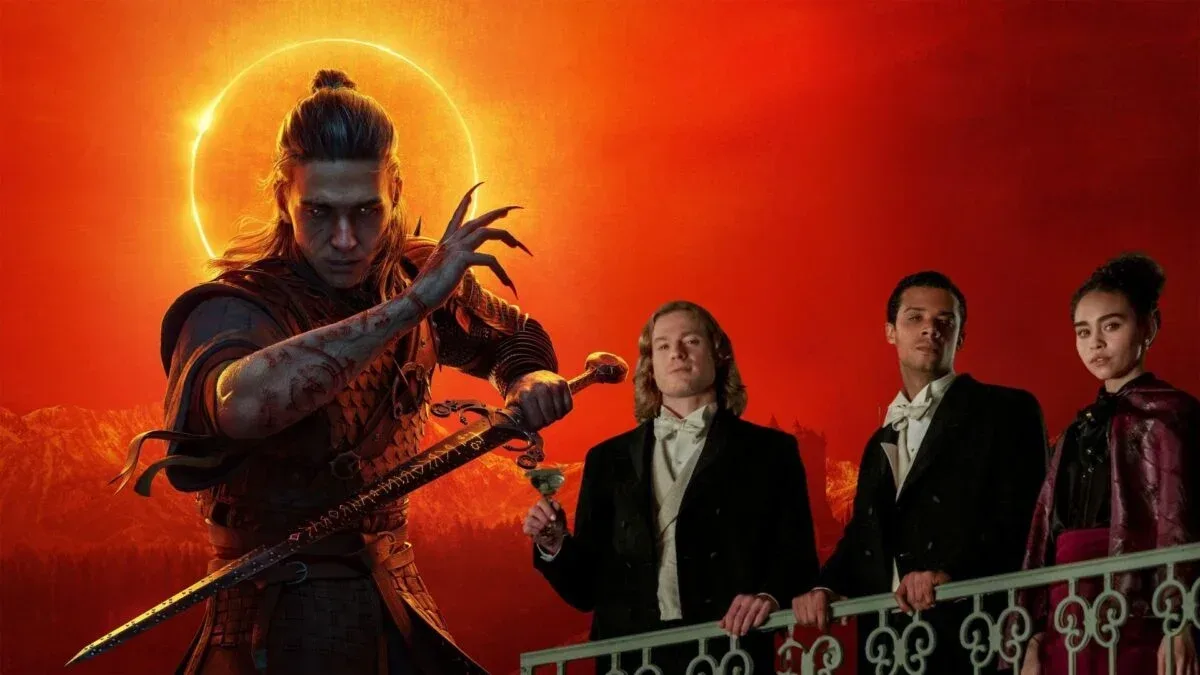
What happens when an RPG about becoming a vampire is put before a roomful of immortals with centuries of baggage, wildly incompatible ethics and absolutely no patience for tutorial chores? In an imagined living-room screening of The Blood of Dawnwalker, the answer is simple: nobody gets to hear the dialogue, every supernatural rule is litigated, and the hero’s entire life becomes a subject for unsolicited criticism.
The premise is a playful crossover: Daniel Molloy, Armand, Louis de Pointe du Lac, Lestat de Lioncourt and Claudia de Lioncourt de Pointe du Lac sit down to observe Coen’s first seven hours in the dark-fantasy RPG. They are not subtle viewers. These are people who see a vampire hierarchy and immediately object to the aesthetics, the theology, the etiquette of making fledglings, and the speed at which a newly empowered protagonist is apparently expected to save his family.
That makes the exercise less a conventional account of an RPG opening than a supernatural group chat made physical. Yet beneath the insults is a useful snapshot of what these early hours put in front of players: an ordinary life under pressure, a vampiric transformation, a hard deadline, a world shaped by plague-era hardship and religious violence, and a hero whose condition brings both extraordinary opportunities and sharp vulnerabilities.
Before the blood, there are chores
One of the most amusing tensions in the imagined watch party is how quickly the immortals lose interest when Coen is doing unmistakably mortal work. Chopping wood and tracking down a missing pig do not offer much immediate appeal to viewers waiting for capes, moonlight and arterial drama. Daniel, whose gaming reference point is an old encounter with Pac-Man, is especially unimpressed by the possibility that the experience might remain a rustic errand simulator.
Claudia shares the impatience. The vampire material is the draw, and the opening’s quieter duties are treated as an intolerable delay. But those moments matter for the story’s tonal contrast. Coen begins connected to a family and a community, with responsibilities grounded in survival rather than power. That baseline makes the later shift into vampirism more consequential than if the adventure opened with an already-superhuman hunter stalking a castle.
The push and pull is familiar to role-playing games: mundane tasks establish place, routines and stakes; fantasy then breaks those routines apart. Here, the joke is that a gathering of flamboyant undead aristocrats regards any peasant labor as an unbearable interruption. Players more receptive to world-building may see why the game begins by showing what can be lost before it asks what vampirism can provide.
Anyone who has watched a game with friends will recognize the dynamic, even if their couch has fewer centuries of interpersonal grievance on it. Our guide to the unwritten rules of couch multiplayer may not explicitly cover “do not begin an argument about immortal family boundaries during a cutscene,” but it probably should.
The Blood Mass gives the room what it wants
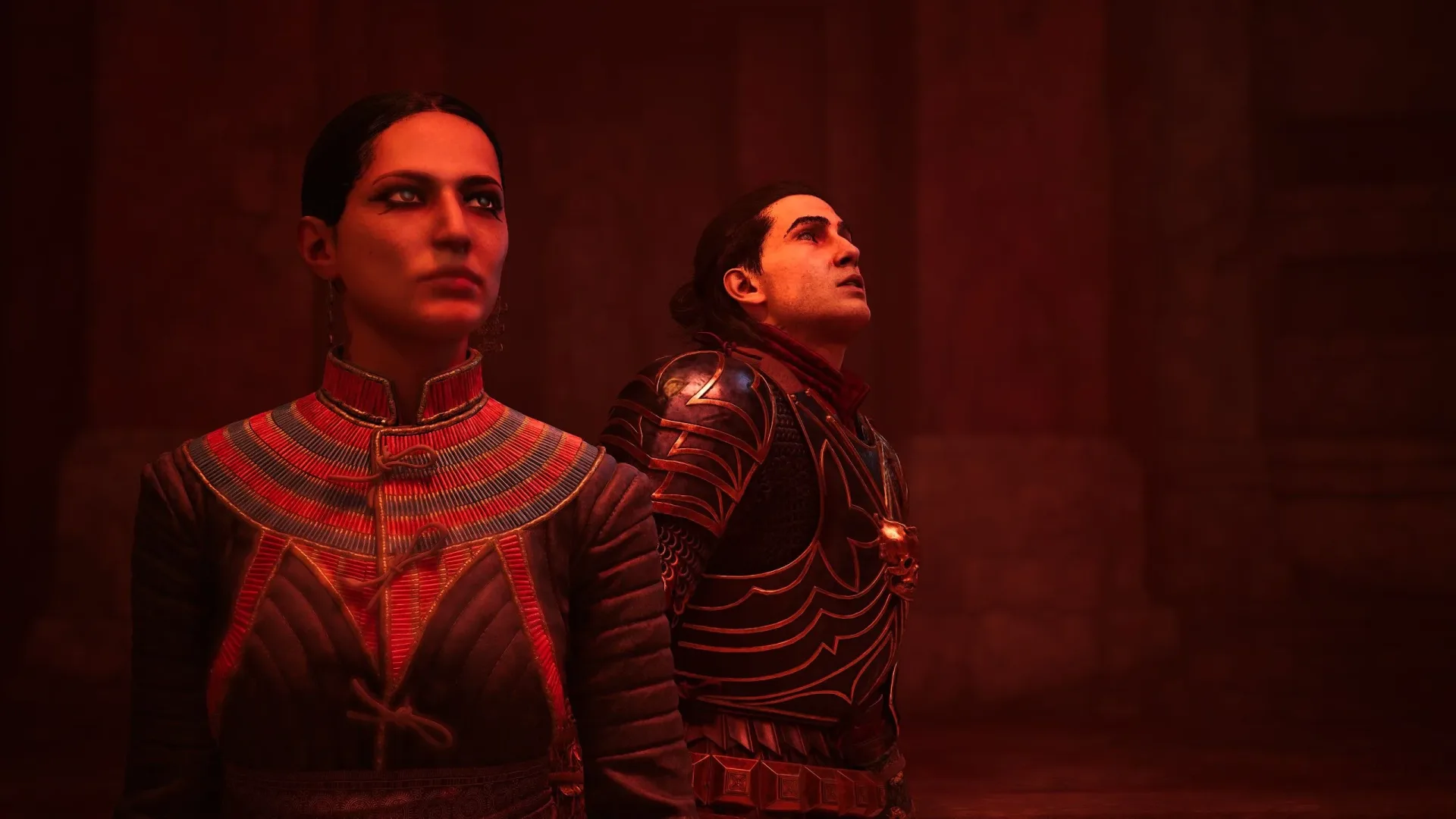
The group’s attention snaps into focus once night falls and the Blood Mass begins. The event shifts the early game into more overtly vampiric territory, with the vrakhiri and their transformation ritual providing the sort of grotesque, deliberate imagery Claudia can appreciate. The process involves a vampire tearing out a fang and using it to stab a human heart, an act the onlookers read as both violent and pointedly ceremonial.
That detail distinguishes the game’s vampires from a simple bite-and-wake-up shorthand. Becoming one of these creatures is not portrayed as casual. It is invasive, bloody and structured around a physical act of transfer. For Claudia, that is a feature, not a bug. Louis, predictably, sees the violence and wonders why it must always be violence. Their disagreement neatly captures two competing lenses for vampire fiction: the transformation as horror and violation, or transformation as a potent, even alluring assertion of agency.
Lestat is less impressed by the apparent use of religious language and imagery to cloak atrocity. He identifies a familiar gothic device in the way a cult or order may dress monstrous conduct in spiritual authority. Armand’s past with the Children of Satan naturally makes him a less than neutral participant in this particular discussion. The resulting argument is comic, but it also fits the game’s willingness to put blood rites, social control and faith-adjacent structures close together in its opening stretch.
The salon’s broad consensus, if such a thing can exist among this group, is that The Blood of Dawnwalker becomes more interesting the moment it commits to its own vampiric identity. The early village concerns are context. The Blood Mass is the pivot.
Coen’s daylight is clever, even if the bear remains a problem
Coen’s condition creates one of the more intriguing early-game twists: contamination associated with a silver mine allows him to move through daylight despite his vampiric nature. Daniel immediately recognizes the practical value of that premise. It gives the game a way to make day and night meaningful without trapping its protagonist permanently in one half of the clock.
For the assembled immortals, though, daylight access is also grounds for jealousy. Lestat objects to Coen receiving an ability comparable to the Sky Gift so readily, contrasting it with the difficulty and social maneuvering he associates with gaining such powers. The tease is characteristically self-serving, but the broader observation lands: vampire stories often use daylight as an absolute limitation, while Coen’s altered biology makes it something more complicated.
His state appears to be a mixed blessing rather than pure liberation. He can walk in the sun, yet he remains exposed to dangers that more traditional vampire healing might seem to dismiss. A bear can still kill him, prompting the room’s most practical verdict: supernatural gifts are not a substitute for survival skills. The complaint is deliberately pedantic—fictional power systems always invite this kind of scrutiny—but it highlights an important tension. Coen is not simply an untouchable night creature. He is a person navigating a dangerous world with a condition that changes the rules without erasing every consequence.
The same applies to his hunger. The urge to drain blood from people nearby is recognized by the veteran vampires as one of the game’s more credible supernatural touches. It is not merely a combat animation or a costume change. It is a disruptive need with social implications, especially when the people around Coen are those he has reason to protect.
Witches, family, and the inevitable romance interrogation
The watch party also latches onto the appearance of an herbalist who is read as a witch. For a room containing people with deep personal and historical associations to occult networks, that development is enough to trigger immediate suspicion. Lestat’s anxiety escalates at the possibility of more familiar supernatural organizations entering the picture, while Claudia is delighted that her guess about the herb woman appears to be right.
Armand, meanwhile, has a much simpler priority: he sees two characters with apparent chemistry and asks why they are not kissing. Louis counters that Coen has more immediate business, namely the fate of his family. That exchange gets to the core of the protagonist’s opening motivation. Coen is not acquiring strength for sport, status or an immortal social circle. The pressure to act comes from family, and the game attaches a firm 30-day window to that objective.
Lestat dismisses familial obligation with the confidence of someone who has made every possible bad decision involving relatives. Claudia quickly reminds him that he may not be the best authority on healthy boundaries. The sharp banter is the point, but it underscores why Coen’s family tie is useful dramatically: it positions the protagonist’s transformation against love, duty and time rather than treating vampirism as an uncomplicated power fantasy.
Thirty days versus an ancient vampire lord
The most substantive objection from the undead panel concerns scale. Armand doubts that a fledgling could become powerful enough to challenge an ancient vampire lord in only 30 days. It is a fair question on the surface. Long-lived vampire fiction often treats power as something accumulated through age, knowledge, patronage and survival. A month is a strikingly brief timetable beside creatures accustomed to decades-long recoveries from grief, injury or a literal dirt nap.
But the 30-day limit is also the engine of the game’s premise. It turns the fantasy of open exploration into a pressured rescue story. Coen’s journey is not only about discovering what he can do; it is about deciding what he can do soon enough. The deadline is designed to make each path, alliance and pursuit feel more urgent, even when players are drawn toward the world’s side activities and supernatural mysteries.
Daniel’s answer to Lestat’s concern about dying to a bear—calling it a skill issue—provides a fitting final note for the imagined screening. No amount of vampire pedigree saves anyone from the basic truth of games: power systems, lore and destiny can all be undone by a bad decision in the wrong encounter.
After seven hours, this fictional panel has not agreed on much. The vrakhiri ritual earns approval from Claudia. The daylight complication wins points from Daniel. Louis remains troubled by the cruelty surrounding the transformation. Armand wants romantic payoff and questions the timeline. Lestat has complaints about nearly everything, including the protagonist’s access to abilities and the general state of vampire presentation.
That is precisely why the exercise works. The Blood of Dawnwalker offers enough vampires, rituals, hazards, family pressure and gothic intrigue to provoke a different response from every immortal on the couch. And if a game can survive that kind of heckling, it can probably survive a bear.