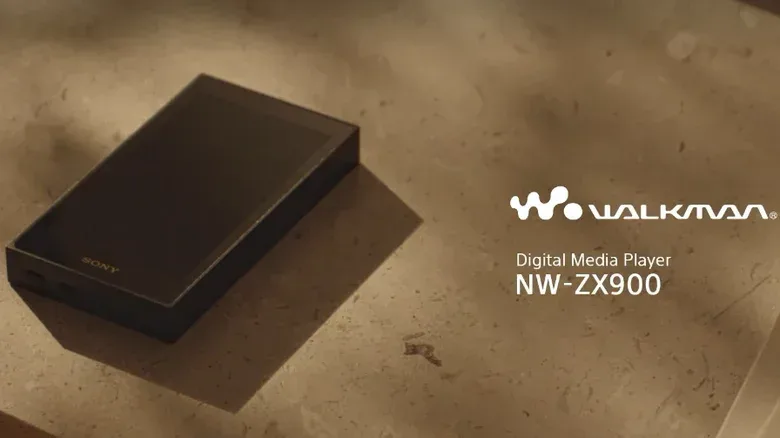

Sony’s Walkman name may evoke cassette players, but its newest use is very different: three high-end portable digital music players aimed at listeners willing to make their headphone setup a serious luxury purchase. Pre-orders opened October 15 for the $1,899 NW-ZX900, the $2,999 NW-WM1AM3, and the $5,899 NW-WM1ZM3.
Those numbers are startling not because premium portable audio is new, but because the entry point for this particular high-end range has moved so far upward. The NW-ZX900 is now the least costly new premium model at $1,899, while the top WM1ZM3 is separated from it by a remarkable $4,000. Sony has not left the affordable portable-player business altogether: the NW-A306, introduced at $349 in 2023, remains on sale. But the new trio makes a clear statement about whom the upper tier is for.
The short version is that Sony has put costly materials and specialized components into all three devices. The longer, more interesting version is that these details do not neatly account for either the broad generation-to-generation increases or the $4,000 jump from the ZX900 to the gold flagship. This is a product family where engineering, craftsmanship, identity and luxury-market pricing are all in the same signal chain.
The lineup: shared core hardware, very different price tags
Each new model uses Sony’s S-Master HX digital amplifier and is rated at 250mW per channel through its 4.4mm balanced headphone connection. A balanced output is a headphone connection design that uses separate signal paths in a way intended to improve the handling of noise and channel separation. The important practical point here is simpler: the output rating is the same across the whole trio.
That shared 250mW figure matters because it is the most direct paper specification for the players’ headphone-driving capability. The flagship does not offer a higher rated output than the $1,899 ZX900, despite costing more than three times as much. It also carries a stated hi-res playback battery life of up to 33 hours, which is shorter than the ZX900’s. Battery estimates vary in real life with files, volume and usage, but Sony’s own published maximum does not give the WM1ZM3 an obvious endurance advantage.
The differences begin with storage and materials. Storage progresses from 64GB in the ZX900 to 128GB in the WM1AM3 and 256GB in the WM1ZM3. That can be useful to collectors of large music files: higher-resolution recordings take up more capacity than compressed files. Yet extra storage alone plainly does not explain the gulf in price.
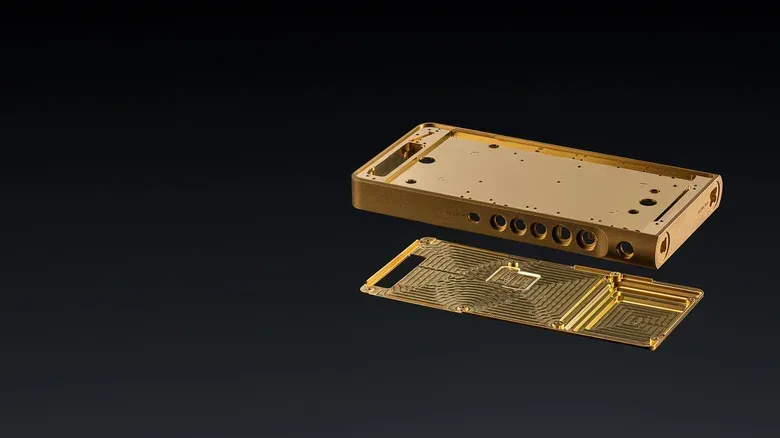
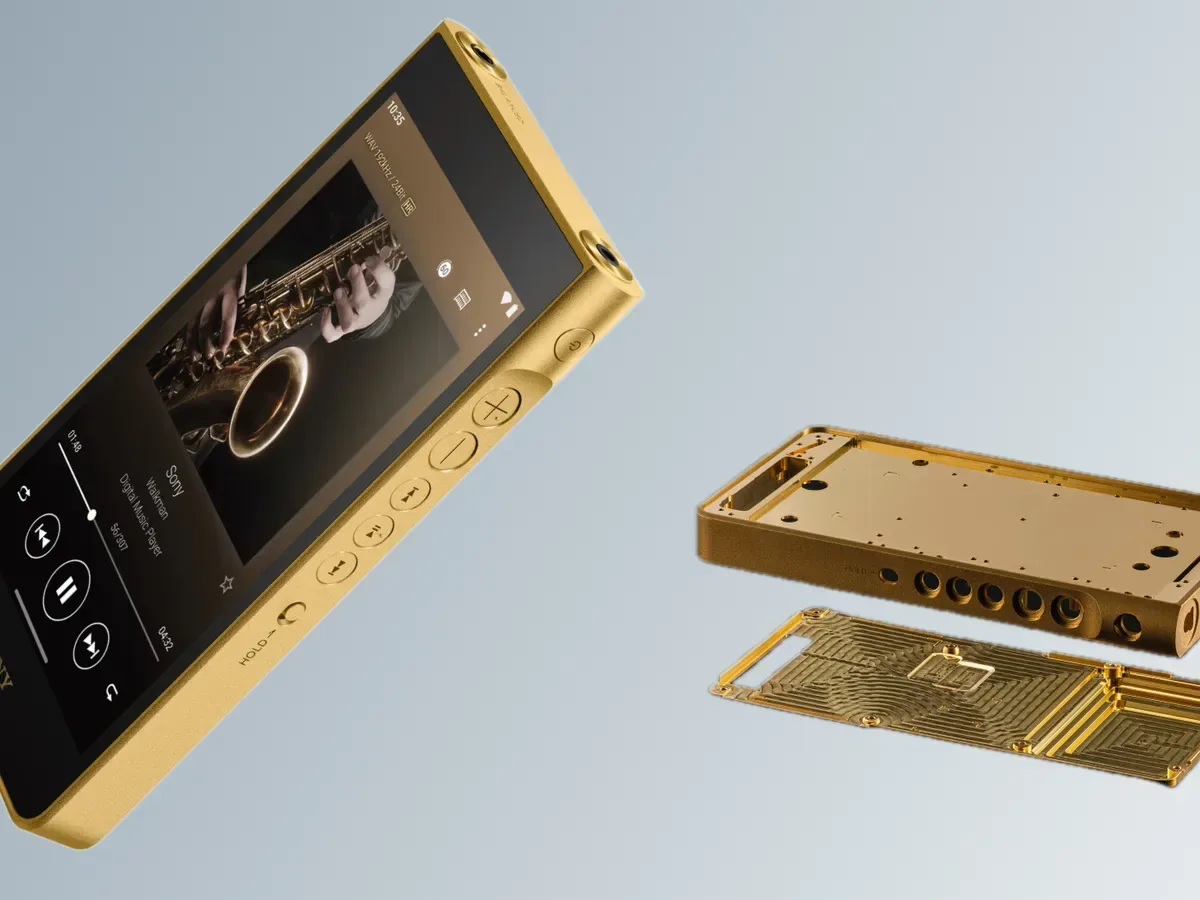
The ZX900 has a machined aluminum chassis and a gold-plated copper rear panel. The $2,999 WM1AM3 also has that gold-plated copper rear panel. Both share the flagship’s ultra-low-noise voltage regulator and crystal oscillators. In other words, the more attainable two models retain several of the components associated with the top player’s low-noise design.
For a buyer focused on functionality rather than material distinction, that overlap is the awkward part of the ladder. At $1,899, the ZX900 already provides the same amplifier family, the same quoted balanced output, the same regulator and oscillators, plus a copper-backed build. It is not a stripped-down product that obviously requires a vast climb to become credible.
What the flagship adds
The $5,899 NW-WM1ZM3 makes its luxury argument through construction and internal hardware. Its main chassis is machined from 99.99 percent pure oxygen-free copper before receiving gold plating. Sony replaced the previous flagship’s aluminum rear panel with copper, gave the screws low-resistance gold plating, added thicker Kimber Kable wiring derived from its DMP-Z1 desktop player, fitted a second large polymer capacitor, and installed a copper block over the digital circuitry that is 34 percent heavier than the earlier version’s.
These choices are not cosmetic in the narrowest sense. Sony says the gold-plated screws help form a more stable ground connection, contributing to stronger bass and a wider soundstage. Ground in electronics refers to a common electrical reference and return path; unwanted variation or noise in the system is a concern in audio-device design. A capacitor stores electrical energy and can be used within a circuit to support stable power delivery. A crystal oscillator provides a highly regular timing reference for digital circuitry.
Those terms help explain what Sony is trying to optimize: electrical stability, noise control and the conditions surrounding digital-to-audio processing and amplification. They do not, on their own, promise that every listener will hear an equally large improvement. That distinction is essential in expensive audio. A design may be elaborate and sincere without guaranteeing that its benefit will be dramatic, universal or proportional to its cost.
The WM1ZM3’s heft is far easier to quantify. It weighs 670g, about 1.5 pounds, compared with 490g, roughly 1.1 pounds, for the 2022 model. That density may reinforce the feeling of owning a substantial object, but it changes the meaning of “portable.” A player approaching a pound and a half can still go in a bag, but it is a less casual pocket companion than the Walkman label might suggest.
There is also an unavoidable tension in the flagship pitch. The money buys copper, plating, specialist internal wiring, an additional large capacitor, a heavier copper block and more storage. But it does not buy a higher published 4.4mm output rating than the ZX900. For an enthusiast whose goal is simply to use demanding headphones, that makes the $4,000 decision depend heavily on trust in the subtler circuit and material changes.
Why diminishing returns dominate this kind of purchase
Diminishing returns describes a familiar premium-audio problem: spending more can still produce improvements, but each additional dollar is less likely to bring a correspondingly large, clear or universally agreed-upon benefit. The first upgrade from weak audio hardware to a well-designed player can matter greatly. Moving between increasingly rarefied versions of already specialized hardware is much harder to assess from a spec sheet.
The previous generation illustrated that problem. The $3,699 WM1ZM2 was positioned as the no-compromise gold-plated player alongside the much cheaper $1,399 WM1AM2. Commentary on those models was not unanimous. One evaluation noted the large amount of shared engineering and specifications while criticizing the ZM2’s limited output power. Another heard a greater improvement in transparency and space from the flagship, while still regarding the AM2 as strong value.
That disagreement is informative rather than a flaw. Audio listening involves headphones, recordings, volume, expectation and individual perception. “Transparency” generally means the impression that playback reveals fine detail with less obscuring character. “Soundstage” is the perceived spatial arrangement and width of instruments and voices. They are meaningful concepts to listeners, but they are not single simple measurements that settle a buying decision for everyone.
What has not changed in the WM1ZM3 is the published 250mW-per-channel balanced rating. Thus, the new flagship does not answer the earlier concern through a higher stated power figure. Sony’s case rests instead on refinement around the amplifier and digital circuitry: materials, grounding, wiring, power-related components and shielding-like mass around the digital section.
That is a valid luxury-audio strategy, but it places a burden on the buyer. Someone considering the WM1ZM3 must value those refinements enough to accept that the financial difference will not be captured by a single straightforward specification. The product is asking the customer to care about the totality of the build, not merely a feature checklist.
The same dynamic is familiar in game audio decisions, where better equipment does not always translate into a proportionate leap in what players hear. Our look at what a soundbar upgrade really buys you explores a related question: the value of an upgrade depends on the system around it and on whether the improvement addresses a practical limitation.
Prices have climbed far faster than the core story has changed
Sony’s recent pricing history makes the new models particularly hard to view as mere incremental successors. The gold-plated NW-WM1Z launched in 2016 at $3,199. In 2022, the WM1ZM2 arrived at $3,699, alongside a $1,399 WM1AM2. Then the ZX707 launched at $899 in 2023.
The new WM1ZM3 is priced at $5,899, a 59 percent rise from the 2022 flagship. More consequentially, the less expensive models have also more than doubled relative to their predecessors. The premium Walkman range no longer offers a model below $1,000.
Competitive context does not make the flagship look less extreme. Astell&Kern’s Android-based SP4000 is listed at $4,290, about $1,600 below Sony’s WM1ZM3. That does not determine which device is better for any particular listener, but it does show that Sony is charging beyond an already premium portable-audio benchmark.
The regional numbers sharpen the question. Japanese retailers expect the WM1ZM3 to sell for about ¥655,000 and the ZX900 for about ¥215,000. Removing the 10 percent consumption tax included in shelf pricing and using September’s approximate ¥156-to-$1 average works out to roughly $3,800 for the flagship and $1,250 for the ZX900. On that comparison, U.S. buyers pay more than 50 percent more for the same players.
Currency movements, tax treatment, distribution, warranty arrangements and market-specific pricing can all affect international pricing. Still, the contrast makes it difficult to treat the U.S. figures as a simple reflection of an unavoidable materials cost.
Copper explains the construction, not the whole premium
Copper’s price did reach around $14,850 per metric ton in August. Sony’s flagship uses a lot of copper relative to ordinary portable electronics, and the specified purity and machining matter more than treating it as raw commodity metal. Gold plating, specialist wiring, custom manufacture and a small-market production run are also not free.
But raw-material arithmetic establishes a useful boundary. Even if the 670g WM1ZM3 were made entirely from copper, its copper content would be worth only about $10 at that quoted market price. The flagship is not made entirely of copper, of course, and its value lies in processing and engineering rather than scrap value. The calculation nevertheless shows why “copper got expensive” cannot be a complete explanation for a nearly $6,000 retail price.
What buyers are paying for is better described as a luxury, low-volume audio object: a device built around expensive materials and narrowly targeted refinements, with a brand name capable of supporting a high price to enthusiasts who value precisely those things. That can be rational for an individual who wants the object and has the budget. It is not the same thing as evidence that it delivers several times the functional utility of the $1,899 model.
The practical buying case is surprisingly simple
The three new Walkmans are not interchangeable, but the decision becomes clearer when separated into needs and preferences.
- Choose the NW-A306 if the aim is simply a Sony portable player without entering luxury pricing. It debuted at $349 in 2023 and remains available.
- Start with the NW-ZX900 if a buyer specifically wants the new high-end range. It contains much of the shared platform, including the S-Master HX amplifier, 250mW-per-channel balanced rating, ultra-low-noise regulator and crystal oscillators.
- Consider the NW-WM1AM3 for its larger 128GB storage and its place between the entry high-end player and the flagship, rather than assuming it represents a wholly separate performance class.
- Consider the NW-WM1ZM3 only when its copper-and-gold construction, specialized internal parts, 256GB capacity and collector-grade appeal are themselves central to the purchase.
That last point is not an insult to the flagship. Luxury goods frequently derive value from execution, materials and ownership experience as well as direct utility. The mistake would be pretending that the WM1ZM3’s price is fully explained by a dramatically different published amplifier capability or battery claim. It is not.
Sony has built three lavish portable players from premium components. Yet the common amplifier rating and shared high-end electronics make the ZX900 look like the rational hardware-first choice within the new line. The WM1ZM3 is for the buyer who wants the most ornate, materially extravagant version of Sony’s vision—and who accepts that the last stretch of audiophile refinement is where price rises faster than certainty.