Game audio has a peculiar superpower: it can make a living-room firefight feel immediate, or turn it into a distant argument happening inside a cardboard TV. Built-in television speakers can handle basic playback, but they are rarely the strongest route to clear dialogue, weighty low-end effects, or a convincing sense of where a sound is coming from. The important purchasing lesson is not that expensive audio is automatically better. It is that different budgets buy different hardware, different placement options and different degrees of control.
For many players, the largest upgrade is simply getting beyond TV speakers. A modest soundbar can make speech easier to follow and give music, engines and explosions more presence. From there, the gains become more conditional. The right setup depends on room size, whether a player can place rear speakers, how much they care about movies and music as well as games, and whether they will actually use features such as height effects, EQ controls or room correction.
The short version: spend for capabilities that solve a real limitation in your room. Do not spend simply because a channel count or a price tag looks impressive.
Start with the upgrade that matters most
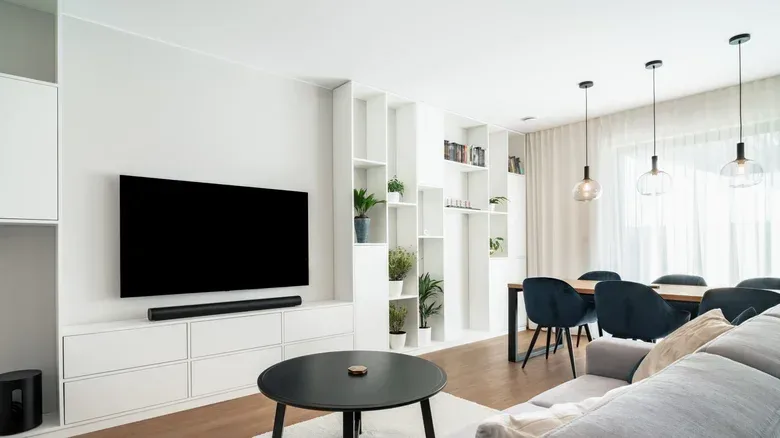
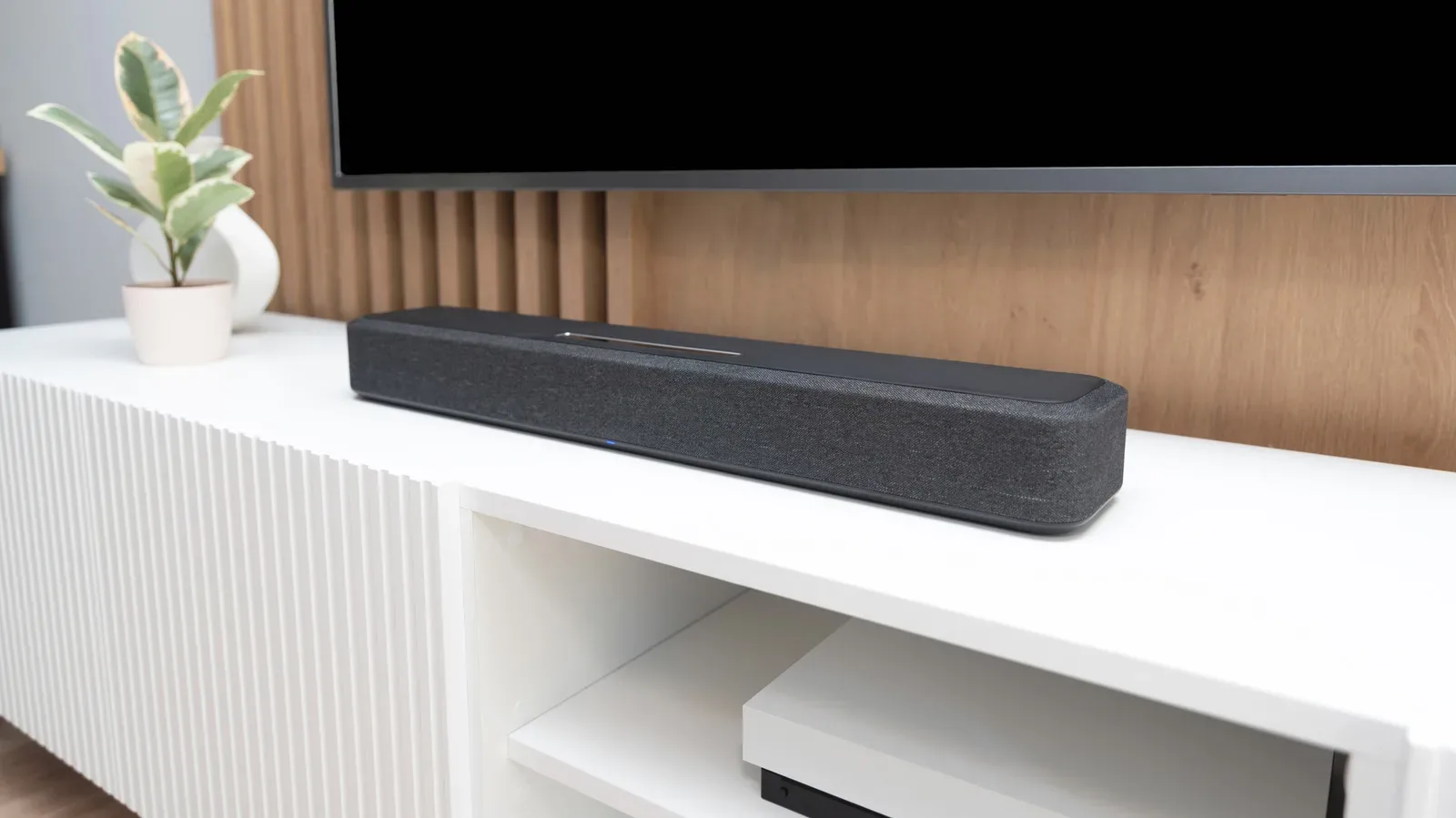
Soundbars range from roughly $100 to well above $1,000, yet price brackets are not hard quality borders. They are more useful as a broad map of what kind of equipment is likely to be included. The jump from TV speakers to an entry-level bar is usually more obvious than the jump from a solid midrange model to a flagship one.
That is the principle of diminishing returns. Early spending buys fundamental changes: more capable speakers, perhaps a subwoofer, and improved dialogue. Later spending can still be worthwhile, but it increasingly buys refinement, physical surround channels, better configuration tools and flexibility rather than a totally different experience.
A useful first question is therefore not “What is the most expensive soundbar I can afford?” It is “What do I currently fail to hear?” If dialogue is the problem, a more basic setup may be enough. If a player wants clear positional cues around the sofa, a system with actual rear speakers is more meaningful than one that only processes sound to suggest surround. If the room is large or listening levels tend to be high, a system that can retain consistency at higher output becomes more relevant.
What the channel numbers actually mean
Channel labels are a compact description of a system’s speaker arrangement. They can be useful, but they do not eliminate the need to check what hardware is physically included.
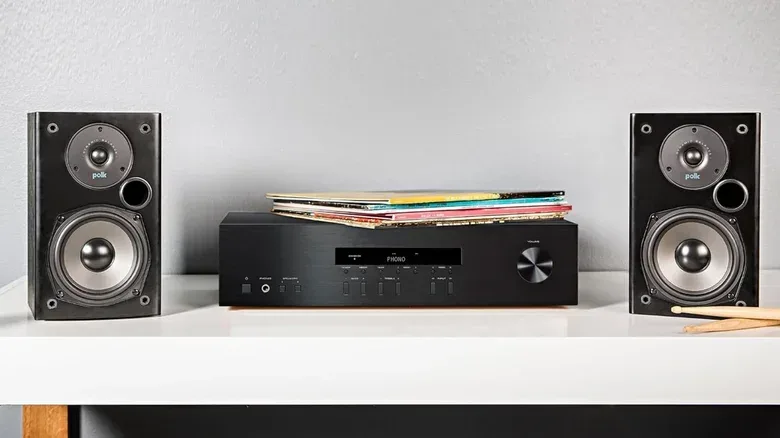
- 2.0 means two audio channels: stereo.
- 2.1 adds a subwoofer, the “.1,” to handle low frequencies.
- 3.1 adds a center channel alongside the left and right front channels, plus a subwoofer. The dedicated center can be particularly useful for dialogue.
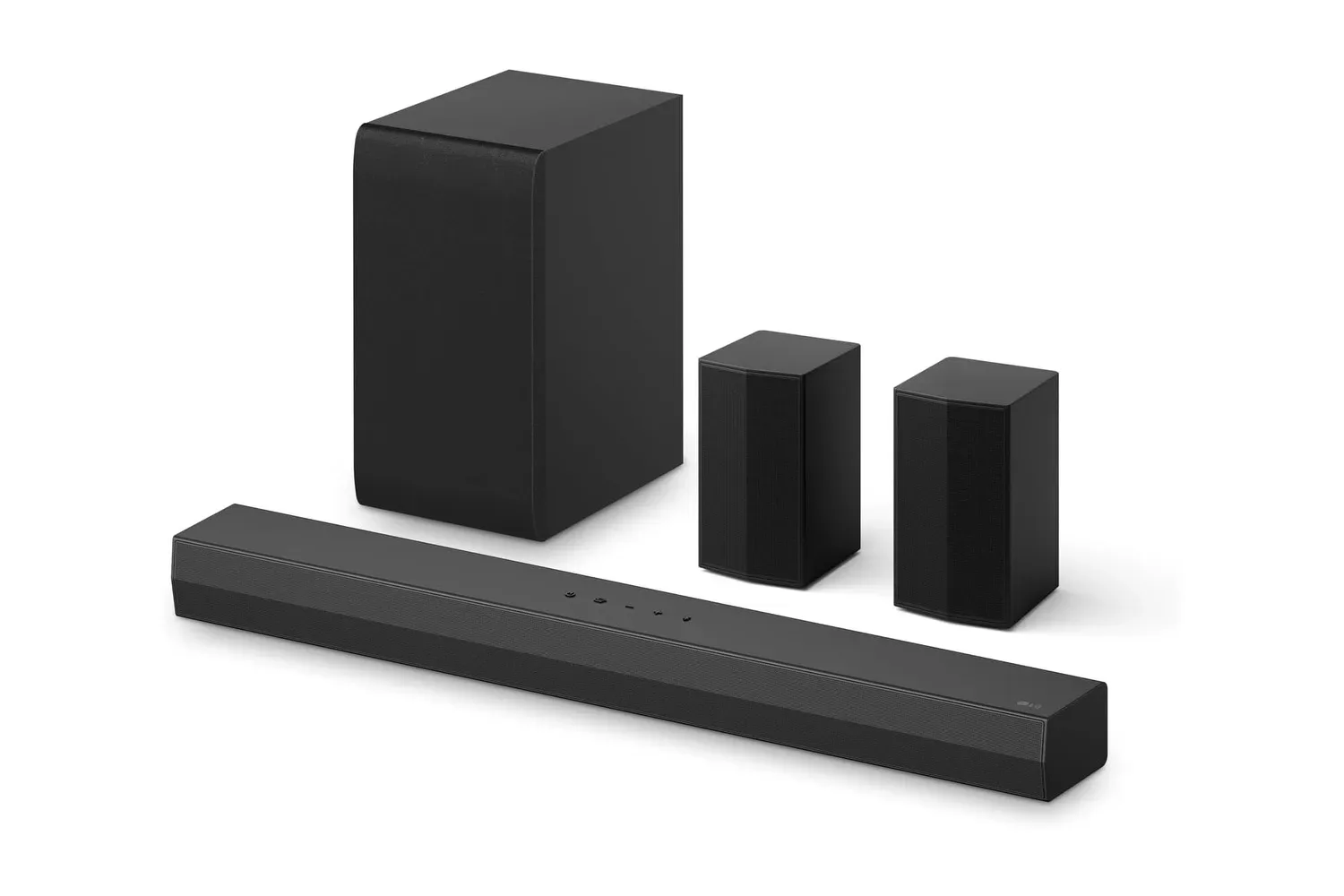
- 5.1 adds surround channels behind or beside the listener, in addition to the front left, front right, center and subwoofer.
- 3.1.2 has three front channels, one subwoofer and two height channels.
- 5.1.4 indicates five main channels, a subwoofer and four height channels.
Height channels are associated with Dolby Atmos playback. Upward-firing drivers are designed to reproduce overhead effects with compatible soundtracks. Some systems use physical drivers for this job; others virtualize directional or height effects through processing. Both approaches can create an enveloping result, but they are not the same as having separate speakers positioned around the room.
For gaming, this distinction is practical rather than academic. Physical rear speakers can put audio behind the listener instead of asking the soundbar to simulate that effect from the front of the room. A virtual-surround bar may still suit a space where rear speakers would be inconvenient, but buyers should recognize what tradeoff they are making.
Under $250: the sensible TV-speaker escape route
At the lowest end, especially below $100, bars are generally stripped back. Expect limited connectivity, fewer sound modes and little ability to reproduce deep bass. That does not make them pointless. Their purpose is straightforward: improve everyday television sound without a complicated installation.
In the broader under-$250 bracket, 2.0 and 2.1 systems are common. A 2.1 setup can make a notably fuller change because the separate subwoofer takes on the low-frequency workload that a standalone bar may struggle to deliver. The Hisense HS2100, around $120, is one example that includes a wireless subwoofer.
There can also be a surprising jump in physical hardware before the $200 mark. Hisense’s HS5100, at just under $200, is cited as a 5.1 system with a dedicated subwoofer, center channel and two rear satellite speakers. Its rear speakers deliver sound from behind the listener rather than relying entirely on simulated surround. It does not support Dolby Atmos, meaning it does not add overhead effects, but that does not erase the value of physical surround placement.
For a smaller or medium room, a basic 2.1 bar may be the most rational answer. It can improve dialogue and bass while avoiding a much larger equipment footprint. Players who primarily want to stop turning subtitles on because speech is being swallowed by a soundtrack may not need anything grander.
$250 to $499: where feature choices get serious
This range is where a buyer starts to encounter more substantial feature sets. One key term is eARC, short for enhanced Audio Return Channel. In practical terms, it can send audio from devices connected to the television back to the soundbar. That matters for an entertainment setup with several inputs, because the soundbar can receive audio from what is plugged into the TV rather than requiring every device to be connected directly to it.
Wi-Fi streaming, broader app controls and fuller EQ management also become more likely. EQ, or equalization, is the ability to adjust parts of the frequency range. A graphic equalizer provides more detailed adjustment than a simple preset. Independent channel adjustments go further by allowing balance changes between channels, which can be valuable if a room or seating position is not perfectly symmetrical.
The Hisense AX3120Q, around $280, is a 3.1.2-channel Dolby Atmos bar. Its configuration means it has three front-facing channels, a subwoofer and two height channels. The center channel is the important component for dialogue, while the height channels are intended for compatible overhead effects.
At around $449, the Polk Signa S4 is another Atmos example. Sony’s Bravia Theater Bar 5 is noted as a roughly $350 alternative with a subwoofer and 3.1-channel design that virtualizes overhead and directional effects. Neither includes separate rear speakers, so neither is a physical-surround solution in the same way as a package with satellites behind the listener.
There are, however, more complete systems near the top of this range. Hisense’s AX5140Q is described as a 5.1.4 system with a wireless subwoofer, two satellite speakers and four upward-firing drivers, along with a graphic EQ, channel controls and dialogue enhancement. That illustrates why channel count alone is not enough: the useful difference is the quantity and placement of actual hardware, plus the ability to tune it.
$500 to $1,000: refinements, flexibility and fuller surround
Higher-priced soundbars can add more than speakers. They may offer stronger customization, room correction and designs that better fit varied rooms. Room correction is a system feature intended to account for the acoustic behavior of a room. That matters because furniture, walls, floors and where the listener sits all affect what reaches their ears, especially in the bass range.
Samsung’s HW-Q800F is a 5.1.2 system with a wireless subwoofer and upward-firing drivers. It does not have rear speakers; side-firing drivers are used for virtual surround. Meanwhile, Samsung’s 3.1.2 HW-QS700F can automatically adjust based on whether it is sitting on a TV stand or mounted on a wall. Those details underscore a point that is easy to miss while comparing specifications: the same room can make placement features more useful than additional channels.
The JBL Bar 1000MK2 takes another approach with a 7.1.4 layout, detachable battery-powered satellite speakers, a subwoofer, upward-firing drivers, room correction and graphic EQ. The detachable rears are a practical response to a common real-world concern. They can provide physical surround when wanted without permanently occupying the room.
At the upper edge of this bracket sits the $1,000 Marshall Dolby Atmos Heston 120. Its presence is a reminder that cost alone cannot establish fit. A premium soundbar can be an elegant option for someone who wants a compact system, but it will not magically bypass an awkward room layout or create a need for capabilities the owner will not use.
Why components remain the control-first option
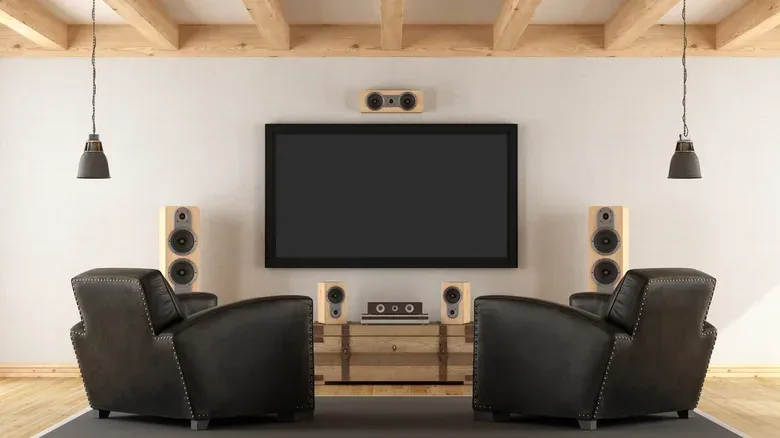
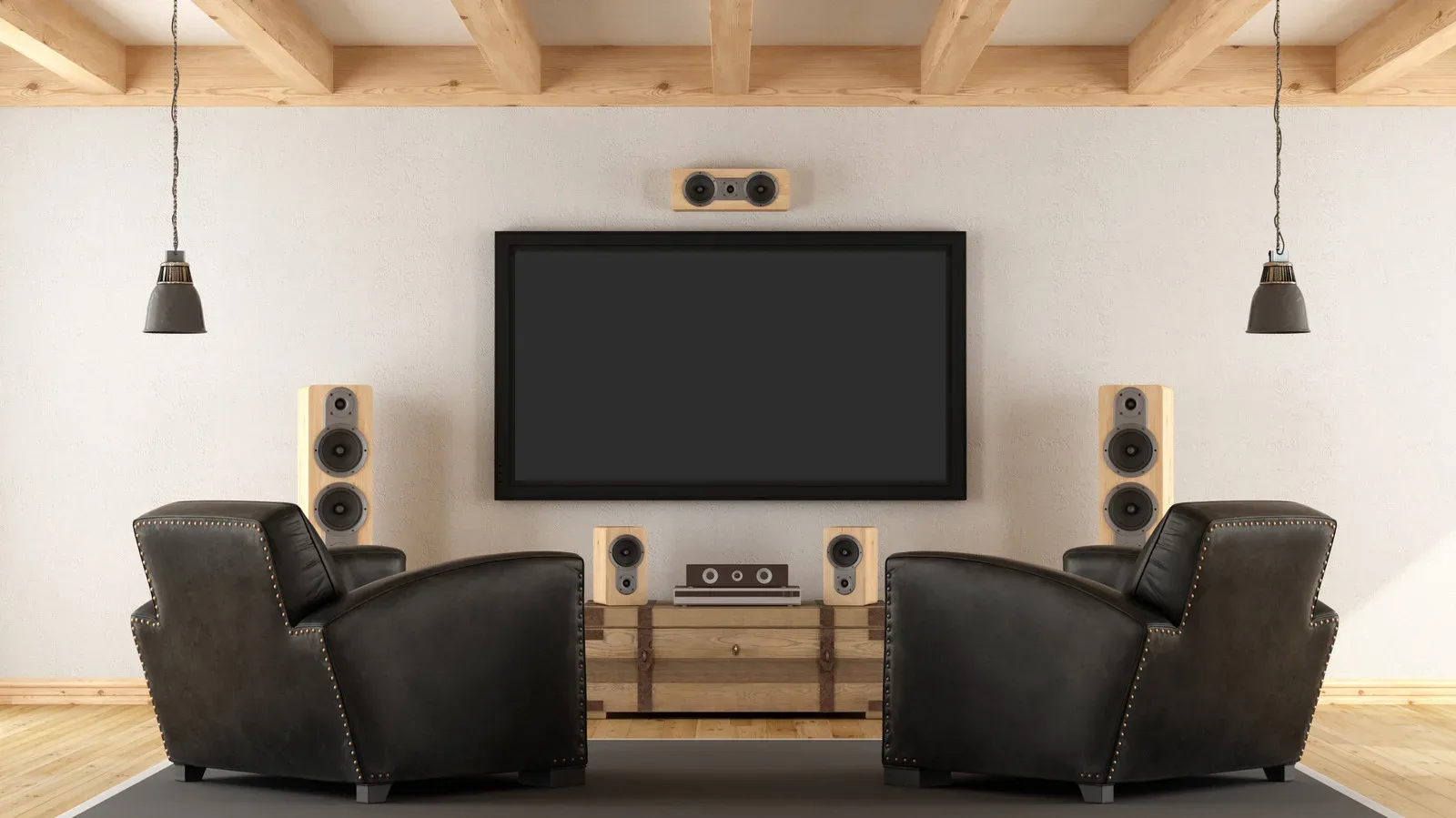
A dedicated home-theater system separates the work among an AV receiver and individual speakers. The receiver sends audio to those speakers around the room. A basic 5.1 arrangement uses front left and right speakers, a center, two rear surround speakers and a subwoofer.
The advantage is placement and upgrade flexibility. Rather than relying on a front-mounted bar to create a surround impression, a receiver-based setup can place speakers where their channels belong. With careful configuration, that can create a more convincing sense of space and make dialogue and effects easier to locate.
It also asks more of the owner: more space, more setup effort and typically more expense. One approximately $1,300 example pairs a Yamaha RX-V4A receiver with a Klipsch Reference Cinema 5.1.4 package. The receiver powers a basic 5.1 setup; the package includes four additional height-effect speakers for use after moving to a compatible receiver. The essential benefit is not merely a big channel number. It is the option to build and upgrade a system over time.
Soundbars are not disqualified from serious surround simply because they are compact. Samsung’s 11.1.4-channel HW-Q990D is one example of a more elaborate soundbar system. LG’s Dolby Atmos FlexConnect system represents a modular route that allows compatible speakers to be arranged around a room without committing to traditional wired placement. The broader choice is between convenience and customization, not between “real” audio and a toy.
What expensive equipment can improve—and what it cannot
Premium speakers can offer a more balanced frequency response. This describes how evenly a speaker reproduces different parts of the audio spectrum. An uneven response may make some frequencies stand out while obscuring others. A more balanced response is intended to sound more natural and to represent what media creators captured more accurately.
Low-frequency extension describes how deep a speaker can play bass before that output begins to fall away. Smaller speakers have difficulty with the lowest frequencies, which is why a subwoofer can be such a meaningful addition to a movie or game setup. It is not only about making explosions louder; it is about allowing low-end information to exist without asking small drivers to do a job beyond their reach.
A pricier system may also keep its character more consistent at higher volume. Loudness alone is not the goal, but maintaining quality as output increases can matter in a large room or for people who listen loudly. These are tangible improvements. They are simply not equally valuable to every household.
Room conditions set a hard limit on what a purchase can accomplish. Bass and other sound behavior change with walls, flooring, furniture and placement. Before replacing equipment, try moving speakers or changing the seating position. This costs nothing and can make a meaningful difference. A great bar placed poorly is still working uphill.
A buyer’s practical game plan
- Identify the problem first. For unclear dialogue and generally weak TV audio, a $150 to $200 2.1 bar can be sufficient.
- Decide whether physical rear speakers are feasible. If they are not, virtual surround may be a reasonable compromise. If they are, a system with satellites can provide a more direct surround solution.
- Check for a dedicated center channel if dialogue matters most. A 3.1 arrangement is designed to provide one.
- Treat Atmos as a compatibility-and-placement question. Height channels and compatible soundtracks can add immersion, but their value depends on the overall system and room.
- Pay for controls only if they solve a problem. eARC, Wi-Fi, EQ, room correction and channel adjustments are useful when they fit the setup, not because they decorate a spec sheet.
- Leave room in the budget for the room itself. Speaker and seating placement may produce a more useful improvement than a costly leap between products.
Players who want clearer everyday sound need not chase the highest price tier. Those who watch many films, play games with expansive sound design or use the TV for music can find more compelling choices between roughly $250 and $500, including center channels, streaming and, depending on the model, rear speakers or Atmos. Spending $500 to $1,000 or more makes the most sense for larger spaces, more complete home-theater ambitions and people who value deeper customization.
There is no shame in the uncomplicated bar. There is also no single premium purchase that guarantees a perfect room. The winning move is matching the hardware to the listening problem—then letting the game’s audio do more than politely emerge from the television.
For another audio-buying reminder focused on wear, hygiene and authenticity concerns in the secondhand market, see this guide to the risks behind used AirPods bargains.
Shop the products
Check current price, model and availability at the retailer.