Songs of Glimmerwick begins with the sort of chain of problems that can make a cozy game either irresistible or exhausting. A mill is cursed. Fixing it requires a song. Learning that song means reaching the mountains. A route north is blocked by an enormous tree root. A classmate has developed a potion that might reverse the plant growth, but its recipe needs a flower that has not yet bloomed in the garden.
It sounds like an obligation stack designed to fill a task tracker from top to bottom. But Glimmerwick’s more interesting move is refusing to treat it that way. Seeds can grow while the player fishes, joins a tabletop campaign, chats with people around town, attends classes when letters announce them, or simply lets a day go by. The game’s school calendar and its larger plot continue to move, yet the unscheduled hours remain unusually open.
That distinction gives the magical-school farming sim much of its early appeal. It has quests, gated routes, recipes and practical errands, but it appears far less interested in constantly announcing them than many contemporary life sims. A player can notice an obstacle, seek a lead, change plans when an ingredient is unavailable, then spend the intervening days doing something entirely different. The result is not the fantasy of being the campus’s most efficient problem-solver. It is the fantasy of living there.
A school schedule that does not turn into a stopwatch
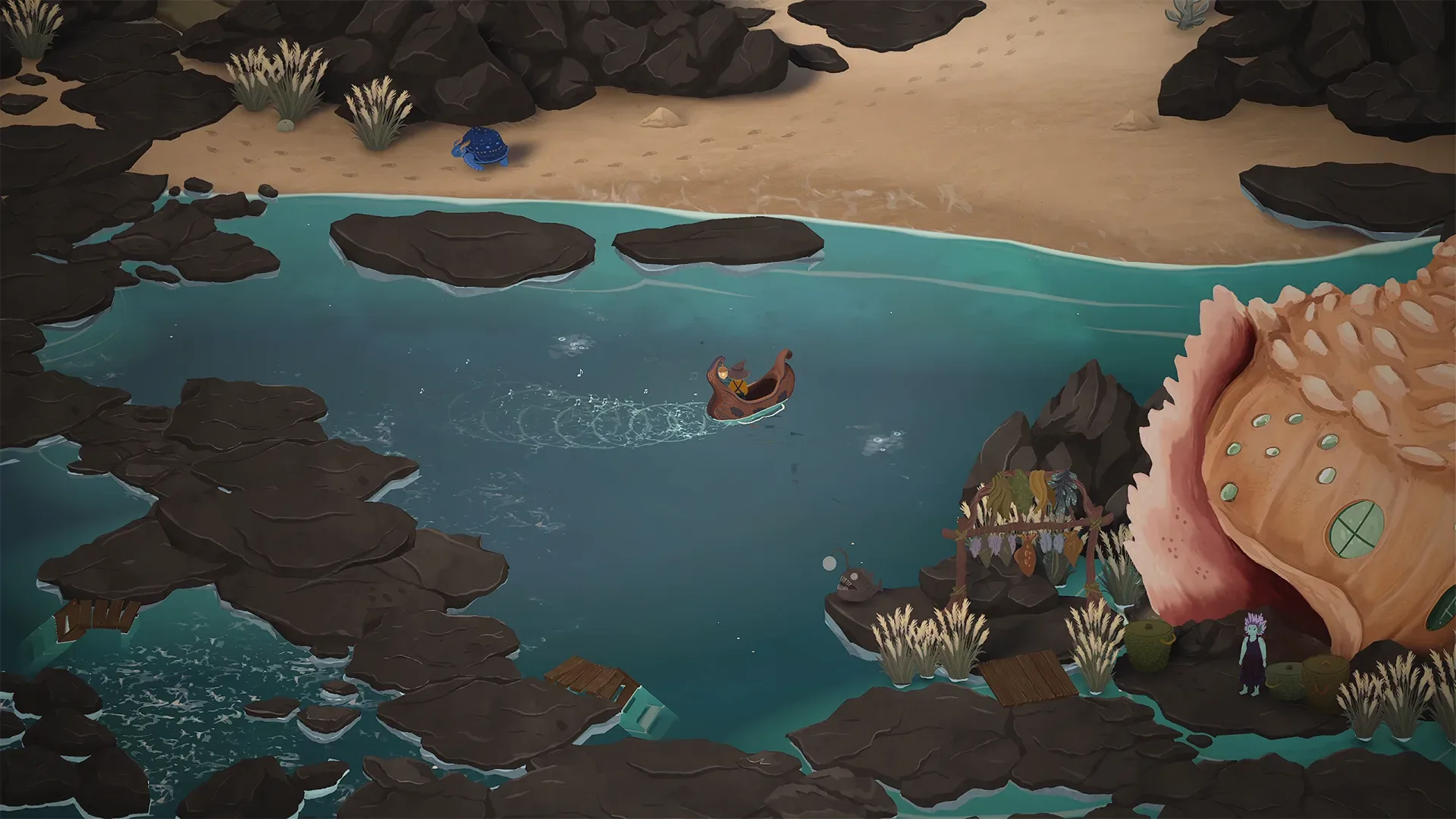
The protagonist arrives by boat with no stated plan, only to discover that their name is already on the Etchery’s student roster. A flutemaker provides an instrument, the neighboring community supplies a uniform and school materials, and the player is folded into a new routine. There are lessons, social occasions and work maintaining the campus garden, but the day-to-day structure is deliberately loose.
The calendar moves forward and story events can occur independently of the player’s preferred activity. Cryptic pamphlets advocating the destruction of the forest may appear in the school halls. Letters may call the student to class. Yet the clock waits for the player to arrive at those lessons, meaning attendance does not become a race against an in-game minute hand.
That is a small mechanical decision with a major tonal consequence. In games with a strict daily schedule, every diversion has an opportunity cost: fish for too long, and an appointment may be lost; explore an unfamiliar path, and a quest might expire. Glimmerwick instead seems to protect the central academic commitments while leaving the space around them flexible. It preserves a passing sense of time without making time pressure the game’s dominant emotion.
For players who enjoy a farm sim’s routines but dislike the feeling that they must optimize every morning, this is the key practical implication. Classes do not sound like another meter to manage. They function more like fixed points in a larger, self-directed week.
Rhythm is not a side activity; it is the language of magic
Glimmerwick’s magic is performed through music. Rather than collecting wands or selecting spells from a conventional menu, the student learns spells by completing short rhythm charts on the flute. A basic passing score is enough to learn a spell and subsequently cast it without replaying the entire musical sequence. Higher scores improve the spell’s effect.
Related coverage includes Songs of Glimmerwick Makes Magic School Feel Like a Place to Linger.
In simple terms, a rhythm chart is a sequence of timed inputs set against music. Here, it is not merely a detached minigame inserted between exploration and gardening. Performance is tied to progression and effectiveness: completing the chart unlocks the practical magical tool, while stronger performance makes that tool more potent.
The spells learned early on are grounded in the chores of the school grounds. Enchanted versions of the hoe, pick and axe can clear brush, allowing the player to concentrate on planting. That makes the musical system a form of environmental interaction rather than pure spectacle. The source material also suggests that later songs may be used on mysterious magical landmarks around the campus, though that remains an expectation rather than a confirmed feature list.
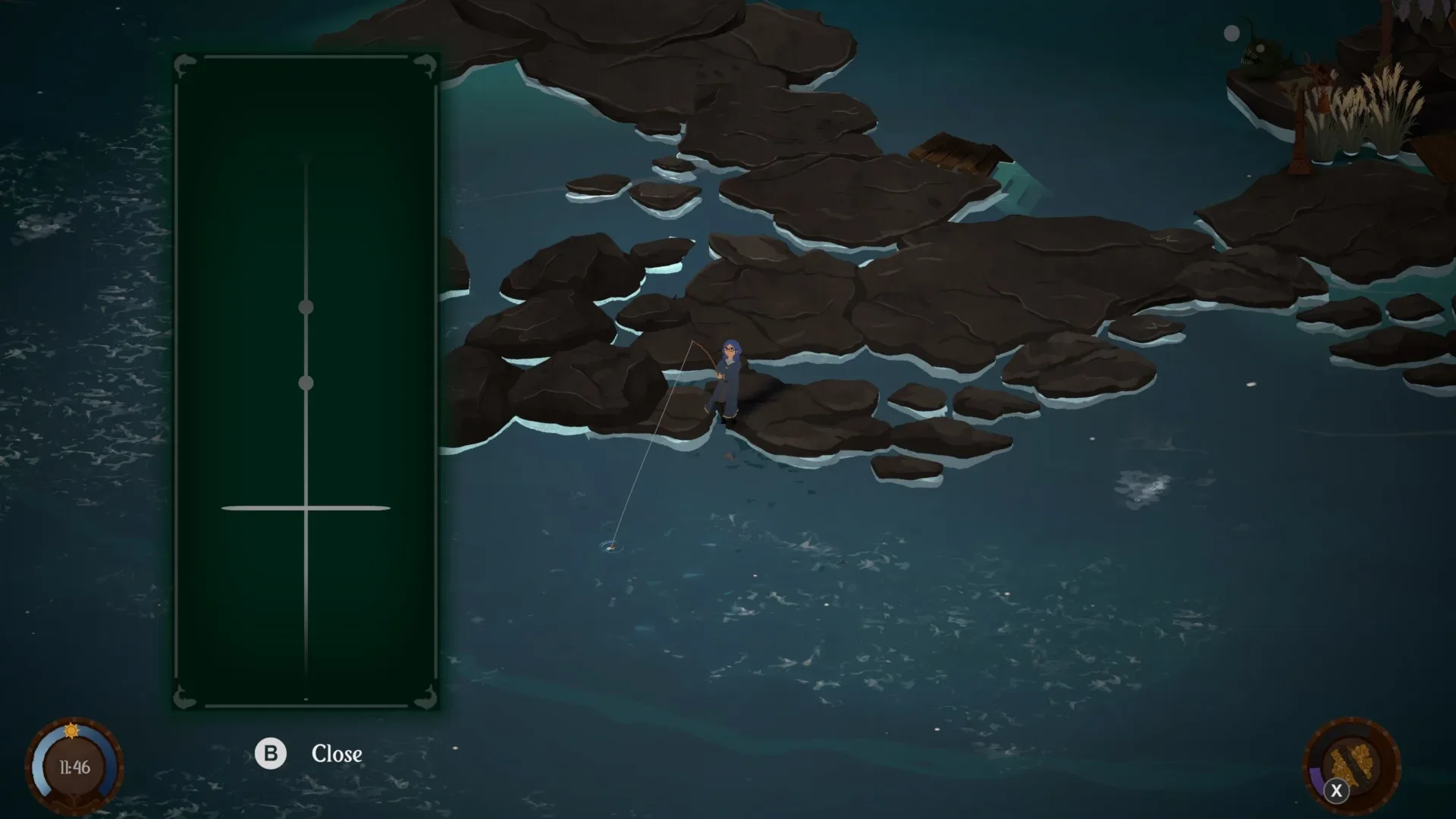
Fishing follows the same musical logic. Each fish appears to have its own melody, turning a usually familiar relaxation activity into another rhythm exercise. Potionmaking likewise has an execution-based layer: ingredients are sorted in a minigame, and better sorting produces higher-quality potions. Across all three activities, Glimmerwick consistently connects competence in a small interactive challenge with the quality or usefulness of the result.
This creates a different kind of progression from simply acquiring better equipment. The player is learning songs, becoming more accurate at performing them, raising ingredients and deciding when to turn those ingredients into potions. The garden supports the potion bench; the spells support the garden; the fishing and exploration fill in the spaces between school events. It is a compact web of activities rather than a pile of unrelated diversions.
The garden is a workshop, not just decoration
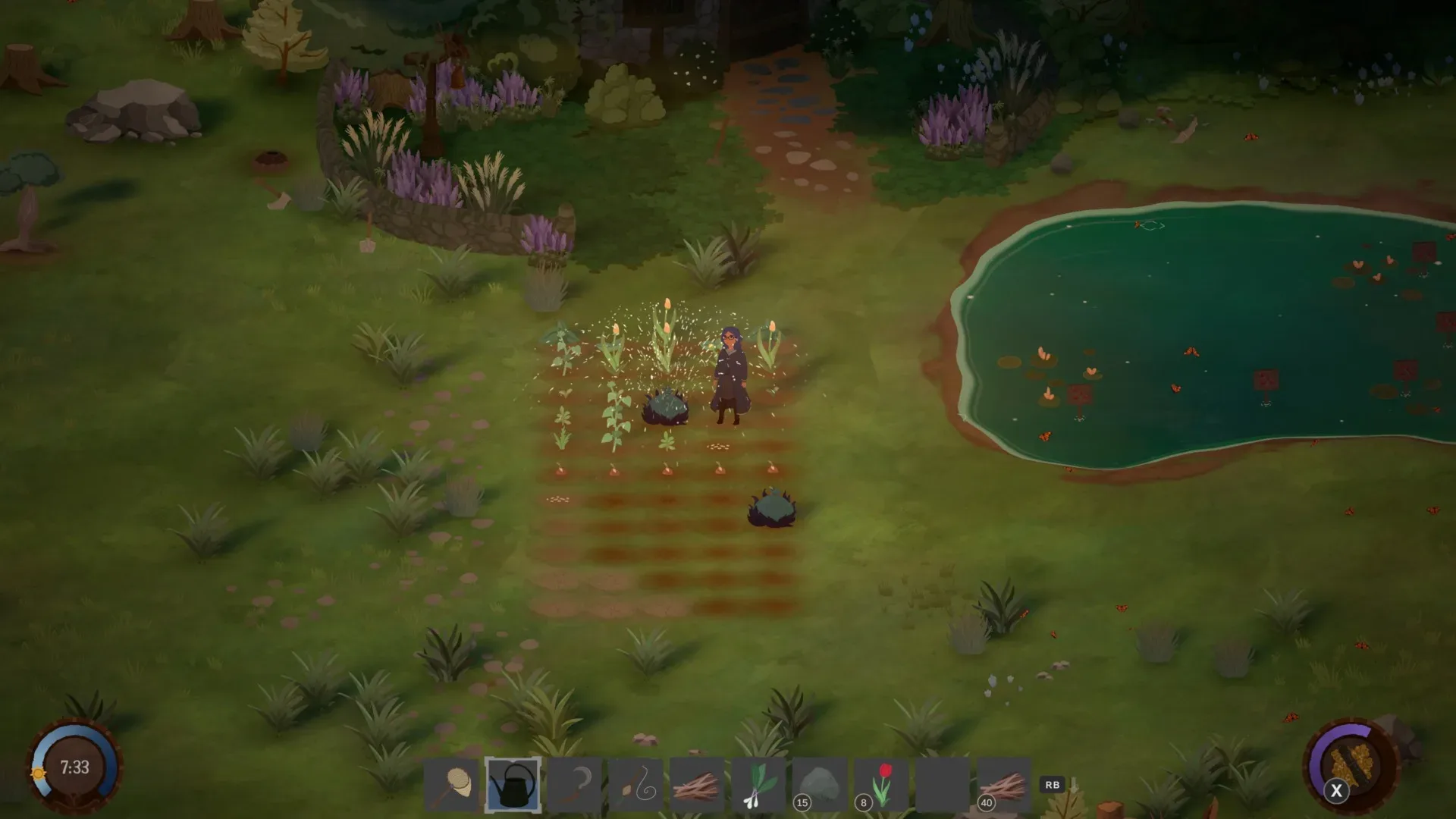
Campus gardening is one of the clearest examples of that web. The grounds begin in poor shape, then slowly improve with magical help and manual attention. Basil, marjoram, multiple flower types and cranberries grown in a pond can be sold, but they can also become potion components. Since people around the town and school regularly request potions, crops feed directly back into social and practical goals.
The flower needed for the plant-reversing potion illustrates why the system works narratively. The player cannot instantly solve the blocked-path problem because the necessary plant has not grown yet. But the wait is not framed as a failure state. It creates an interval in which fishing, town exploration, conversations and other low-stakes activities have room to matter.
That design avoids a common cozy-game contradiction: asking players to enjoy a slow life while continually punishing them for not moving fast enough. Glimmerwick has resource dependencies, but its apparent lack of urgency lets those dependencies feel like seasonal or daily texture instead of a productivity test.
Players interested in games that put farming comfort under sharper pressure may find a useful contrast in this look at a desktop farm shaped by quotas. Glimmerwick’s available details point in the other direction: chores are part of the world’s rhythm, not an overt demand to hit a target.
Discovery replaces the loudest version of quest design
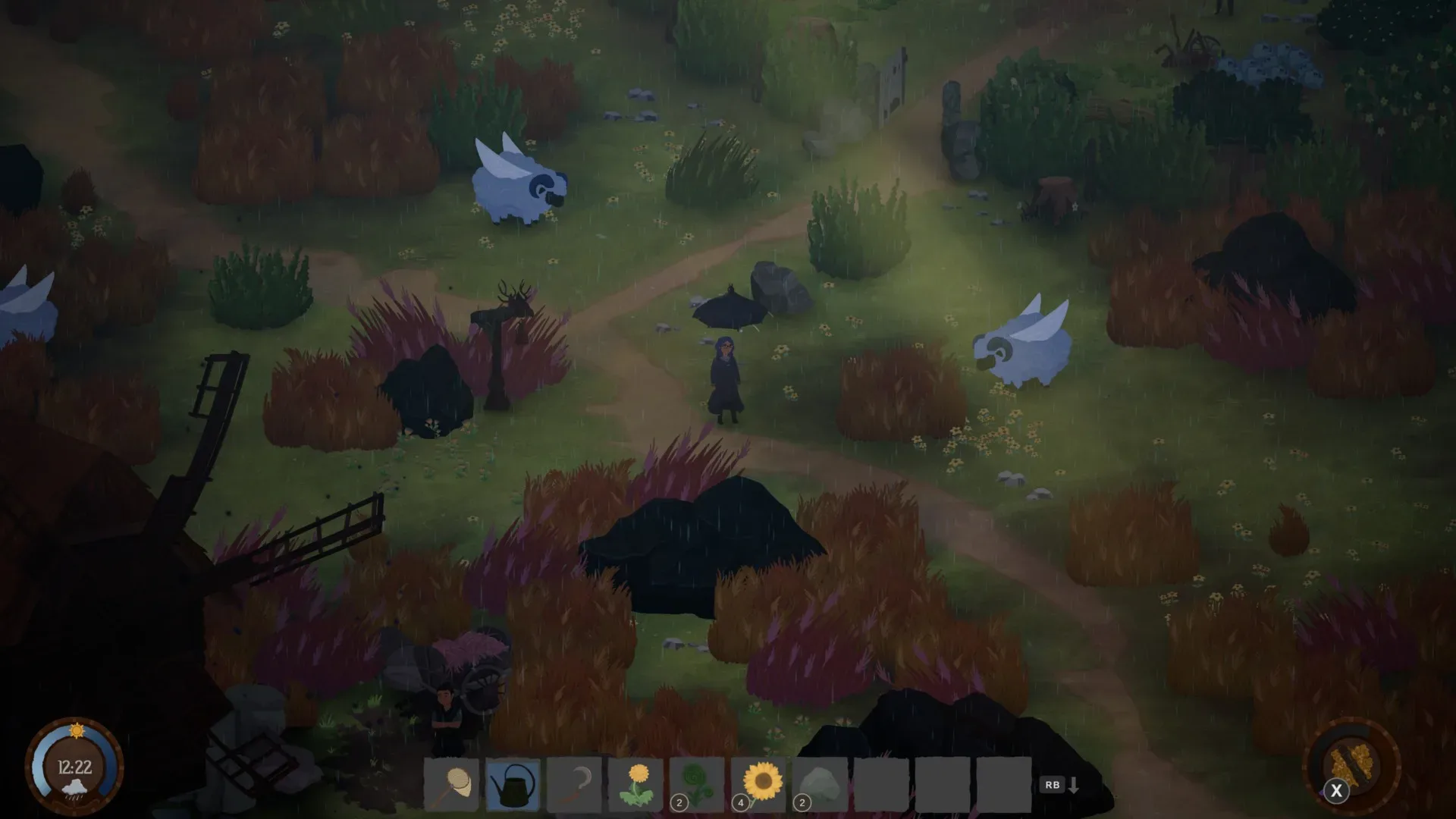
The game’s most distinctive quality may be what it declines to foreground. Characters do not appear to advertise a permanent list of requests through large, insistent quest markers. Talking to someone might reveal something interesting. It might lead to a favor. Or it might not. Shops, odd local residents, an intelligent and grumpy bush south of town, and environmental barriers become sources of information through ordinary exploration and experimentation.
This is a design philosophy with trade-offs. A quest marker is direct: it tells players what matters, where to go and often what reward to expect. Removing or reducing that guidance can create uncertainty, and some players may reasonably worry about missing content. It is not yet clear whether reaching the end of a school term can lock players out of undiscovered activities.
But that uncertainty is also the point. The mill-and-ferry predicament emerged from following loose threads—examining shops, talking to people, noticing the northern blockage and considering a classmate’s potion—rather than accepting a clearly labeled assignment. The steps form a personal anecdote because the player assembled them.
In other words, Glimmerwick favors diegetic discovery: learning through the world and its inhabitants instead of through an interface that stands apart from the world. The term does not mean the game provides no direction. The classmate’s potion, for example, is connected to the main story. It means that much of the optional pathfinding seems to emerge through observation, conversation and curiosity.
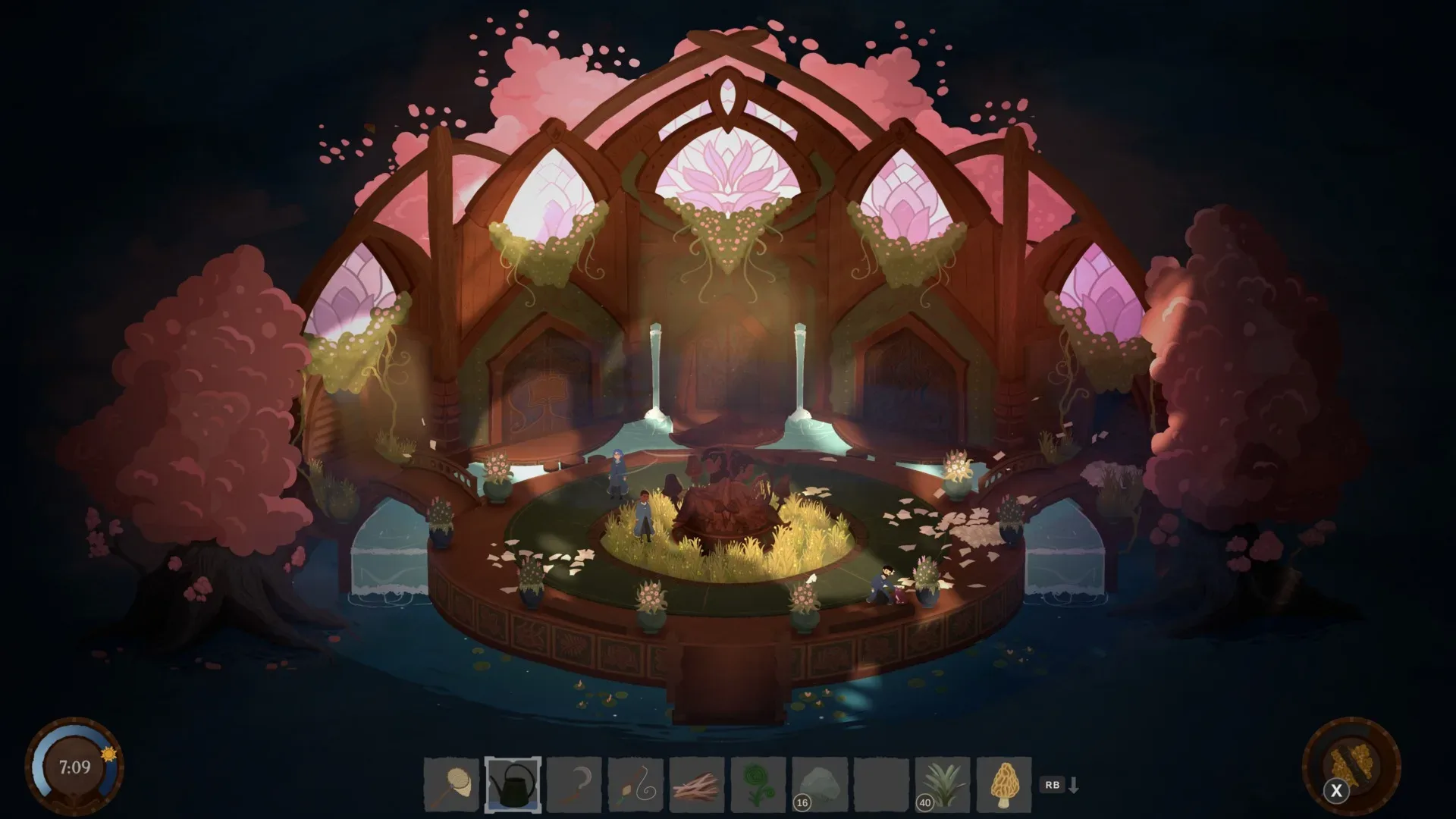
That approach is particularly well suited to an island setting and a school whose scale may initially seem modest. The Etchery is presented as a premier magical institution, yet there are indications it contains more than its first impression suggests. Rather than giving every secret away at orientation, the game seems content to let the player decide whether to poke at it.
A gentler structure with some early limitations
The freedom is not presented as flawless. The central character has a potentially compelling history: they escaped a rigid fundamentalist society, alone and friendless, and arrive at a place that could offer an alternative to that background. The broader plot appears interested in religious zealotry, prescriptive social rules and the question of who gets to decide for everyone else.
Those are weighty ideas, especially in a game that otherwise spends time on pastries, seed growth and fishing melodies. Yet the player character is customizable and relatively neutral, which may limit how much the game can develop that specific history as a personal portrait. The premise has room for a sharper authored protagonist than the available impressions suggest it currently provides.
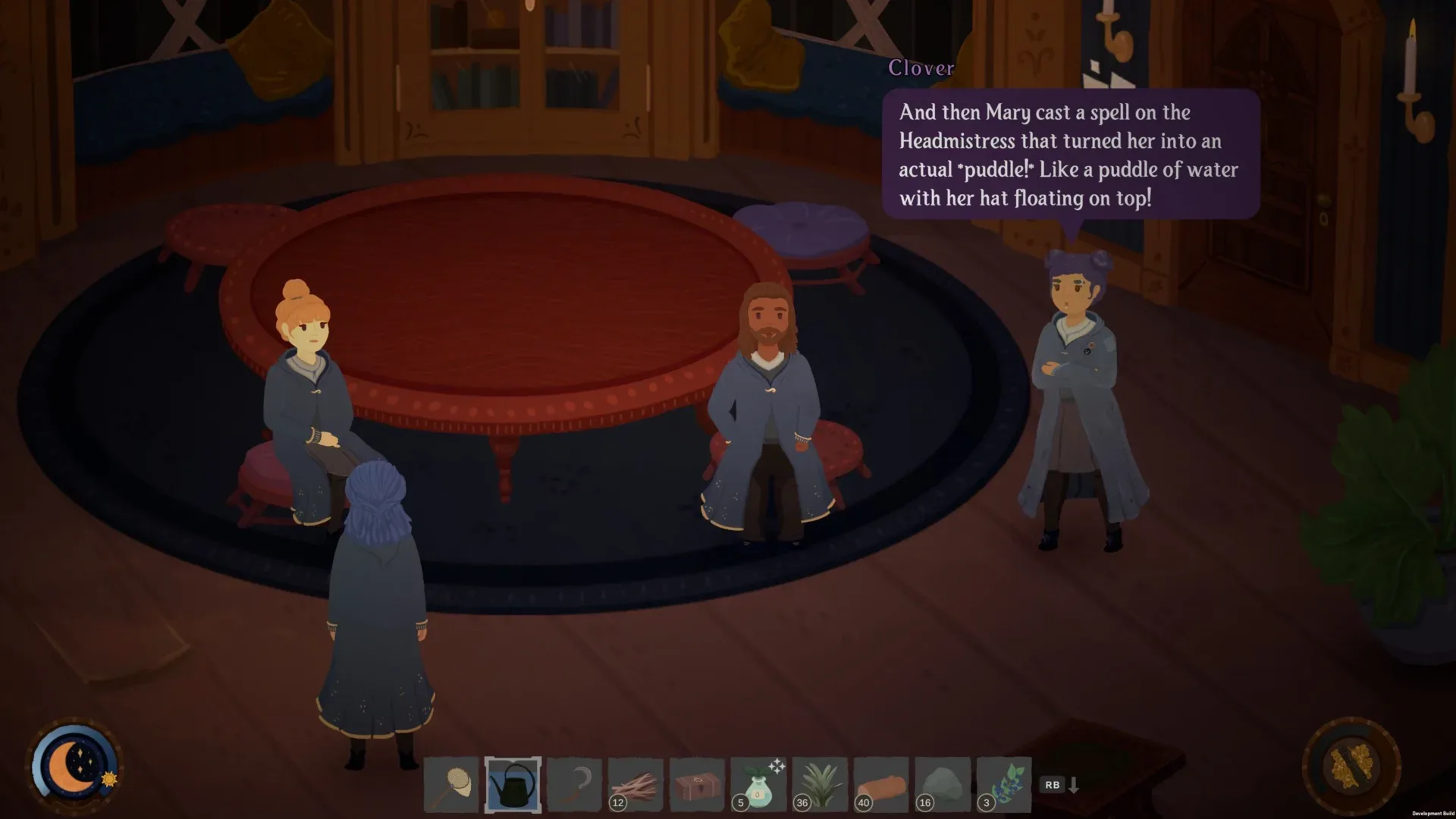
Supporting characters are another tentative weakness. A fish person experiencing extended life on land and enthusiastically discovering kimchi stands out, as does a roommate who damages the fireplace and expects someone else to handle the problem. But many fellow students and major figures do not initially make a strong visual impression. The pulled-back camera, used to display the attractive fantasy landscape, makes this harder when students wear near-identical uniforms.
These are not trivial concerns. A game built around casual conversation needs its people to be recognizable enough that players want to seek them out. Likewise, a story about leaving control behind has greater force when its protagonist feels like a person rather than only a customizable point of view. Still, both observations sit beside a stronger positive: Glimmerwick already appears to understand that a peaceful game needs permission to be peaceful.
Why the lack of urgency matters
There is a meaningful difference between a game having little to do and a game allowing the player to choose what matters today. Songs of Glimmerwick appears to be pursuing the latter. A day can hold a class, a garden task, a potion request or an interesting conversation. It can also hold fishing and little else. The story will continue to stir in the background, but the player is not seemingly scolded for taking an afternoon to play flute in the woods or gather mushrooms.
That makes the game’s premise unusually coherent. Someone fleeing a closed, demanding society does not necessarily need another institution that insists every hour be accounted for. A magical school can be a place for formal learning, certainly, but it can also be a place to recover the ability to wander, experiment and decide what to pursue.
Glimmerwick’s chain of curses, pastries, ferries, roots and flowers is therefore more than a whimsical obstacle course. It demonstrates a world where a problem can remain unsolved for a few days while the player lives around it. For a farm sim built around music, that patience may be its most important rhythm.