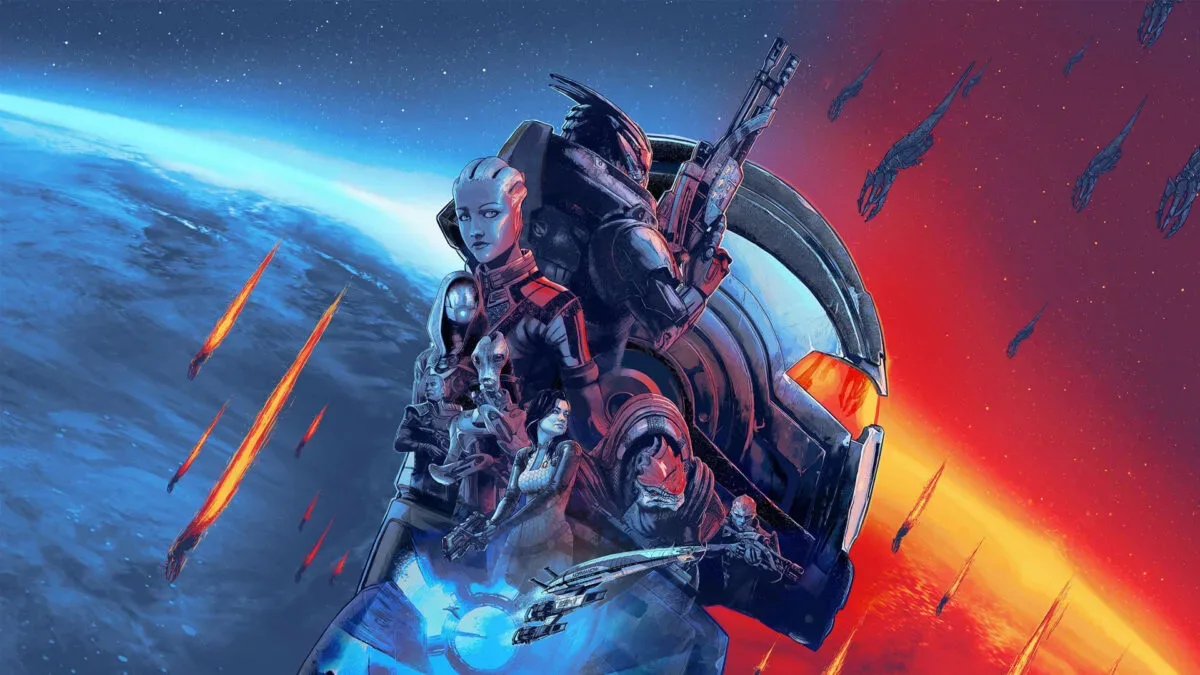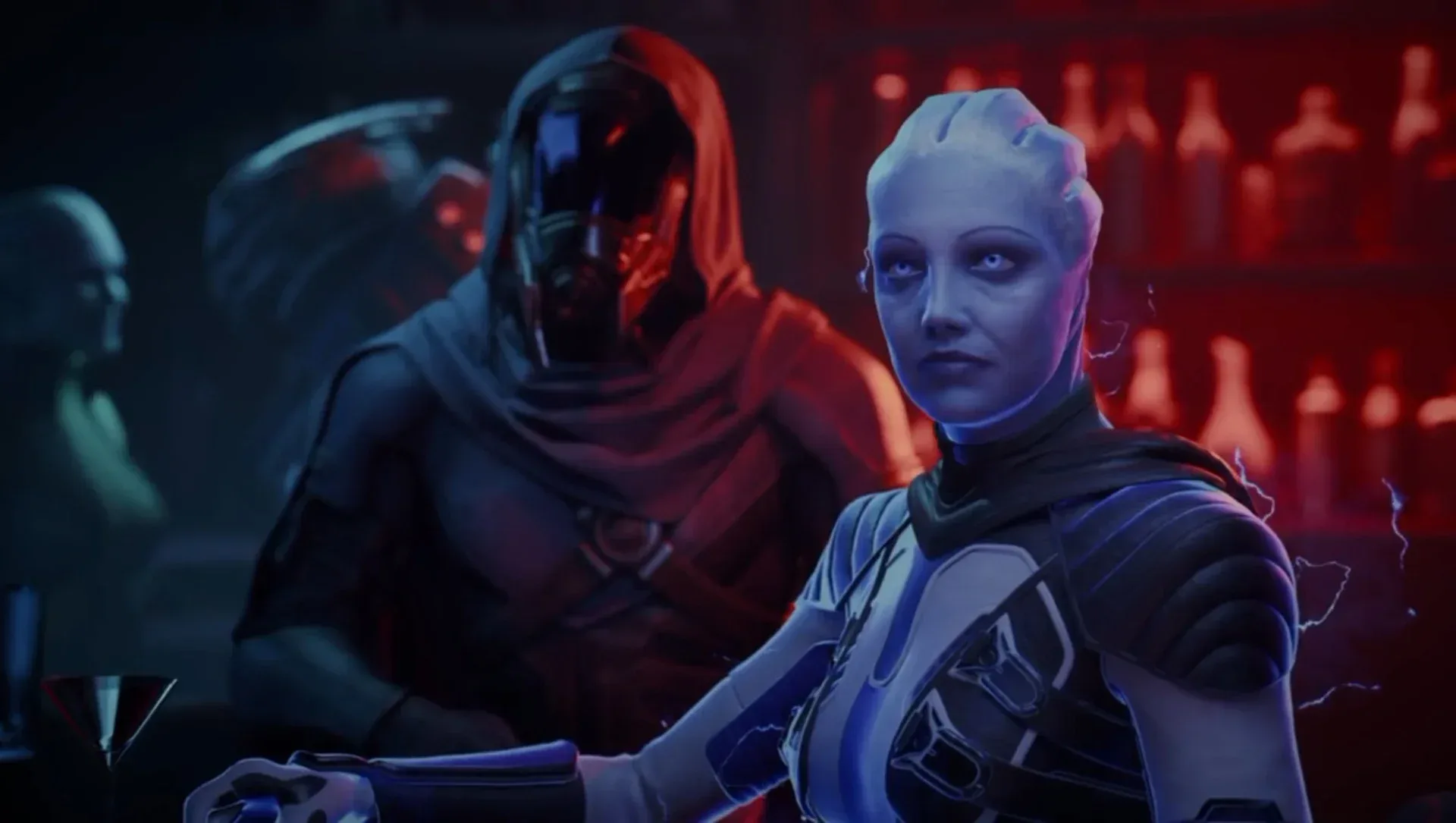
More than 200,000 people have signed a petition asking Electronic Arts to “Save Mass Effect” following BioWare’s closure and the cancellation of Mass Effect: Universe, the proposed fifth entry in the science-fiction RPG series. It is an understandable reaction. A beloved series appears to have lost its next chapter, and fans want to register that the loss matters.
But “save” is carrying a lot of weight here. It can mean preserving a world people care about. It can mean giving unfinished creative work another chance. It can mean securing jobs and recognizing the developers who built the series. Or it can mean only one thing: ensuring that a new product bearing the Mass Effect name eventually reaches shelves and digital storefronts.
Those are not interchangeable goals. The petition’s proposed solutions—continued EA-backed development with adequate funding, staffing, and time, or licensing the property to an outside studio—make the tension clear. Both imagine a route to more Mass Effect. Neither, by itself, guarantees a route that protects the people and accumulated creative knowledge behind it.
A franchise is an IP, but it is also a workforce
In business terms, Mass Effect is intellectual property, often shortened to IP. That means the protected name, setting, characters, designs, and other creative elements controlled by its owner. IP can be licensed: the owner can authorize another company to make a work using that universe under agreed conditions.
That definition is useful, but it is incomplete as an explanation for why a game resonates. A license can provide a studio with permission to use Mass Effect’s setting. It cannot automatically transfer the professional relationships, working methods, institutional memory, narrative instincts, technical experience, or individual creative judgment that shaped earlier games.
Large games are collaborative productions. Writers, designers, artists, programmers, producers, quality-assurance staff, audio teams, and many others turn a broad concept into a playable RPG. The familiar public tendency to attach a series to one or two prominent figures can obscure that reality. No single person “is” Mass Effect, but neither is Mass Effect a simple recipe that any team can reproduce merely by receiving the legal rights to use its name.
This matters especially when a studio closes. The loss is not only an office or a logo. It is a disruption to a network of people who know how a project was being made, why prior decisions were made, what had been tried, and what remained unresolved. A future game may still be possible, but it would be a new production with a different set of conditions—not a seamless continuation achieved by moving a folder from one company to another.
What the petition actually asks for
The campaign does not simply demand that the former BioWare staff be reassembled. Its central request is for EA either to fund and resource Mass Effect’s continued development appropriately or to consider external development and licensing arrangements.
Related coverage includes Saving Mass Effect Means More Than Demanding Another Game.
The petition calls for proper funding, sufficient staffing, and time for Mass Effect, while also leaving open the possibility of licensing the IP to a studio positioned to continue it.
That framing is more measured than a promise that signatures can compel a new game. Organizer Joe Smith has also stressed that BioWare developers are central to the series’ identity, that their contributions deserve recognition, and that no proposal has a guaranteed outcome. The petition does not claim it can restore BioWare as an organization, nor does it present its signature count as proof that EA will greenlight a project.
Those caveats are important. A petition can show that a community is engaged, grieving, and willing to speak publicly. It cannot supply a development budget, solve licensing negotiations, re-create a closed studio, or determine whether a prospective project is creatively and financially viable. Every path would still require EA’s approval, financing, and a capable team.
The campaign’s openness to external development is therefore both its practical strength and its most contentious feature. It acknowledges that bringing back every former employee and resuming work exactly where it stopped may not be realistic. At the same time, it invites the question that has divided supporters: is a Mass Effect revival meaningful if its central achievement is simply getting another Mass Effect-branded game made?
BioWare’s legacy was never one person’s work
It would be a mistake to answer that question by treating only the earliest trilogy-era leadership as authentic and everyone who came later as a substitute. Casey Hudson, the original creative director for the franchise, departed BioWare in 2020 and was not part of the development of Mass Effect: Andromeda or the work completed on Universe. That does not invalidate the people who continued contributing to the series after him.
There were experienced hands across the later team. Michael Gamble, who had worked on the series since Mass Effect 2, led the Universe team until its final days. Other developers with trilogy experience were also involved. BioWare itself described its latter-day team as containing several studio veterans.
This is the useful middle ground often lost in arguments about a studio’s identity. An acclaimed series does not belong to one auteur, and it does not belong solely to a corporate owner. It emerges from a large group of people, many of whom have different tenures and different kinds of expertise. Some may leave; new people may make vital contributions; a veteran team can evolve without becoming illegitimate.
But that same fact sharpens the concern around a handoff. If Mass Effect’s quality depended on a broad, changing collection of collaborators, then its future should not be evaluated only through the abstract question of whether another studio is “qualified.” A qualified team is essential, but so are the working conditions that let such a team make difficult choices, revise ideas, and develop something more substantial than a familiar logo and a checklist of expected references.
“Properly resourced” should be more than petition language
The petition’s most meaningful phrase may be “properly resourced.” In game development, resources are not just money. Funding affects staffing, but staffing does not merely mean a headcount. Teams need time, stable leadership, clear scope, tools, production support, and the ability to make decisions without treating the people making the game as interchangeable inputs.
Time allocation matters because a large RPG is not finished simply when its broad premise exists. Narrative branches need to be written and implemented. Systems must work together. Missions, environments, cinematics, audio, accessibility, and testing all need coordination. Changes in one area can create consequences in another. A studio given insufficient time or unstable staffing may still ship a game, but “a game shipped” is a far lower bar than a carefully made continuation of a series with Mass Effect’s history.
EA recently cut 400 jobs from its workforce, making the request for adequate resourcing especially stark. Fans can reasonably ask a publisher to value Mass Effect. They can also ask what that value means in practice. Does it mean preserving the name as an asset for future use? Or does it mean investing in the people, time, and structures necessary to create work worthy of the name?
Those questions are not anti-franchise. They are the opposite. They reject the idea that affection for a series should obligate audiences to accept any future installment, under any conditions, from any configuration of developers, as long as it offers the recognizable promise of returning to a cherished universe.
What an outside studio could—and could not—do
An external developer could conceivably make a strong Mass Effect game. There is no factual basis to say that every team outside BioWare would fail, just as there is no basis to say a new team would automatically capture what fans loved. A studio could recruit former BioWare developers if those developers chose to participate. It could retain people with direct franchise knowledge, build a team with the right disciplines, and approach the material with care.
Yet even that optimistic case is a proposal, not an assurance. It depends on decisions by EA, the availability and interest of developers, financing, and the capability of whichever team is selected. It also depends on what survives of the abandoned project and what, if anything, a new group could responsibly continue.
That distinction is important for Mass Effect: Universe specifically. The game was announced in 2020 and would have been the series’ fifth entry, but a cancellation does not mean a replacement team could simply resume at the same point. Development work is shaped by the people doing it. New leadership may interpret material differently, change the scope, or begin anew. Calling that outcome a “rescue” may be emotionally appealing, but it risks disguising a more complicated reality: a different team may make a different Mass Effect game, rather than complete the one that was lost.
There is also a human dimension that cannot be solved by successful recruitment. Inviting former developers to join a new project might create an opportunity for some people. It does not undo the closure, guarantee their participation, or make the prior loss acceptable. Fans should be wary of a model in which the disappearance of a studio is treated as a minor inconvenience so long as enough talent can later be gathered around the same corporate property.
Demanding better means keeping people in the picture
There is no wrong way to grieve a canceled game, and it is not cynical to hope that Mass Effect eventually returns. The series means a great deal to many people. Its fans are not foolish for wanting another adventure in that universe, and the campaign’s organizers have been clear that they do not offer signatures as a guarantee of a new release.
Still, support for Mass Effect should be specific about what is being supported. “Save Mass Effect” can be a demand for the franchise’s future, but it should also be a demand that the people who create games not vanish from the story once a recognizable IP remains. The health of a creative series cannot be reduced to whether its owner retains the legal ability to commission another installment.
That is why the debate around the petition is valuable rather than pedantic. It forces a clearer definition of success. A licensing deal, an outside developer, or a future sequel might be welcome news someday. None should be treated as a complete answer to the loss of a studio and the developers whose work gave Mass Effect its meaning.
Fans looking for more context around the uncertain future of the series can also read about Austin Wintory’s unreleased musical vision for Mass Effect 5. Whatever comes next, the more useful version of “saving” the series is not merely demanding another product. It is insisting that a future Mass Effect be made with the resources, respect, and creative labor that made people care in the first place.