New reporting about the canceled Mass Effect: Universe paints a more detailed, and more troubling, picture of the project’s final stretch at BioWare. Anonymous developers who were laid off following the studio’s closure reportedly said the team removed a flag resembling a Pride flag from a video presentation intended for EA management. The stated concern was not a technical issue or an artistic rethink, but the possibility that the image could create friction with executives.
That reported presentation change matters because it concerns more than a single background detail. It points to an atmosphere in which developers allegedly anticipated a negative response and adjusted a project before receiving a direct instruction. The available account does not establish that EA executives ordered the flag removed, or that any executive ever saw it. Instead, it describes a precaution taken by a team that reportedly felt the next Mass Effect was not a priority within EA.
EA has been approached for comment on the allegation, but no response is included in the available information. Until there is an on-the-record explanation from the company or further corroboration, the details should be understood as claims from anonymous former employees rather than confirmed findings.
What the report says changed in the demo
The specific claim is that BioWare removed a flag that was seen internally as too similar to a Pride flag ahead of a demonstration for EA management. A journalist who reported on the accounts later clarified that the move was understood as an attempt to anticipate potential negative feedback given EA’s ownership structure, rather than an effort by the development team to conceal inclusive material on its own initiative.
That distinction is important. A presentation demo is not necessarily the finished game, and a removed visual in a demo does not prove that a comparable element would have been cut from the shipped release. In this case, of course, there will be no shipped release: BioWare has closed and Mass Effect: Universe has been canceled. The practical effect is that players cannot compare an earlier build with a final version to determine whether the proposed game’s broader creative direction changed.
Still, demos are consequential internal documents. Teams use them to communicate a game’s tone, identity, technology, story priorities, and commercial promise to people who control budgets and greenlights. Removing imagery because it might upset decision-makers can shape what a project appears to be, even when no formal policy is issued. It can also influence what a team decides is safe to include in future pitches, trailers, art briefs, or story discussions.
Why anticipation can have real creative consequences
The dynamic described here is often called self-censorship or anticipatory compliance: people alter choices to avoid an expected objection, penalty, or confrontation before an authority explicitly demands the change. It is different from a direct executive mandate. A direct mandate leaves a clear instruction and an identifiable decision; anticipatory compliance can be much harder to document because the adjustment happens lower in the organization, often amid uncertainty.
That is why the reported flag removal deserves careful language. It should not be reported as proof that EA banned Pride imagery, because the supplied information does not support that claim. But it also should not be dismissed as meaningless simply because there was reportedly no direct order. If former team members removed a visual out of fear of a management reaction, that fear itself may have affected the way the project was presented.
Related coverage includes Report Details Mass Effect: Universe's Canceled Development and Demo Changes.
The concern lands in a wider period of scrutiny over representation and corporate decision-making in games. Questions about how ownership, investor expectations, and senior leadership affect creative teams are not confined to one franchise. Recent debate around promised cosmetic representation in another major online game illustrates how closely players watch the gap between inclusive messaging and the decisions that follow. That discussion has also surfaced around housing cosmetics and representation, although it concerns a separate company and a different set of circumstances.
What was reportedly planned for Mass Effect: Universe
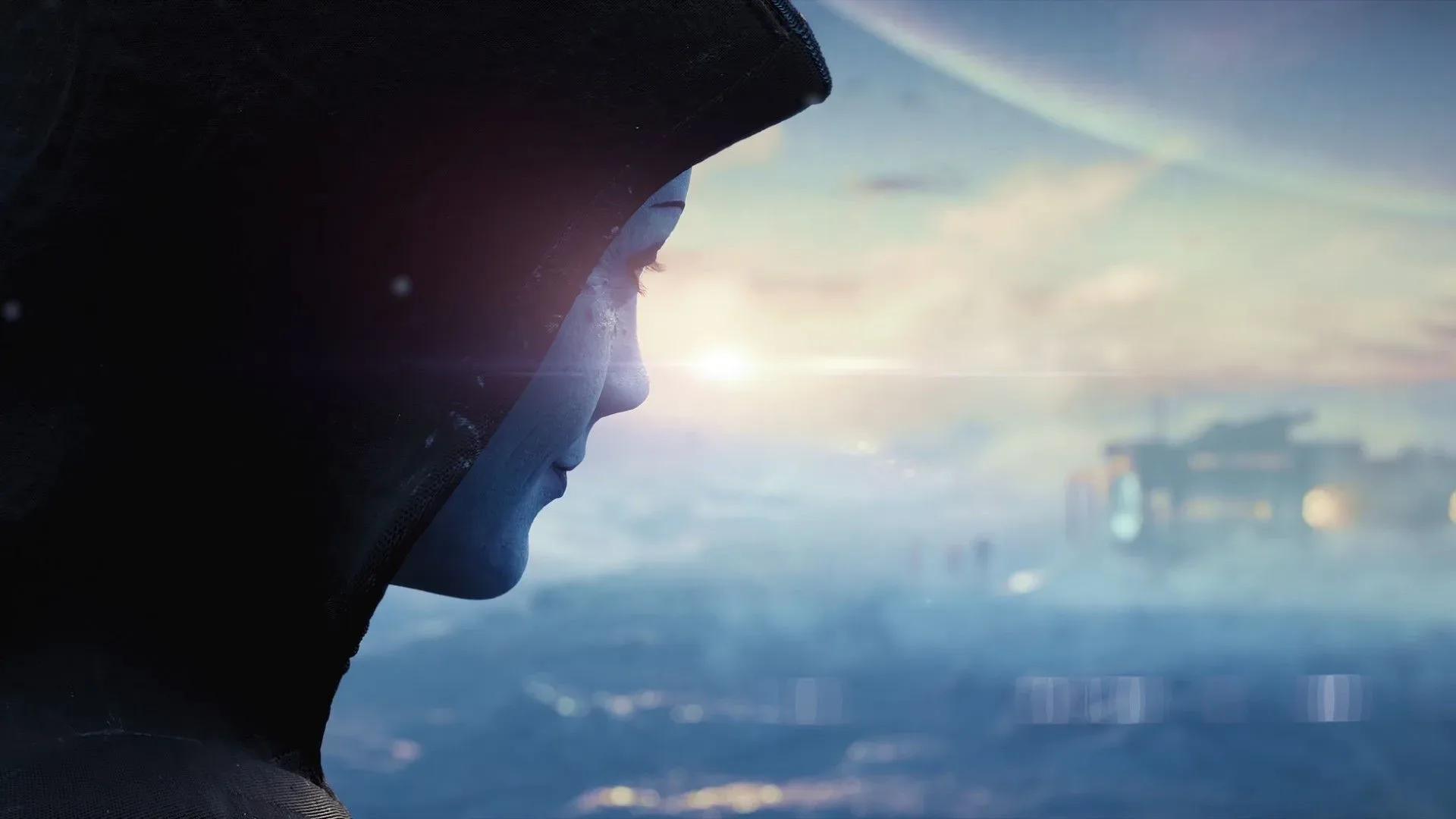
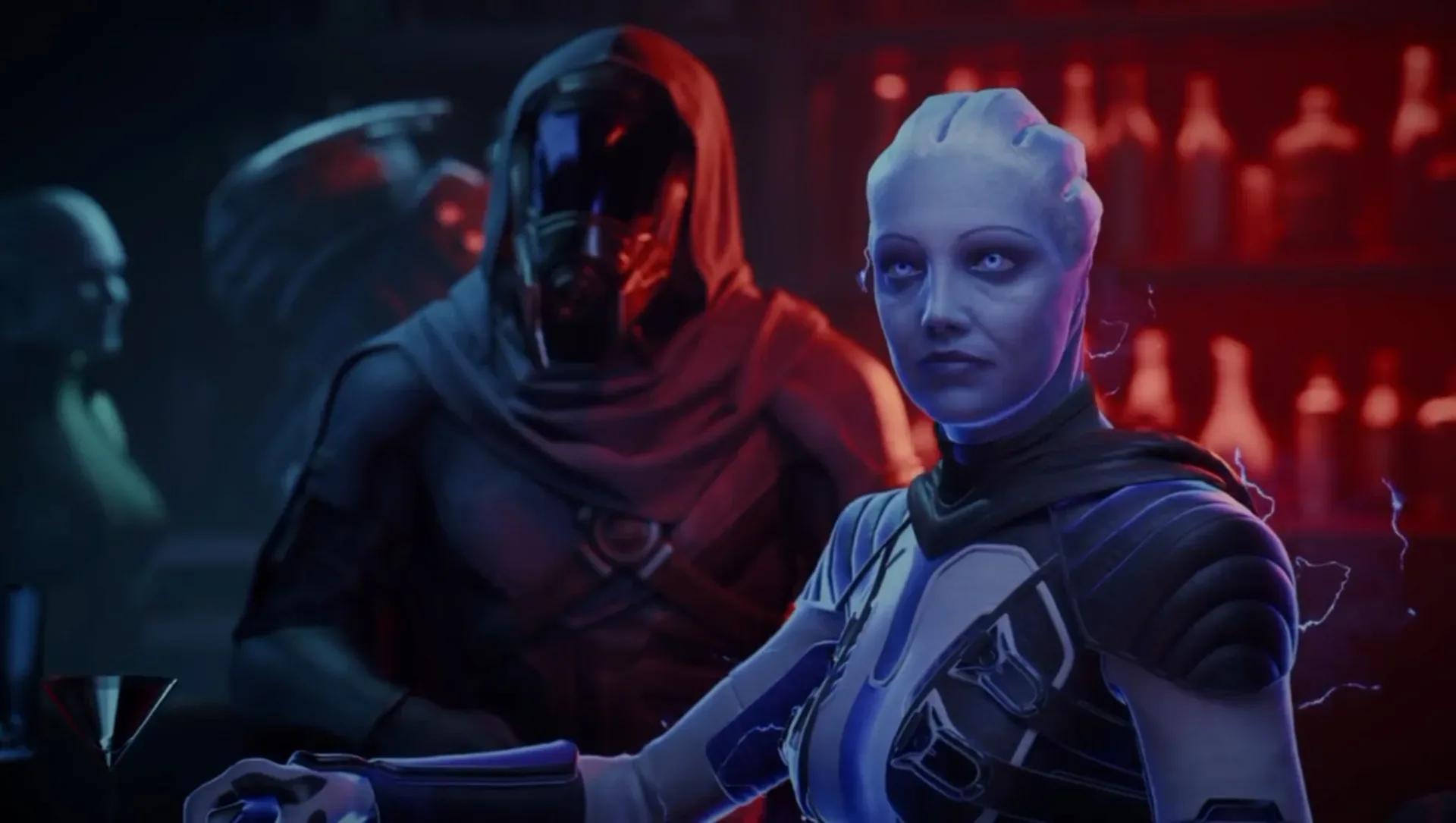
Before its cancellation, Mass Effect: Universe was reportedly envisioned as a new chapter set 600 years in the future. It would have featured a new protagonist, while Liara T’Soni—one of the original trilogy’s companions—was expected to have a major role. The project reportedly had concepts covering large portions of its story and narrative-design plans intended to incorporate choices from across the series.
Those details suggest BioWare was pursuing a balance familiar to long-running role-playing franchises: a new entry point for new characters and a continued connection to the decisions and relationships that made earlier games personally meaningful to fans. “Narrative design” refers to the work of integrating storytelling with player interaction: how choices are presented, what game states they affect, how dialogue and quests reflect them, and how consequences are communicated. A plan to incorporate choices across a franchise can therefore be much more complicated than simply referencing old characters or events.
The report indicates the game remained a long way from completion despite this groundwork. Its team had reportedly missed some deadlines, but former developers characterized development as going well overall. BioWare was said to be aiming for a late-2028 release.
That schedule, if accurate, underlines how early the project still was in commercial terms. A target window is not a release commitment, particularly for a project that had not been formally launched to the public in the information provided. It is better read as a planning goal that gives some sense of the project’s intended runway before its cancellation.
The engine change reportedly helped development
One of the more concrete production details concerns the game engine. The team reportedly moved to Unreal Engine after BioWare’s experience using Frostbite Engine for Mass Effect: Andromeda. Former developers indicated that the switch was helping the project progress.
A game engine is the foundational software framework teams use to build a game. It commonly provides tools or systems for rendering graphics, animation, audio, physics, asset management, scripting, and more. Choosing an engine does not determine whether a game will be good, but it can heavily affect how quickly teams can prototype, iterate, fix problems, and bring separate disciplines together.
For a large narrative RPG, workflow flexibility is especially valuable. Designers, writers, artists, animators, cinematic teams, and engineers all need to revise connected pieces of content. If tools are difficult to use or poorly suited to a studio’s needs, routine changes can become slower and more expensive. The report’s claim that Unreal Engine was helping does not tell us how far the team had advanced or which systems were complete. It does, however, complicate any simplistic suggestion that the project was canceled because it was plainly failing in development.
Based on the accounts presented, the more immediate obstacle was whether leadership believed the proposals made a strong enough case to continue funding the game. Development quality, schedules, technical direction, and executive confidence are related but distinct issues. A project can have a workable production path and still be canceled if its owners do not see it as an acceptable investment.
Ownership anxiety is central to the account
The reported concerns emerged after EA’s acquisition by the Saudi Arabian Public Investment Fund, Silver Lake Partners, and Affinity Partners. The acquisition was previously followed by assurances to employees that the new owners would not make creative decisions, amid employee fears about what the ownership change could mean for studios and series with a history of inclusive characters and themes.
The concerns described by former BioWare staff centered in part on Saudi Arabia’s record of human-rights violations against queer people and on Affinity Partners founder Jared Kushner’s ties to the Trump family. These facts do not, on their own, demonstrate a particular instruction about Mass Effect. They do help explain why a team might believe that Pride-adjacent imagery could receive heightened scrutiny, especially while trying to persuade new management to keep an expensive project alive.
There is a meaningful difference between ownership not personally dictating a story beat and ownership having no effect on creative conditions. Senior management choices can influence what gets funded, what risks people think are tolerable, which projects appear strategically valuable, and how confidently staff present material. The reported removal of the flag, if accurately described, is an example of the latter kind of pressure: indirect, pre-emptive, and difficult to measure from outside the studio.
What remains unknown
The reporting provides a partial view of a canceled project, not a complete production record. Several core questions remain unanswered:
- Whether EA management gave any feedback about the flag, or ever viewed the version containing it.
- Who made the final call to remove it and whether it was debated within BioWare.
- Whether similar changes were made to other material in the project.
- What combination of financial, strategic, scheduling, and creative factors led to cancellation.
- Whether any assets, systems, or narrative ideas from the project could be used elsewhere in the future.
None of those unknowns changes the immediate loss for fans and former staff: a new Mass Effect reportedly built around a distant future, a new lead, Liara’s return, and franchise-spanning choices will not reach release in its planned form. For the people who worked on it, the story is also about a studio closure and layoffs, not merely an unreleased game becoming another piece of series lore.
For players, the most responsible response is to separate the confirmed outcome from the still-developing allegations. BioWare is shuttered, and Mass Effect: Universe is canceled. The project reportedly had a late-2028 internal target, a new protagonist, Liara in a significant role, a 600-years-later setting, and a move to Unreal Engine. The Pride-like flag allegation comes from anonymous former developers and is presented as an effort to avoid anticipated executive friction—not evidence of a documented directive. That nuance does not make the claim less concerning; it explains precisely why further clarity from EA would matter.