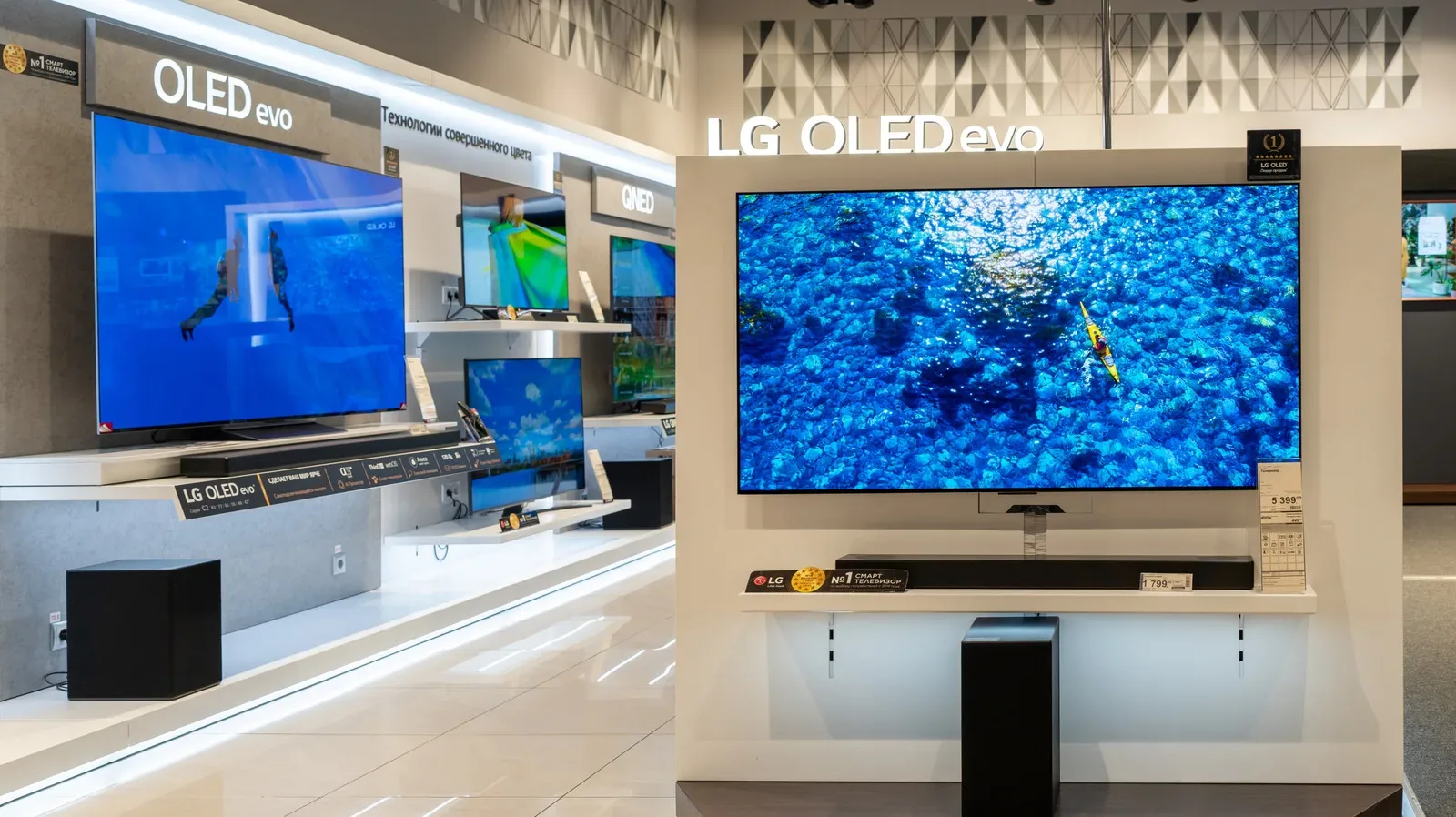
Choosing between a Samsung and LG OLED television is not a simple contest of which company has the larger number on a specification sheet. Both brands occupy major positions in OLED, but their televisions can be built around notably different panel approaches. Those differences affect color, brightness, reflections, text rendering and the kind of room in which a TV makes the most sense.
For players, that distinction matters beyond movie night. A display that looks spectacular during a dark HDR game can be a less comfortable fit in a sunlit shared room. A television’s operating system, long-term update commitment and HDR support also shape the ownership experience after the initial setup. There is no universally correct winner here: the better choice depends on the panel in the specific model, the light in the room and which compromises a buyer is prepared to make.
The first question: which OLED panel is actually inside?
“OLED” describes a display family, not one uniform image-making method. Three panel types frame the Samsung-versus-LG discussion: WOLED, QD-OLED and RGB Tandem OLED. Understanding those labels is more useful than treating either brand name as an automatic guarantee of a particular viewing result.
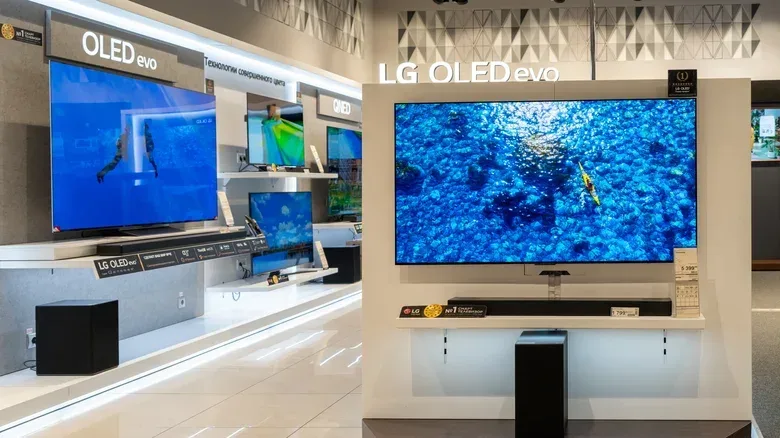
LG helped establish WOLED as the common OLED approach. Its early OLED work included the 15-inch 15EL9500 in 2010, followed by a 55-inch television in 2012. WOLED remains central to LG’s lineup and uses a white light source with red, green, blue and white filters. The white subpixel is important: it helps lift image brightness after light has passed through the color filters.
The trade-off is text clarity. In practical terms, text rendering refers to how cleanly a TV draws the fine edges of letters, menus and other interface elements. It can matter to anyone who uses a television as a large PC display or spends significant time reading dense game UI. A WOLED’s extra white subpixel can bring brightness benefits while making this particular aspect of image detail less ideal.
WOLED’s strength is its suitability for environments with substantial ambient light. Ambient light is light already present in a room, whether it comes from windows, lamps or ceiling fixtures. A bright shared living space places a different demand on a screen than a dim, controlled media room. That context is often more decisive than a headline claim about which panel has the strongest color.
Samsung re-entered the OLED TV market in 2022 with a major focus on QD-OLED. This design begins with a blue light source and uses red and green quantum dots to create color. A quantum dot converts light into a different color rather than simply filtering unwanted portions out. That distinction underpins QD-OLED’s key advantages: a broad color gamut and greater energy efficiency than the filtering-based approach described above.
A color gamut is the range of colors a display can reproduce. A wider gamut does not mean every scene will look better by default, but it gives a television more scope to present richly saturated colors when the content and processing call for them. Samsung’s QD-OLED panels are positioned as especially strong in color saturation and HDR presentation. Their efficiency also theoretically supports longer life, though that should not be read as a promise about the lifespan of every individual set.
Related coverage includes Samsung vs. LG OLED TVs: Panel Types, Room Light and Software Differences.
The catch is room light. Direct or strong light hitting a QD-OLED panel can introduce a magenta-colored glare. That does not make QD-OLED a poor technology; it means a room with uncontrolled daylight can undermine one of its most attractive picture propositions. Dimming or limiting nearby light sources can mitigate the issue, but the room must allow for that adjustment.
RGB Tandem OLED is a third approach. It uses multiple emissive layers and a striped subpixel arrangement to increase brightness, with some TV models reaching more than 1,000 nits per pixel. A nit is a measure of display brightness. Higher brightness can be valuable when a scene contains brilliant highlights or when a television has to compete with a brighter room.
RGB Tandem panels do not use quantum dots, however, and therefore may deliver poorer color accuracy than Samsung’s QD-OLED technology. They also carry high manufacturing costs, making them a premium proposition. The important lesson is that brightness, color and price do not all move together in a straight line. A panel can be extremely bright without automatically matching another design’s color behavior.
Room conditions decide more than a spec-sheet duel
The most useful buying question is not “Which panel is best?” but “What will this panel have to overcome where I watch or play?” Samsung’s QD-OLED technology has a compelling color advantage and is especially well suited to HDR, yet it is not at its most comfortable under strong ambient light. Its tendency toward magenta glare under direct light means placement and window control are part of the purchase decision.
LG’s WOLED approach is better suited to high-ambient-light settings. That does not mean reflections disappear. LG provides forms of anti-glare treatment on its OLED displays, but anti-glare is not the same thing as reflection elimination. It can reduce the impact of reflected light without making a brightly lit window or lamp vanish from the panel.
That distinction is easy to overlook when comparing televisions in abstract terms. A set chosen for a dedicated dark room can prioritize QD-OLED’s wide gamut and saturated appearance. A television headed for an open living room may call for a panel better aligned with persistent daylight. Buyers should consider where lamps sit relative to the screen, whether windows face it, and whether the room can be darkened during the hours it is most used.
For gaming, this is also a comfort and visibility decision rather than merely an aesthetic one. Fast-moving, high-contrast HDR imagery can showcase OLED’s strengths, but reflections and glare are distractions no menu setting can fully solve. Players building out a PC setup should approach the display as one component of a wider chain that includes the computer, connections and graphics configuration. Our guide to DxDiag and troubleshooting DirectX, graphics and audio issues covers the Windows-side diagnostic tool that can help establish what a system is reporting before display problems are blamed on a single piece of hardware.
HDR support: Dolby Vision is a firm dividing line
Panel performance is only part of the HDR story. HDR, or high dynamic range, is intended to preserve a wider span between dark and bright portions of an image, alongside expanded color information. It is not a single format. Dolby Vision and HDR10 are separate HDR formats, and support for one does not automatically mean support for the other.
Samsung OLED televisions do not support Dolby Vision. HDR10 is the alternative HDR format in Samsung’s OLED lineup. That is a straightforward compatibility consideration, not a verdict on Samsung’s hardware quality. A buyer whose preferred content or setup depends on Dolby Vision should know the limitation before treating QD-OLED’s color performance as the only deciding factor.
Conversely, Dolby Vision support should not end the comparison by itself. A television still has to fit its room, its software experience and the user’s tolerance for reflections. HDR is the combined result of the display panel, the content format and the viewing conditions. A strong HDR-capable screen in a poorly suited location will not necessarily produce the result a buyer expects.
WebOS and Tizen make the television part of the decision
Modern televisions are also software platforms. LG uses WebOS, while Samsung uses Tizen. This affects daily navigation and, more importantly, how long the manufacturer expects to maintain the TV’s software.
LG’s WebOS support extends for more than five years. Samsung’s latest Tizen OS has an update commitment of up to seven years. Software support does not alter the physical qualities of an OLED panel, but it can influence how confidently someone plans to keep a set in service. A longer stated update window may be meaningful for users who want their television’s platform maintained across several years rather than replacing hardware merely to obtain newer software.
Neither platform is a footnote. It is the interface through which owners use the television and its functions. A buyer weighing Samsung’s HDR10-only position against LG’s broader format compatibility should add software longevity to the same checklist. The preferable balance will differ from household to household.
Brand confidence is part of the value calculation
Technical comparisons can become too neat when they leave out trust. Samsung has faced criticism for quality control and for not clearly identifying panel technologies in certain television models. That lack of clarity is especially frustrating in a category where the precise panel type can materially change the picture trade-offs described above. Buyers should seek clear model-specific panel information rather than assuming that every OLED under a brand follows the same recipe.
LG has had a comparatively more consistent record in this area, but it has faced its own serious criticism. The launch of the G6 brought major quality concerns. LG also drew backlash over privacy terms that permitted the company to record user conversations and sell them to advertisers. The company issued a statement after the response, but the controversy remains relevant for buyers who place a high value on privacy practices.
These issues do not prescribe one decision for everyone. They do explain why “better panel” is incomplete advice. Product quality, transparency, stated support and privacy expectations are legitimate factors alongside contrast, brightness and color.
A practical way to narrow the choice
- Start with light control. A room with strong daylight or many lamps places QD-OLED at a disadvantage because direct light can produce magenta glare. WOLED is better suited to high ambient light, though it cannot erase every reflection.
- Decide whether color saturation or brightness behavior leads your priorities. QD-OLED offers a wider color gamut and excellent HDR potential. RGB Tandem OLED targets much higher brightness through its multi-layer design, but comes at a premium and lacks quantum dots.
- Check HDR requirements before shopping by brand. Samsung OLED televisions do not offer Dolby Vision and use HDR10 instead. Anyone for whom Dolby Vision compatibility is essential should account for that early.
- Treat panel labels as model-level information. Samsung’s criticism around obscured panel information makes it particularly important not to assume a panel type from the logo alone.
- Factor in software lifespan. WebOS is supported for upwards of five years, while Samsung’s latest Tizen OS is slated for up to seven years of updates.
- Include trust and privacy in the checklist. Quality concerns, transparency and the handling of user data can be as important as picture preferences for a long-lived connected device.
Samsung’s QD-OLED models offer an unusually persuasive mix of color saturation, efficiency and HDR appeal when the viewing space can be kept under control. LG’s OLED choices remain highly competitive because WOLED better fits brighter rooms, RGB Tandem OLED pushes brightness in another direction, and LG’s platform supports Dolby Vision where Samsung’s does not. The best OLED is therefore the one whose panel behavior, software and manufacturer practices match the actual room and expectations—not simply the one attached to the most impressive isolated specification.