There is a particular kind of technology argument that makes PC players reach for the power button: the one that treats a personal computer as an inefficiently parked resource rather than a machine somebody bought to use on their own terms.
That is why Sam Altman’s comments about DRAM have landed so badly. Discussing allocation in a constrained memory market, the OpenAI chief executive described it as “quite terrible” for people to have much of the world’s limited DRAM sitting in personal computers and being used only 5% of the time. His alternative is the cloud model: pool scarce hardware in data centers and drive higher utilization.
There is a narrowly plausible reading of that position. Plenty of old, switched-off or lightly used systems do exist, and cloud infrastructure can share computational capacity between many users. But extending that observation to personal computers as a category creates a glaring disconnect. A gaming PC is not a warehouse of spare parts awaiting reassignment. Its memory is a basic, always-available part of an interactive system, and the owner has paid for the ability to use it locally whenever they choose.
The remark also arrives during a reported global shortage affecting RAM and storage, one increasingly tied to the scale of AI data-center construction and model training. For gamers budgeting a build, upgrading a laptop, or watching graphics-card pricing, it is difficult not to hear the statement as a suggestion that consumer computing should surrender ground to industrial AI expansion.
What DRAM does in a gaming PC
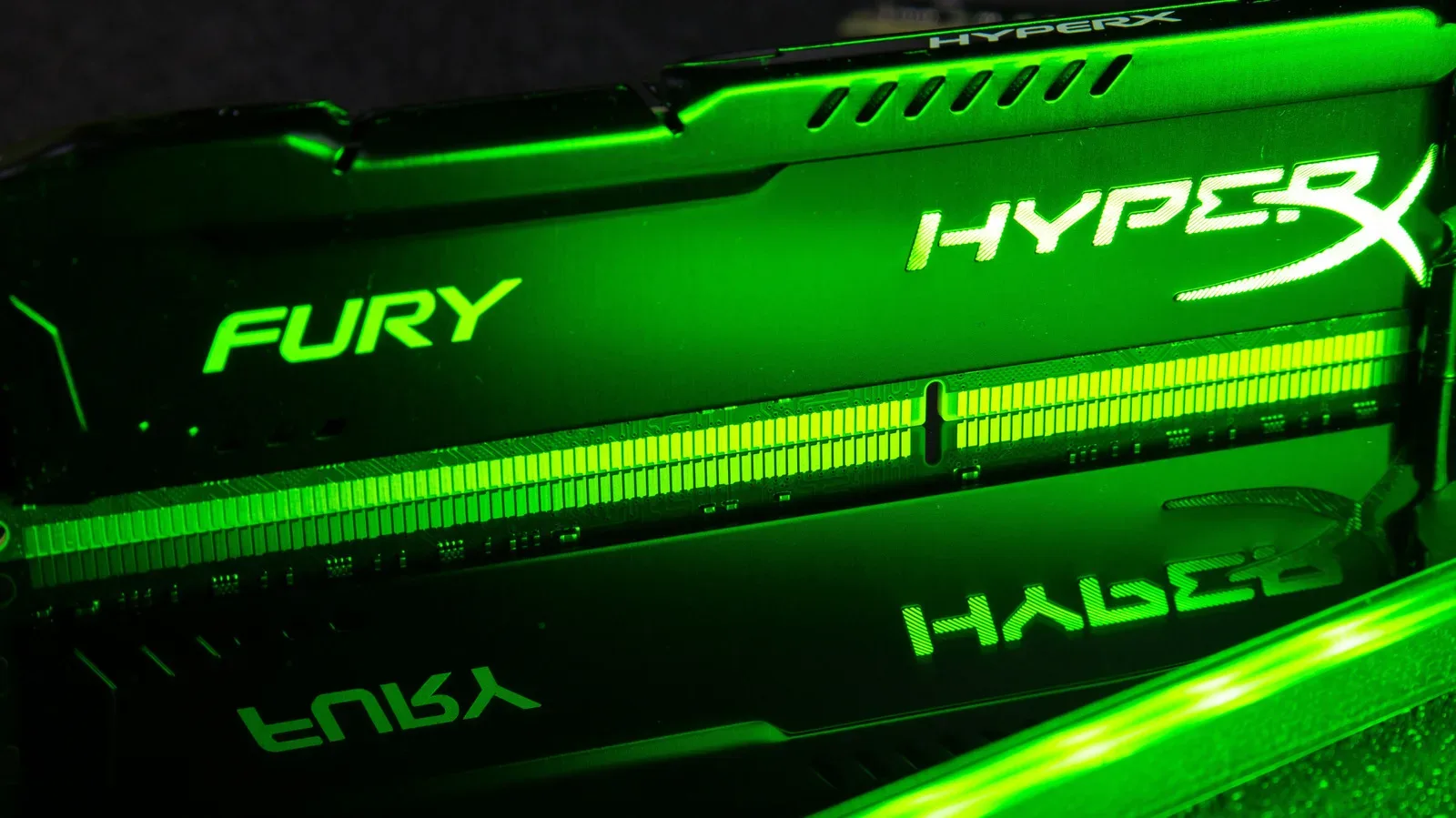
DRAM, short for dynamic random-access memory, is the main working memory in most PCs. It temporarily holds data that the processor and active applications need quickly. It is not long-term storage: that role belongs to an SSD or hard drive. Nor is it identical to graphics memory, though both are important to games.
When a PC is running, its operating system needs memory. So do the browser windows, voice chat, launchers, capture software, background utilities, and the game itself. During play, a title may load and unload assets, handle world data, run game logic, and coordinate with other parts of the system. The exact workload varies by game and by setup, but the central point is uncomplicated: installed RAM is not meaningful only when a single program visibly fills every last gigabyte.
That distinction matters because “utilization” can mean different things. A data-center operator may define it around keeping expensive infrastructure busy across many tasks and customers. A home user values something else: responsiveness, low friction, privacy, control, and the option to launch a game or application immediately. Those are valid uses even if a monitoring graph does not remain at maximum capacity around the clock.
A fire extinguisher is not a wasted purchase because it is not in constant use. PC memory is obviously a different kind of product, but the underlying consumer logic is similar: people buy capacity to make their systems capable when they need them, not to satisfy an external utilization target.
Related coverage includes Sam Altman's RAM Comments Spark Fresh Concern for Gaming PC Owners.
RAM is not a decorative PC component
The 5% figure is especially awkward when interpreted as a description of active gaming machines. A desktop cannot realistically operate as a normal personal computer without main memory; RAM is foundational to booting and running software. A gamer may not be playing every minute of the day, but that does not make the PC’s memory surplus in the ordinary sense of the word.
There is a more charitable interpretation. Altman may have been referring to unused, abandoned, or very lightly used computers rather than the machines owned by people actively buying parts and playing games. That reading softens the direct insult to players, but it does not solve the broader concern. The public discussion was about a globally constrained supply of DRAM, while consumers face the consequences of that constraint at checkout.
It is also worth separating a computer being idle from memory being recoverable. RAM installed in an old desktop is not automatically a practical contribution to a modern data center. Compatibility, logistics, reliability requirements, physical collection, testing, and infrastructure design all matter. The supplied information does not establish that idle consumer RAM could simply be gathered and turned into the kind of memory capacity required for large-scale AI operations.
Why the comments have become a gaming-PC issue
The frustration is inseparable from the supply picture. Samsung, one of the world’s largest memory manufacturers, reportedly reached a supply deal with OpenAI for 900,000 DRAM/HBM wafers per month. The reported volume has been described as roughly 40% of global RAM manufacturing output. A further Samsung agreement was reportedly negotiated amid the shortage.
HBM, or high-bandwidth memory, is a form of memory designed to move data at very high speed and is particularly relevant to advanced compute workloads. It is not simply the same thing as the conventional memory modules a player installs in a desktop. Still, huge demand for DRAM and related memory production capacity affects the broader market conversation, because manufacturers and customers are competing within a finite manufacturing ecosystem.
OpenAI is not the only organization seeking enormous memory resources. Anthropic, Google, Meta, xAI, and other major AI groups are also pursuing data-center capacity. That does not prove every increase in a particular PC component’s price has one cause, nor does it mean every memory shortage can be reduced to a single company. It does make the suggestion that consumer RAM is the central allocation problem feel upside down.
At the same time, IDC reportedly found PC hardware shipments fell 20.1% in the third quarter of 2026. If fewer consumer systems are shipping while AI infrastructure demand accelerates, blaming households for supposedly hoarding memory invites an obvious question: who has the greater purchasing power and supply leverage?
For the person assembling a gaming machine, RAM is generally not a speculative stockpile. It is part of a complete build, alongside a processor, motherboard, graphics card, storage, power supply, display, and peripherals. Higher prices can mean taking less memory than originally planned, delaying an upgrade, or making compromises elsewhere. That is an immediate practical impact, not an abstract allocation debate.
VRAM makes the graphics-card anxiety worse
Gamers are also watching the cost of VRAM, the video memory used by graphics cards. VRAM supports the graphics processor by holding the data it needs for rendering work, such as textures and frame-related information. It is distinct from system RAM, although both memory markets matter to PC gaming.
Reportedly rising VRAM costs have raised questions about whether Nvidia and AMD will release a new graphics-card generation in 2027, while existing cards have become more expensive. Those questions are not confirmed launch plans, and no conclusion should be drawn before either company announces its intentions. But even the uncertainty tells a story about how closely players are watching memory economics now.
The result is a compounding anxiety. A gaming PC buyer may see memory costs rise, face expensive graphics options, and then hear a leading AI executive frame personal computers as an unfortunate use of globally limited DRAM. It is hard to interpret that as confidence that consumer needs will receive equal consideration.
Cloud efficiency is not the only measure of value
Altman’s underlying claim is an efficiency argument: centralized infrastructure can be used more continuously than components spread across millions of individual computers. In a purely operational sense, that is understandable. Large shared systems are designed to distribute workloads and maximize the use of costly hardware.
But consumers do not purchase a PC to act as an extension of a cloud operator’s fleet. Local hardware has value precisely because it is personal. It is available without waiting for a remote allocation, without needing someone else’s business model to remain favorable, and without turning every use case into a request for shared infrastructure.
For gaming, this autonomy is not a quaint preference. A locally running game depends on the player’s own CPU, GPU, storage, and memory. That setup supports ownership of the experience in a direct, practical sense: install the game, configure it, run it. The PC remains useful for everything else, too. The argument that capacity should instead be consolidated in AI data centers assumes a hierarchy of uses that many consumers never agreed to.
It is also a poor communications strategy during a shortage. Executives whose companies are buying massive volumes of scarce components should expect scrutiny from people priced out of upgrades. Describing consumer-held hardware as waste, even in an attempt to make a systems-level point, risks making those customers feel like obstacles rather than participants in the technology market.
What PC players can take from this
The immediate lesson is not that players should panic-buy memory or abandon upgrades. Supply pressure, pricing agreements, and component road maps are larger forces than one buyer can fix. Micron has reportedly signed client agreements that could secure pricing through at least 2030, suggesting that the ramifications may persist beyond the near-term shortage.
Instead, it is a reminder to distinguish between necessity, capacity, and hype when planning a PC purchase. Memory is essential, but the right amount depends on the games and applications a person actually uses. Paying for excess capacity solely because of fear can be as unhelpful as dismissing RAM as idle inventory. A balanced build remains the goal.
- System RAM is the PC’s general working memory and is necessary for the operating system, games, and other running applications.
- VRAM is memory attached to the graphics card and is used for graphics workloads.
- HBM is high-bandwidth memory used in advanced compute contexts; it should not be casually treated as interchangeable with every desktop RAM stick.
- Utilization is a measure of how busy hardware is, not a universal measure of whether an owner’s purchase is justified.
There is a wider industry context here, too. The fight over who benefits from PC gaming has never been limited to components. Storefront power and platform economics remain consequential, as explored in the continuing debate over PC storefront competition. Memory supply is another pressure point, except it reaches deeper: without affordable components, there is no accessible platform on which the rest of the ecosystem can compete.
The fairest version of the controversy is not “cloud computing bad, home computing good.” Shared infrastructure has legitimate uses, as do powerful AI systems. The real issue is whether the pursuit of those systems is being presented as more deserving than the ordinary people buying, using, and maintaining their own machines.
For PC gamers, the answer should be simple. Your RAM is there to serve your computer, your games, and your work—not to apologize for existing because someone else wants a larger data center.