Steam’s position at the center of PC game distribution has become the focus of a renewed argument over fees, player habits and whether a rival storefront can meaningfully compete at all.
Kiaran Ritchie, a former principal animation engineer at Epic Games, has argued that the key issue is not simply whether Valve’s Steam platform has useful infrastructure or stronger features than competing stores. In Ritchie’s view, developers are effectively paying Steam’s often-discussed 30% revenue share to reach its enormous existing audience. That audience, he contends, is difficult for any competitor to reproduce.
“PC developers have no option but to distribute through Steam or lose the vast majority of sales,” Ritchie wrote while discussing the platform fee.
That is a deliberately bleak framing, but it gets to the practical tension behind the storefront debate. A distribution fee is the percentage of a game sale retained by the store that processed and hosted it. For a developer or publisher, that percentage affects the money left for the game’s team, future projects and operating costs. Yet the percentage alone does not decide where a game goes. A storefront with a large pool of active shoppers can be more valuable than a cheaper alternative if it materially improves the chance that players will find and buy the game.
The fee debate is really an audience debate
Ritchie’s argument is that Steam’s cut is not principally payment for back-end services. He said the real value is entry to Steam’s user base, describing that audience as the reason developers cannot comfortably choose to avoid the platform. He further argued that Valve could reduce the distribution fee while maintaining healthy margins, characterizing the money removed from PC game sales as leaving the wider games business.
There are two separate claims embedded in that criticism. The first is economic: the charge is higher than it needs to be. The second is structural: developers may have too little practical leverage to reject it. The latter is the more consequential claim. A marketplace becomes hard to challenge when both sides of the transaction expect the other side to be there. Players go where their libraries and preferred games are, while developers go where the players are. That reinforcing loop is commonly called a network effect.
Network effects do not require users to declare allegiance to a single company. They can arise from convenience. A player who has already built a library in one launcher may prefer not to split purchases, friends lists and routines across several places. A developer facing a launch decision may reasonably prioritize the marketplace where that player is already accustomed to browsing and buying. Neither choice has to be irrational for the combined result to favor the biggest store.
Steam’s centrality is therefore not just a question of who has the best checkout page or the lowest fee. It is a question of accumulated consumer behavior. As Ritchie put it, the 30% is paid to reach a “massive Steam userbase.” That is a very different proposition from saying the fee is paid only for technical hosting, payment processing or a download client.
Related coverage includes Former Epic Developer Says Steam's Dominance May Be Impossible to Dislodge.
Why “build a rival” and “replace Steam” are different tasks
The dispute followed Ritchie’s earlier assertion that someone could “vibe code” a Steam alternative in a week. The phrase vibe coding generally refers to using AI-assisted coding tools and natural-language prompts to quickly produce software. In this context, it makes a useful distinction: constructing a basic digital store is not the same as establishing a store that consumers and game makers treat as their default destination.
A technically functional storefront is one challenge. Earning a critical mass of buyers is another. Critical mass means reaching enough participation that a platform starts becoming more useful to everyone involved: there are enough customers for developers to care, and enough games for customers to keep returning. Ritchie’s later posts focused much more on that hurdle than on the act of coding software.
His conclusion was pessimistic. He argued that committed Steam users would not be interested in a rival even if it were objectively better on whichever measure a person values. In his assessment, competition is not merely unappealing to much of Steam’s audience but actively dismissed by it. He said the consumers preserving this stalemate would themselves stand to benefit from a more financially healthy development ecosystem, then concluded that he did not believe the situation was fixable.
That goes beyond a complaint about one percentage. It is an argument that an established platform can become insulated from normal competitive pressure because users see little reason to move. If consumers will not switch, a competitor’s improved terms for creators may not be enough to generate the sales developers need. If developers cannot justify prioritizing that competitor, consumers have even less reason to make it part of their buying habits.
Players may be choosing continuity, not necessarily rejecting competition
Ritchie’s assessment paints Steam users with a broad brush, and it is worth separating the observation from the conclusion. It is possible for a player to prefer one established store because of its library and overall platform offering without believing that no other store should succeed. The supplied evidence supports the point that Steam is generally viewed as offering more than alternatives in its library and platform experience; it does not establish that every avid user rejects competing storefronts as a matter of principle.
Still, the practical outcome can look similar. A user does not need to be hostile to alternatives to avoid buying from them. Inertia can be enough. Inertia, here, means the tendency to remain with an existing service because switching introduces friction or because the current choice is already good enough. For PC players, the relevant friction may be as simple as maintaining a unified library and keeping purchases in the place they already use.
For a game maker, that consumer inertia changes the calculation. A lower store fee means little if the smaller revenue share comes from far fewer sales. Conversely, a larger platform fee may be easier to accept if it connects the game with substantially more potential customers. That does not resolve the fairness question around the 30% cut. It explains why the question cannot be settled by comparing percentages in isolation.
The same commercial reality informs a pointed observation in the debate: joining Steam’s large audience may be preferable to becoming another PC release that underperforms while available exclusively through the Epic Games Store. The evidence here does not demonstrate that exclusivity alone determines a game’s outcome, nor does it provide a complete list of such releases. It does, however, reflect the perceived risk behind taking a distribution path outside the dominant store.
Independence matters in the argument over Valve
Emmanuel Rosier, director of market intelligence at research and analyst firm Newzoo, offered a similarly formidable assessment of Steam’s standing. Rosier said that Steam appears impossible to dislodge as the default PC game marketplace as long as Valve remains independent and is not publicly traded.
The implication is not that independence makes competition literally impossible. Rather, it may shape how a company can approach the market. A publicly traded company is owned through publicly traded shares; an independent company does not face that same shareholder structure. Rosier’s point connects Valve’s ownership position to the broader durability of Steam’s market role.
That framing is significant because it shifts the conversation from individual launcher features to long-term strategy. If Steam’s strongest advantage is a combination of user habit, scale and Valve’s corporate position, then a rival may need more than a better interface or a different fee. It would need to persuade enough players and enough developers to change established behavior at the same time.
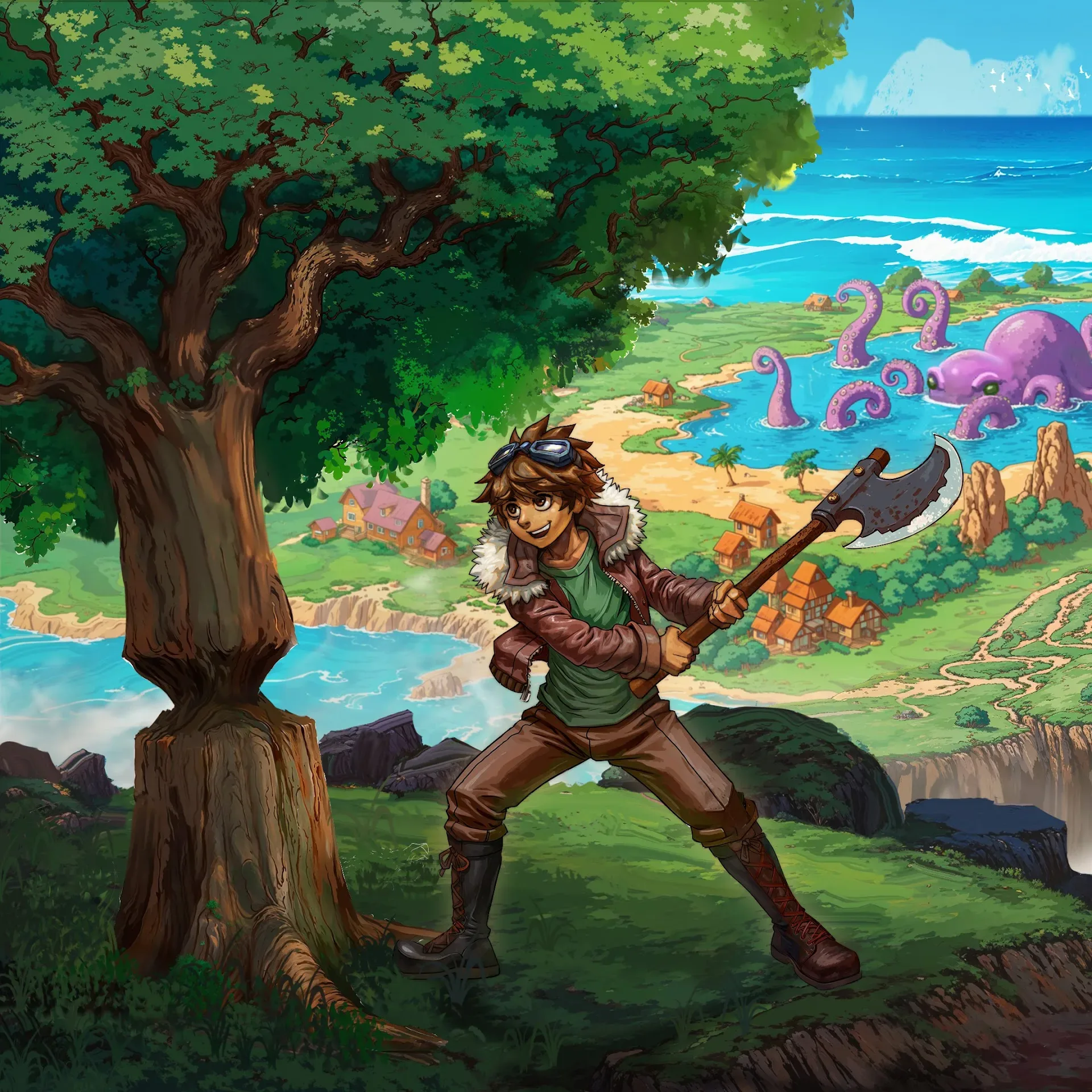
Meanwhile, Steam remains an active destination for new PC releases. For example, Mayday: The Survival Island’s arrival on Steam illustrates the basic appeal Ritchie is describing: releasing on the store places a game before the platform’s existing PC audience.
What the dispute means for developers and players
For developers, the immediate lesson is not that every PC game must use only one storefront. The supplied material does not support such a universal rule. It does show why Steam distribution is viewed as commercially difficult to pass up: a game’s access to potential buyers can outweigh objections to the revenue share.
For players, the issue is less visible at the point of purchase but still meaningful. Storefront competition can affect where games are sold and how game creators evaluate their release plans. Ritchie’s argument is that consumers who prefer Steam’s convenience could still benefit if developers retained more resources. The counterweight is that users may consider Steam’s existing library and features meaningful value, rather than treating the service as a neutral toll booth.
Tim Sweeney, Epic Games’ CEO, also entered the wider discussion with the claim that Valve has held gaming back for years. That shows how quickly a fee argument becomes a larger disagreement about who is responsible for the state of PC gaming. But the most grounded point in Ritchie’s position is narrower: the leading marketplace’s greatest asset may be the people already there.
Whether that makes Steam an unbreakable stalemate remains an opinion, not a proven fact. Ritchie believes it does, while Rosier sees Valve’s independent status as a major reason the marketplace is unlikely to be dethroned. What the exchange makes clear is that a new store’s challenge would not end once its software works. It would begin with the much harder task of making users, and then developers, believe there is a reason to change where they buy and sell games.