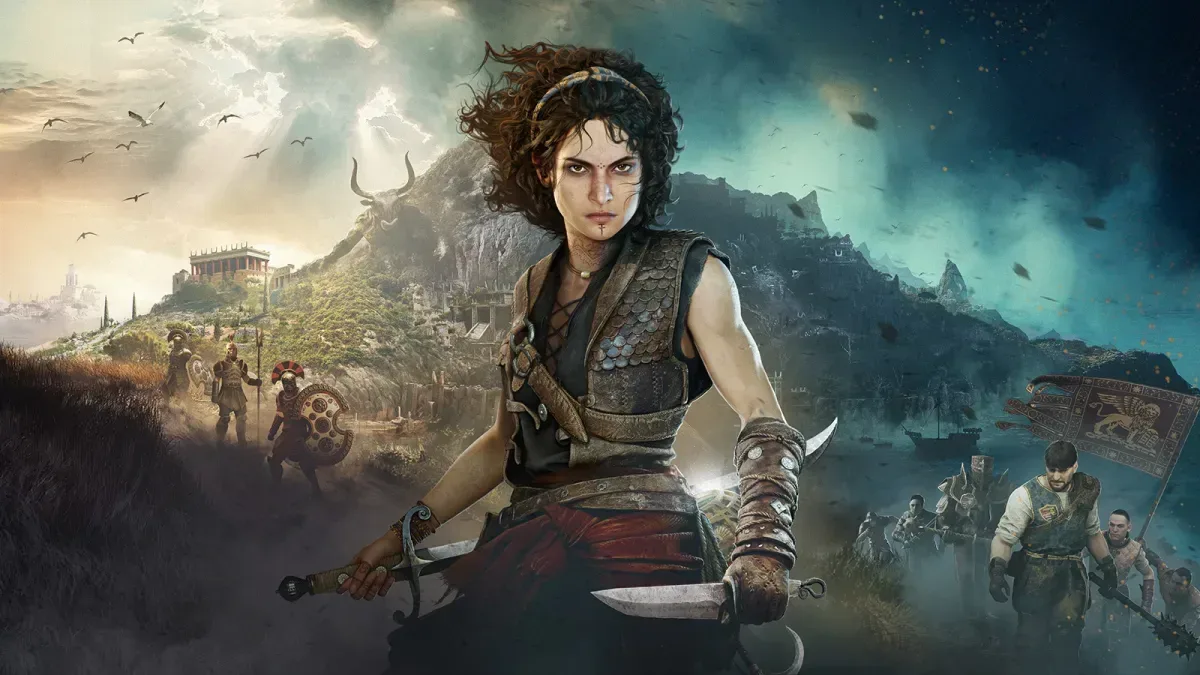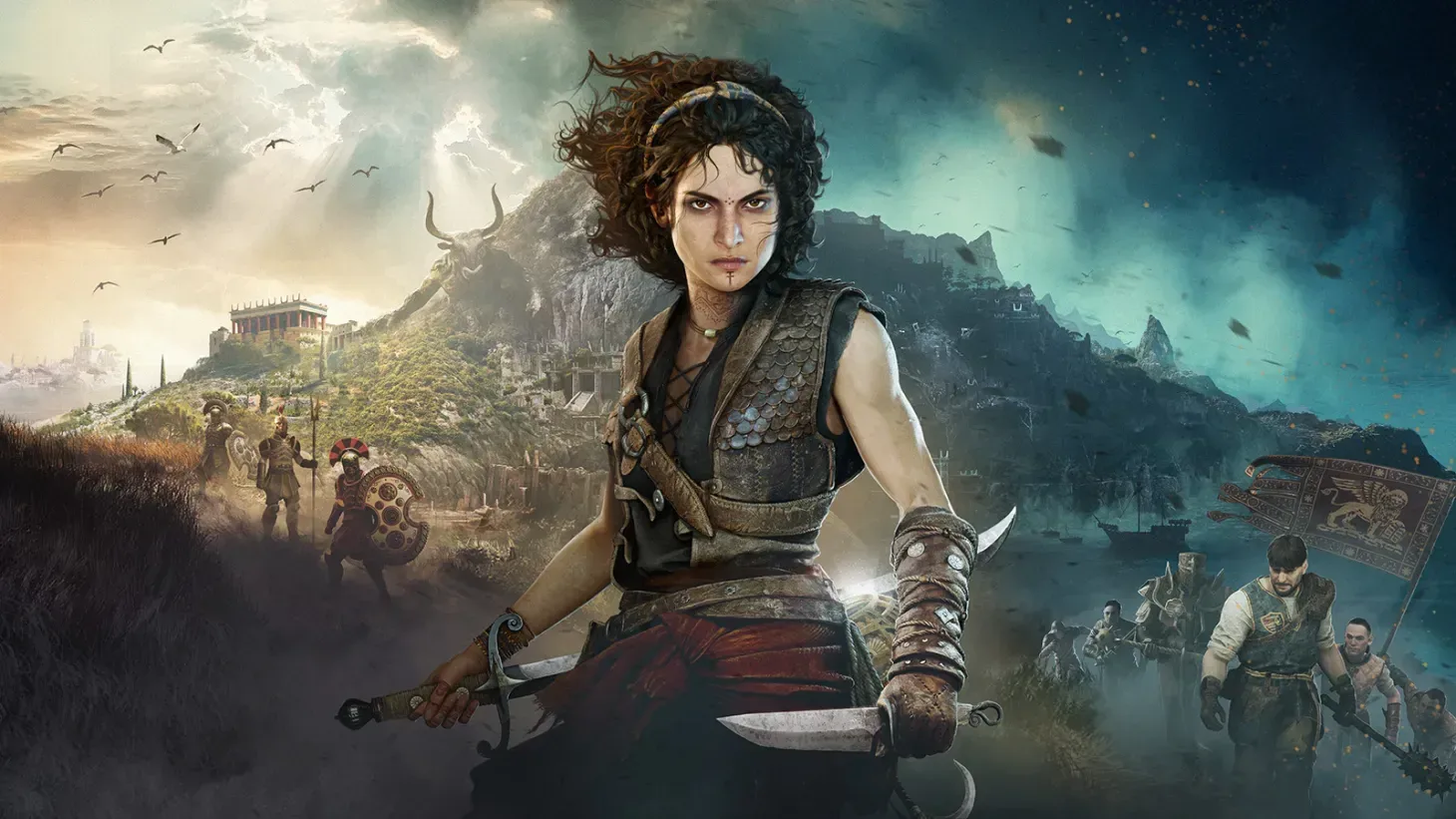
Resonance: A Plague Tale Legacy has a title that could make newcomers assume there is homework waiting at the dock. There is not. Although it belongs to the wider A Plague Tale universe, the game is set before the earlier two entries and follows a different lead. Its story can be approached without prior knowledge of those games, making this a welcoming entry point for players who know Sophia only as a name—or do not know her at all.
That accessibility is important because Sophia carries the adventure comfortably. She was a supporting character in 2022’s A Plague Tale: Requiem, but Resonance makes a clear case for why developer Asobo Studio gave her the spotlight. She is capable, sharp, and charismatic, a pirate with enough presence that it is easy to wonder why she is not already calling every shot in her community. The game’s greatest strength is the way it establishes that personality and the people around her quickly, then gives the player reason to care when danger closes in.
The result is a polished, well-paced action adventure that does not pretend it invented swords, ruins, crumbling ledges, ancient mysteries or ominous things lurking in the dark. Instead, it uses those familiar ingredients effectively. The broad mixture brings to mind the globe-trotting traversal and puzzle language associated with Uncharted, alongside the mythological weight and direct combat echoes of God of War. It does not surpass those landmarks, but it does not need to for Sophia’s journey to land as an engaging and moving one.
A pirate drawn toward a dangerous mystery
Sophia’s background gives Resonance an immediate human center. Her father was forced to rescue her from a dangerous situation when she was young, and she subsequently grew up among a supportive pirate community. That found-family setting matters: the island at the heart of the game is not merely a convenient destination full of puzzles. Sophia feels a mystical pull toward it, while many people in her orbit have already died because of it.
That premise creates a useful tension from the opening. The island’s effect on Sophia is a mystery, but it is a mystery with personal stakes rather than a generic treasure-map excuse. The narrative’s pull comes from wanting to understand what connects her to this place and what the connection will cost. Sophia’s relationships make the danger more than theoretical, and the story’s eventual trajectory is framed as one of the most tragic and consequential experiences of her life.
Asobo’s character work appears particularly important here. Sophia is not defined solely by her ability to swing a sword or clamber over architecture that has plainly failed every safety inspection. She is presented as intelligent and resilient, while her ties to the pirate community give the adventure emotional leverage. Strong performances support both the high-stakes material and quieter exchanges, helping the game avoid turning its dramatic moments into pure spectacle.
It is also a welcome reminder that an established game world can expand through a side character without requiring a continuity flowchart. Fans of the earlier A Plague Tale games may naturally find extra context in meeting Sophia again, but the narrative is constructed so a new player can follow her motivations and connections. That makes Resonance feel less like an appendix and more like a distinct chapter within the setting.
Familiar building blocks, confidently assembled
The central play loop rotates among light platforming, stealth, environmental puzzle-solving and sword combat. None of these components is positioned as a radical reinvention of its genre, but they form a dependable rhythm. A traversal sequence can give way to a puzzle, an encounter can break up exploration, and story scenes can reset the tension before the next threat. That structure helps the game maintain momentum rather than asking one system to do all the heavy lifting.
Platforming often invites the comparison to Nathan Drake’s famously precarious relationship with stable surfaces. Sophia’s route through the world involves the expected scrambling and climbing, keeping the adventure physically active even when the narrative is doing the emotional work. The environmental puzzles similarly draw on a recognizable tomb-raiding tradition. They are rewarding rather than revolutionary: an established style of challenge delivered with enough care to make solving it satisfying.
For an adventure so clearly built from well-known genre language, that consistency is valuable. Players looking for a completely new mechanical vocabulary may not find it here. Players who enjoy a tightly assembled combination of exploration, action and environmental obstacles have a more persuasive reason to pay attention. There is a difference between borrowing a form and merely repeating it, and Resonance benefits from putting its familiar tools in service of a specific protagonist and an emotionally grounded plot.
That balance also makes the game a useful contrast to the social chaos celebrated in the unwritten rules of couch multiplayer. Sophia’s trip is not a shared-screen negotiation over who took the last health pickup; it is a focused single-character adventure whose tension comes from her vulnerability, the island’s secrets and the consequences surrounding her community.
A three-hit combat system that keeps each fight tense
Combat is one of the clearest examples of Resonance finding value in a small, smart adjustment instead of a huge pile of moves. Sophia fights with a sword, but the system is not built around elaborate combo displays. Its key wrinkle is health: she can sustain three hits, and defeating an opponent restores one hit. This is a simple rule, yet it changes the feeling of each skirmish.
Because a successful takedown recovers health, an enemy is not only an obstacle but a potential way back from danger. At the same time, the three-hit limit means there is not much room for casual mistakes. Counters matter, pressure matters, and a fight can shift from threatening to manageable—or the other way around—quickly. Sophia is sturdy enough not to feel helpless, but she is never so durable that combat becomes thoughtless.
That measured stress suits the game’s overall approach. Rather than overwhelming players with flashy systems, it asks them to engage with a readable risk-and-reward idea. The health restoration on a defeat gives aggression a purpose, while the limited number of hits keeps defensive timing relevant. It is a compact design choice, but one that makes each combat scenario more alert and deliberate.
Greek mythology also contributes to the game’s identity, reinforcing the comparisons to modern myth-inspired action games without making Sophia’s journey feel like a duplicate of them. The mythology, pirate setting and mysterious island create a combination with its own flavor, even when the individual gameplay parts are recognizable.
Stealth saves its sharpest teeth for late in the voyage
Stealth is the portion of Resonance that brings the most friction. The issue is not presented as a parade of constant failures so much as a pacing problem: stealth sequences can interrupt the otherwise smooth flow. They are concentrated toward the final third of the game, when a creature Sophia must evade becomes a major source of pressure.
That enemy is more than routine patrol design. It is genuinely frightening and unusual relative to comparable action adventures, leaving a strong impression both as a gameplay threat and as an element tied to the plot. This is the sort of monster that can become the memory a player carries away from a game: not just because it creates immediate danger, but because its presence deepens the island’s menace.
The trade-off is clear. The stealth sections contribute fear and narrative significance, but their placement and tempo can be frustrating. Still, the fact that this threat remains memorable speaks to the effectiveness of the idea. Horror is not simply layered over the action for a momentary jolt; it becomes part of how Resonance expresses the stakes of Sophia’s journey.
There is something apt about a game where a pirate’s biggest problem is not a rival crew, a locked chest or an inconveniently placed chasm, but a frightening force that changes the pace of the entire expedition. Sophia may be bold, but the island is designed to make boldness feel costly.
A compelling Sophia story, even without a new genre blueprint
Resonance: A Plague Tale Legacy succeeds because its pieces work together: a charismatic lead, quickly meaningful relationships, strong performances, straightforward but tense swordplay, satisfying environmental puzzles and a late-game stealth threat with real bite. It draws obvious inspiration from prominent adventure games, including the traversal and puzzle tradition of Uncharted and Tomb Raider as well as the combat and mythological associations of God of War. Those inspirations are visible, but so is the care in their execution.
For players who keep an eye on how game series preserve and present their histories, the wider collecting perspective in this guide to storing retro games offers a different kind of legacy conversation. Resonance, meanwhile, is concerned with a narrative legacy: a supporting character stepping forward, a community under threat, and an island whose pull turns personal history into a dangerous present.
Sophia’s adventure is not defined by novelty for novelty’s sake. Its appeal is in how confidently it delivers recognizable action-adventure pleasures while keeping its heroine and her stakes at the forefront. Newcomers can board without playing the earlier A Plague Tale games, while existing followers get a more focused look at a character strong enough to lead her own perilous voyage.