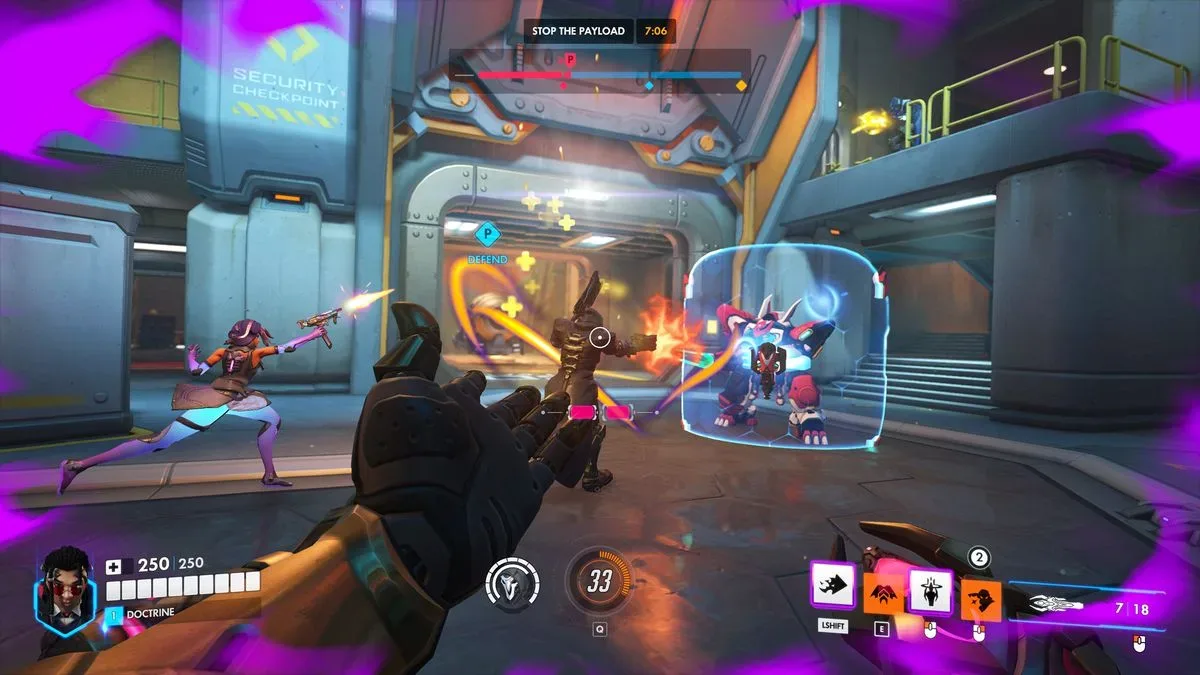
New Overwatch support hero Doctrine is not officially joining the roster until October 6, but his BlizzCon 2026 playable debut has already raised the most dangerous possible question for a competitive hero shooter: where exactly is the trade-off?
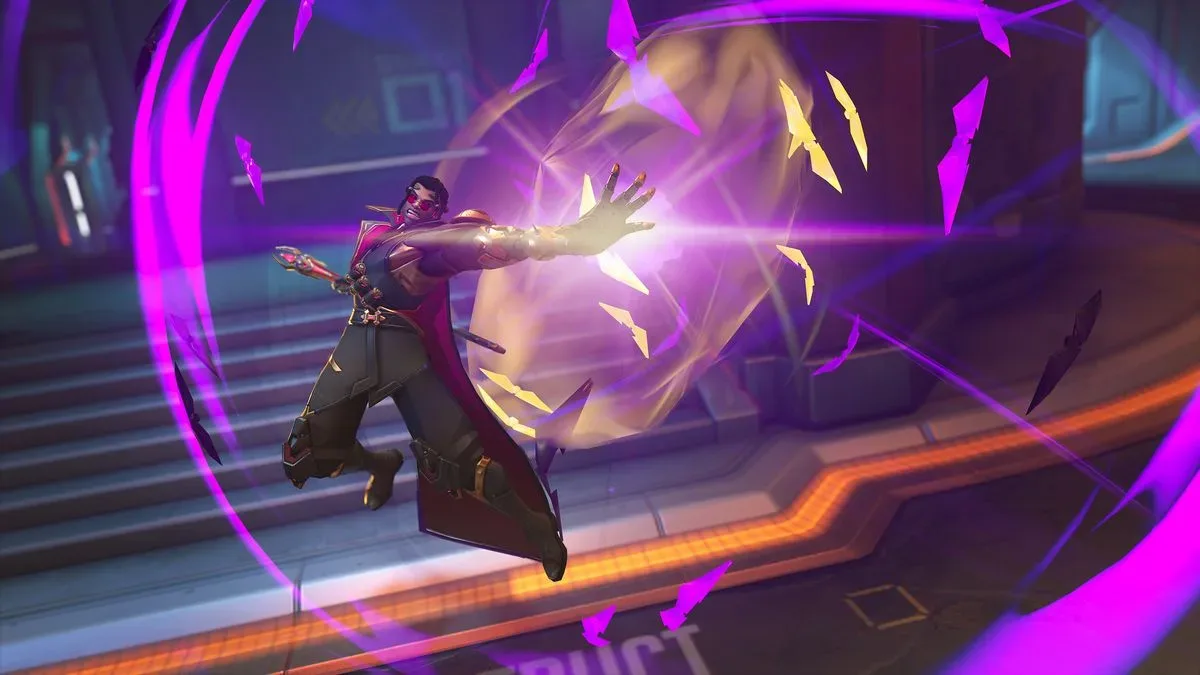
Doctrine appears to bring an unusually broad package to a support slot. His kit includes a ranged primary attack, drones that provide healing and speed-related support, mobility, a way to reach high ground through an Infuse-enhanced dash, and an Ultimate called Deliverance that can hurt opponents’ health while healing his own team. On paper, that is an awful lot of useful stuff for one vampire-themed character to carry into a fight.
Early impressions from a small number of Quick Play matches are not evidence that a hero is definitively overpowered. They are enough to identify why Doctrine could become a serious balance conversation once the player base has more time with him. If a hero feels immediately useful to a newcomer yet contains substantial room for precision and tactical improvement, the potential ceiling can be intimidating.
What makes Doctrine look so adaptable
The core concern is not simply that Doctrine can heal, deal damage, or move quickly. Most Overwatch heroes are designed around a mix of strengths. The concern is the way several different strengths appear to overlap.
- Ranged pressure: Doctrine has a ranged primary attack, letting him participate in fights without being forced into the same positions as a close-range support.
- Mobility: His kit can help him enter fights, disengage, and access high ground. That can make a support harder to isolate and gives him more options for line of sight.
- Infuse interactions: Infuse can alter Doctrine’s rush and drone abilities, including a flight option when used with his dash. Its changing effects mean opponents may have to identify not only the hero but also the active version of his tools.
- Support utility: His drones help with healing and speed-related buffs, which gives Doctrine a direct way to improve teammates’ ability to survive or reposition.
- Fight-swinging Ultimate: Deliverance combines an enemy health debuff with allied healing. That is a particularly meaningful combination because it affects both sides of a fight at once.
“Flexible” is the crucial word here. A flexible hero can respond to changing conditions: protecting allies, contributing damage, escaping danger, taking angles, or moving toward elevated positions. Flexibility does not automatically mean dominance, but it can make a character difficult to draft against and difficult to punish when they make sensible choices.
Doctrine’s apparent engagement range is important, too. Supports are often most vulnerable when the fight moves outside their preferred range or when terrain blocks their connection to teammates. A hero who can make plays at range, then use mobility to reposition, potentially has fewer moments of enforced helplessness. Whether that turns into real match power will depend on details that early play cannot settle, including how reliably he lands shots, how vulnerable he is during ability use, and how players learn to deny his best positions.
Infuse may be the kit’s real pressure point
The obvious flashy element is the flight-enabled dash, but Infuse may matter more because it changes the texture of Doctrine’s decision-making. A movement ability is often readable: players see the hero move and react. A system that changes how a dash or drones function introduces an extra layer. The Doctrine player chooses the mode and timing; opponents must recognize the threat and respond quickly.
That does not make Infuse inherently unfair. It does make it strategically dense. The best Doctrine players may be able to hold the effect for an escape, spend it for an aggressive route to high ground, or use it to modify their supportive tools depending on the fight. The supplied perk that sharply reduces the cooldowns tied to Infuse’s damage and healing effects could increase the frequency of those choices.
Related coverage includes Overwatch's Doctrine Looks Set to Shake Up Support Play When He Arrives October 6.
Cooldowns are the built-in timers that stop powerful abilities from being repeated continuously. Lower cooldowns mean more casts over the course of a fight and more chances to adapt. If the reduced-cooldown perk proves effective in ordinary matches, it could be especially influential because it reinforces Doctrine’s defining asset: having an answer available more often than opponents expect.
The practical implication for players facing him is straightforward: tracking Infuse should be at least as important as tracking Doctrine’s location. An opponent who has just spent a mobility option may be more catchable. An opponent with Infuse ready may be capable of reaching a safer platform or changing the tempo of an engagement. Those distinctions are not a full counter-strategy, but they are likely to be part of one.
Deliverance could decide whether the alarms are justified
Ultimates are designed to create decisive moments, so Deliverance should not be judged solely because it looks powerful. The detail that stands out is its dual effect: it applies a health-related penalty to enemies while healing allies. In a coordinated team fight, reducing the opposing side’s durability while increasing your own side’s durability can create a large gap in the same brief window.
A health-point, or HP, debuff is an effect that weakens an opponent’s health situation rather than simply adding raw damage from a single attack. Paired with a team heal, it could make opponents easier to finish while making Doctrine’s allies tougher to remove. That is the kind of Ultimate whose impact may grow as teams learn the right moment to layer their own pressure on top of it.
There are still unanswered questions. The available details do not establish Deliverance’s range, duration, charge rate, or whether it has meaningful counterplay. Those variables are essential. An Ultimate can sound overwhelming in isolation yet be manageable if it is rare, avoidable, interruptible, limited by positioning, or easy to answer with disciplined play. Conversely, an ability with several favorable effects can become a persistent problem if it is earned too quickly or works too reliably.
For now, Deliverance belongs in the “watch closely” column rather than the “certainly broken” column. It is a plausible target for a future adjustment only because its effects seem capable of changing an entire fight’s math.
High skill floor, high skill cap: the important distinction
Overwatch game director Aaron Keller has identified aim requirements as a limiting factor for Doctrine, while also emphasizing the hero’s mobility and flexibility. He has also said the team is not yet certain which hero Doctrine will replace or what his strongest synergy will be, though he expects the newcomer to be versatile and powerful enough to enter the meta.
That uncertainty is more meaningful than it might sound. In a hero shooter, a character does not need to replace one exact existing character to be widely used. A broadly capable hero can instead compete for a team slot across several compositions, depending on map layout, teammate preferences, and the opposing lineup. If Doctrine can support multiple styles rather than serving one narrow plan, his role could become clearer only after a large number of players experiment with pairings.
It is also useful to separate two terms that often get blended together:
- Skill floor is the level of ability needed to get worthwhile value from a hero.
- Skill cap is the amount of additional performance an expert can extract once they understand the mechanics and decisions deeply.
Doctrine may have a mixed profile. His basic ranged attack, drones, and mobility can apparently feel intuitive enough for a fresh player to contribute in Quick Play. At the same time, accurate aiming, ability timing, positioning, and Infuse choices may create a much higher ceiling for practiced players. That is generally a promising character-design shape: approachable at the beginning but rewarding in the long term.
It is not, however, a guarantee of healthy balance. An accessible baseline combined with elite-level payoff can become problematic if the baseline is too strong or the advanced interactions cover too many weaknesses. The aim requirement is an important balancing lever, but it only meaningfully constrains a hero if missed shots and mistaken decisions carry consequences opponents can exploit.
Why launch predictions are especially shaky
Keller has cautioned that new-hero balance is difficult to forecast even with extensive internal testing. A development team has many skill levels but cannot replicate every combination of tactics, player behavior, map knowledge, and coordination that emerges when a hero reaches the wider community.
That is why the first weeks after release matter more than an early playable build. Players will discover movement routes, new drone timings, unexpected pairings, and better ways to use Deliverance. Higher-level play may reveal combinations that are barely visible in introductory matches. Alternatively, the same broader testing may expose vulnerabilities that a small number of early rounds fails to show.
Keller specifically suggested Doctrine could become a hero played heavily at high levels but less often at lower levels, or he could be used across the full player base. Both outcomes remain possible. The first would point to a character whose precision and decision-making requirements are doing meaningful balancing work. The second would suggest that his immediate utility is carrying over well beyond skilled specialists.
There is an understandable concern about another support-led launch disruption after Jetpack Cat’s debut, which Keller referenced as a case the team hopes not to repeat. But it would be premature to declare that Doctrine is headed for the same outcome. A handful of matches and an impressive tool list are signals, not final results.
What players should pay attention to after October 6
The sensible approach is neither blind panic nor dismissal. Once Doctrine joins the live roster, players should watch for patterns rather than isolated highlight clips.
- Pick rate across skill levels: Is he showing up almost everywhere, or does his use concentrate among players who can consistently capitalize on his aim and movement demands?
- Ultimate fight impact: Does Deliverance repeatedly convert otherwise even engagements, or are teams finding dependable ways to play around it?
- Infuse uptime: Does the cooldown-reduction perk let Doctrine modify abilities often enough that opponents struggle to predict him?
- Survivability under pressure: Can coordinated enemies realistically punish a Doctrine who mispositions, or does his mobility erase too many risks?
- Composition flexibility: Does he settle into a particular team pairing, or does he work well beside a large share of the support roster?
Those answers will say much more than a new hero’s first-day reputation. Balance is not about whether Doctrine can do impressive things. He clearly appears equipped to do them. It is about whether he gives up enough in accuracy, timing, exposure, and resource management to keep the match fair.
For players drawn to mechanically demanding support characters, Doctrine looks like a compelling arrival: a mobile, ranged option with a strategic transformation mechanic and an Ultimate built for dramatic team-fight swings. For everyone else, he may be a reason to get serious about ability tracking and high-ground awareness. Either way, the October 6 launch will determine whether the early nerf chatter is prescient—or simply the customary nervousness that follows any hero who can fly, heal, shoot, and make the opposing team’s health bar feel suddenly negotiable.
For more on Blizzard’s larger action-RPG plans, see the reported shift toward Diablo 5 rather than additional Diablo 4 expansions.