Nighthawks is a vampire noir role-playing game that puts character-building, social maneuvering and carefully chosen nightly excursions at the center of its dark-city fantasy. Developed by The Curiosity Engine and published by Wadjet Eye Games, it is listed for PC with a September 22, 2026 release date.
Its premise is familiar in the best way: a newly made vampire begins at the bottom of an undead social order and has to claw toward power through investigations, alliances and a healthy amount of predation. What makes Nighthawks stand out is not an attempt to simulate every corner of a vast 3D city. Instead, its text-driven RPG structure concentrates attention on the people, places and decisions that make Cradlebridge feel inhabited.
The result is a game where a nightclub can be a headquarters, a recruitment point and a social minefield; a companion can change the options available during an outing; and a power selected at character creation can continue to define what secrets are visible many hours later. It is an approach with practical limitations, including at least one progression detail that can be easy to miss, but the early impression is of a densely written vampire RPG that understands the value of consequences.
Cradlebridge is built around mood and social friction
Nighthawks begins with a fledgling vampire searching for their sire’s vassal. In this setting, a vassal is a servant bound by blood to a master, immediately establishing that supernatural power is also a hierarchy of obligation. The search leads through Cradlebridge, a grimy city populated by blood addicts, thralls and people caught in the margins of the nocturnal order.
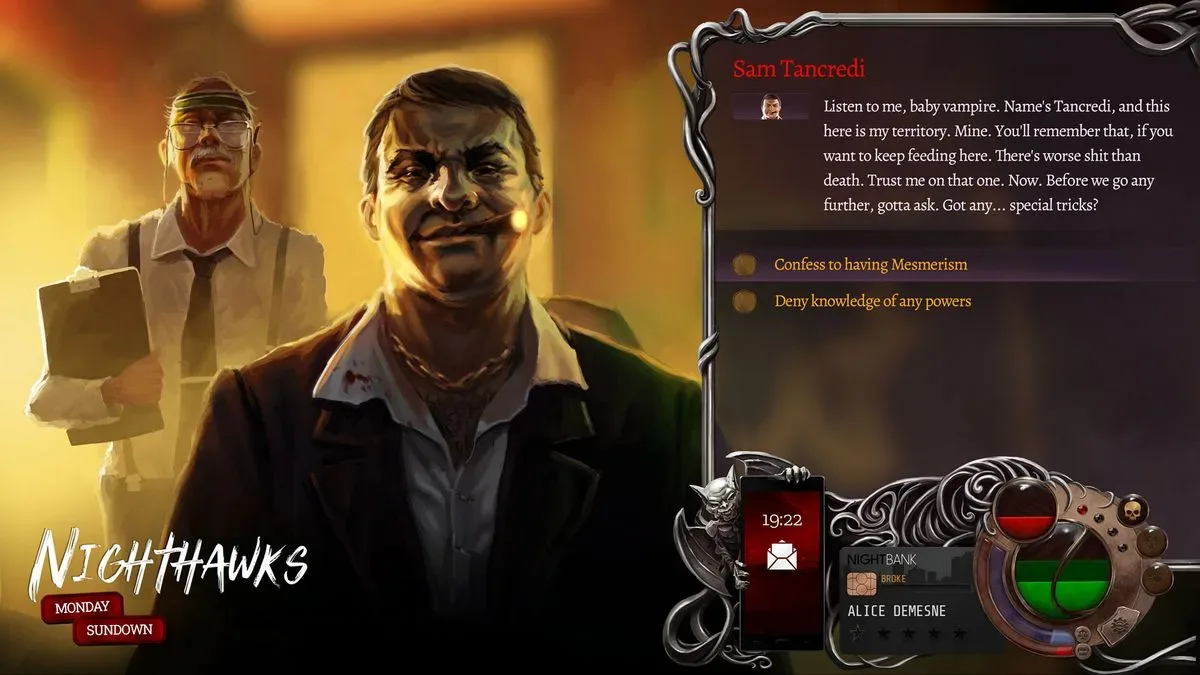
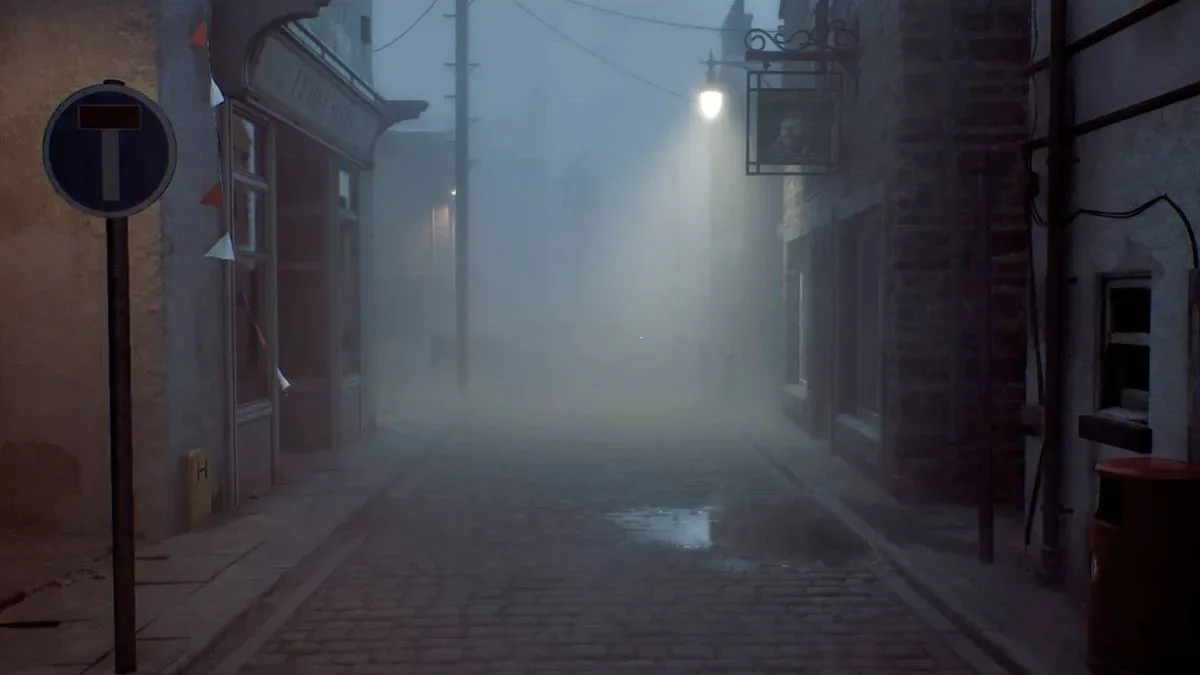
Its neighborhoods appear designed to give that setting contrast rather than simply supply different map markers. The nightclub called Nighthawks is a central gathering place for vampires. Angelbreach projects a gaudier identity, with pink neon, fishnets and sleaze. Fountaincourt presents itself as comparatively prim and respectable. These contrasts matter because vampire noir depends on more than darkness: it needs places where wealth, vulnerability, desire and danger are distributed differently.
Early in the story, the player becomes the boss of the Nighthawks club after its former owner meets a violent end involving a giant vampire and a boathook. The club is therefore not merely a stylish backdrop. It becomes the player’s operational base while they move from a powerless newcomer toward a more influential position in the city.
That progression has the recognizable shape of a supernatural crime story. There are mysteries to solve, rivals to manage and potential friends who may be just as useful as they are trustworthy. Nighthawks’ strongest apparent choice is to frame those broad RPG ambitions through a compact city and an intimate cast rather than treating scale itself as the measure of immersion.
Character creation is meant to keep shaping the story
Nighthawks gives its character system several interconnected layers: credentials, blood lineage, powers, gear, skills and companion bonuses. “Credentials” establish the protagonist’s background, special abilities and lineage at the start of a game. This is more than a cosmetic biography. The selected origin informs the kinds of interactions and problem-solving routes a player can pursue.
Related coverage includes Nighthawks Turns Vampire Noir Into a Living, Choice-Driven City RPG.
One available example is a Continental vampire whose scholarly life was encouraged by their sire. That character can communicate with rats and other unwanted creatures, using them to gather information or gain leverage in troublesome situations. This is a useful illustration of what a role-playing build should accomplish: it does not simply add a number to a menu, but supports a particular fantasy of who the character is and how they survive.
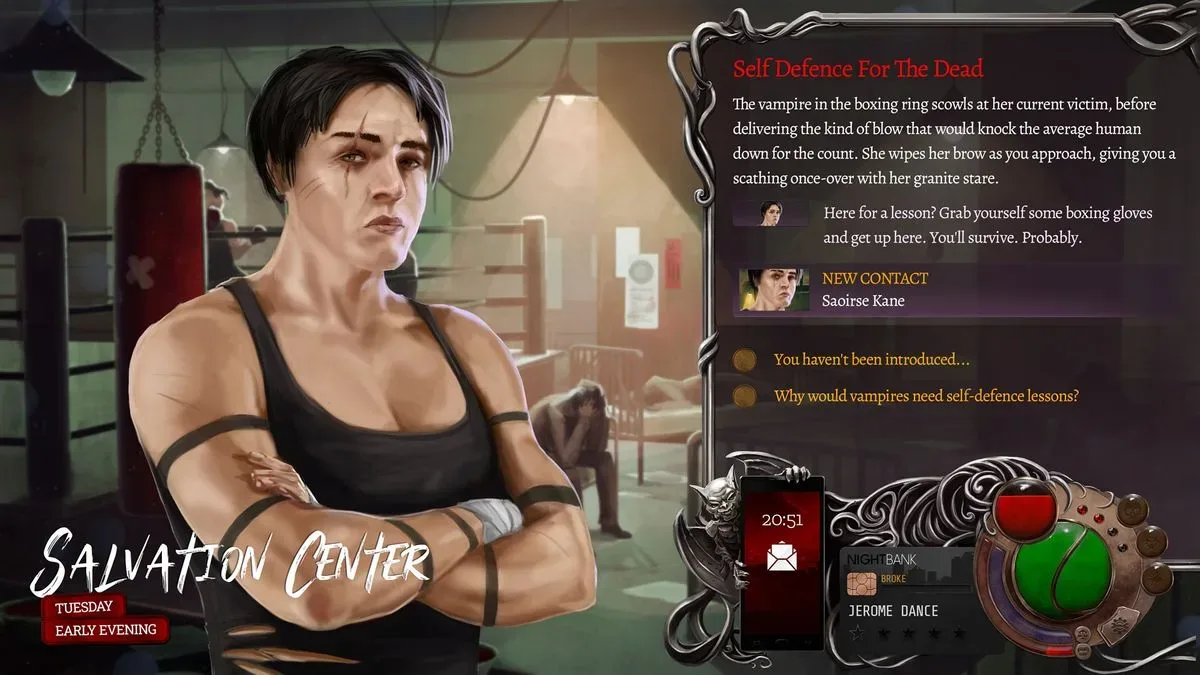
Skills can also be altered through equipment. A less physically imposing vampire might normally depend on seduction and stealth, then compensate for a weak brawler profile by buying and equipping knuckle dusters that increase intimidation and brawler stats. In RPG terms, this creates a flexible build system. A player is not permanently locked into one answer to every challenge, but neither is the initial identity irrelevant.
The available powers can create more consequential trade-offs. Tenebrous Form is described as useful for teleporting past obstacles. Corpsetalker is associated with dialogue or interactions that otherwise remain grayed out. Choosing rat communication over those options can produce genuine curiosity about paths left unexplored. That is an important distinction from a game that merely lists choices: Nighthawks appears to make absent choices visible enough for players to understand that their build changed the story space.
For prospective players, the practical takeaway is straightforward. Character creation deserves attention, particularly if a player has a preferred style of vampire fiction. A socially adept investigator, a stealthy information broker and a character built to muscle through confrontations should not be expected to receive exactly the same routes. Equipment can shore up weaknesses, but it does not erase the value of selecting powers with an eye toward the kind of obstacles one wants to answer.
Companions are role-playing tools, not just party slots
The club’s bar serves as a place to recruit and dismiss companions before heading out. That sounds like a standard party-management feature, but its value lies in how each traveling companion can affect the player’s choices for a given night.
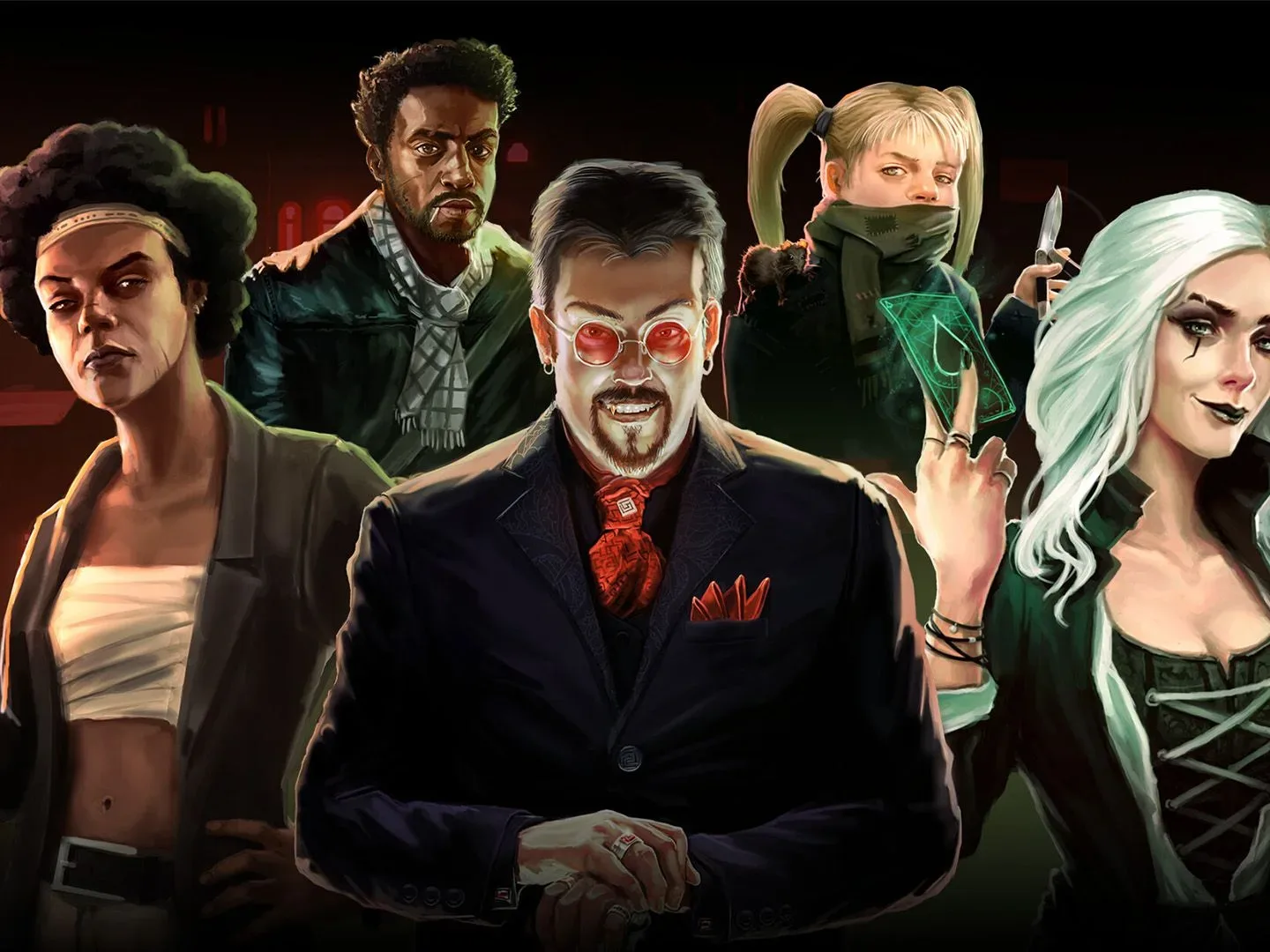
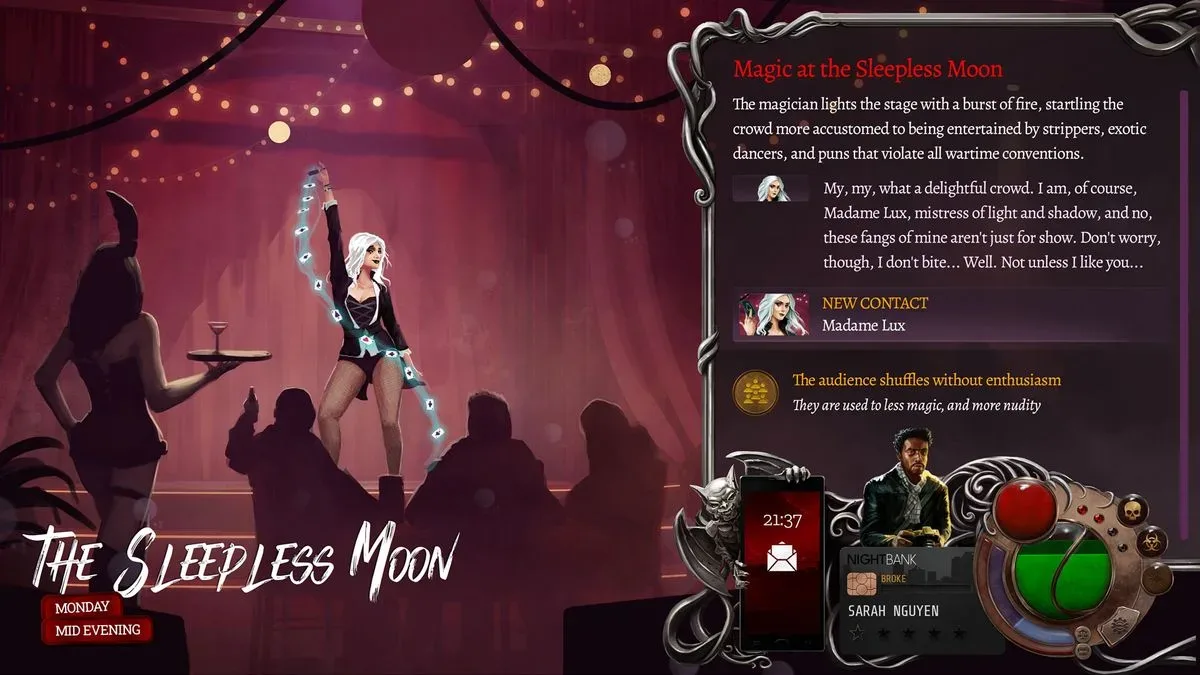
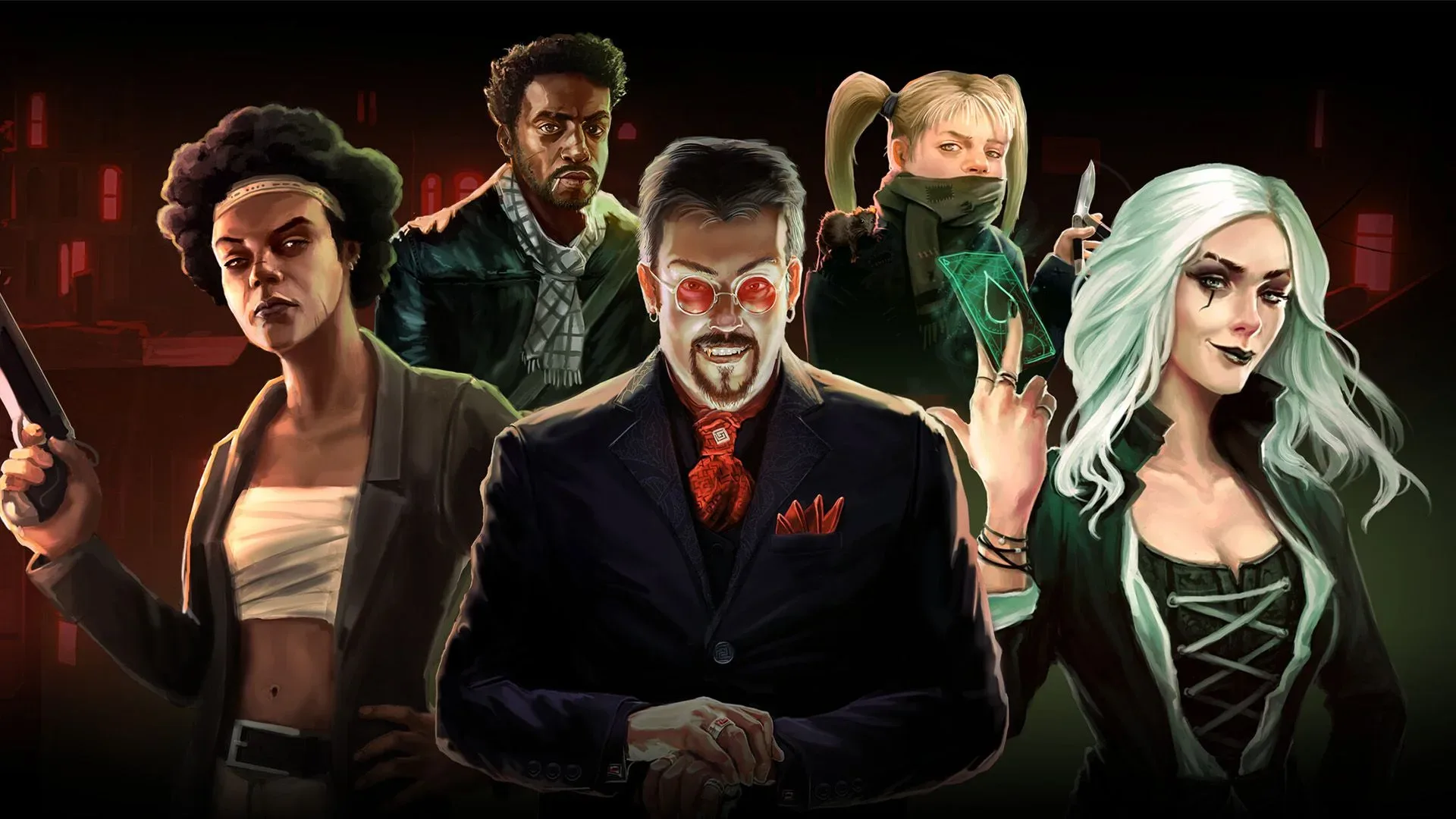
Maze, an eccentric bookshop owner and con man with gold-capped fangs and red-lensed glasses, is especially alert to tricks around town. Domino is a human private investigator operating from a nearby hotel room, and his living body can be an asset in situations where an undead protagonist’s nature would be a disadvantage. Lux is a magician at a rival burlesque nightclub with a secret of her own.
These party effects make companion selection a piece of role-play rather than a matter of choosing the highest combat values. Bringing Maze could better suit a deception-heavy plan; bringing Domino could open practical solutions that depend on the warmth of human blood. The system encourages players to think about who belongs in a scene, what information they might recognize and what complications their presence could introduce.
The companions also carry their own stories. Their histories range from a woman who was a captain during the Golden Age of Piracy to an elite artist subjected to the restrictions of a pedigree blood covenant. A blood covenant here refers to a binding condition tied to a character’s vampiric lineage, another example of Nighthawks treating blood as both a supernatural resource and a social constraint.
Each act gives the player one major task to finish within a month. The task is reportedly manageable enough to leave time for companion stories and side mysteries. That pacing is significant. Many narrative RPGs claim to value relationships, then structure their main plots as emergencies that make optional conversations feel irresponsible. Nighthawks instead appears to reserve space for the detours that reveal its cast.
Hunting is a strategic loop, not an automatic refill
In a vampire game, feeding is often the central test of whether the fantasy has real mechanical weight. Nighthawks approaches it through planned hunts across several stalking grounds. Players use skill checks and decisions before feeding, rather than treating blood as something acquired without thought in the middle of the street.
A skill check is a role-playing game test in which a character’s capabilities, and sometimes their gear or party support, determine whether an action succeeds. By placing skill checks around hunting, Nighthawks makes the act of feeding part of the same wider web as investigation and social maneuvering. The question is not only whether the protagonist needs blood, but where to hunt, which approach to attempt and what talents can support the plan.
This is also where the game’s smaller scope looks like an advantage rather than a compromise. A convincing RPG city does not necessarily require a huge open world. It needs meaningful reasons to care about where the player goes, which residents they approach and what methods they use. The neighborhoods, companion-specific approaches and strategic hunts give Cradlebridge a sense of purpose that a larger but thinner environment might lack.
Other activities reinforce the city’s tone. Players can explore winding sewers, buy new clothing before visiting a high-status members’ club and encounter a group playing a vampire tabletop RPG in a diner. The latter is a knowingly layered gag: characters in a vampire game are themselves playing at vampire role-play. An undead medic also treats health-sapping Wounds and restores vitality, offering a supernatural answer to the cybernetic doctors found in other dystopian RPGs.
“Wounds” are a useful term to note because they suggest a condition beyond a simple momentary health bar. Their treatment gives the city another service point and adds texture to the routine of maintaining an undead life. The game’s broader loop is consequently not limited to advancing a main quest. It includes recovery, wardrobe decisions, investigation, recruitment and the ongoing maintenance of a social position.
A phone interface may be the biggest early obstacle
Nighthawks is not free of friction. The phone is described as the player’s lifeline, but its email inbox can be overlooked. At least one mission chain requires reading a particular email to move forward, and missing that detail until midway through Act 2 can leave a player wondering why progress has stalled.
That is a small but meaningful usability concern. A game built around messages, clues and contacts should make it clear when communications are essential rather than optional flavor. Players starting Nighthawks may want to inspect the phone closely, including the inbox, when an objective seems unresponsive. That is not a story solution so much as sensible interface awareness.
It also aligns with the game’s old-school text-RPG sensibility. Attention is part of the challenge. Important progress may not always announce itself with a giant waypoint, and information can be embedded in the tools the character carries. Players who enjoy reading closely and tracking leads will likely see that as part of the appeal; players expecting every next step to be loudly signposted may need to adjust their habits.
Why the comparison to Bloodlines 2 matters
Nighthawks invites comparison with Vampire: The Masquerade – Bloodlines 2 because both chase a supernatural noir RPG mood, not because they share the same format. Nighthawks is text-forward, while the other game aims for a very different presentation. The meaningful comparison is about how each game treats the city, the vampire fantasy and player behavior.
Where Bloodlines 2 has been criticized for allowing street feeding with little apparent consequence and for sending players through a sparsely engaging set of familiar locations, Nighthawks emphasizes deliberate hunting, differentiated districts and character-dependent choices. The comparison is ultimately less about graphics or map size than design priorities. Nighthawks argues, through its structure, that a city feels alive when its people and systems respond to who the player is.
Voice acting is another part of the presentation reportedly helping its text-based action land. That matters for an RPG with substantial reading. Strong vocal performances can turn a long conversation into a scene rather than a block of exposition, especially in a genre that relies on seduction, threats, buried resentment and half-spoken bargains.
Nighthawks is rated by its content as much more PG-13 than a previously risqué store presentation might have implied, despite its adult noir atmosphere and occasional cheeky humor. Its appeal is not dependent on explicitness. The focus is intrigue: secrets in a magician’s veins, compromises made by a detective, old histories carried by immortals and choices that reshape the available ways forward.
For PC players settling in for lengthy late-night investigations, practical screen comfort can matter as much as a sharp eye for clues; see this guide to monitor and laptop viewing distance.
Based on its character systems and early acts, Nighthawks’ clearest strength is its confidence in specificity. A rat-whispering scholar, a nightclub inherited through violence, a con man who spots the angle in every room, and an email inbox that might hold the missing key: these are small, concrete details. Together, they give Cradlebridge the lived-in, choice-driven texture that vampire RPGs need.