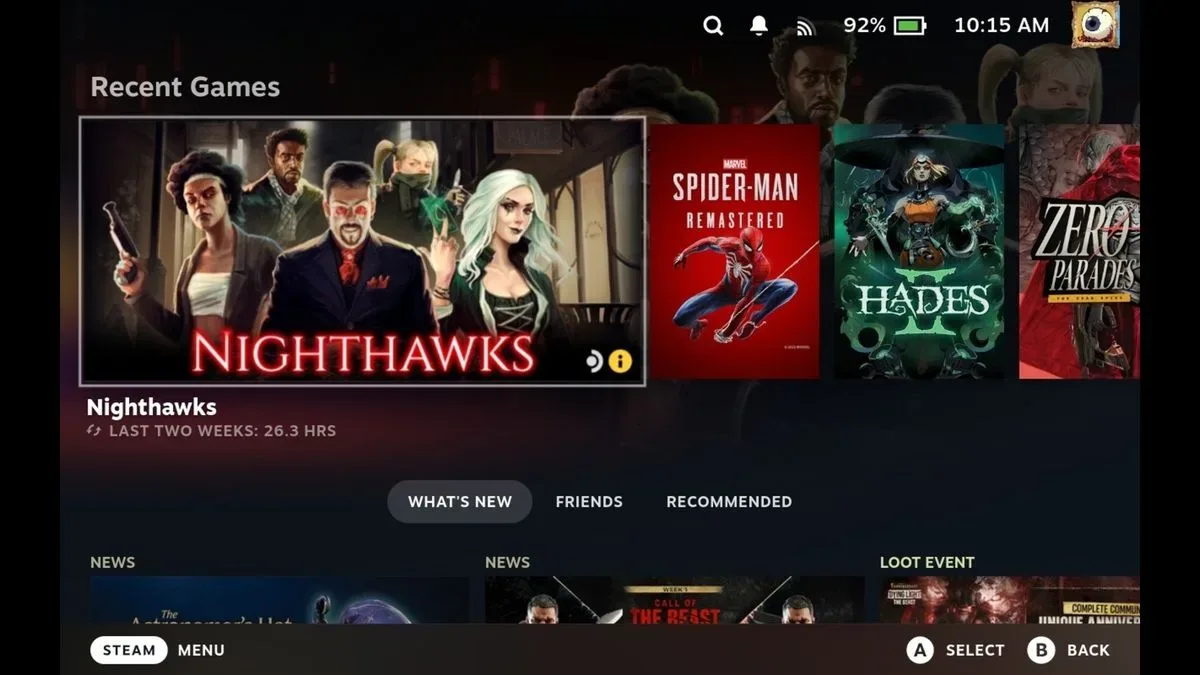
Not every handheld game needs to turn a commute into an endurance test of flashing effects, tiny interface labels and a battery meter in open rebellion. Nighthawks, a text-based vampire RPG available on PC through Steam for $18, appears built around a different kind of portable appeal: a story-heavy experience where reading, decisions and investigation take priority over a demanding combat loop.
That emphasis matters on Steam Deck. A screen can be perfectly capable of rendering an elaborate game and still be a poor place to read it. Nighthawks addresses that problem with a dedicated smaller-screen setting that includes larger text. For a game whose drama is carried substantially through written scenes and dialogue choices, that is not a cosmetic perk. It is an accessibility and usability feature that can determine whether playing on a handheld feels inviting or exhausting.
The game is not officially Steam Deck Verified at present, so prospective players should treat that distinction seriously. “Verified” is Steam’s compatibility designation, rather than a measure of a game’s quality; it is intended to signal that a title meets a defined set of handheld expectations. Nighthawks’ lack of that label does not automatically mean it is troublesome on Deck, and the reported experience points to the opposite: no performance or formatting issues were encountered with the smaller-screen mode enabled. Still, unsupported edge cases can exist, and the control layout has a notable quirk worth knowing before buying.
A vampire RPG driven by choices rather than constant fights
Nighthawks puts players in the role of a fledgling vampire working through five acts toward a fate that can range from hardship to luxury. The central storyline is described as relatively linear, which sets a useful expectation: this is not presented as a sprawling, totally freeform sandbox where every main plot beat can be rerouted.
Its replay value instead seems to come from the decisions surrounding that central route. Players can select character backgrounds, powers and skill proficiencies, then meet up to 10 potential companions. Those companions have individual stories and side quests, while different choices lead toward multiple endings. In practical terms, that structure gives players reasons to revisit the game without promising that every playthrough becomes an entirely different campaign.
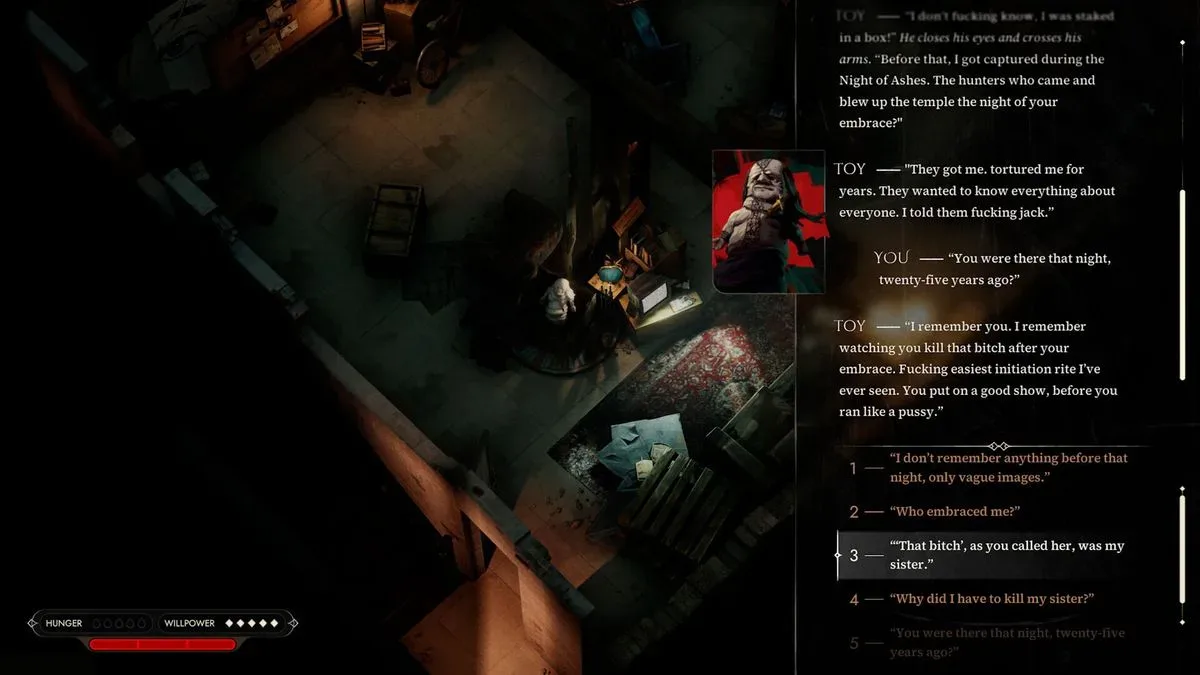
Text-based RPG can mean different things depending on the game. Here, the term signals a role-playing experience that asks players to engage with dialogue, descriptions and choices rather than rely primarily on real-time action. The appeal is not simply that there is more reading. It is that narrative information becomes part of the play: paying attention to an exchange, interpreting a clue or choosing how a character approaches a problem can matter as much as reflexes do in an action-focused RPG.
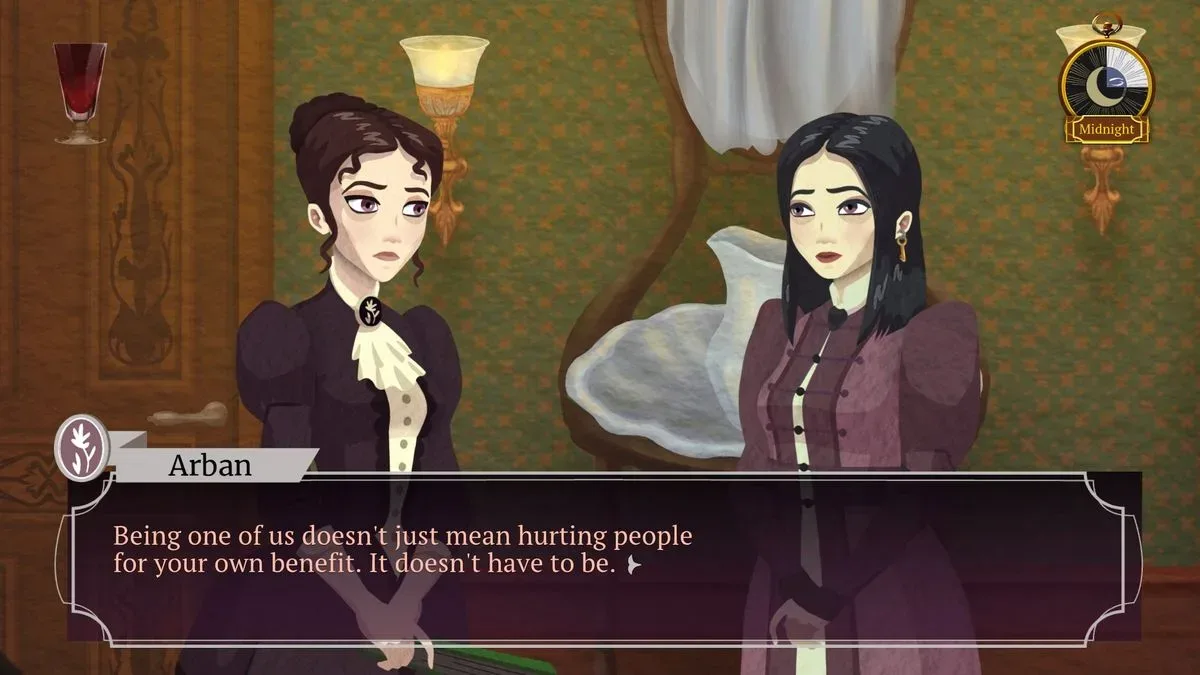
That makes Nighthawks a potentially good match for players who enjoy the vampire-fiction atmosphere of Vampire: The Masquerade visual novels, as well as social-simulation elements in games such as Cabernet. It is a less natural fit for someone seeking a combat-heavy vampire fantasy in the vein of The Blood of Dawnwalker. The distinction is important. A player looking for frequent weapon clashes or ability rotations may not find their preferred rhythm here, while someone fatigued by long combat cycles may welcome a game that asks them to think, read and decide.
The handheld feature that matters: readable text
Steam Deck compatibility discussions often focus on frame rate, graphics presets and controller detection. Those are meaningful issues, but narrative games add another: text legibility. A font that looks ordinary on a desktop display can become uncomfortable on a smaller handheld panel, especially during extended dialogue-heavy sessions. Enlarging the text reduces the strain of deciphering small letters and lets players keep their attention on a scene rather than repeatedly leaning closer to the screen.
Related coverage includes Nighthawks Is a Smart Steam Deck Pick for Vampire RPG Fans.
Nighthawks includes a mode specifically intended for smaller displays, toggled from the settings window. That option reportedly preserves the experience well on Deck rather than making the interface feel merely tolerable. It is a particularly relevant design decision because the game has been characterized as atmospheric, paced and well voiced. The portable format can complement that mood: a player can settle into a chapter on a sofa, in bed or while travelling, rather than treating the game as something that only belongs at a desk.
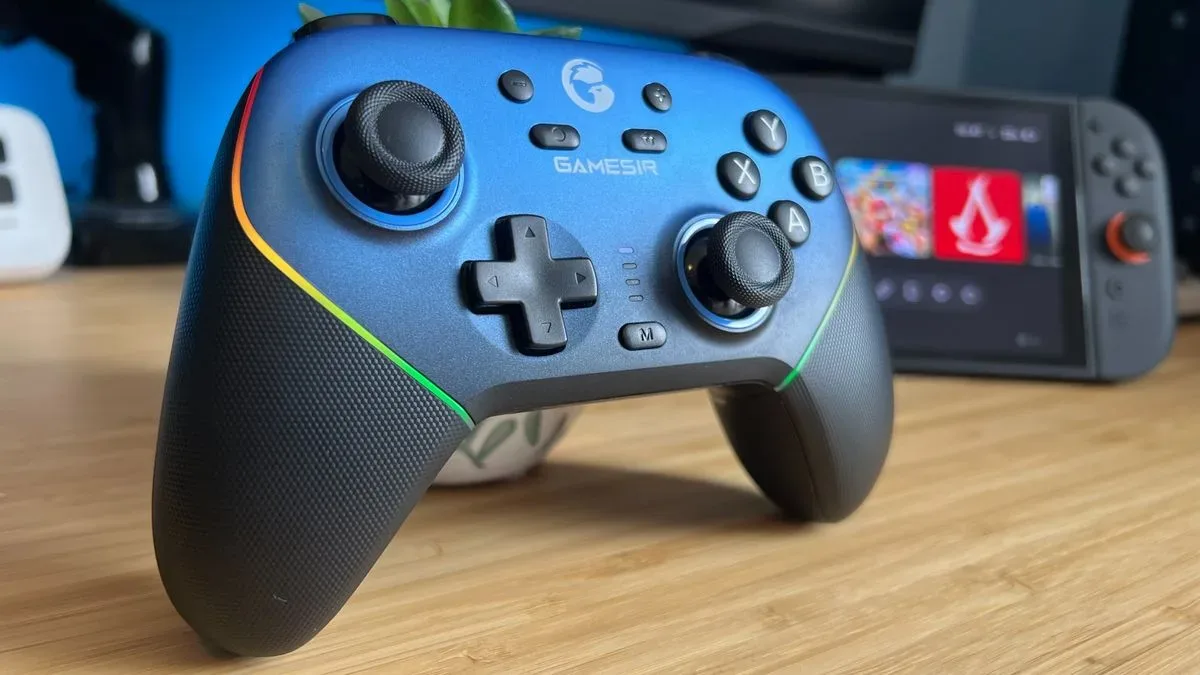
For anyone assembling a handheld setup, controls remain part of the calculation. Our look at the GameSir Super Nova’s controller features and limitations is a reminder that button layouts and device-specific behavior can matter as much as raw specs. In Nighthawks’ case, the relevant issue is not whether the game can be launched, but the exact way navigation behaves on Steam Deck.
What to expect from Steam Deck controls
The analog sticks do not move an on-screen cursor in Nighthawks. Instead, they are used to scroll through text and dialogue choices. That may sound unexpected to players accustomed to a mouse-like pointer on handheld PC games, but it is not necessarily an obstacle in a text-forward design. The D-pad is described as an intuitive alternative for navigating the interface.
The Deck touchscreen is also compatible, offering a more direct way to select or examine points of interest. This may be especially convenient in scenes where directional arrows would otherwise be used to scroll around the screen. In short, Nighthawks’ controls appear to offer a workable mix of button-based reading and touch interaction, but players expecting the sticks to behave as a cursor should adjust their expectations.
That is the honest middle ground on the game’s handheld status. Nighthawks has a purposeful smaller-screen option and reportedly performs cleanly in use, but it does not yet carry the official Verified badge, and its input behavior is not identical to every traditional PC interface. Players comfortable with D-pad navigation and touchscreen taps should have the clearest idea of what they are getting.
A focused campaign with room to investigate
Nighthawks can reportedly be completed in well under 20 hours, including revisiting the closing portion of the final act to see the endings available within that playthrough. That suggests a manageable narrative RPG rather than an open-ended game demanding dozens of hours before its credits. It may be well suited to a long weekend, a sequence of train rides or a few evenings of dedicated play.
“Well under 20 hours” should not be treated as a universal completion estimate. Reading speed, the number of side quests pursued and a player’s willingness to reload decisions can all change the result. The useful takeaway is scale: five acts supply a defined arc, while companions, builds and endings supply reasons to go beyond a single straight run.
The side content also appears to be where some of the game’s most memorable storytelling lives. One highlighted investigation uses a haunted dollhouse to piece together what happened to a family that employed a vampire nanny for their son. The house occupies the left side of the screen, with text boxes on the right; visual details in each room guide the player toward the next memory vignette.
A memory vignette is a brief, focused narrative scene that reveals a fragment of past events rather than delivering the entire account at once. In this case, the presentation turns observation into a form of progress. The player is not simply clicking through a story; they are expected to notice hints in a small environment and use them to determine which recollection to view next. It is a smart example of how a largely text-driven RPG can make investigation active without requiring conventional combat.
It also explains why optional leads may be worth pursuing even when they do not seem essential to the main objective. Side quests can expand the setting’s darker details, develop individual stories and provide the kinds of self-contained mysteries that linger after a session ends. For players who value a world’s texture as much as its destination, that can be more rewarding than a checklist of errands.
Who should put Nighthawks on their shortlist?
- Steam Deck owners who read a lot in games: The dedicated larger-text mode directly addresses a common handheld pain point.
- Vampire RPG fans seeking narrative over action: The game emphasizes choice, companions, skills and investigation instead of a combat-heavy loop.
- Players with limited time: A five-act story completable in under 20 hours, depending on approach, is more approachable than an enormous RPG commitment.
- Replay-minded players: Character backgrounds, powers, proficiencies, companion material and endings create several variables to explore.
Who may want to wait or look elsewhere?
- Players who need official Steam Deck verification: Nighthawks does not currently have that designation, even though its reported handheld performance and display formatting were positive.
- Players who strongly prefer analog cursor control: The sticks scroll rather than move the pointer; D-pad and touchscreen inputs are the more relevant tools.
- Fans of action-first vampire games: This is not positioned as a combat-led RPG, and buying it in expectation of one risks a mismatch.
Nighthawks’ strongest selling point is not that it tries to make a Steam Deck behave like a desktop computer. It seems to recognize what the device is good at: making a compact, immersive story easy to pick up away from a desk. Larger text, touchscreen support and a relatively contained campaign make a persuasive case for the format, while the lack of official verification and unusual stick behavior are fair cautions rather than deal-breakers.
For $18, it looks like a focused vampire RPG for players eager to trade button-mashing for conversations, clues and consequences. The game is available now on PC via Steam.