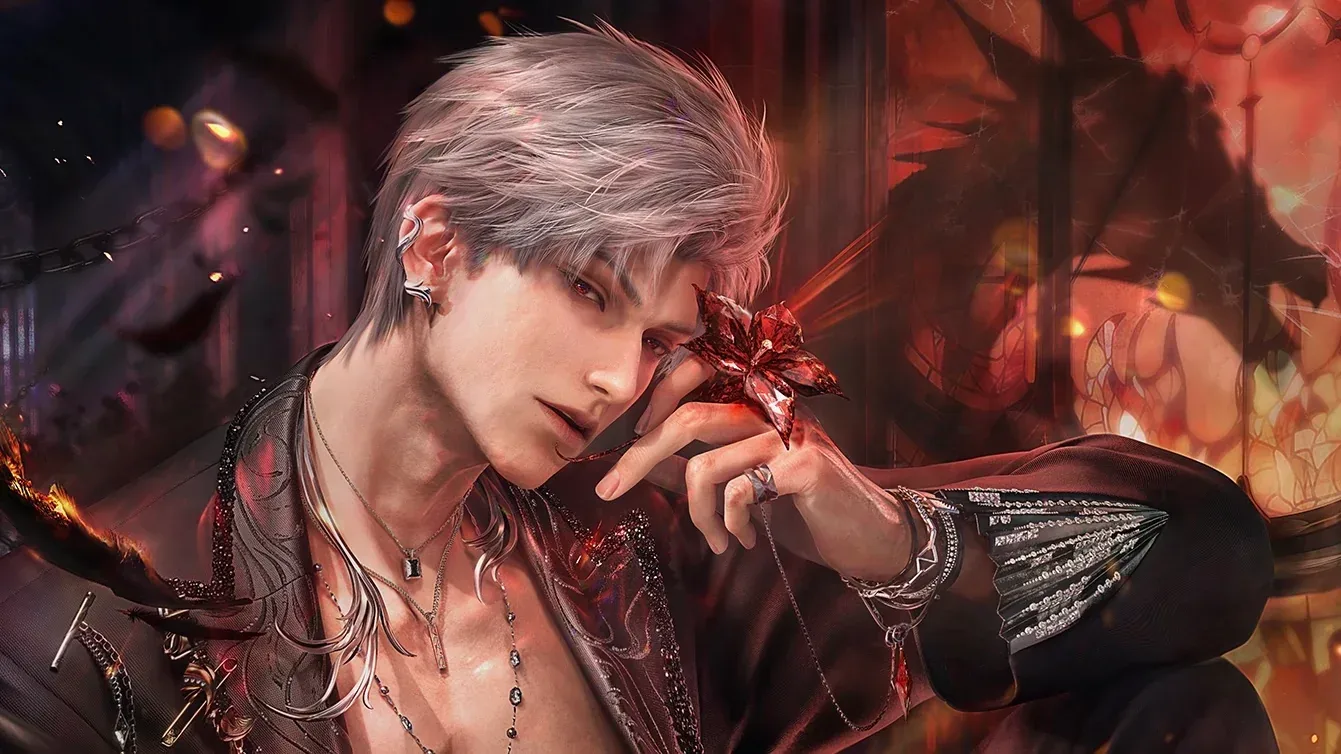
Otome games are built around romance with male characters, but a recent comparison of player responses suggests that the pleasure of the genre is not identical everywhere. For U.S. players, forming an emotional bond with a fictional love interest can be closely connected to a rewarding entertainment experience. Yet the feeling that the character returns that affection appears to be far less important to enjoyment than it is for players surveyed in Asian markets.
That is a small but revealing distinction. It complicates the easy joke that players are simply looking for a virtual boyfriend who will say the right thing on schedule. Romantic attachment remains central to the experience, but the research indicates that some players can value a character, story, or relationship arc without needing to interpret the romance as a direct, mutual relationship between themselves and the game’s love interest.
Elena Yifei Zhao and Nicholas D. Bowman examined how U.S. otome players respond to the genre in comparison with findings from other regions. Their work points to a shared foundation: emotional bonding and romantic connection with male characters are positively associated with the entertainment experience. That shared result matters. It suggests the central appeal of otome games travels across cultural boundaries even when players understand their role in the romance differently.
The important term: perceived reciprocity
The key idea is perceived reciprocity. In this context, it means whether a player feels that a fictional love interest emotionally responds to, validates, supports, and shows affection toward them. It is not merely whether a character is friendly, attractive, or prominent in a story. It is the sense that the relationship is mutual from the player’s perspective.
For the U.S. sample, perceived reciprocity was not significantly associated with either enjoyment or appreciation. In plain language, the survey results did not show that feeling loved back explained whether those players enjoyed or appreciated the game. That is not evidence that reciprocity never matters to any individual U.S. player. It means it did not emerge as a meaningful statistical explanation for entertainment outcomes within this particular sample.
That distinction is worth keeping intact. A finding of “not significantly associated” is not the same thing as proving that a feature has no value, that every player feels the same way, or that a game can discard romantic responsiveness without consequences. It describes the pattern detected in the surveyed group, and it leaves room for a wide variety of individual tastes.
Still, the contrast with earlier findings about Chinese players is notable. Previous work by the same researchers found that Chinese players wanted fictional crushes to be emotionally responsive and to offer validation, support, and affection. In that context, reciprocal emotion was part of what players expected from the genre’s romantic fantasy. The U.S. data did not replicate that same relationship between reciprocity and entertainment.
Connection does not always mean self-insertion
One useful way to read the finding is to separate two experiences that are often bundled together under “romance game.” A player can enjoy a love story as a direct fantasy in which they imagine themselves receiving a character’s affection. Or they can enjoy it with more distance: identifying with an avatar, appreciating the chemistry between characters, following narrative development, or becoming emotionally invested in a love interest without treating the exchange as personally reciprocal.
Related coverage includes Study Examines Why U.S. Players Connect With Otome Game Love Interests.
The research suggests U.S. players may be more likely to maintain that separation between themselves and their in-game avatar. They may not need to imagine that they personally are the recipient of every affectionate gesture for a relationship path to feel entertaining or meaningful. Put differently, a player can be attached to the character without requiring the game to confirm that the character is attached to the player in the same way.
That does not make the emotional response less real as entertainment. Fiction constantly asks audiences to switch among viewpoints: rooting for a protagonist, admiring a character, enjoying a relationship dynamic, or imagining a role for themselves. Otome games make those possible positions especially visible because romance is their core structure. The research simply indicates that the preferred distance between player, avatar, and fictional partner may differ across audiences.
Stigma may shape the way players frame the fantasy
The researchers connect this difference to the stigma still associated with otome games in the United States, where the genre is described as less accepted and relatively newer as a phenomenon. If a form of play feels socially marginal, players may be more inclined to frame it as a story, character interest, or avatar-based role rather than a straightforward statement of their own romantic feelings.
This is an explanation offered by the research, not a universal diagnosis of U.S. players. Stigma does not mean every player is embarrassed by the genre, nor does it establish a direct cause-and-effect chain from social judgment to survey answers. But it provides a plausible cultural lens for the observed difference: when audiences do not feel fully licensed to claim a romantic fantasy openly, more distance from the protagonist can become part of how the experience is understood.
Experience with the genre may also matter. Chinese players have a longer-established relationship with otome games, and reciprocity may have become an expected feature of that experience. U.S. players may include more people still discovering the genre or coming to it with different expectations about character fiction, interactive storytelling, and avatar role-play. The supplied research presents this as a possible reason for the contrast rather than a settled conclusion.
What the result does—and does not—say about game design
For developers and writers, the practical lesson is not “reciprocity does not matter.” Romance games still need characters and relationships that players can care about. The broader findings say emotional bonding and romantic connection remain linked to entertainment across regions. A cold, inert, or dramatically disconnected love interest would hardly follow from the data as a winning formula.
The more careful lesson is that one romance design does not serve every audience in exactly the same way. Some players may prize clear emotional validation and a feeling of mutual affection. Others may get just as much from narrative closeness, character appeal, and the evolving relationship itself, even if they do not experience it as a direct exchange between themselves and the love interest.
That can affect how a game presents its protagonist and relationship options. A strongly defined avatar may invite players to observe and inhabit a romance without demanding full self-insertion. Conversely, writing that emphasizes personal affirmation and direct affection may be especially valuable for audiences seeking a more reciprocal fantasy. Neither approach is inherently more authentic; they serve different routes into emotional engagement.
It is also a reminder that survey results should not be flattened into a claim about national taste. “U.S. players” and “Asian players” are not single, uniform audiences. The study identifies a difference in the surveyed patterns, while the article’s underlying point remains broader: lived experience, familiarity with a genre, and the social meanings attached to play can all shape what people take from the same mechanics and characters.
Why the distinction matters beyond romance games
Otome games make the question unusually explicit, but the underlying issue reaches beyond them. Games often ask players to form attachments—to companions, teams, avatars, rivals, and communities—without dictating precisely how personal those attachments must feel. One person treats a protagonist as an extension of themselves; another sees them as a separate character whose choices they guide; a third may shift between both positions during the same game.
Even interface and social features can change how a player understands their place in a game space. For example, tools designed to clarify who is participating in conversation, such as the PS5 Display Who’s Speaking feature, address a different type of connection but underline the same broad truth: games are not experienced only through rules and visuals. Framing, communication, and the player’s perceived relationship to others all matter.
The otome findings therefore offer a useful corrective to the assumption that interactive romance has one obvious appeal. Emotional closeness can be meaningful without being interpreted as personal romantic confirmation. A virtual crush does not have to “love the player back” in a measurable sense for the player to find the character compelling, the relationship satisfying, or the game worth their time.
That is not a reduction of the genre’s emotional power. If anything, it gives that power more dimensions. Players can seek affection, validation, narrative chemistry, escapism, identification, observation, or a mixture of all of them. The research supports the simple point that romance-game audiences share important desires while still bringing different cultural contexts and expectations to the screen.