Lots of board games wear horror’s costume. Haunted houses, ancient entities and familiar movie-monster silhouettes are all easy enough to put on cards, boards and miniatures. Achieving actual dread around a table is far harder. Friends are talking, snacks are within reach, and someone is inevitably checking a rulebook. The atmosphere is usually closer to a playful mystery than a nerve-fraying survival story.
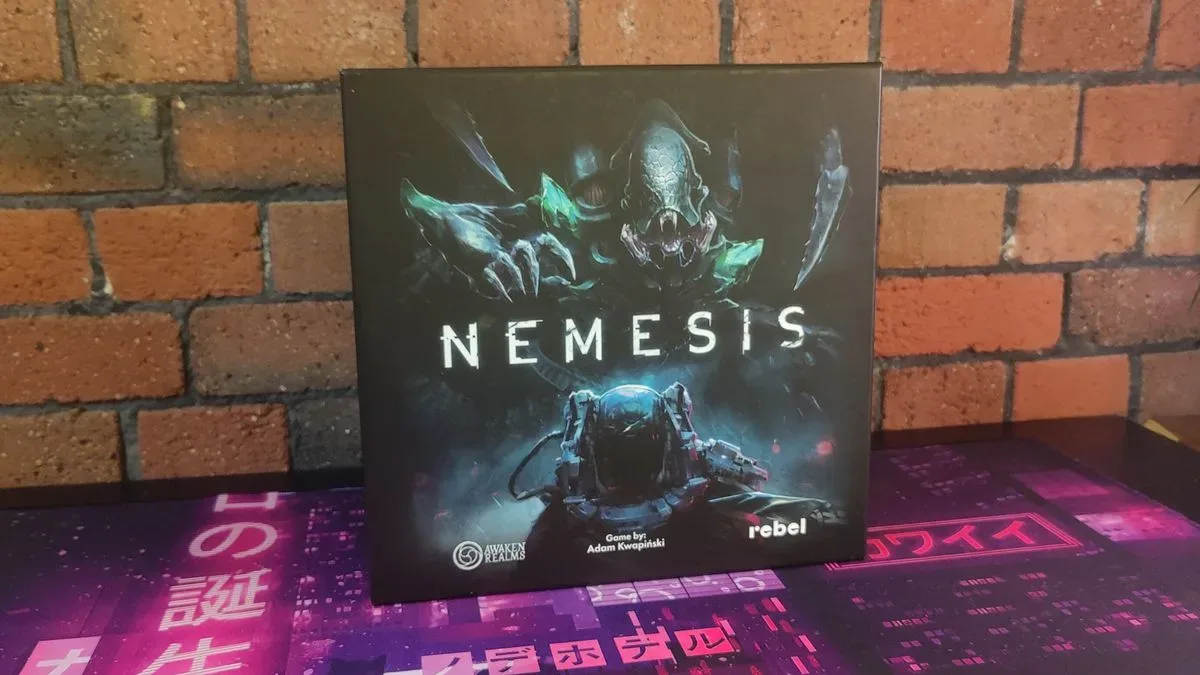
Nemesis is built to fight that comfort. Its scenario puts players aboard a battered spacecraft shared with deadly extraterrestrial Intruders, but the monsters are only one part of the pressure. The game’s central trick is making cooperation feel necessary without making it safe. Players may need one another to survive encounters and keep the ship functional, yet each person begins with private goals that can pull the group in incompatible directions.
That combination makes it a particularly sharp candidate for a Halloween gathering: not merely because it has vents, corpses and things eager to attack from the dark, but because it creates stories about suspicion. A teammate who says the engines are repaired might be telling the truth. They might also be pursuing an objective that makes somebody else’s survival inconvenient.
Why tabletop horror usually stops at spooky
Horror games have a structural challenge that horror films and video games do not. In a film, the audience has little ability to intervene. In a video game, sound design, camera position and pacing can isolate a player. A board game is a social object. Participants can openly debate a choice, joke about a threat, or pause the momentum to clarify a rule. Those are strengths for many kinds of games, but they can blunt fear.
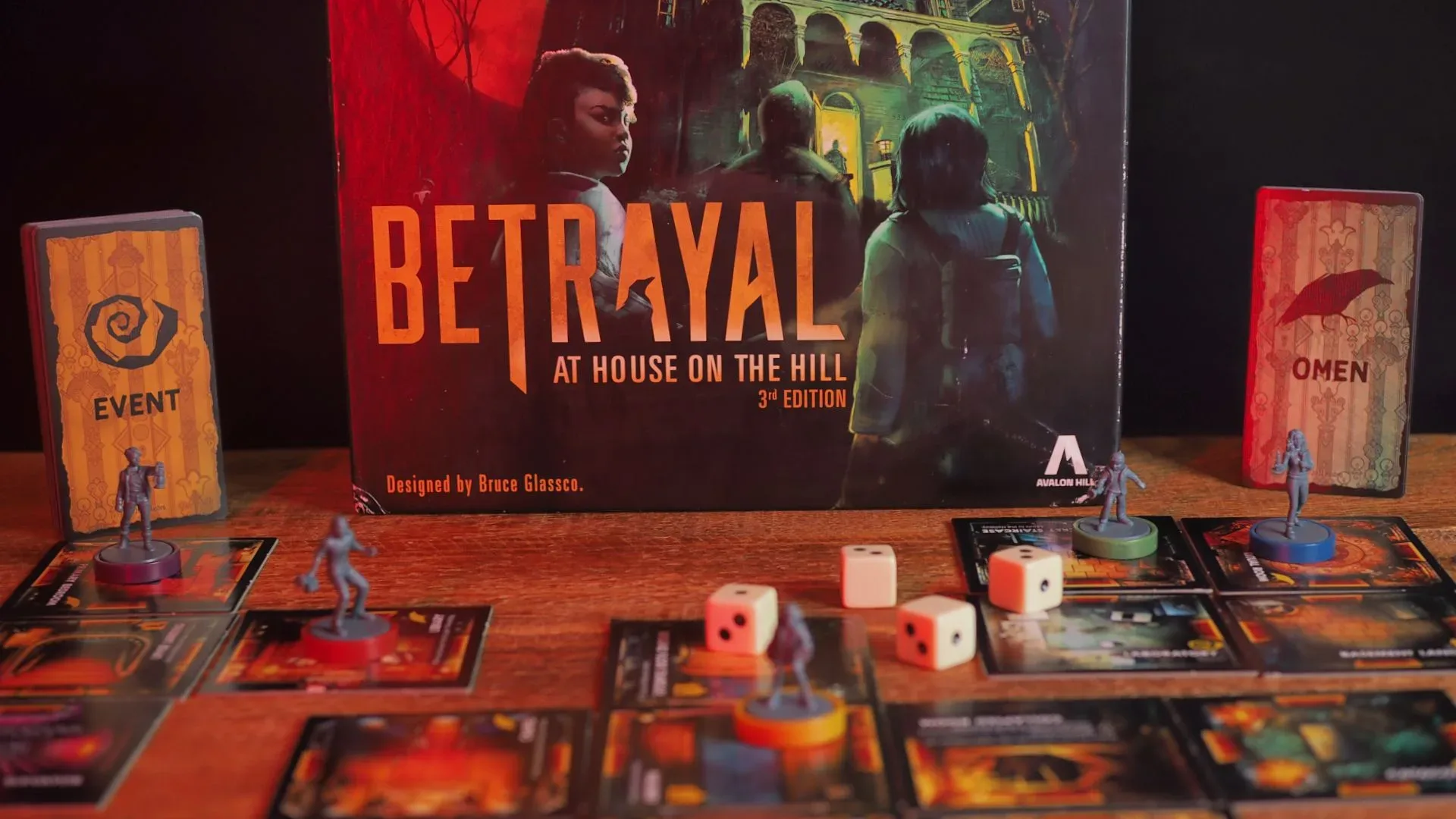
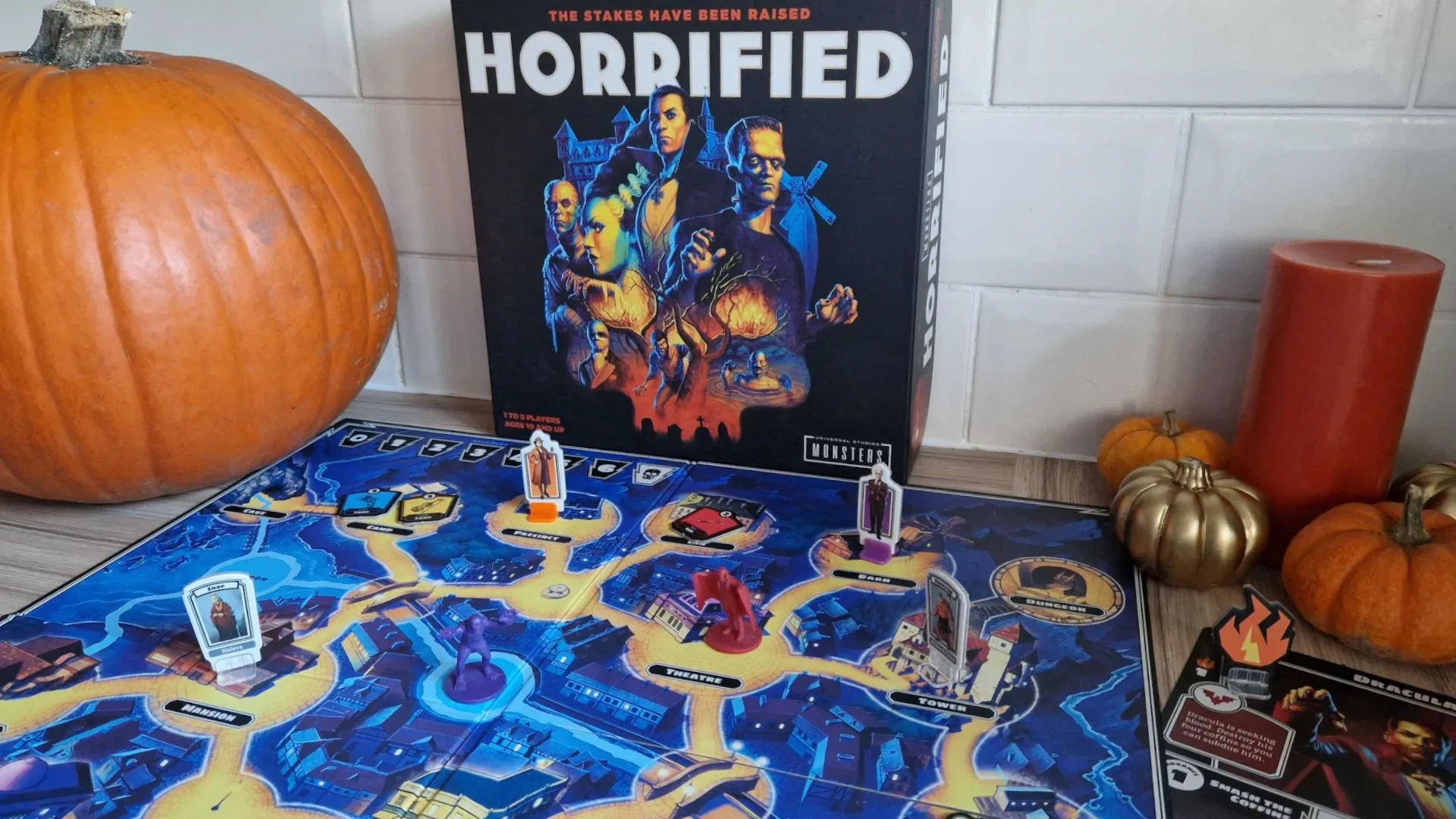
Titles such as Betrayal at House on the Hill, Arkham Horror and Horrified demonstrate how broad and appealing the spooky-board-game space can be. Their themes invite players to engage with monsters and menace. That does not automatically mean participants feel endangered. Tabletop tension needs consequences that players believe in, uncertainty they cannot casually talk away, and difficult decisions that arrive before everyone has settled on a neat plan.
Nemesis seeks that feeling through a deliberately hostile survival structure. It is not simply a game about eliminating aliens. It is a game in which exploration, noise, hidden information and personal incentives build on each other. That turns ordinary questions—where should we go, should we help, is combat worthwhile—into questions with an uncomfortable edge.
A ship designed to make players uneasy
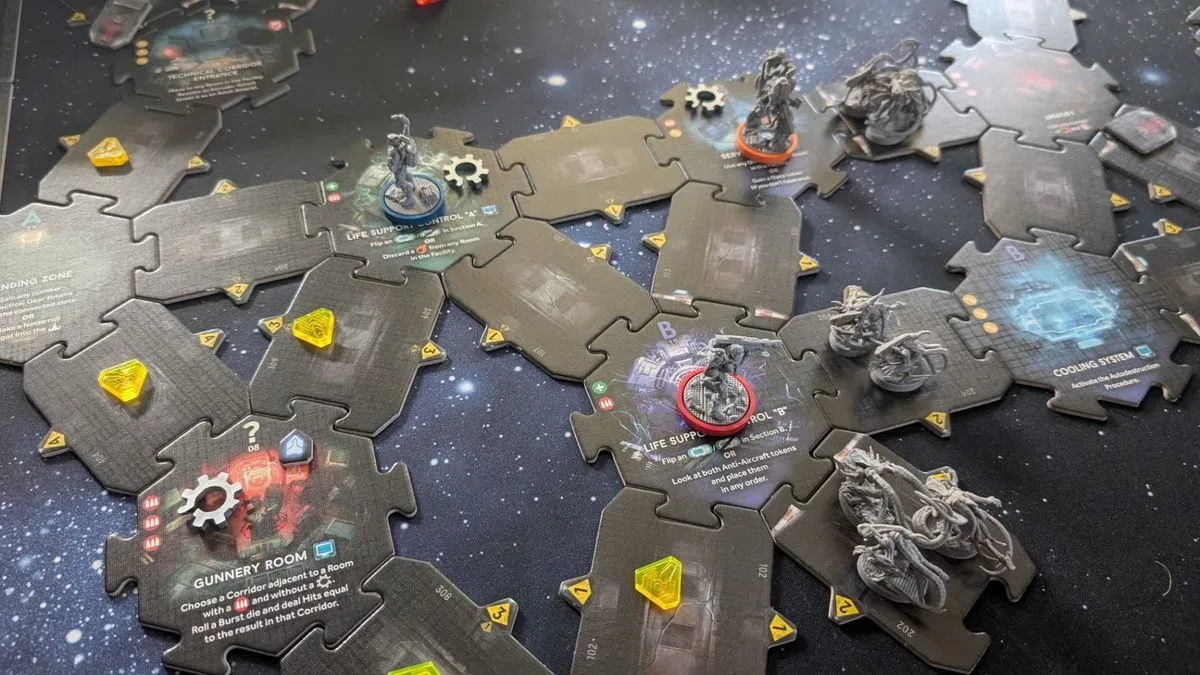
The opening premise supplies the first layer of disorientation. The crew wakes from hibernation amid a dead body and missing memories. The ship’s layout is randomized, so players must discover how their own environment is arranged rather than begin with complete knowledge of the board. In practical terms, that means the group cannot immediately treat the spaceship as a solved puzzle.
Randomized configuration is an important term here. It means the arrangement of locations is not fixed from playthrough to playthrough. The uncertainty is not only narrative decoration; it affects planning. A route that seems sensible early may lead somewhere less helpful than expected, and players have to learn what the ship offers as they move through it.
Related coverage includes Nemesis Turns Halloween Board Game Night Into a Fight for Survival.
Exploration itself creates danger. Moving around can generate noise, and that noise can draw the Intruders out. The resulting tension curve is gradual rather than constant. Early turns are about getting oriented and testing what is known. Over time, the consequences of movement and incomplete information accumulate. The ship grows less like a setting and more like an active threat.
That escalation matters for a group night. An immediate pile-on of monsters can be exciting, but it leaves little space for people to become invested in one another’s claims and plans. Nemesis gives suspicion time to take root. By the point the aliens are a regular danger, players have already had opportunities to make promises, withhold information or make choices whose motives are unclear.
The Intruders are a problem, not a target practice
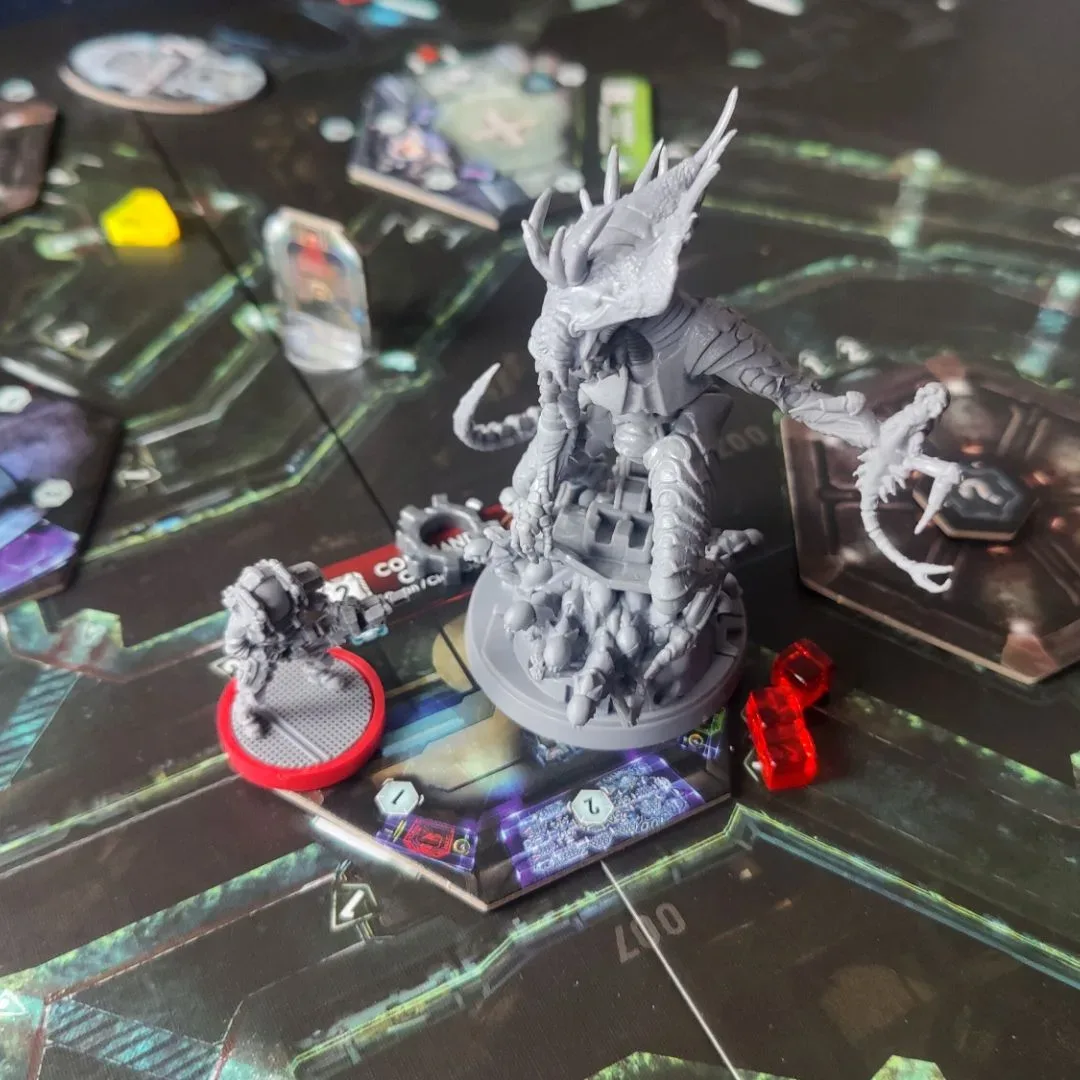
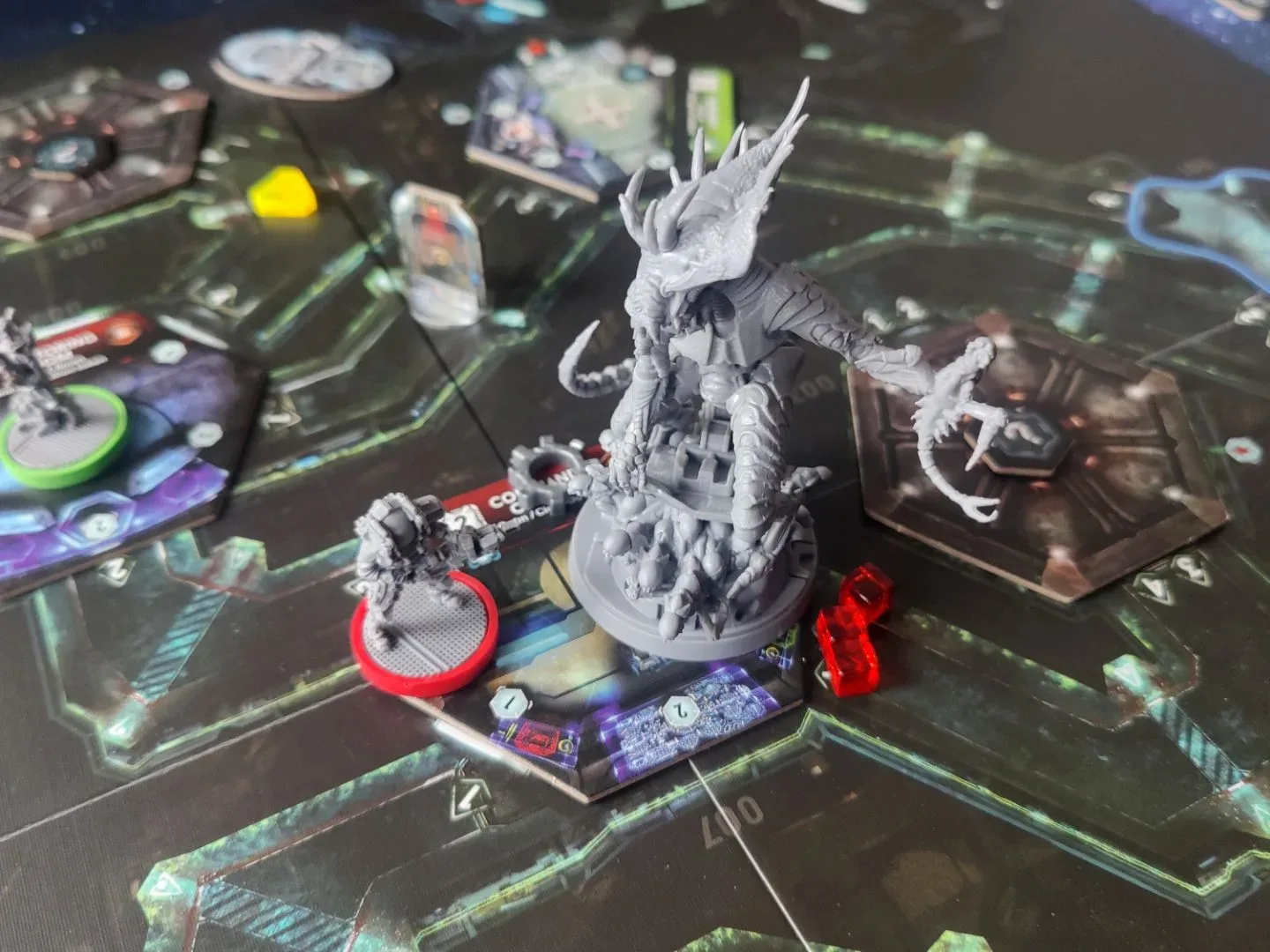
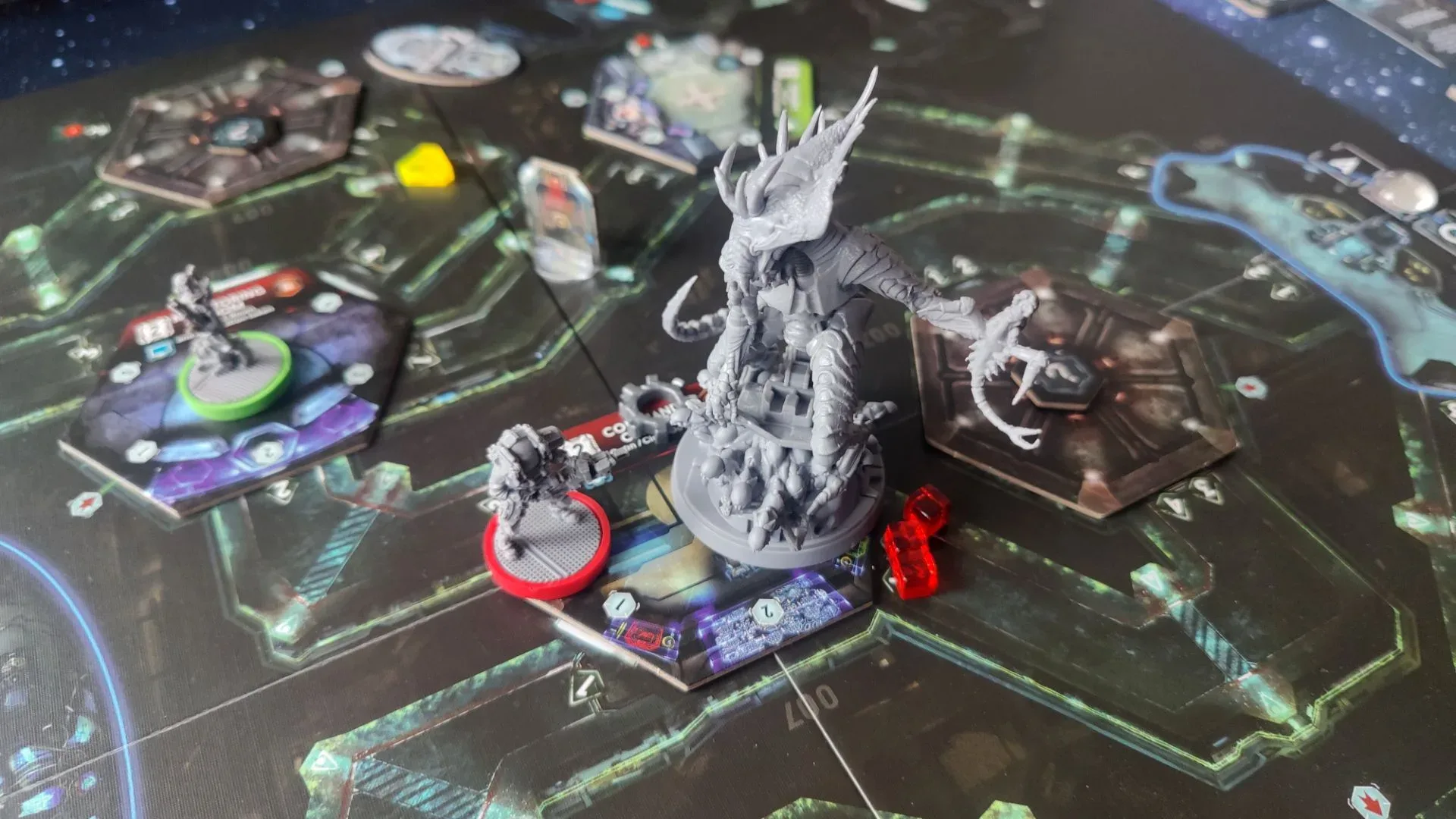
Nemesis takes obvious inspiration from the kind of science-fiction horror where a crew is trapped in tight metal corridors with a predatory alien organism. Its versions use the name Intruders for the extraterrestrial threat. They can emerge from vents, attack the crew and create a danger that is much bigger than a routine combat encounter.
Fighting them is generally presented as a last resort. That design decision is crucial. If players could reliably solve every appearance through force, an Intruder would become an inconvenience: another obstacle to calculate, then remove. Instead, the monster’s presence is an event that may force a retreat, an appeal for aid, or a change in plans.
Help improves the odds, but that help cannot be assumed. A player who rushes in to assist might share a survival interest. They may also be weighing their own secret objective, deciding that the cost of saving a teammate is too high. The fear therefore comes from the overlap of two uncertainties: what the creature will do, and whether other people will honor the social understanding of the table.
Co-op with an asterisk
Nemesis is often described as cooperative, but that label needs an asterisk. Everyone has a reason to keep the overall situation from immediately collapsing. Yet every player also receives a hidden objective. Some of those goals are comparatively harmless, while corporate-themed objectives may require betrayal or leaving someone behind.
Hidden objectives are private win conditions: goals that one player knows but the other players do not. In a fully cooperative game, the group can normally share information and optimize a common solution. Hidden objectives interfere with that certainty. Even a useful action can invite doubt, because the table cannot be fully certain why it was taken.
This does not mean every game becomes an argument, or that every player is secretly trying to destroy everyone else. The point is subtler and more effective. Nemesis makes trust conditional. One person may need the team to survive long enough to reach their own goal; another might need a particular piece of information, a ship system, or another crew member’s bad luck. As a result, cooperation is real, but it is never entirely clean.
The game’s strongest horror idea is arguably that an alien attack can be easier to interpret than a friend’s decision. A creature is expected to be dangerous. A fellow survivor is supposed to be useful—until the moment they shut a door, fail to come back, or reveal that their plans were never aligned with yours.
Nemesis turns a familiar question—“Will you help me?”—into the most alarming line at the table.
Failure is part of the story engine
The prospect of death is not a decorative risk in this framework. Characters can die through encounters with Intruders, but the ship itself is also a source of catastrophe. A crew member might be left behind, caught in a burning room, blown up or sent into space. The exact details are less important than the wider message: survival is precarious, and a group can carry the memory of an especially ruthless decision into the next session.
That is why Nemesis works well as a story-generating game. The term does not mean it follows a single authored story in the way a novel does. It means the game’s systems produce memorable events from player choices, unexpected threats and competing incentives. One session’s defining story might be about an exploration gone wrong; another might be about an apparent rescue that turns into a betrayal.
For prospective groups, there is a practical implication. Nemesis is likely to land best with players who are comfortable treating setbacks and character deaths as part of the experience. Its appeal is not based on everyone cleanly executing a plan. The brutal difficulty and possibility of betrayal are the mechanisms that make its tension work. A group that wants low-pressure cooperation may find that intensity frustrating rather than festive.
Conversely, a group that enjoys dramatic reversals and recounting the worst thing somebody did during a game has a lot to work with. The important expectation to set before play is that the social drama is part of the design. No one should mistake a hidden objective for a promise that the evening will be gentle.
Which Nemesis is easiest to start with?
There are three versions currently in the family: Nemesis, Nemesis: Lockdown and Nemesis: Retaliation. A Legacy version is also planned. Each offers a different flavor of the core alien-survival idea rather than an unrelated experience.
- Nemesis is the original spaceship survival scenario and remains the recommended starting point for players who can find it.
- Nemesis: Lockdown moves the setting to a secret research base.
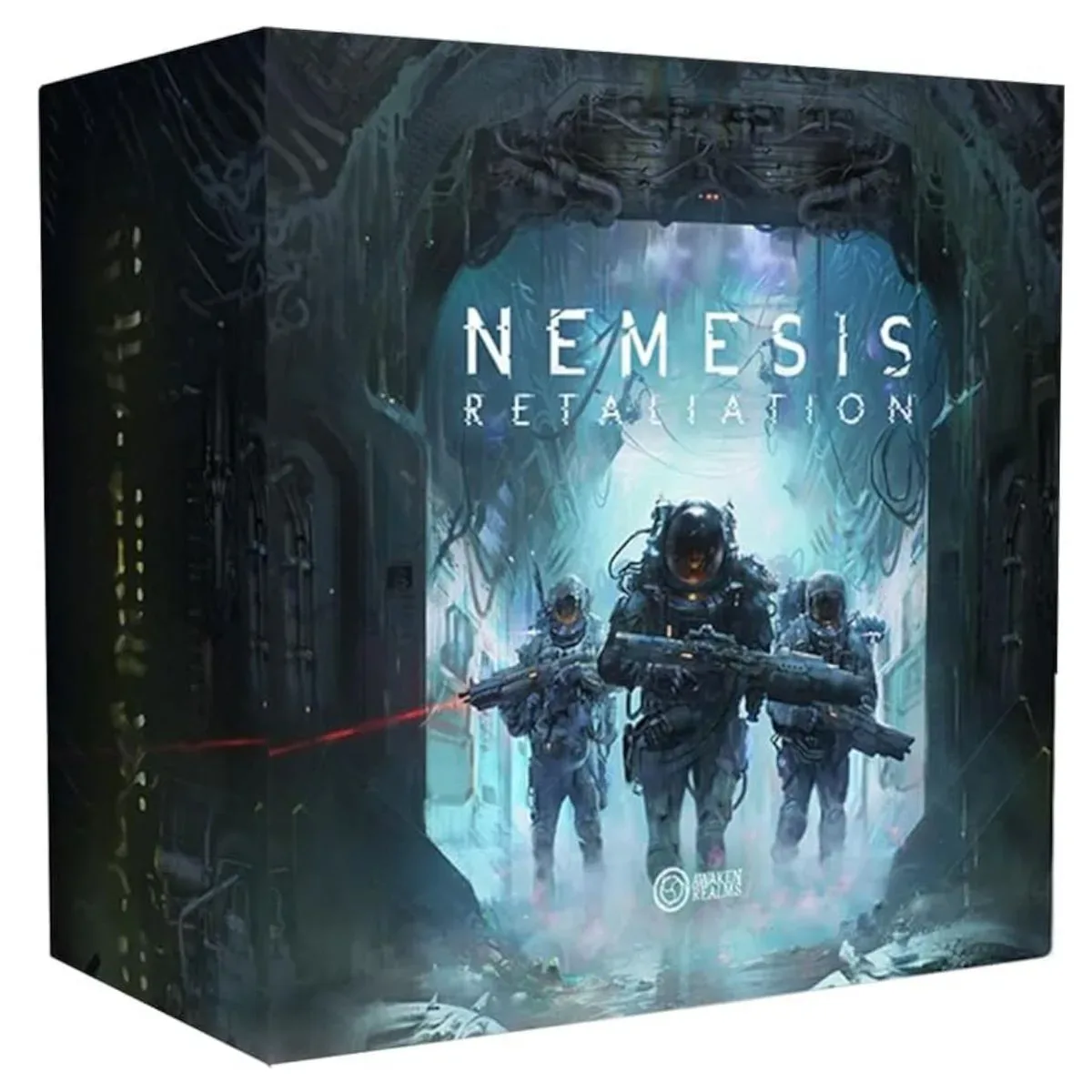
- Nemesis: Retaliation shifts the tone toward a marine squad, evoking a more action-oriented variation on the premise.
Availability may make the choice simpler than preference. The original has been difficult to obtain and can command a premium over MSRP when copies appear. Retaliation, the newest version, is widely available, while the sequels can be less expensive routes into the series. In that sense, the most useful recommendation is straightforward: the best Nemesis to play is the one the group can reasonably get hold of.
The distinction between the original’s isolated-survivor feel and Retaliation’s squad framing is still useful when matching a game to a crowd. Players attracted to slow-building claustrophobia may prefer the original setup. Players who respond to the idea of a capable team facing an overwhelming threat may look first at Retaliation. Either way, the core appeal remains the collision between a lethal environment and unreliable allies.
Making the Halloween session work
Nemesis does not require extra theatrics to manufacture an atmosphere. Its own mechanisms provide the pressure. Still, groups can get more from it by agreeing on what kind of night they are having. Explain upfront that private objectives may create conflicts, that combat is not a universal answer and that failure can be spectacular. This is not a game to introduce as a casual monster romp and then spring the betrayals on players who expected a pure team exercise.
Give the opening room to breathe. The early uncertainty—learning the layout, deciding where to explore and beginning to assess the crew—is where the later paranoia gets its force. Racing through that portion risks reducing the experience to a series of battles. The quieter decisions are what turn an alien encounter into a personal disaster.
Most importantly, let the post-game accusations be funny rather than genuinely sour. The scenario may encourage abandonment and deception, but those events are at their best as anecdotes: the engine repair that was never verified, the ally who did not return, the suspicious egg someone was carrying. The game provides the disaster; the group supplies the legend.
For more discussion of how games create distinct experiences through their mechanics rather than just their themes, see our look at the case for turn-based design in a mainline Final Fantasy.
For Halloween, Nemesis stands apart because it understands that a monster is only half the fright. The other half is looking across the table at the person who says they are coming to save you—and wondering whether they have already decided you are expendable.
Shop the products
Check current price, model and availability at the retailer.