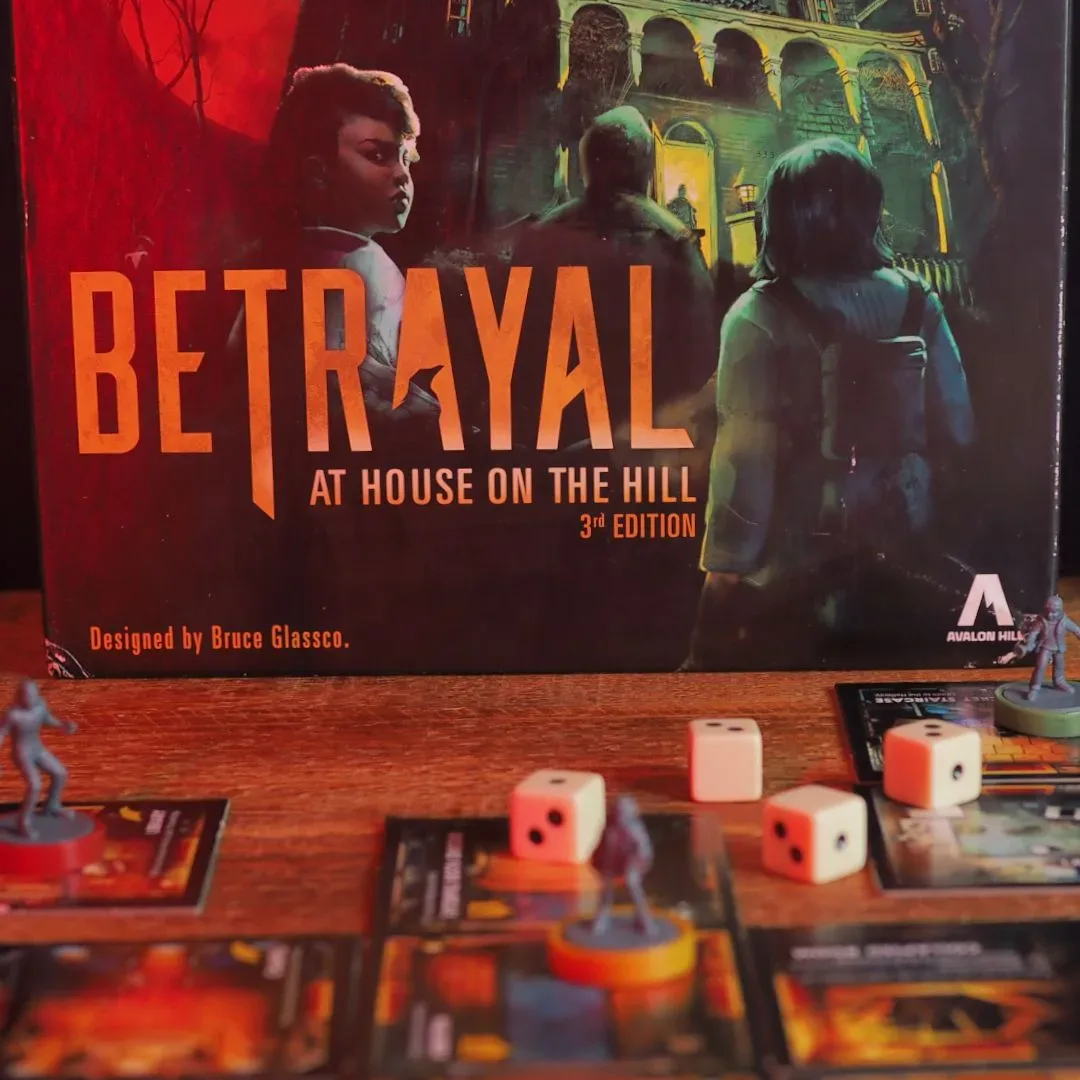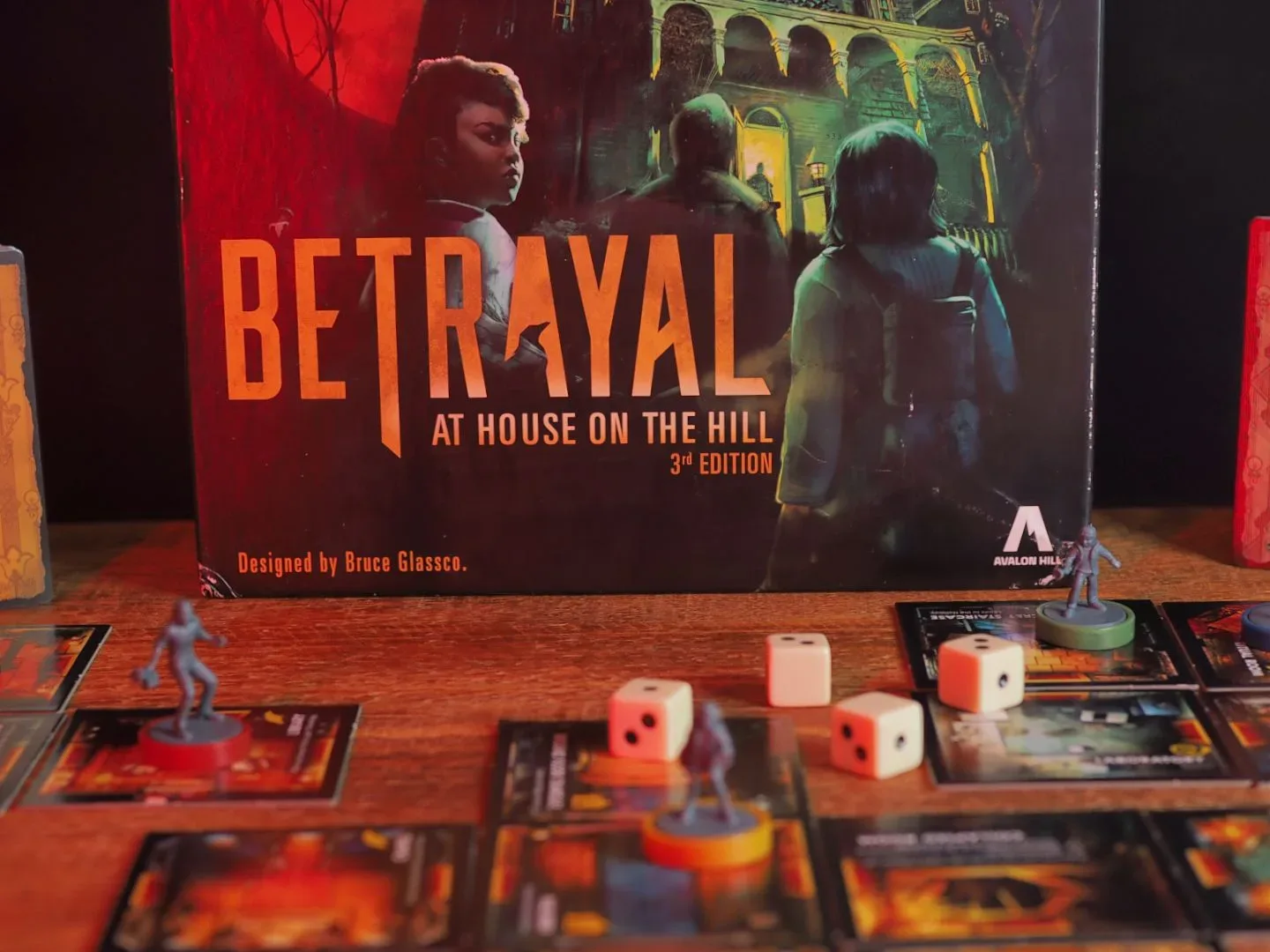
Horror has a few unfair advantages on a screen. A film can cut to a face at exactly the wrong moment, pour dread through its soundtrack and control what the audience can see. A board game has dice, cardboard rooms and the unnerving possibility that the person opposite you is about to become a monster with a rulebook.
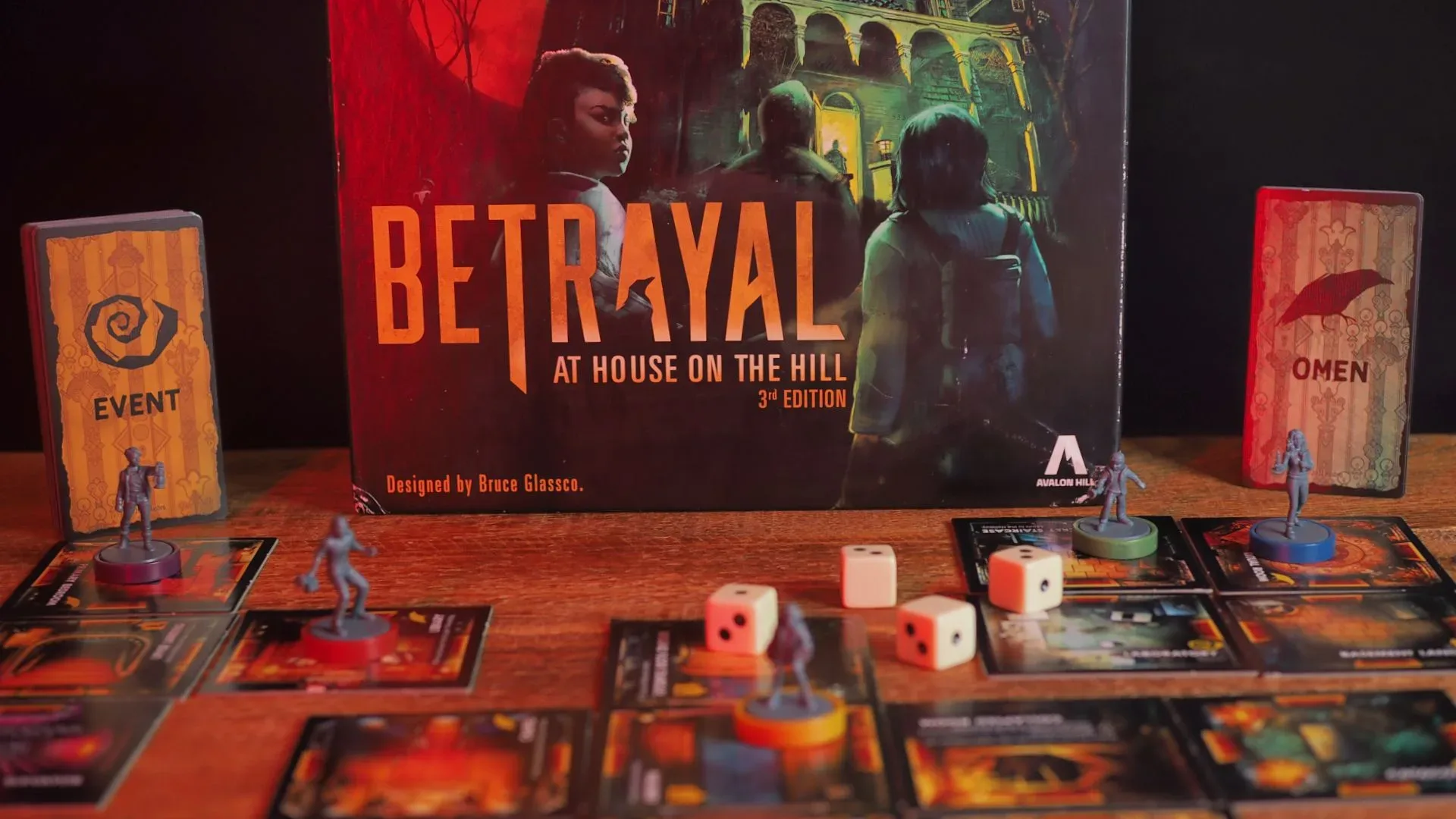
Betrayal at House on the Hill has remained a Halloween-table contender because it understands that limitation and turns it into a social weapon. Its horror does not depend on meticulously crafted jump scares. Instead, players collectively build an unfamiliar mansion, uncover strange objects and events, then wait for the game to reveal which terrible genre premise has been hiding inside the house all along. The change from cooperative exploration to suspicion, pursuit and competing hidden goals is the point where the table starts supplying its own atmosphere.
The current third edition is listed at $60/£45, though lower prices may appear through retailers. A second edition also remains in circulation. Both are associated with 50 alternate scenarios, giving the game an unusually broad pool of possible climaxes for a box built around haunted-house escalation rather than one fixed plot.
A mansion that refuses to learn its floor plan
The core idea is simple enough for a group that does not want to spend Halloween evening wrestling with a dense simulation. Players take on broad horror archetypes, including figures such as a jock or a creepy child. Their reason for arriving varies, from paranormal investigation to an ominous summons. Once inside, they explore.
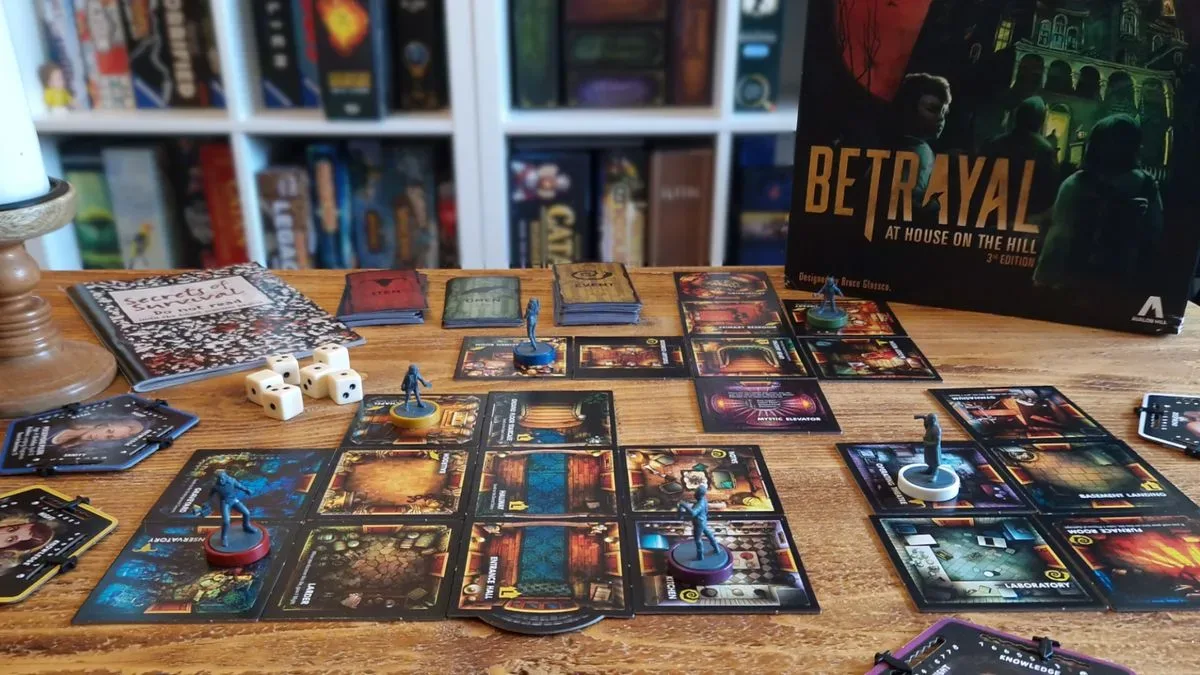
But there is no complete mansion map waiting under the lid. Rooms are drawn as tiles, so the layout emerges during play. A door can lead to another place that did not exist a minute earlier, and the house is consequently different from session to session. That random construction is more than decorative variety. It makes navigation part of the tension: players cannot reliably plan the safest route, and the geography becomes a story of its own.
In practical terms, the system gives newcomers something immediately understandable to do: reveal a room and deal with what it contains. Those rooms can introduce supernatural events or items that help and hinder explorers. The early game therefore has a lightly cooperative character, with everyone investigating a house that is visibly getting larger and stranger.
That shared investigation also provides a useful runway before the game asks players to take sides. Groups can learn the immediate consequences of rooms and cards as they go, rather than needing to understand every one of the game’s eventual horror plots before the first turn. Accessibility, here, means that the initial task is tangible even while the destination is deliberately unknown.
Omens make the eventual disaster feel inevitable
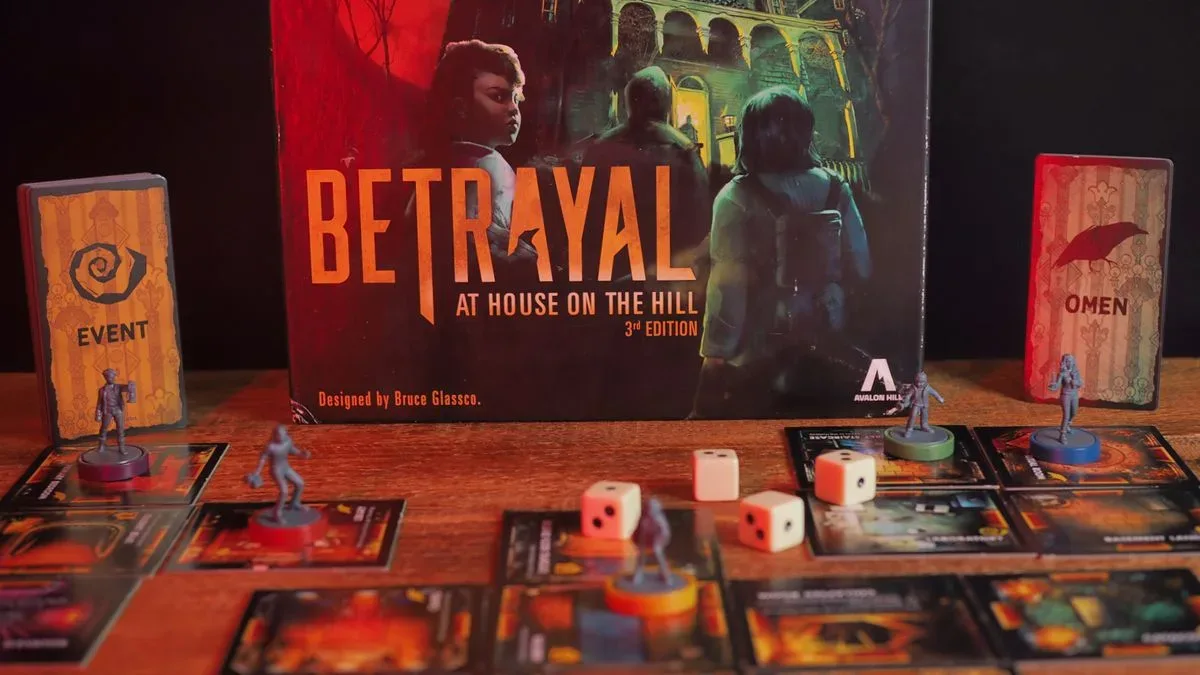
The mechanism that drives the house toward its big reveal is the Omen. An Omen is a special artifact that can deliver a significant benefit, but it also adds danger to the session. Each time an Omen enters play, players roll dice based on the number of Omens currently in the game. A result of 5 or more begins the scenario.
Related coverage includes Betrayal at House on the Hill Remains a Halloween Tabletop Essential.
That process matters because it creates a visible threat curve. An Omen can be tempting precisely because it is useful, yet every additional Omen means another encounter with the roll that can flip the entire game. This is not a countdown measured in a known number of rounds. It is a rising chance of catastrophe, which suits a haunted mansion much better than a timer politely announcing when the ghost will arrive.
For players, the technical takeaway is that the game’s suspense comes from probabilistic escalation: the danger is determined by a die result, but the number of Omens steadily changes the conditions around that result. Nobody knows the exact moment the story will pivot, while everyone knows it is becoming harder to avoid. The table gets a reason to feel anxious before the haunt begins.
It is also a clean example of theme and mechanism pulling in the same direction. Drawing rooms makes the building unknowable. Drawing strange things makes it hostile. The Omen roll makes disaster increasingly likely. None of those elements needs cinematic production values to make players lean toward the board.
The betrayal is a format, not one fixed villain
Once the scenario begins, the game can turn one player against the rest. That player and the other side receive secret objectives, transforming the experience into a race in which neither side necessarily has a full view of the other’s plan. The shift is why the title carries more weight than a generic haunted-house label: the danger may be in the rooms, but it can also be sitting in a chair nearby.
The game’s 50 scenarios range from eerie setups to knowingly pulpy B-movie material. One premise can involve the ghost of a serial killer possessing a friend. Another has a faceless figure stalking the mansion, returning whenever players seek the knowledge needed to banish it. A further scenario turns the house into a flooded trap with dark creatures coming from below. These are not variations on a single antagonist. They are different horror engines that reuse the mansion, its occupants and the uncertainty created by the opening exploration.
That variety is the strongest answer to the question of replay value. A repeat session is not simply an attempt to optimize the same case. The map changes, the order of discoveries changes, and the haunt can change. A group is more likely to remember the ridiculous chain of events that happened in its version of the house than a universal, scripted narrative beat. In-jokes and retellings are a feature of this design, not merely a pleasant side effect.
There is an important caveat. The scenarios are not uniformly balanced. A haunt can be memorable, atmospheric and exciting without delivering a perfectly even contest. Players looking for the most exacting competitive challenge should set expectations accordingly. Betrayal’s priority is generating a story at the table, even when the machinery behind that story is a little lopsided.
Why its messiness can work on Halloween
Balance concerns are not something to dismiss, especially when a game’s finale may determine whether everyone leaves satisfied. Yet a Halloween group often wants a different kind of success than a tournament-minded group. It may value a sudden reversal, an absurdly specific monster premise or a desperate sprint through a house that has become hostile. Betrayal is built to produce those peaks.
That does not mean randomness automatically creates drama. It works here because the randomness is layered into a recognizable arc. First, the group discovers the mansion. Then, useful and dangerous objects accumulate. Next, a threshold is crossed. Finally, the game redefines the players’ relationship to one another. The surprise has structure. Participants are not merely drawing outcomes from a pile; they are helping construct the place in which the outcome will play out.
The result is an approachable form of horror tabletop play. Other horror games can be deeper or more chilling, and Nemesis is one named example of a heavier alternative. Betrayal’s appeal lies in its balance of atmosphere and approachability rather than in being the most punishing or strategically intricate option. A haunted-house story is an especially forgiving frame for a little chaos: an impossible hallway, an unexpected flood or a friend suddenly becoming a threat all feel like they belong.
For people choosing a game-night centerpiece, that distinction is useful. A group that wants rigorous symmetry and reliable competitive balance may find the scenario variability frustrating. A group that wants a flexible horror event—one with a changing map, shifting allegiances and material for post-game stories—has clearer reasons to consider it. The game is best approached as a shared genre machine, not an ironclad contest of pure skill.
What to know before putting it on the table
- Expect a changing board: room tiles are drawn as players explore, so no one begins with a solved mansion layout.
- Expect the tone to change: the opening is exploration, but an Omen-triggered scenario can make a player an opponent with a separate objective.
- Expect scenario variety: there are 50 possible scenarios, covering both creepy threats and deliberately B-movie-style setups.
- Do not expect flawless balance every time: the game’s scenarios may vary in fairness, a trade-off for their range and surprise.
- Choose an edition deliberately: the third edition is the current version, while the second edition is still available in some form and likewise offers 50 alternate scenarios.
For a wider gaming reminder that replay value can come from seeing familiar hardware or systems used in unexpected ways, the community experiment in which World of Warcraft runs on Dreamcast makes for a very different, but similarly curiosity-driven, rabbit hole.
Betrayal at House on the Hill’s lasting trick is not that cardboard can replace a horror film’s sound and visuals. It is that a living room can generate its own version of both: the pause before a die roll, the reaction when a friend becomes the threat, and the frantic conversation when nobody quite agrees on how to survive the house. For a Halloween game night, that is a persuasive kind of haunt.
Shop the products
Check current price, model and availability at the retailer.