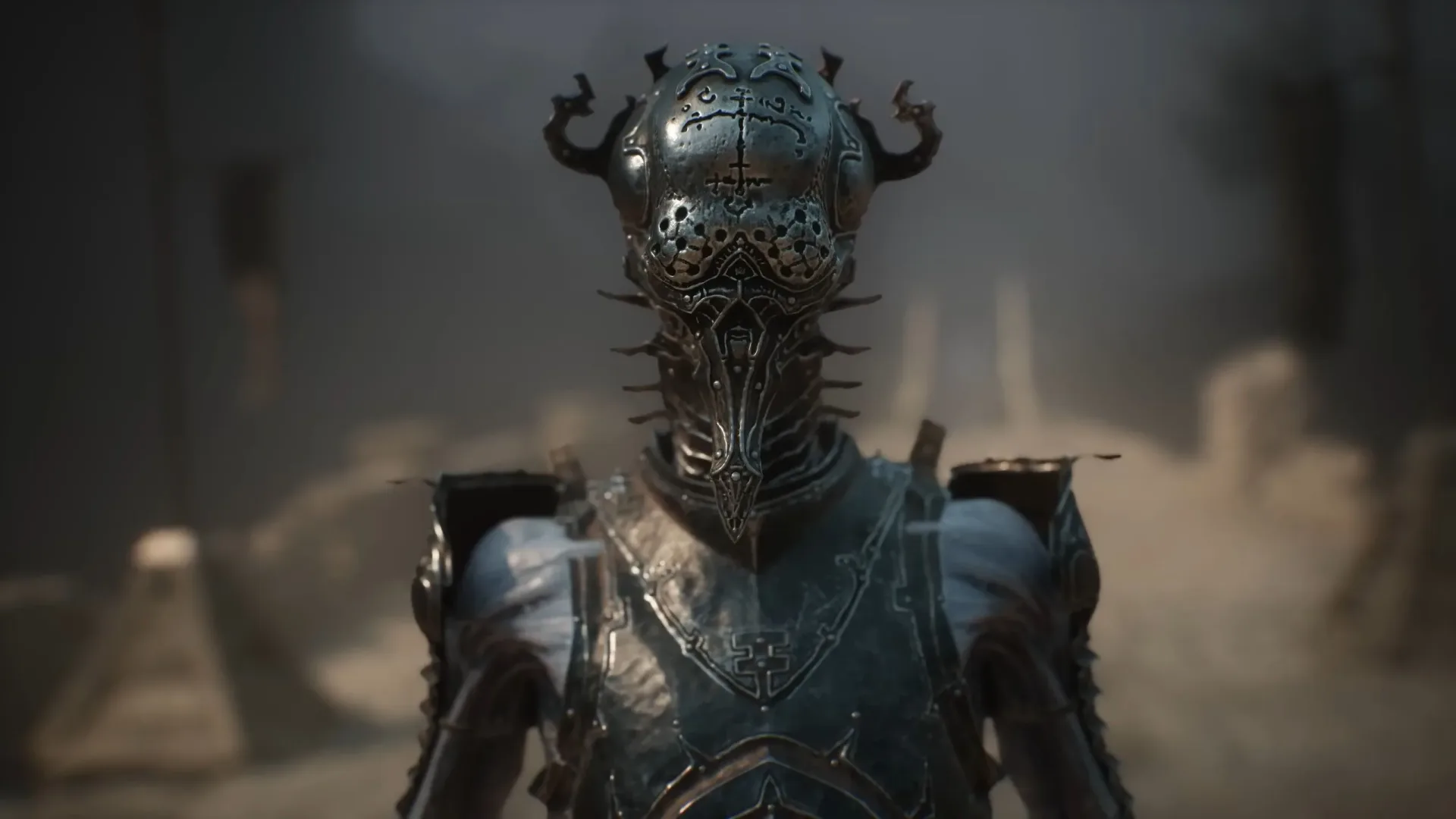
Mortal Shell 2’s difficulty is not the whole problem. Information reliability is. A hard Soulslike asks players to absorb defeats, study enemy behaviour, return stronger and gradually learn how its systems fit together. But when the game fails to show an interaction prompt for a pivotal chest, it changes the nature of that challenge. A player is no longer choosing to proceed underpowered, or missing a clue through inattention. They are making decisions using incomplete information supplied by a malfunctioning game.
That distinction matters in Mortal Shell 2 because an early beacon chest contains an item needed to get the blacksmith’s forge working for melee-weapon upgrades. When that chest cannot be opened, the result is not merely a missed consumable or optional secret. It can delay a core progression system while the player clears a substantial portion of the early game with level-one equipment.
A reported PS5 experience illustrates how quickly that can spiral. Item use reportedly stopped working within minutes of the tutorial, despite the control guide listing the appropriate input. Graphics options could be toggled but did not appear to alter the image before a patch. Later, interaction prompts and the ability to open containers reportedly vanished in the village outside the first checkpoint. Reloading restored chest interactions there, but the earlier beacon chest had already been left behind and mentally filed as non-interactive scenery.
The consequence emerged around six hours later: after the first major dungeon, its boss and a wide sweep of the surrounding map, the melee weapon was still at level one. The player had located two components that seemed to be part of a three-item forge-repair objective, but those were for other gear. The actual early weapon-progression item was back in that first beacon chest.
The chest problem is really a communication problem
Beacon dungeons are compact areas inside checkpoints. The relevant one is described as opening into a circular, pale marble room, with a grey, altar-like object placed centrally. It is visually conspicuous, flanked by candelabras and spotlighted. Yet the object does not read cleanly as a conventional chest. Without an interaction prompt, testing it from several angles produces nothing. Moving on is an entirely reasonable response.
That is why this is more consequential than an ordinary missed pickup. Games routinely use the environment to communicate: a contrasting object, a deliberate light source, room placement and repeated visual language all tell players that something deserves attention. The player’s side of that bargain is to look. The game’s side is to consistently acknowledge when an object can be used.
Once an interaction bug has appeared elsewhere, however, players have no reliable way to separate three possibilities:
- an object is decorative;
- an object is usable but the required angle or condition has not been found; or
- an object should work, but the game is failing to present the prompt.
That uncertainty is especially punishing in a game built around revisiting spaces, fighting through hostile areas and managing scarce patience after a difficult encounter. An unexplained failure does not simply make a secret harder to find; it makes every similar object suspect.
Related coverage includes Mortal Shell 2's Early Bugs Can Turn a Promising Soulslike Into a Punishing Grind.
Technical context: an interaction prompt is the on-screen signal that an object is currently within the game’s usable range and state. It is more than a cosmetic label. It confirms that the player’s position, targeting and the object’s own scripting are aligned. If it disappears for a chest containing progression-critical equipment, the player loses the key feedback that tells them they have found the correct solution.
The source of the malfunction is not established here, and it would be a mistake to diagnose a specific technical cause from one account. What is clear is the player-facing effect: the item could not be accessed at the moment it mattered, and no alternative in-game explanation pointed back to it.
Why weapon upgrades cannot be treated as optional flavour
Weapon upgrading is a foundational progression loop in this type of action RPG. The exact numbers and formulas are not the important point. An upgrade system gives players a way to make future fights more manageable through exploration and resource use, even if their mechanical execution remains unchanged. It is one of the tools that lets a difficult game feel demanding rather than static.
In this case, the missing forge component held up those early improvements. Once the chest was finally opened, the sword could reportedly be raised to +9 immediately using materials already gathered, changing enemy encounters dramatically. That abrupt shift is revealing. The player had not suddenly become much better at parries, spacing or resource management. They had recovered access to the intended power curve.
Power curve is the term for how a game expects player capability to rise over time relative to enemy threat. It includes character levels, equipment upgrades, abilities and player knowledge. A Soulslike can deliberately bend that curve—placing a dangerous enemy early, for example—but it usually provides routes for a player to adapt. Blocking an early upgrade path through an interaction failure bends the curve accidentally, which can make routine fights feel like an excessive grind.
The report says the first roughly 20% of Mortal Shell 2 was completed with unupgraded weapons, guns and skill stones. That is a remarkable amount of time to spend in an unintended state, particularly when the game itself offers little corrective dialogue. Even having partial forge-related items in the inventory reportedly did not cause the blacksmith to give more useful guidance.
NPC dialogue is not the only answer to bugs, but it is an important redundancy. If a progression gate depends on several items, the associated character can help clarify what has been found, what remains, or where the player should reconsider. In a game where interactions may fail, a more responsive blacksmith could have provided a second route to the same realization. Instead, the combination of vague feedback and a broken chest created a six-hour detour.
Darkness, checkpoints and boss friction compound the issue
The reported chest problem did not exist in isolation. Mortal Shell 2’s open world was criticized for an inadequate checkpoint situation that was subsequently addressed in a patch. Its lighting was also described as so dark that brightness and gamma had to be increased to make the environment legible, while key items could still disappear into shadow. The final boss was characterized as buggy, overly durable and prone to repeatedly using an aggravating grab attack, even when using a secret item intended to counter that encounter.
Any one of these complaints can have a different explanation or level of severity. Taken together, though, they expose a shared design risk: friction stacks. A long return run is more frustrating when visual information is hard to read. A difficult boss is more exhausting when equipment has been unintentionally held back. A vague progression clue becomes far less forgivable after players have already seen settings or interactions fail.
That does not erase the positive judgment of Mortal Shell 2 overall. The game was ultimately finished in about 22 hours, including all collectible Ova, and was considered much more enjoyable after patching. The central point is narrower: quality in an action game is not just about combat feel, enemy design or the broad appeal of its systems. It is also about whether the game consistently conveys its rules and honors the player’s time.
There is a useful broader lesson for studios working on demanding games. As one discussion of development choices around an early Portal design decision demonstrates, seemingly small implementation choices can fundamentally shape how players read a game. In Mortal Shell 2, the ability to recognize and activate an altar-like chest is not a small detail when it controls a primary upgrade route.
What players can reasonably take from this
Players encountering a similar stall in Mortal Shell 2 have a limited but practical checklist grounded in this reported sequence. First, if item use or chest interactions vanish unexpectedly, reload the game before assuming an object is purely decorative. Reloading restored interactions in at least one affected early area.
Second, if the blacksmith still cannot support melee upgrades after the early dungeon, reconsider the first beacon rather than assuming every forge-related item serves the same purpose. The crucial component was in the prominent grey chest-like altar near the beginning, while two other components found later were tied to other gear.
Third, do not interpret early struggles with a level-one sword as definitive evidence that the intended route requires that level of hardship. A player may certainly choose a self-imposed low-upgrade run, but that is very different from being unknowingly locked into one by a missed, bugged interaction.
Finally, patches matter, but players should be precise about what they expect them to fix. The available account says the checkpoint issue was patched and that the game felt much better after patching. It does not establish that every interaction, display-setting, lighting or final-boss concern has been resolved on every platform. Treat a patch as an improvement, not a guarantee that a particular save state or issue has disappeared.
Hard games need dependable rules
A Soulslike earns its difficulty when defeat teaches something actionable: dodge later, use a different opening, explore another route, refine a build. Mortal Shell 2 can offer that rewarding loop once its systems are accessible. But an absent use prompt teaches nothing. It asks players to mistrust their eyes, their controller inputs and the game’s own environmental signals.
That is the real damage caused by the early bug chain. It turns exploration into uncertainty and underpowered combat into a false reading of the game’s balance. A sword leaping from level one to +9 after a return to the opening beacon is not just a satisfying upgrade moment; it is proof that a vital piece of the intended experience had been hidden behind a failure of communication.
Mortal Shell 2 may be worth continuing for players who can get past that rough stretch, especially given the reported improvement after patches. Yet its opening serves as a sharp reminder that in a genre defined by deliberate difficulty, basic reliability is not a luxury feature. It is part of the challenge design.