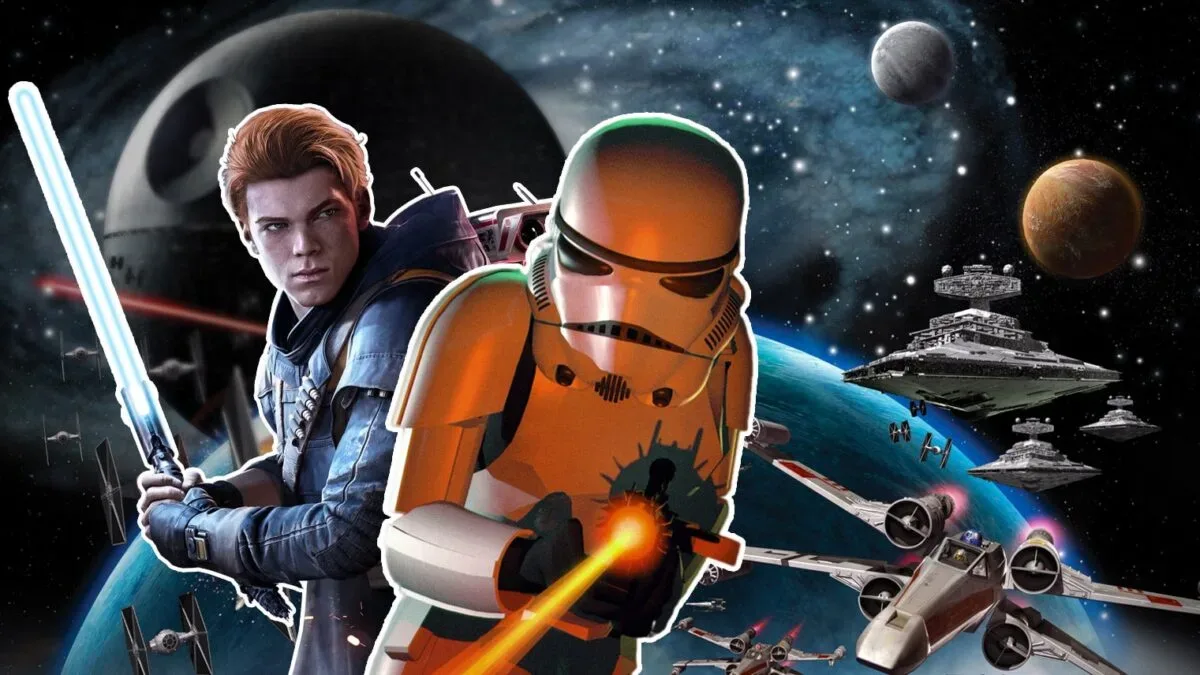
May the Fourth is the annual moment when Star Wars fandom collectively looks toward the stars, reaches for a controller, and remembers that “best Star Wars game” is not one question. It is several questions stacked inside a trench coat with a lightsaber clipped to the belt.
Is the best game the one that most convincingly captures the feeling of flying through space? The one with the strongest action? The one that turns the saga into strategy, racing, arcade chaos, or something stranger? Should a beloved handheld version count beside a console original? Is a remake competing with the game it remade, or is it a separate creature entirely? And, most dangerously of all, are we judging a game for what it did at release or for the memories it built afterward?
A revived May 4 ranking embraces that full mess. Its stated scope places modern and old games, PC releases, console releases, handheld games, remakes, ports, and other qualifying Star Wars video games in the same enormous pool. That is a sensible way to start an argument, because Star Wars has never belonged to only one hardware generation or game genre.
It is also the kind of premise that guarantees somebody will send a strongly worded transmission from the outer rim of the comments section.
A galaxy too large for a tidy leaderboard
The joke that there have been roughly 64,534 Star Wars games since the films began arriving in theaters in the 1970s is, mercifully, not presented as a real count. But the exaggerated number gets at the important part: this is an unusually sprawling game library. A ten-game list is not a museum catalog. It is an attempt to create a conversation with limited shelf space.
That is why the no-restrictions approach matters more than it might initially seem. Narrowing the selection to one platform, era, or style would make the job easier, but it would also leave out the ways people actually encounter Star Wars games. One person’s defining memory may be tied to an arcade cabinet. Another may have spent their time with a portable version. Someone else may value a PC game, a later rerelease, or a console title that became a local multiplayer staple.
The format is especially appropriate for a property built around variety. The Star Wars label can sit on vastly different kinds of games without making any of them feel illegitimate. A ranking that allows all of those forms to compete is admitting that the shared universe matters, but the experience at the controller matters too.
There is no stated internal order for the ten selections. They are presented as a group rather than as a climb from tenth place to first. That removes one layer of combat, although only one. Fans may still contest who made the roster, who did not, and which game clearly ought to be standing at the center of the virtual medal podium despite the lack of an official podium.
Related coverage includes The Best Star Wars Games Remain a Galaxy-Spanning Debate.
The names just outside the top 10
The clearest snapshot of the ranking’s taste comes from the honorable mentions. Five games are singled out as worthwhile even though they stop just short of the final ten:
- Star Wars Arcade
- Rogue Squadron 2
- Galactic Battlegrounds
- Racer Revenge
- Jedi Starfighter
That shortlist is a useful reminder that an honorable mention is not a dismissal. In a list built from decades of releases and multiple kinds of hardware, missing the last cut can still mean being called fantastic. It simply means the available spaces ran out before the affection did.
It also illustrates why Star Wars rankings never settle into a permanent final form. The five titles named here represent different corners of the larger gaming conversation. Even without forcing them into a numerical order, their appearance signals a willingness to put arcade, flight-focused, strategy-oriented, racing, and starfighter experiences in dialogue with one another. The conversation is not asking one genre to beat every other genre at its own game. It is asking how well each title serves its own version of Star Wars fun.
Honorable mentions are where the real fighting starts
There is a special kind of pain associated with the honorable-mentions column. A title that never appears on a list can be ignored. A title that appears just below the line has been acknowledged, praised, and then ceremonially denied a seat at the main table. That is practically an invitation for readers to make their case.
And that case can be personal without being trivial. A favorite game may be the first one a player owned, the one played at a friend’s house, the one connected to a particular console, or simply the one that offered the right fantasy at the right time. Lists often pretend that nostalgia is a contaminant. In reality, nostalgia is one of the reasons pop-culture games survive long enough to be argued over in the first place.
There is a parallel in the etiquette of sharing a screen with other people: what feels like a minor preference to one player can be a sacred rule to another. Our guide to the unwritten rules of couch multiplayer gets at how quickly games become social rituals. A Star Wars ranking works much the same way. People are not only defending software; they are defending the rituals and memories surrounding it.
Why platform and version debates cannot be avoided
Including ports and remakes makes the ranking broader, but it also raises a few necessary complications. A game title is not always one fixed object. Different platforms can shape how an audience remembers it, and later versions can alter the practical route to playing it. A broad list does not need to resolve every version question to be useful, but readers should be clear about what they are comparing whenever a single name covers more than one release.
That is not pedantry. It is part of game history. Hardware, controllers, screens, formats, and the conditions under which people played can influence a game’s identity. The phrase “best Star Wars game” therefore may mean best original release, best version available at the time, best remembered edition, or best experience for a particular kind of player. Those are related answers, not necessarily identical ones.
The inclusion of handheld games is important for the same reason. Portable play should not automatically be treated as a side category just because it arrives in a smaller package. Likewise, PC and console games should not be asked to erase the differences that made their audiences care about them. A wide-open ranking is most interesting when it leaves room for those differences rather than sanding every game into one generic standard.
A May 4 rerun is an invitation, not a final ruling
The ranking was first published on May 4, 2023, and has been brought back for another May 4. The date is not incidental. Star Wars day rewards repeat viewing, repeat play, favorite-character declarations, and the cheerful re-litigation of questions that probably cannot be settled. Re-running a best-games feature on that date makes sense because its purpose is not to close the case. It is to reopen it.
The original framing even anticipates angry messages and comments. That is the correct tone for this kind of list. It recognizes that a top ten can be confident without behaving as though it has issued a law of the galaxy. A curated selection is valuable when it gives readers something concrete to agree with, push against, revisit, or use as a prompt to fill in a personal blind spot.
There is also something refreshing about the implied standard here: the standout Star Wars games should work not only for committed fans but also for people who may not arrive with deep attachment to the franchise. That is a demanding idea. It asks the games to be more than references, recognizable sounds, and familiar iconography. The strongest candidates need to hold attention as games in their own right.
Of course, that standard does not make the arguments simpler. It merely makes them better. Some players will value how well a game channels a specific Star Wars fantasy. Others will focus on craft, replay value, a favorite format, or the peculiar magic of the era in which they first encountered it. Those competing priorities are not a flaw in the debate; they are the debate.
So keep the ten slots open in your head, even if your own roster has eleven, fifteen, or an extremely confident “actually, this one from the honorable mentions belongs at number one.” The Force may bind the galaxy together. A ranking list, meanwhile, is held together by equal parts enthusiasm, selective memory, and the knowledge that somebody has already typed a rebuttal.