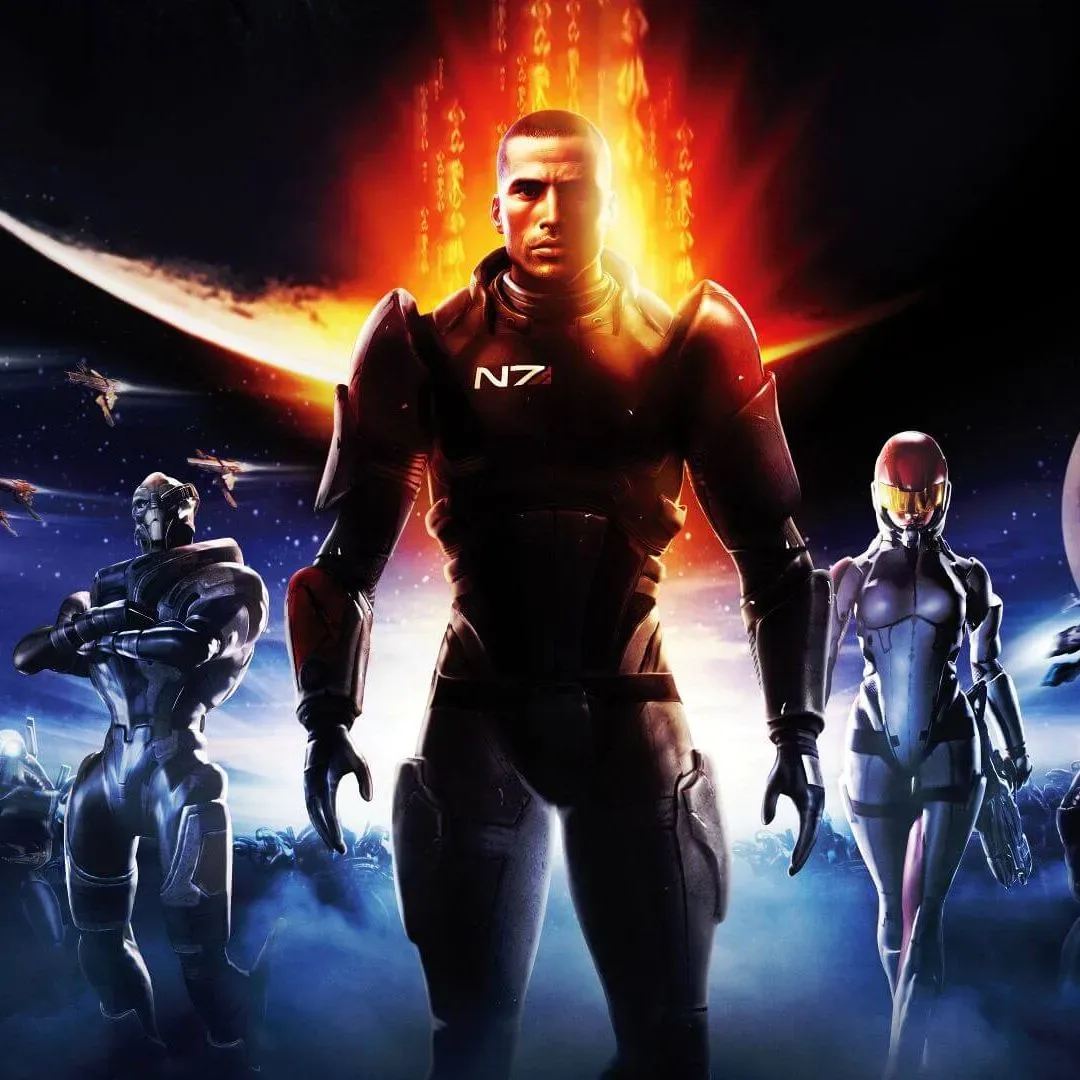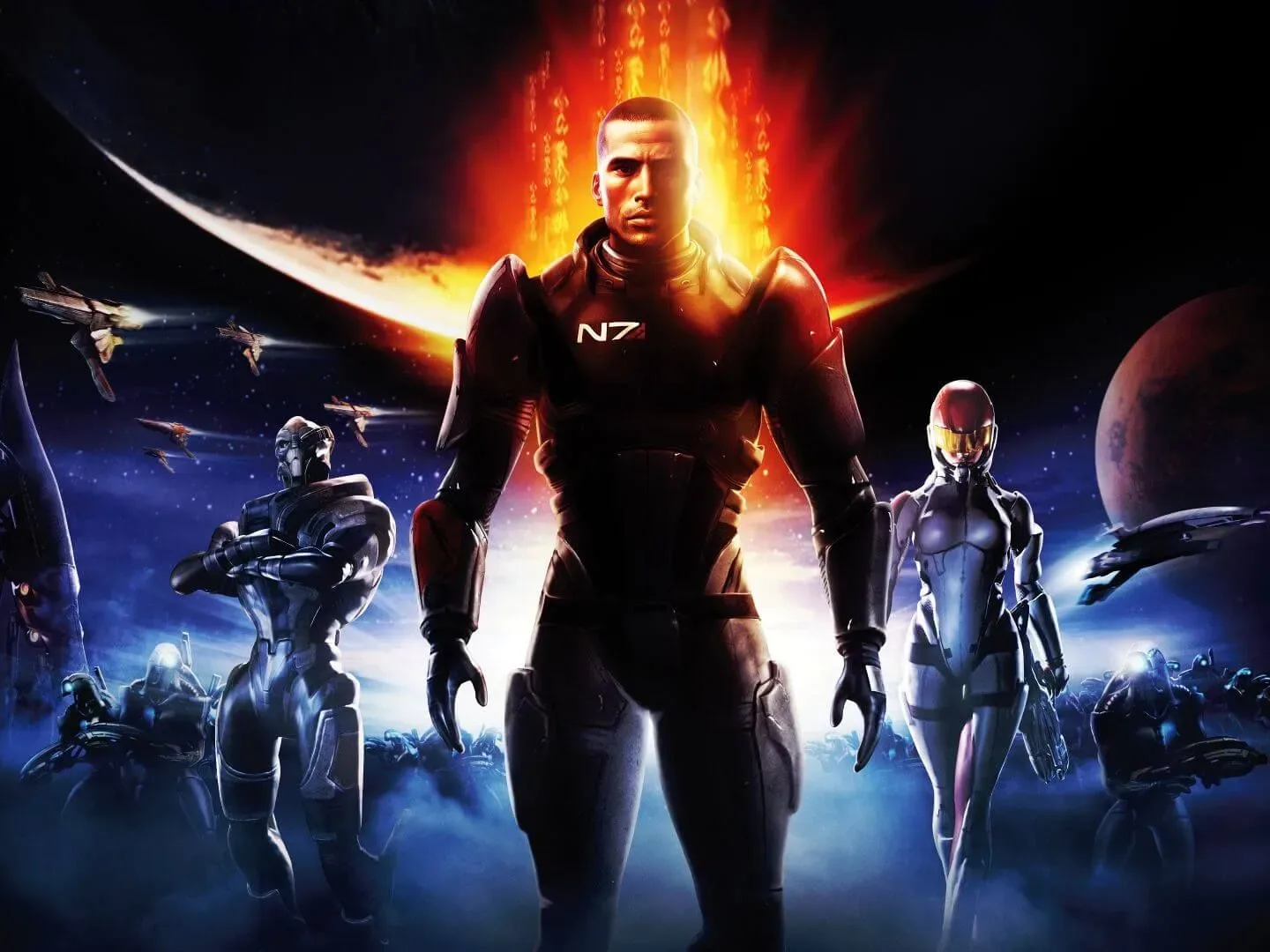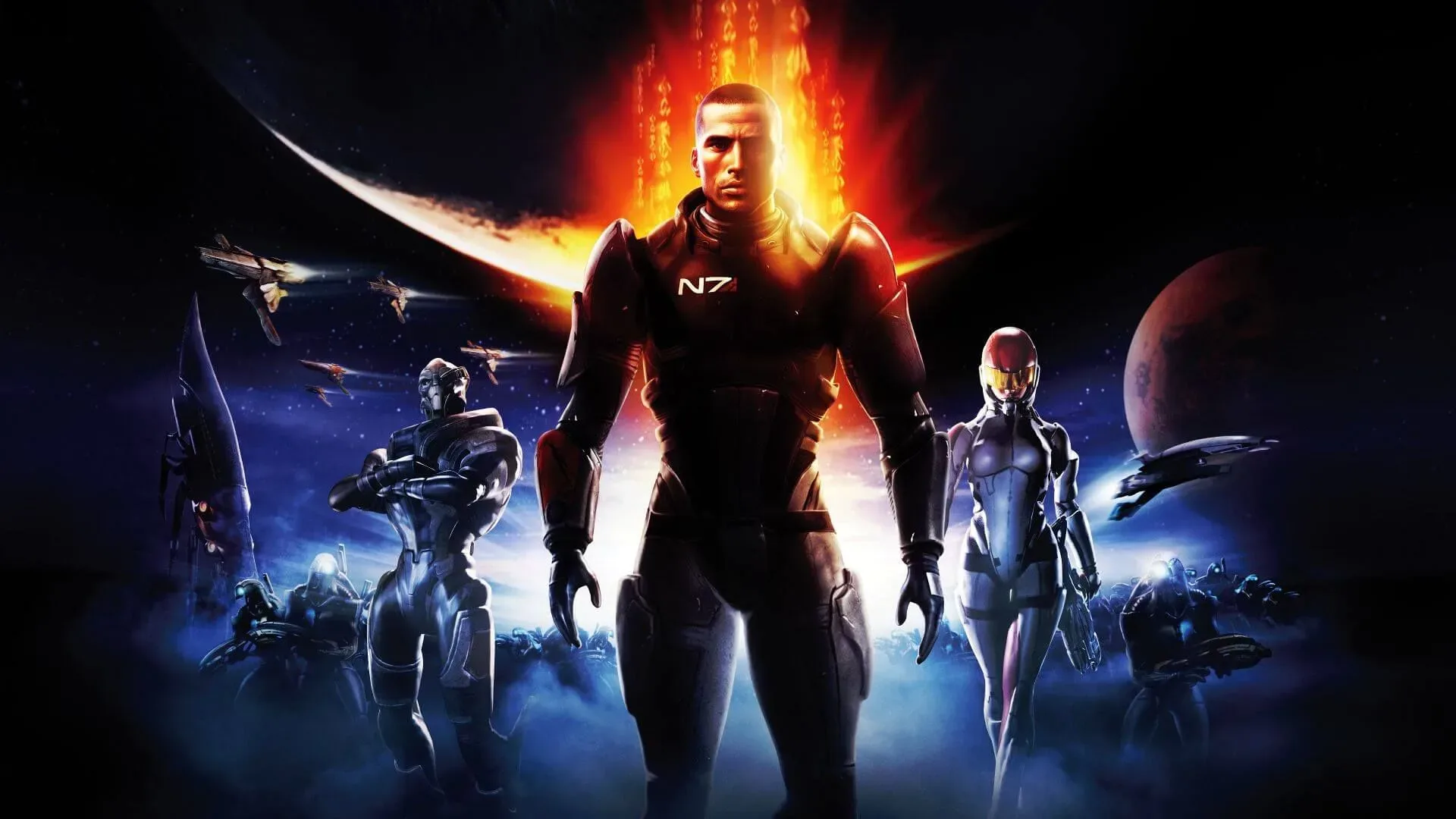
Mass Effect is often remembered through a comparison it was never likely to win. Its 2007 debut, originally an Xbox 360 exclusive, is placed beside the more streamlined Mass Effect 2 and found guilty of awkward shooting, slow elevator rides and the famously divisive Mako driving. Those criticisms have real foundations. Yet they can also obscure what the first game does exceptionally well: it makes a huge science-fiction setting feel inhabited, politically complicated and worth caring about.
That achievement matters because Mass Effect is not simply a story about chasing the rogue Spectre Saren across the galaxy. It is a game about arriving in a civilization already in motion. Commander Shepard, the player-created protagonist, enters an interstellar community with its own institutions, resentments, commerce, military history and social hierarchies. The player does not need to see every planet, apartment or government office for the setting to register as vast. The game instead makes a convincing case that all of those places exist beyond the playable boundaries.
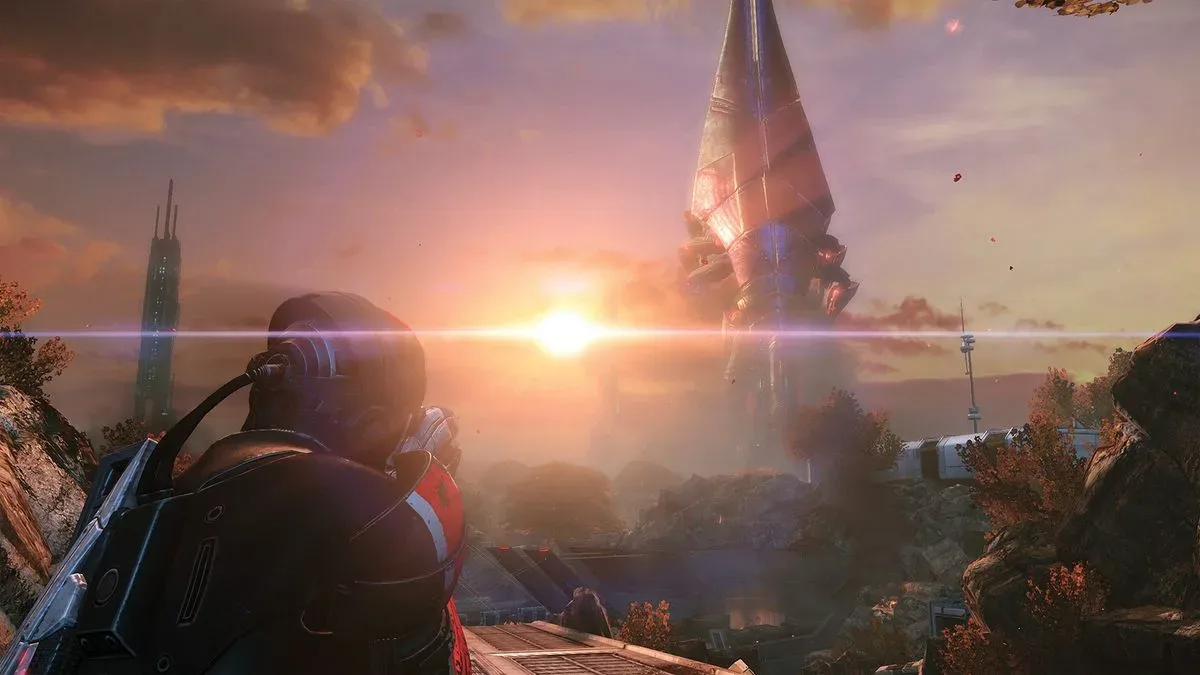
Its 2021 Legendary Edition remaster put the trilogy in one package and smoothed some of the first game’s rougher presentation. It also made the contrast with the sequel’s more polished pacing especially visible. But polish is not the only measure of a role-playing game’s value. The original’s systems are messier, its dialogue choices can be blunt, and its action is less graceful. Its worldbuilding, however, is more than a prelude to what followed. It is the foundation that gives later character arcs and conflicts their weight.
That is also why Mass Effect’s setting remains central to the broader appeal of the series, a point explored in this look at why Mass Effect’s worldbuilding is such a durable strength.
The Citadel makes a limited space feel like a capital city
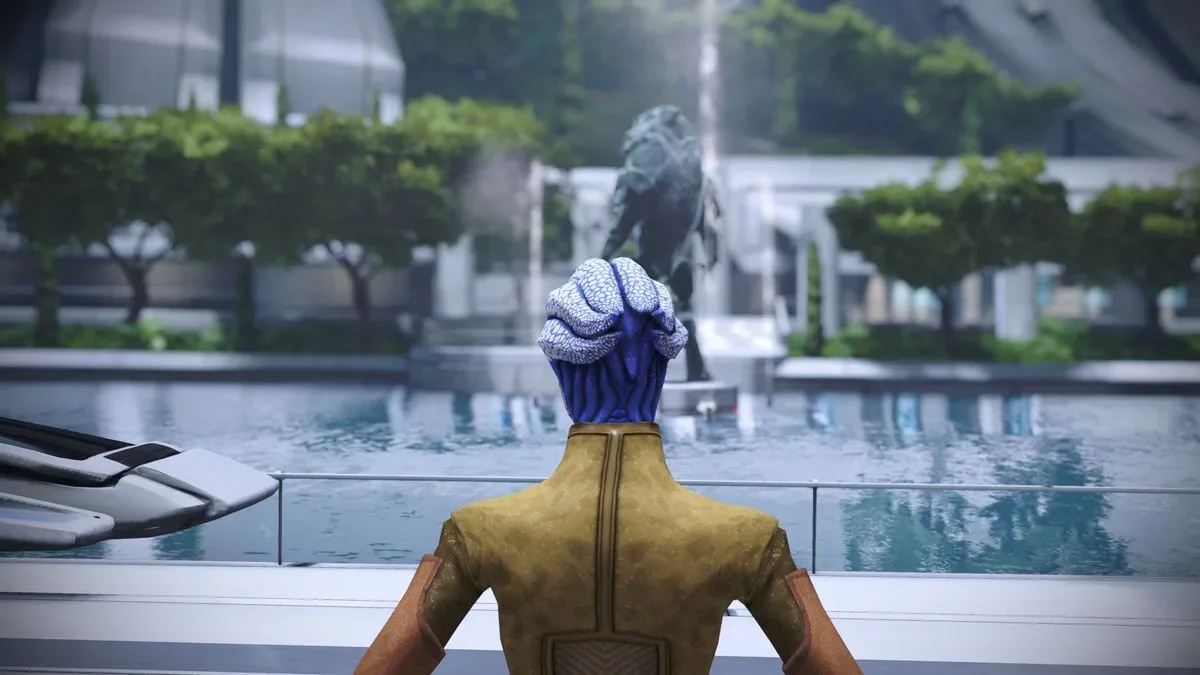
The strongest evidence is the Citadel. This five-armed megastructure sits at the center of galactic politics and is home to the Council as well as 12 million residents. It is the first major hub Shepard visits while reporting Saren’s betrayal. On paper, it is an extraordinarily demanding setting: a multi-species capital whose scale would be difficult to depict in full. The game’s answer is not to simulate an entire metropolis. It builds selected spaces with strong identities, then uses architecture, incidental dialogue and implied activity to let the player picture the rest.
The Presidium communicates diplomatic power through its pristine artificial sky, white fountains and carefully maintained greenery. It is an orderly place designed for ambassadors and administration, and its cleanliness is part of the point: this is a polished public face for a civilization that is anything but uncomplicated. The Wards offer a different mood, with the Flux nightclub providing music, neon, gambling and crowds gathering at tables and bars. The contrast between spaces makes the Citadel feel socially stratified rather than merely large.
Much of that effect comes from what is not interactable. Curved windows look over distant city lights. Corridors lead past side rooms where aliens work at terminals with no obvious player-facing purpose. Walkways overlap. Small nooks exist for a single optional encounter, or seemingly for nothing at all. Even the lengthy elevator transitions contribute background news about humanity’s attempts to colonize distant worlds. None of this makes the city physically enormous, but it makes it feel as though Shepard is passing through a working fragment of something far larger.
This is a useful distinction between graphical scale and narrative scale. Graphical scale is the literal amount of city a game lets players traverse. Narrative scale is the impression that a place extends beyond those boundaries because its people, institutions and details suggest a wider life. Mass Effect relies heavily on the latter. It is a practical design solution, but it is also an artistic one. A restricted hub can be more memorable when every area tells the player what kind of society operates there.
Related coverage includes Mass Effect Still Deserves More Credit Than Its Reputation Gives It.
Worldbuilding happens in the margins
The first Mass Effect does not always deliver its lore elegantly. Shepard can ask conspicuously direct questions about a species’ culture, a device that can make conversations feel like a briefing rather than a natural exchange. Still, the answers establish meaningful differences among the galaxy’s peoples. The Elcor deliberately announce their emotional intent before speaking. The Volus are associated with trade and frustrated by their lack of a Council seat. Such material points outward toward differing environments, economies and power structures.
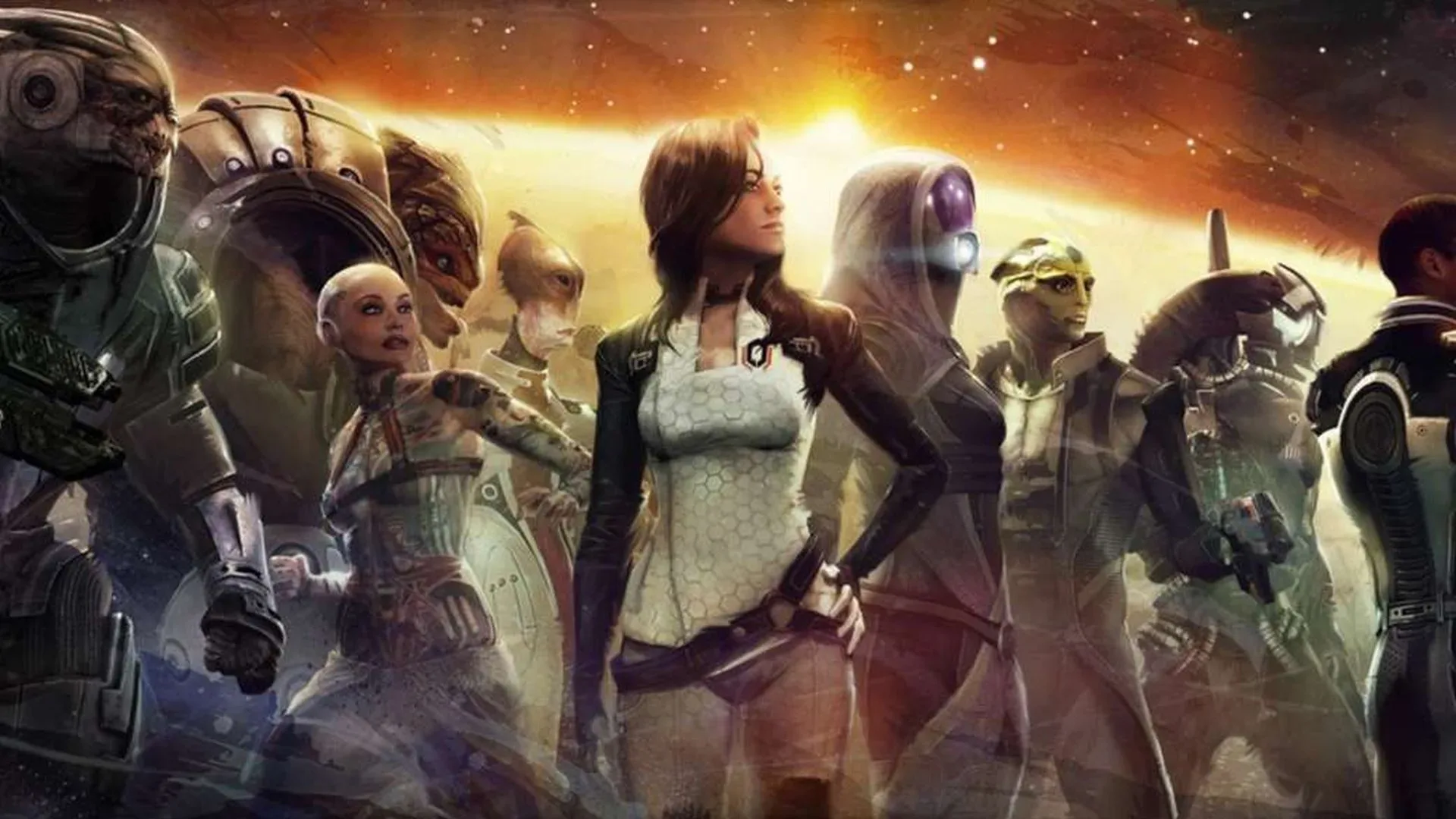
The game is even more effective when it lets companions provide the context. Take Wrex into Flux and he comments on the tendency for venues to employ Krogan as bouncers, framing the practice as a stereotype packaged as status. Garrus’s response to a gambler thrown out by Flux owner Doran implies familiarity with the club and confidence in its owner’s judgment. Neither moment is a grand exposition scene, but both make companions seem as if they had lives before joining Shepard’s ship.
The tension between Wrex and Garrus carries a much heavier piece of history. Their exchanges can touch on the Krogan’s violent reputation and the genophage, the biological weapon used after a long war to curb the Krogan population. That history is not relegated to a single codex-style explanation or a single mission. It turns up across conversations and quests, turning an abstract historical fact into a source of distrust within the active squad.
This is close to the storytelling principle often called the iceberg theory: what appears on the surface gestures toward much more beneath it. Applied to game design, the Citadel becomes an iceberg tip. A few offices, bars, clinics and shopping areas imply a capital of millions. A passing conversation about prejudice or military history makes the player infer decades of politics. The benefit is not just lore volume. It is that the galaxy feels capable of surprising the player because it seems to contain more than the immediate plot has explained.
Separate missions add texture to a galaxy-wide chase
The main story’s outline is familiar science fiction: pursue Saren while a threat to civilization approaches. The individual stops along that pursuit do more of the distinctive work. On Feros, a colony operated by ExoGeni, Shepard encounters settlers dealing with shortages of food, water and power. The mission links the central chase to questions of corporate power and the precarious position of people living on the frontier.
Noveria offers a different kind of dilemma through the Rachni, an insectoid species believed to be extinct. The game asks the player to determine their fate. It is a major decision, but it also enlarges the setting by presenting a species whose apparent absence still shapes how others understand the galaxy. The point is not that every choice system is subtle. It is that these missions repeatedly turn a destination on a map into a place with its own conflict, history and moral stakes.
The Citadel supports this structure by rewarding returns. Side missions send Shepard between its financial district and Chora’s Den, opening additional conversations and uncovering more of the station’s daily tensions. An early visit to the med clinic can later lead to a doctor being blackmailed by a Krogan in the markets. Resolving that incident points toward a classified project in a distant system, a thread that does not receive its payoff until Mass Effect 3. The original game is therefore not merely setting up a sequel through cliffhangers; it is placing long-term promises inside seemingly local stories.
Its role-playing choices have aged less well
Giving the game credit for its setting does not require pretending it is flawless. Its dialogue wheel was presented as an alternative to a simple good-versus-evil model, but it can still collapse into an obvious morality menu. Shepard can jump sharply between compassionate and hostile responses, including dialogue that veers into species prejudice. The renegade path is sometimes so exaggerated that its sense of character consistency suffers; punching a reporter after ordinary questions is the clearest example.
The writing can be stiff as well. Characters may state a lesson after the player has already demonstrated it through an action, and some jokes land with a thud. These are not small issues in a character-driven RPG. A role-playing system works best when choices feel connected to a coherent version of the protagonist. When choices instead read as isolated buttons for kindness, cruelty or spectacle, the player is managing a meter as much as shaping a person.
That limitation makes Mass Effect’s environmental and companion-based storytelling more important. The world often supplies nuance where the morality structure does not. Wrex’s irritation at how Krogan are perceived, for instance, complicates any player who might otherwise reduce species to a dialogue-wheel label. The setting pushes back against simplistic conclusions even when the choice interface invites them.
Combat rewards planning, even when it lacks refinement
Combat is another area where the original is plainly less fluid than Mass Effect 2. Weapons can overheat quickly and feel imprecise. Shepard does not reliably adhere to cover. Powers and first-aid healing have slow recharge times, slowing fights down. These are frustrations, not imaginary defects.
But the slower tempo also exposes a tactical structure that is easy to overlook. Fights can be paused while Shepard directs squad abilities, turning encounters into short planning problems rather than pure shooting galleries. A player can pull an enemy out of cover, suspend them in the air and concentrate squad fire before the opponent recovers. Success depends substantially on ability timing and party composition.
Biotics are the clearest expression of this design. In fiction, they are powers enabled by the setting’s energy fields; functionally, they occupy the role that magic often fills in fantasy RPGs. Adepts specialize in biotic power, while Vanguards trade some of that emphasis for shotgun capability. These classes can manipulate enemy positioning with effects such as vortexes and lifts, making them especially useful in a system where shooting alone can become repetitive.
Squad selection and equipment customization deepen that approach. Ashley Williams is the sole pure soldier among the available companions, while figures such as Garrus and Wrex bring tech or biotic options. Weapon attachments and ammunition types can materially change a combat plan. Wrex can strengthen his biotic barrier, absorb punishment and attack shields with phasic ammo, while Garrus contributes tech effects through his omni-tool and can use his sniper Assassination skill. The result is less sleek than the sequel, but it gives the first game a particular sense of buildcraft: effectiveness comes from combining tools rather than simply taking the cleanest shot.
Why the roughness is part of the conversation
Mass Effect 2 streamlined several of these systems, but that streamlining came with trade-offs. The original’s deeper weapon and ammo customization was reduced, and its version of the Citadel remains more dynamic in spirit than the smaller, more static sequel hub. The first game’s willingness to be unwieldy sometimes gives it room for more interlocking detail.
That does not make every slow elevator, stiff line or Mako journey secretly brilliant. It does mean the original deserves assessment on more than a refinement curve where every difference from its sequel becomes a defect. It established the political architecture, species histories and lived-in hub that made the trilogy’s later drama possible. Its greatest accomplishment is scene-setting on a scale that stays convincing despite the visible limits of its spaces and systems.
Mass Effect is best understood not as a disposable prototype but as an ambitious first act with a distinct identity. The game built a galaxy that could carry future stories, then embedded enough unresolved tensions within it to make players want to see those stories through.