Major spoilers for Mass Effect, Mass Effect 2, Mass Effect 3, the Citadel DLC, and Mass Effect: Andromeda follow.
Mass Effect built its reputation on a deceptively risky promise: decisions made by one Commander Shepard could carry forward through a whole trilogy. That premise is easy to state and exceedingly hard to make players feel. A coloured dialogue response is not, by itself, emotional consequence. A sequel cameo is not automatically payoff. The series found its greatest power when it made choice tangible—an empty chair on the Normandy, a teammate who did not survive a mission, a political alliance built on a painful compromise, or an ending that asks the player to define what Shepard’s victory should cost.
That is why its standout scenes are not all explosions, triumphs, or lore revelations. Some are conversations with an enemy so ancient that humanity barely registers to it. Some are courtroom drama or an unexpectedly gentle prayer. One is a party. Together, they make a strong case for Mass Effect as a role-playing story about command: the uncomfortable reality that leadership means making calls with incomplete information and living with outcomes no dialogue wheel can cleanly undo.
With the BioWare team’s closure and split described by former Mass Effect art director Nicolas Bouvier as “heartbreaking,” the series’ defining scenes also invite a renewed look at what made the games endure. The circumstances around that closure make the unfinished questions surrounding Andromeda feel particularly acute. But the original trilogy’s strongest moments have never depended on a single canonical Shepard. They work because they leave room for a player’s Shepard.
1. Sovereign makes the galaxy terrifyingly big
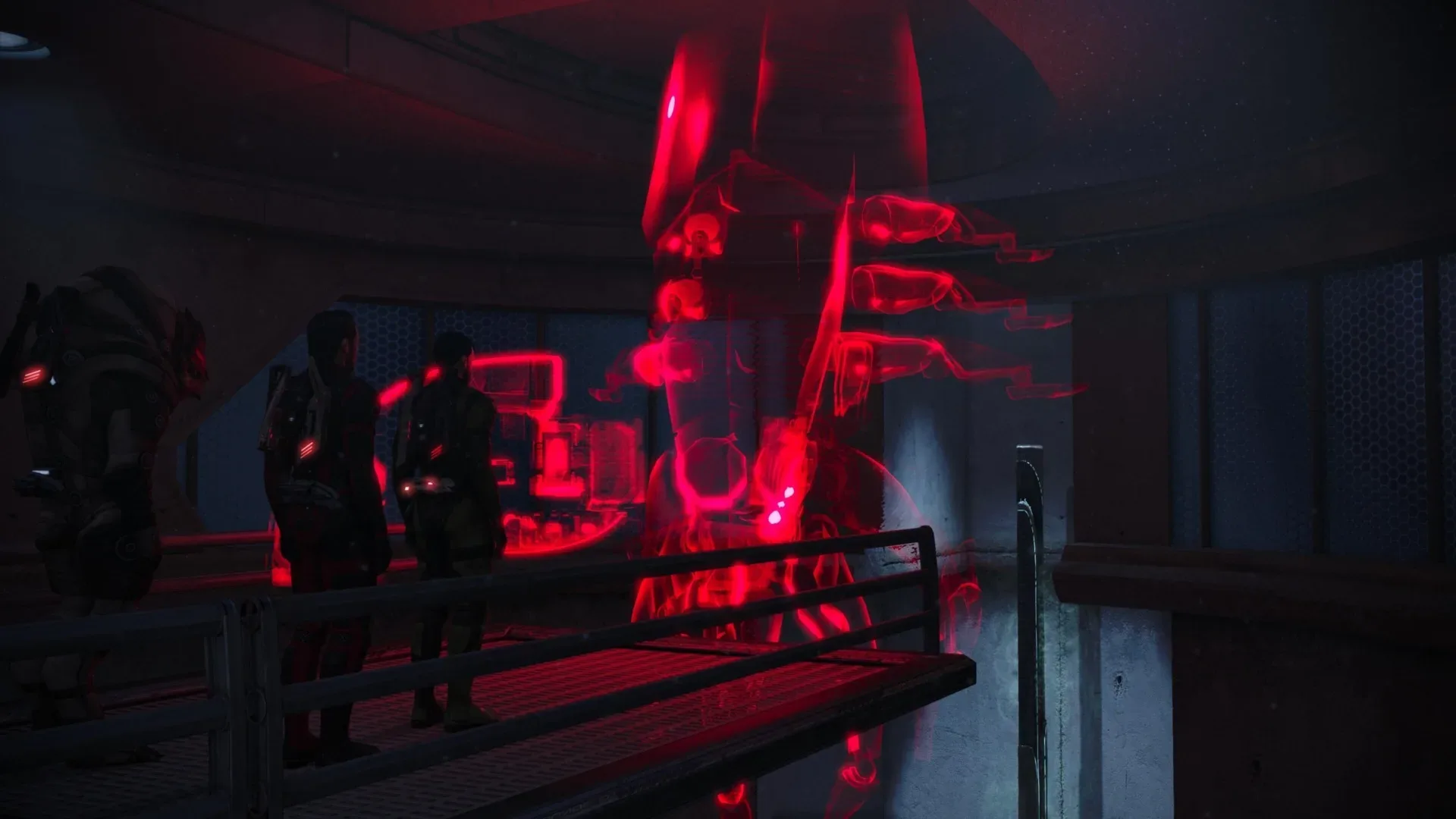
The first game spends considerable time establishing a rich galactic setting: the Citadel, its institutions, alien species, and the political friction around humanity’s place among them. Then Shepard speaks with Sovereign, and the scale changes abruptly. The Reapers are not merely another hostile force with a larger fleet or a crueler plan. Sovereign presents them as beings that have wiped out galactic civilizations across vast stretches of time.
That exchange works because it is not interested in a fair fight. Sovereign regards organic life as something too limited to grasp what it is facing. Shepard’s response is defiantly human: past civilizations may have failed, but humanity will not simply accept its assigned place in the cycle. The scene creates the trilogy’s core tension in a few minutes. The Reapers are presented as incomprehensibly old and unstoppable; the player is nevertheless asked to believe action matters.
It is a classic use of cosmic horror, a storytelling mode where the frightening element is not only danger but insignificance. Mass Effect then does something important with that feeling: it gives Shepard responsibility rather than surrender. The intimidation is real, but so is the decision to resist.
2. Virmire proves that consequence is not a bluff
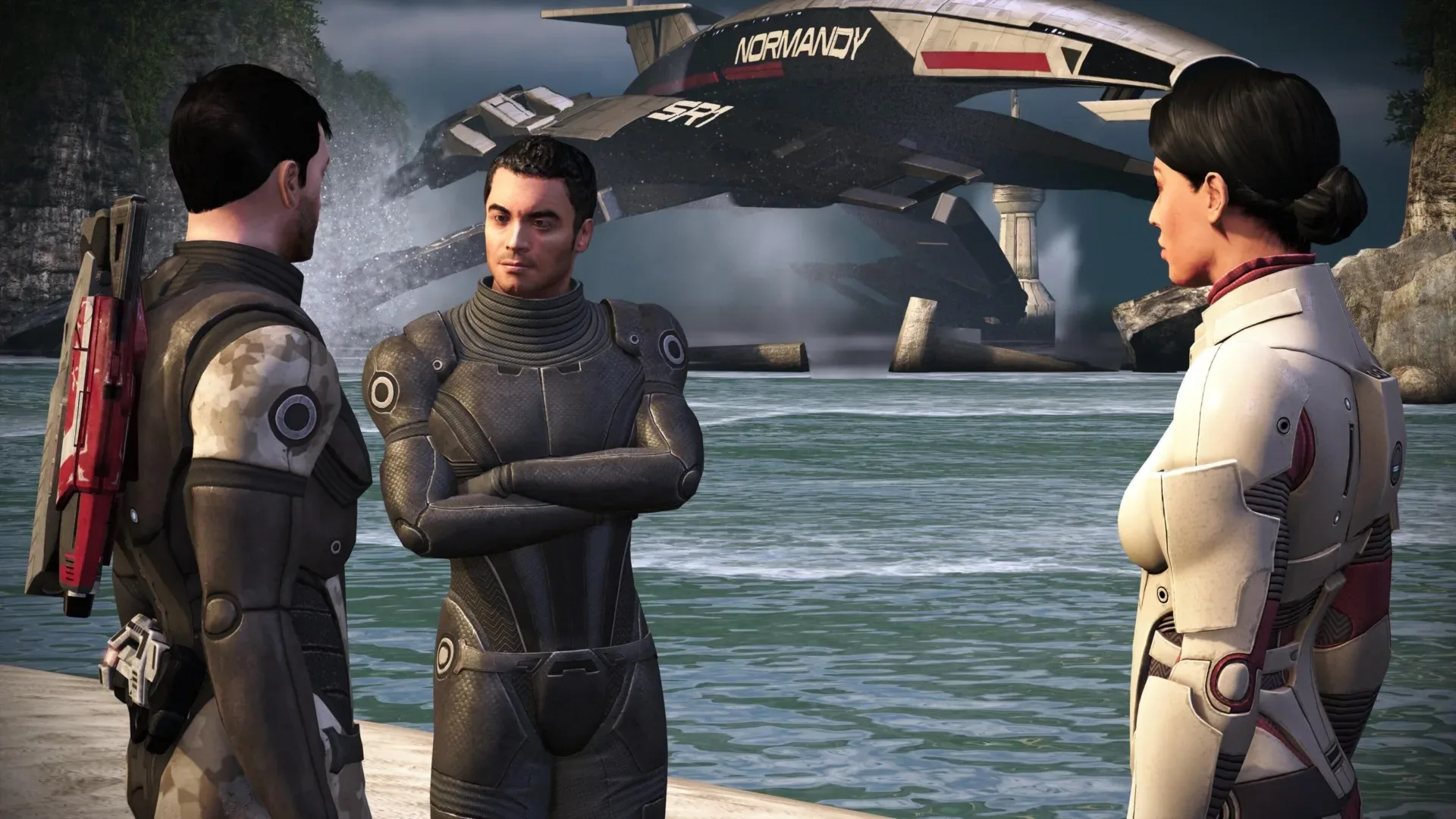
Virmire is perhaps the clearest early demonstration of what “choices matter” means in practice. Shepard must decide whether Ashley Williams or Kaidan Alenko survives. Both are trapped on different sides of an enemy base; there is no ideal line of dialogue that permits a rescue of both.
Related coverage includes Mass Effect's 12 Defining Moments, From Virmire to Andromeda's Unanswered Secrets.
The decision is memorable not because the game pauses to congratulate the player for making a difficult call, but because it refuses to erase the result afterward. The survivor continues into later games. The person left behind does not. Back on the Normandy, their vacant place becomes a quiet environmental reminder that the commander’s job is not just to win battles but to decide where help goes when help cannot reach everyone.
This is the practical difference between a branching narrative and a cosmetic one. A branching narrative gives choices that alter later story states, relationships, scenes, or available characters. Virmire makes that branch emotionally legible. It is not a percentage change hidden in a menu. It is a person missing from the ship.
3. Vigil turns the Citadel’s mysteries inside out
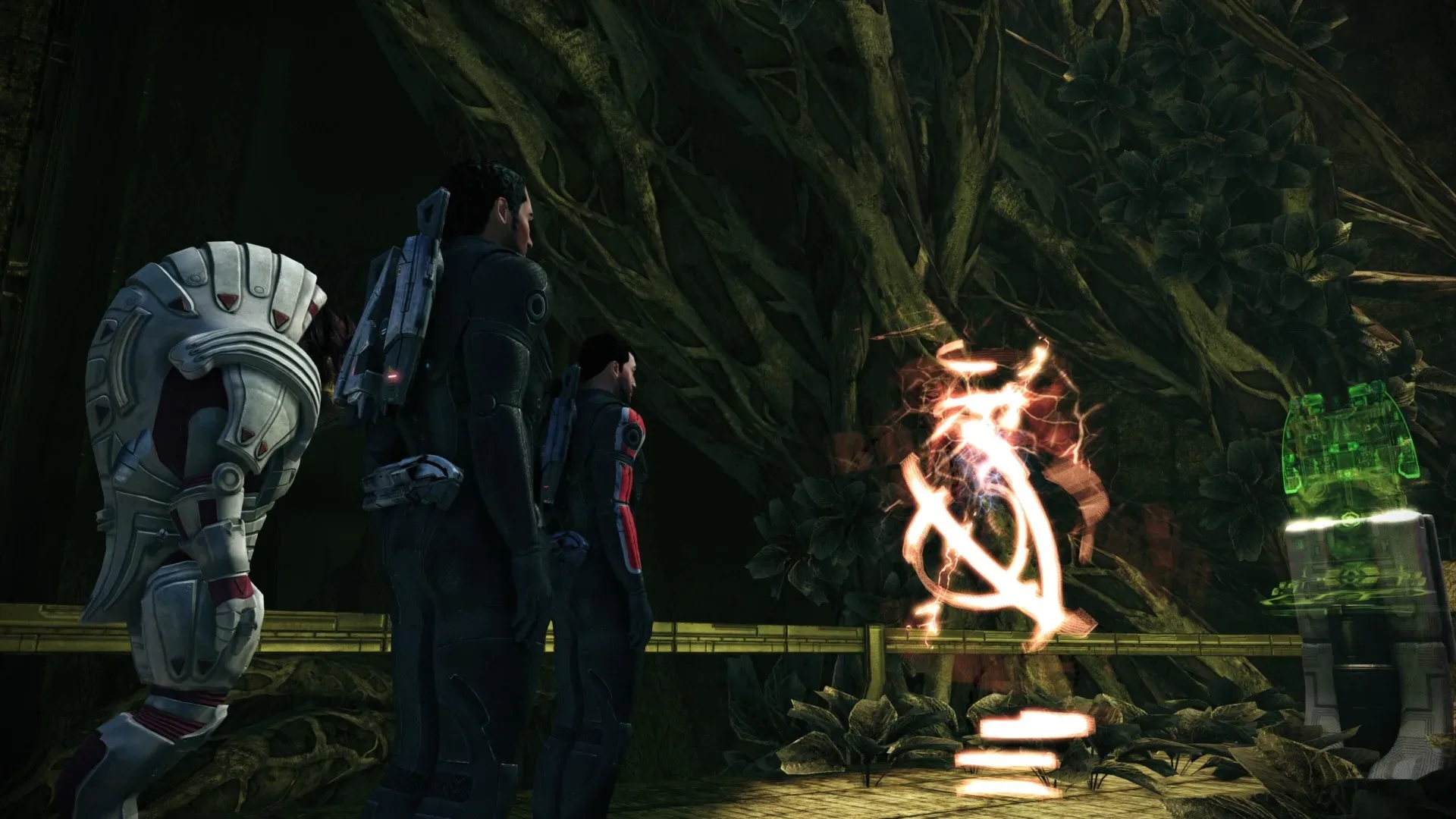
If Sovereign establishes the Reapers as the threat, the encounter with Vigil on Ilos reveals the desperate efforts made to oppose them. The scene ties the Protheans’ failed resistance to the Citadel itself, recontextualizing a structure that initially appears to be a magnificent political capital full of unknowable history.
Vigil also gives new importance to the keepers. Early on, they can seem like background figures performing maintenance around the Citadel. The later explanation makes them central to the effort that has kept the Reapers at bay. It is satisfying lore because the answer grows directly out of details the player has already seen rather than arriving from nowhere.
Importantly, the conversation preserves uncertainty. Vigil can explain what happened and what must be stopped, but it cannot fully resolve why the Reapers operate as they do. That restraint maintains the menace introduced by Sovereign. An enemy can be partially understood without becoming ordinary.
4. Mass Effect 2 opens by breaking the unbreakable
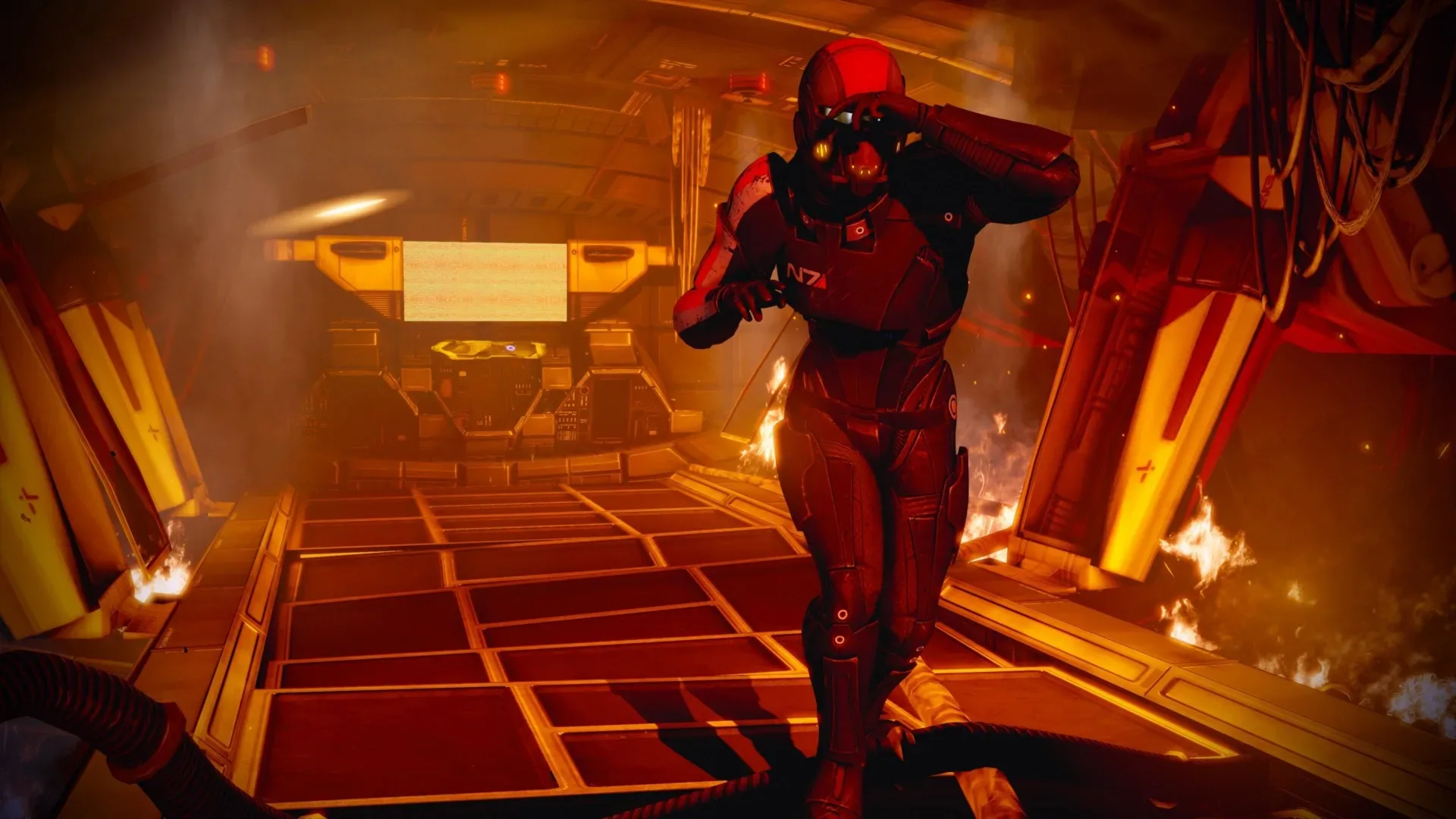
Mass Effect 2 begins with the destruction of the Normandy and Shepard’s death. It is an audacious opening precisely because it attacks the apparent constants of the first game. Shepard is the protagonist; the Normandy is home; surely both are protected by narrative necessity. The opening says otherwise, at least long enough to make the player feel the shock.
Shepard and the ship ultimately receive a second chance, but the point has already landed. The game establishes an atmosphere in which the squad cannot assume it will be protected. That tone is essential to the mission that follows. The player is not merely gathering an impressive team for a finale; they are recruiting people for an operation openly described as potentially fatal.
The Normandy’s loss matters beyond spectacle. In a series structured around conversations and travel, the ship is the place where companions become more than mission assets. Destroying it briefly removes the player’s familiar centre of gravity. The replacement Normandy may restore the setting, but it does not entirely remove the sense that survival will need to be earned.
5. Tali’s trial makes loyalty personal and political
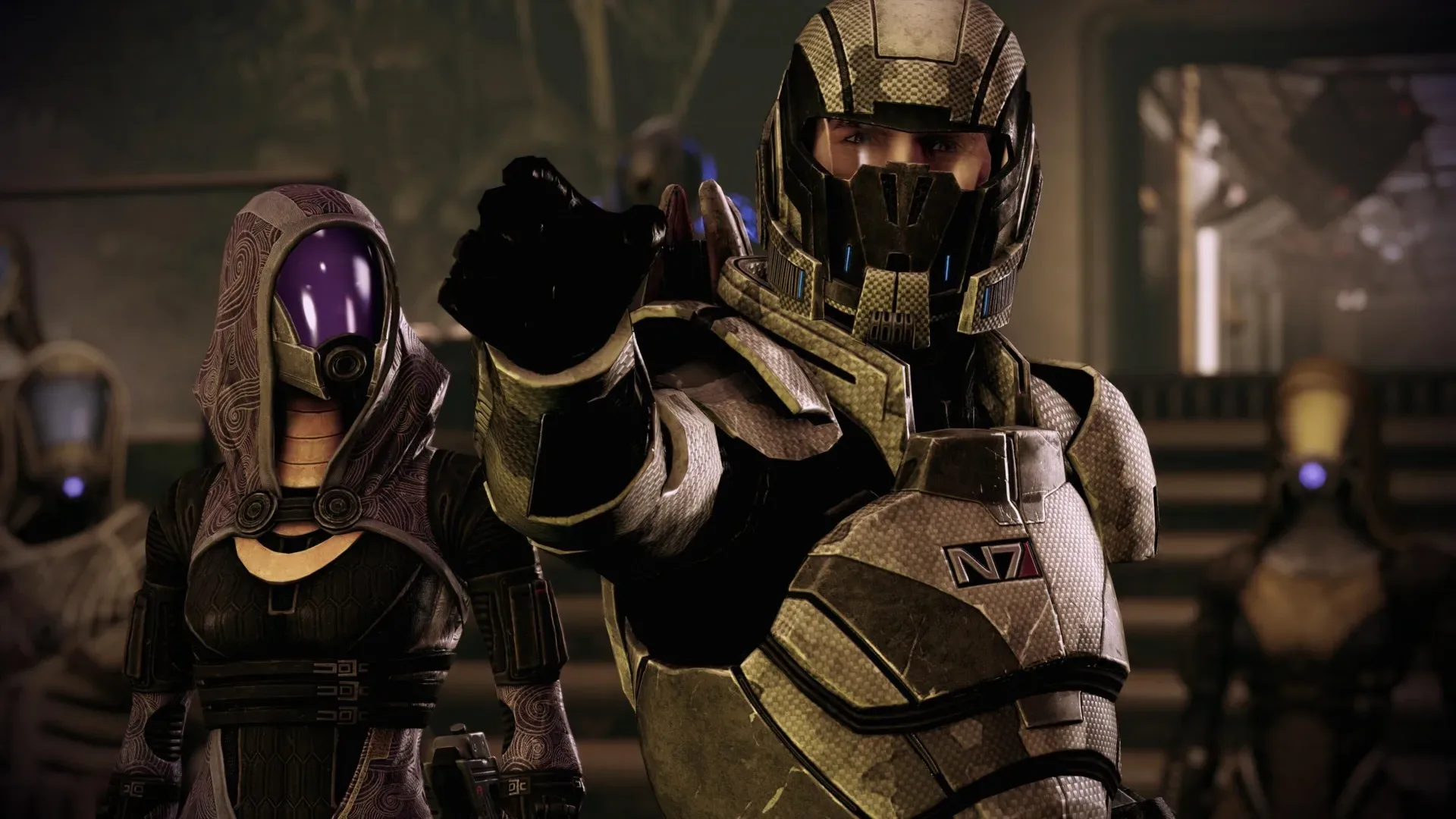
Mass Effect 2’s loyalty missions frequently deepen a squadmate’s history. Tali’Zorah’s stands apart because it combines family grief, quarian politics, the geth conflict, and a public legal hearing. Shepard visits the Migrant Fleet after Tali’s father has died during a geth attack. What begins as an investigation becomes an examination of how the Admiralty Board can use Tali’s situation to advance its own agenda.
The choices at the hearing are compelling because they do not map neatly onto “good” and “bad.” Shepard can reveal damaging information about Tali’s father in order to protect her from exile and improve standing with the fleet. Shepard can protect his reputation and retain Tali’s trust. Or, provided the player has learned enough from speaking with those involved, Shepard can publicly expose the political manipulation behind the trial.
That structure illustrates a recurring Mass Effect strength: character loyalty is never completely separate from institutions. The outcome is about Tali, but it is also about a community under pressure and leaders who see a strategic opportunity. The scene’s courtroom framing adds theatricality, while its consequences remain rooted in the relationships Shepard has taken time to understand.
6. The Suicide Mission asks whether the player was listening
The final mission of Mass Effect 2 is still a remarkable piece of role-playing design because preparation is not abstract. Recruiting teammates, earning their loyalty, and learning their strengths all become relevant when the squad enters the Collector Base. Shepard has to assign people to specific jobs. Choosing poorly can lead to deaths.
The genius of the sequence is that it turns knowledge into tension. The game has spent hours allowing players to get to know companions through missions and conversations. At the climax, those relationships become a test of judgment. This is not solely a combat test, and it is not a moment where selecting the favourite character is necessarily the wise answer. It is command under pressure.
The phrase suicide mission is doing real dramatic work here. It tells the player to expect loss and then makes survival contingent on attention. Even a successful run carries anxiety because the stakes have been plainly stated, and because the squad is full of people the player has helped shape. Later role-playing games have pursued similar high-stakes finales, but Mass Effect 2’s sequence remains unusually effective at making the player feel accountable for each assignment.
7. Mordin’s cure forces an answer to an old atrocity
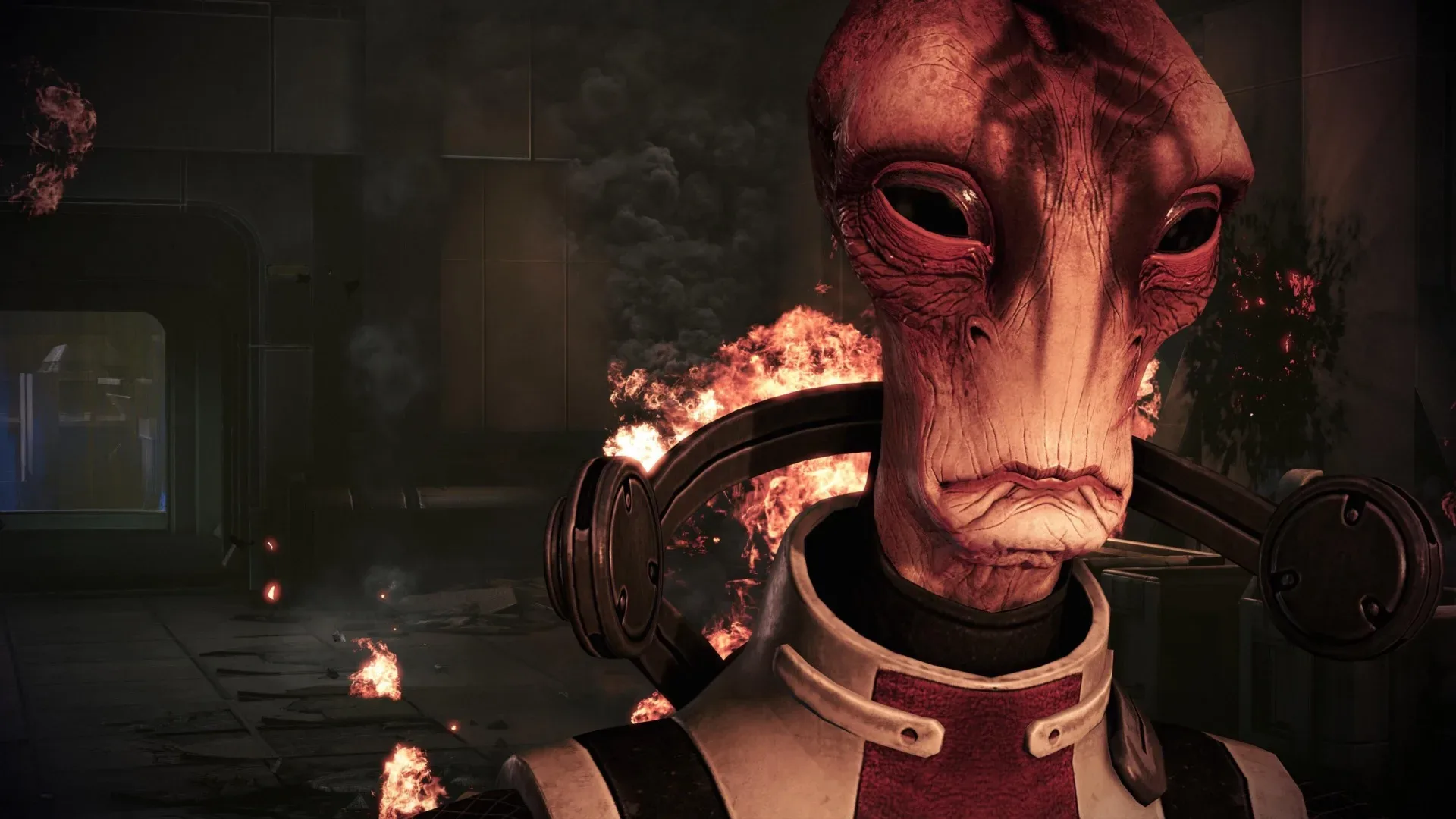
Mordin Solus’ pivotal Mass Effect 3 scene is powerful because it brings a long-running moral problem to a specific individual. The genophage is a sterility plague that has pushed the krogan toward declining birthrates. Mordin, a salarian scientist, has previously approached the issue through clinical logic and statistics, including the salarian role in sustaining it.
In the war against the Reapers, curing the genophage becomes central to securing the krogan alliance. In the route where Mordin commits to the cure, he climbs a collapsing tower to disperse it across the krogan homeworld’s atmosphere, sacrificing himself in the process. It is a resolution that changes the stakes from an argument about population control to a personal decision to accept responsibility.
Other outcomes remain possible, including paths where Shepard prevents the cure or persuades Mordin to let the genophage remain. That variability is crucial. The most moving version is not imposed as the only valid reading; it gains force because the game permits players to take the ethical burden in different directions. When Mordin sings to steady himself, the moment recalls his earlier lighter side while sharpening the tragedy of what he has chosen to do.
8. Thane’s final prayer finds tenderness amid the war
Thane Krios’ death scene achieves something distinct from Mordin’s sacrifice. Mordin’s is urgent, explosive, and tied to a massive political decision. Thane’s final moments are slower and more intimate. Too ill to read his own prayer, he leaves words intended not for himself but for Shepard.
That focus is what makes the scene so affecting. In the middle of an escalating galactic crisis, it allows room for concern, faith, and friendship. Thane’s prayer imagines rest for the tired, stability for the hungry, and companionship after separation. The writing does not pretend that a prayer reverses loss. Instead, it acknowledges the pain while offering Shepard a measure of grace.
Mass Effect 3 has a great deal of devastation to deliver. Scenes such as this work because the series understands that relentless catastrophe can become numbing. Grief needs specificity. Thane’s farewell is not merely another tally in the war’s cost; it is a final act of care from one character to another.
9. The Citadel party lets the crew breathe
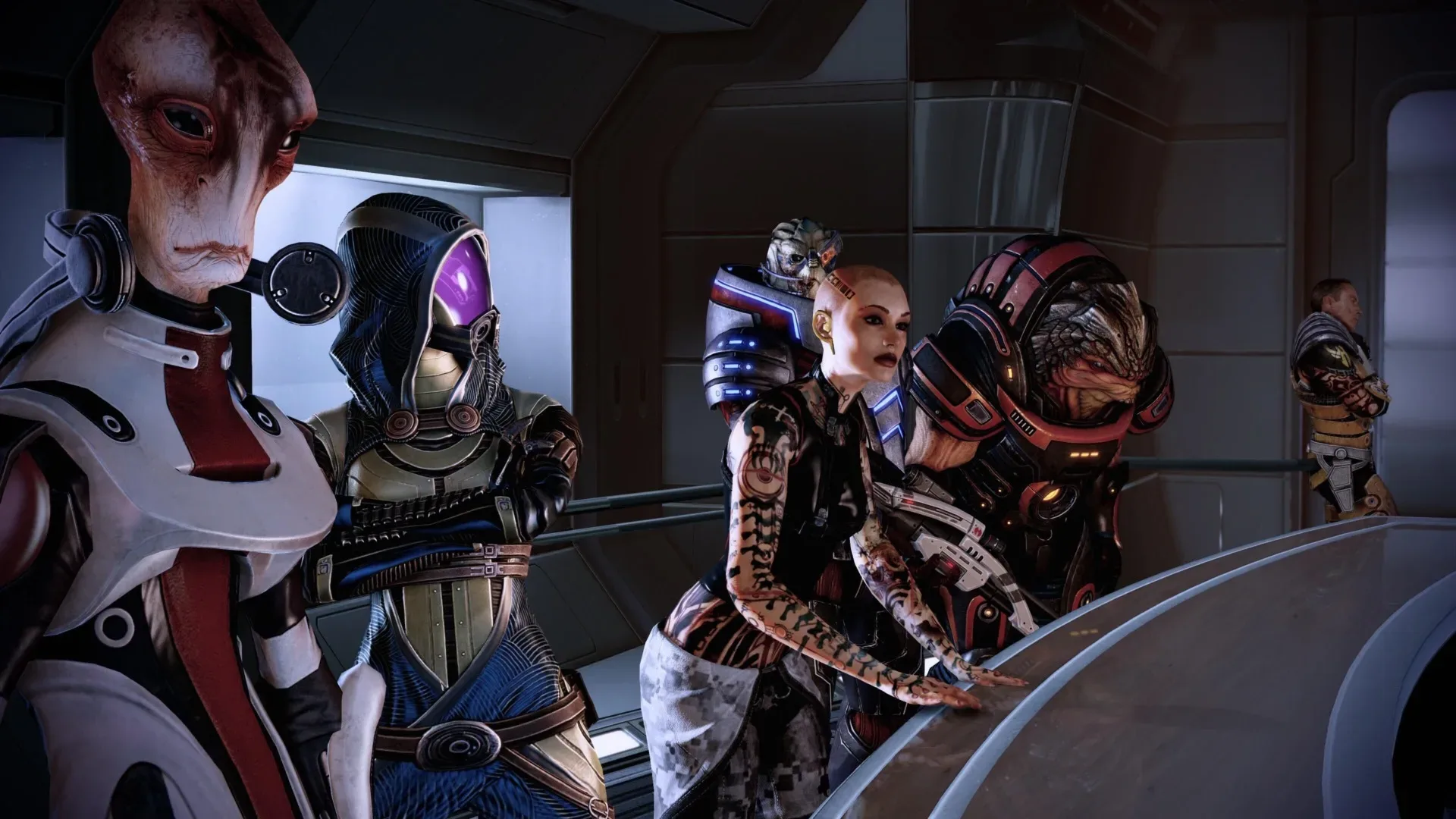
The Citadel DLC is a tonal release valve. After a deliberately absurd spy adventure and smaller social hangouts on the station, Shepard can host a party for surviving friends from across the trilogy. Characters who do not always get opportunities to interact can share a room with their guard down. The tone is comic, affectionate, and knowingly celebratory.
This is not a distraction from the trilogy’s stakes. It is part of their meaning. A war story about saving the galaxy needs to show what is worth saving beyond military strategy and planetary totals. The party supplies that answer in human-scale form: friendship, teasing, awkwardness, old grudges, and temporary peace.
Its timing gives it an edge. Shore leave ends. Shepard must return to the larger conflict. That means the warmth is not hollow fan service; it is an intentionally limited reprieve. The DLC understands that the party is special because the characters may not get another chance to be together like this.
10. Anderson’s pride brings Shepard’s journey full circle
Admiral David Anderson has been a mentor and steady presence for Shepard since the beginning. At the end, his encouragement carries unusual weight because it connects the galaxy-saving figure Shepard has become with the officer Anderson believed in at the start.
His affirmation is intimate rather than grandiose. He tells Shepard they did well and that he is proud. In a story packed with ancient machines, political alliances, and civilization-scale choices, that small personal recognition lands as a genuine endpoint. It reassures the person behind the controller as much as the fictional commander.
This is an example of character payoff: an emotional reward produced by an established relationship, rather than a surprise designed only for the immediate scene. Anderson’s words work because the series has repeatedly shown what he means to Shepard. The scene does not need a complicated twist. It simply lets a mentor acknowledge the person he helped set on this path.
11. The final choice makes the player own Shepard’s legacy
Mass Effect 3 concludes with a decision about the Reapers and the future of organic and synthetic life. Shepard can choose to destroy synthetic life to end the Reaper threat, take control of the Reapers, or pursue Synthesis, a galaxy-wide merging of organic and synthetic life. Each route changes the galaxy, and Shepard is absent from most of the possible futures.
The scene is notable for moving away from a final dialogue-wheel explanation. The player acts rather than delivering one more persuasive speech. That design choice leaves motivation unusually private. Is Shepard pursuing the least immediate loss? Distrusting the Reapers entirely? Seeking unity? Believing that personal control is the responsible answer? The game gives options with clear consequences but leaves the final internal rationale largely to the player.
That is fitting for a series about role-playing. A role-playing game does not necessarily mean every outcome is completely open-ended; it means the player collaborates with the game’s authored structure to create a version of the protagonist. The final choice makes that collaboration stark. It asks not merely what happens next, but what kind of legacy this Shepard is willing to leave.
12. Ryder Family Secrets gives Andromeda its most unsettling mystery
Mass Effect: Andromeda’s Ryder Family Secrets questline collects the protagonist’s father’s memories and reveals troubling information about the Andromeda Initiative. The Initiative brought thousands of Milky Way inhabitants to a new galaxy, and the recovered material frames it as, at least in part, an attempt to evacuate people before the Reapers arrived during Mass Effect 3.
The quest also raises questions around the Initiative’s mysterious benefactor: who funded it, what that person intended, and whether they travelled to Andromeda or remained behind in the Milky Way. These are not minor bits of trivia. They connect Andromeda’s ostensibly separate expedition to the trilogy’s existential emergency, adding uncertainty to the project’s altruistic public face.
It is especially notable that this material comes through an optional collectible-driven storyline. Optional quests can sometimes be treated as disposable side content, but Ryder Family Secrets demonstrates how they can carry substantial narrative weight. The unanswered questions have become more poignant following the cancellation of Mass Effect: Universe, leaving players without a confirmed resolution to these threads. The mystery remains effective precisely because it establishes how much the Ryders—and players—do not know about the journey that carried them so far from home.
Across all of these scenes, Mass Effect’s most reliable trick is simple but difficult to execute: it connects enormous stakes to personal ones. A war for the galaxy becomes a decision between two friends. A cure becomes one scientist’s reckoning. An ending becomes the player’s private statement of values. That fusion of scale, consequence, and character is why Shepard’s story still has moments capable of making a whole Normandy crew—or a player at home—go quiet.