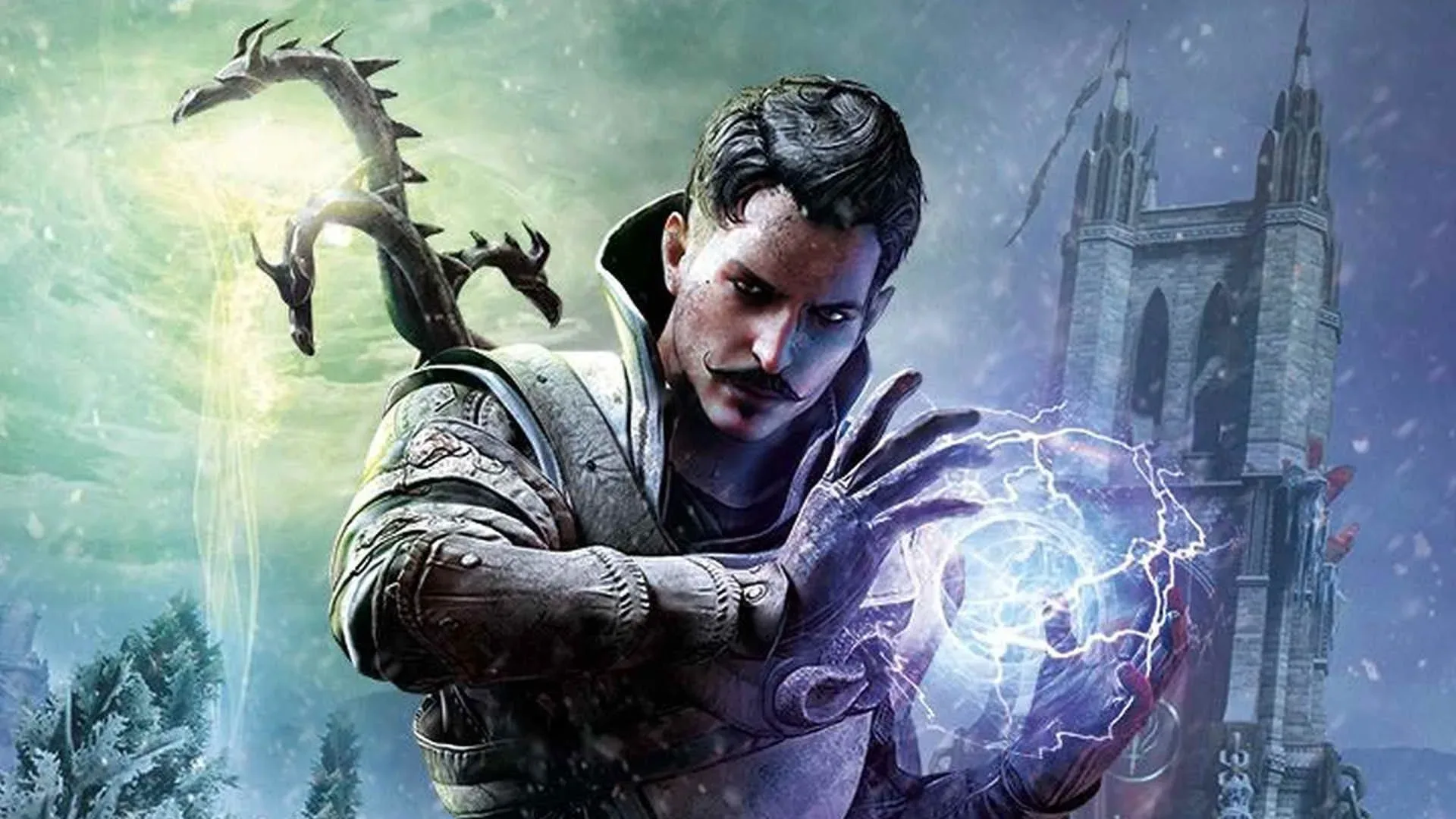
Mass Effect may be the stronger acquisition target than Dragon Age—not because Dragon Age lacks fans, lore or a recognizable identity, but because Mass Effect’s fictional universe is harder to substitute, former BioWare producer Mark Darrah has argued.
It is an important distinction in any discussion of what makes a game intellectual property, or IP, valuable. A popular name matters. So do a built-in audience and years of accumulated goodwill. But a buyer also has to ask a colder question: does purchasing the name unlock something that cannot be replicated by creating a new game?
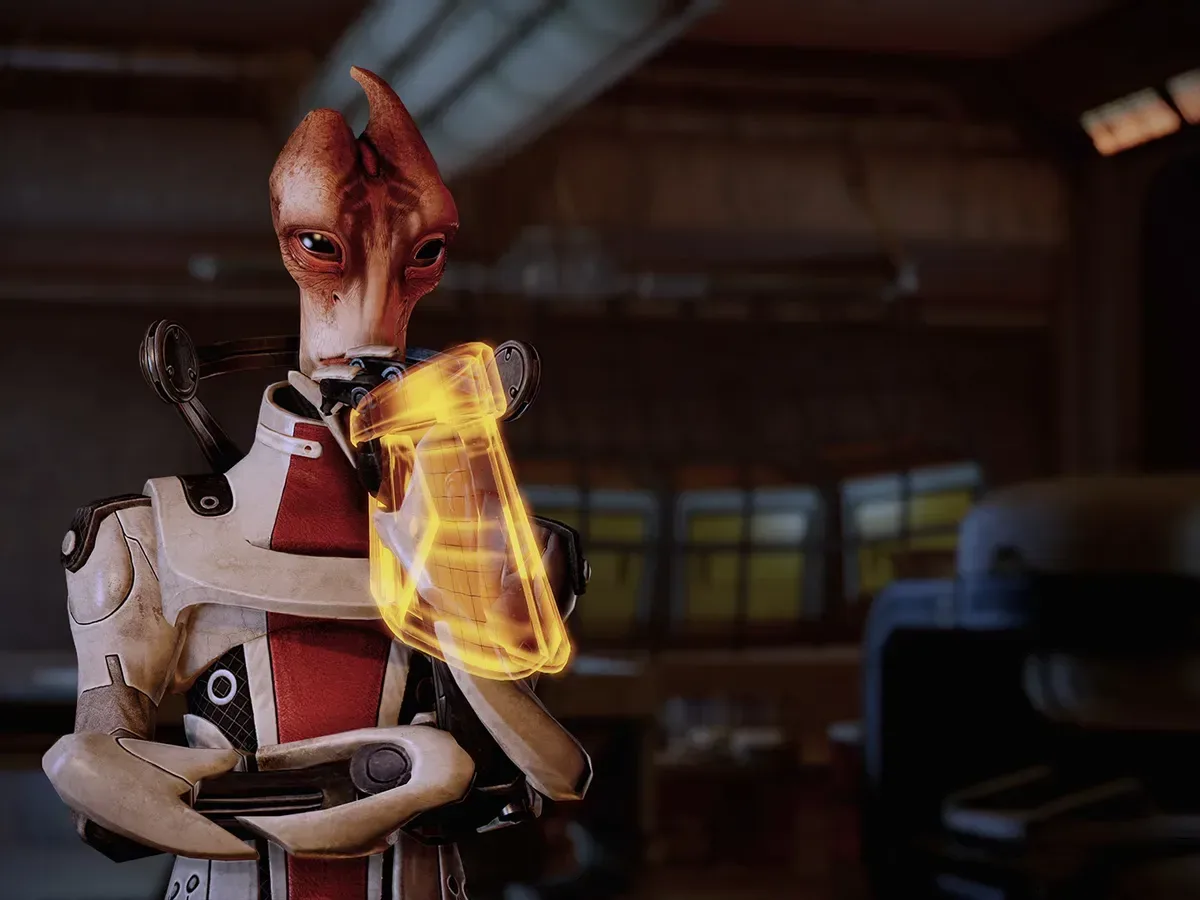
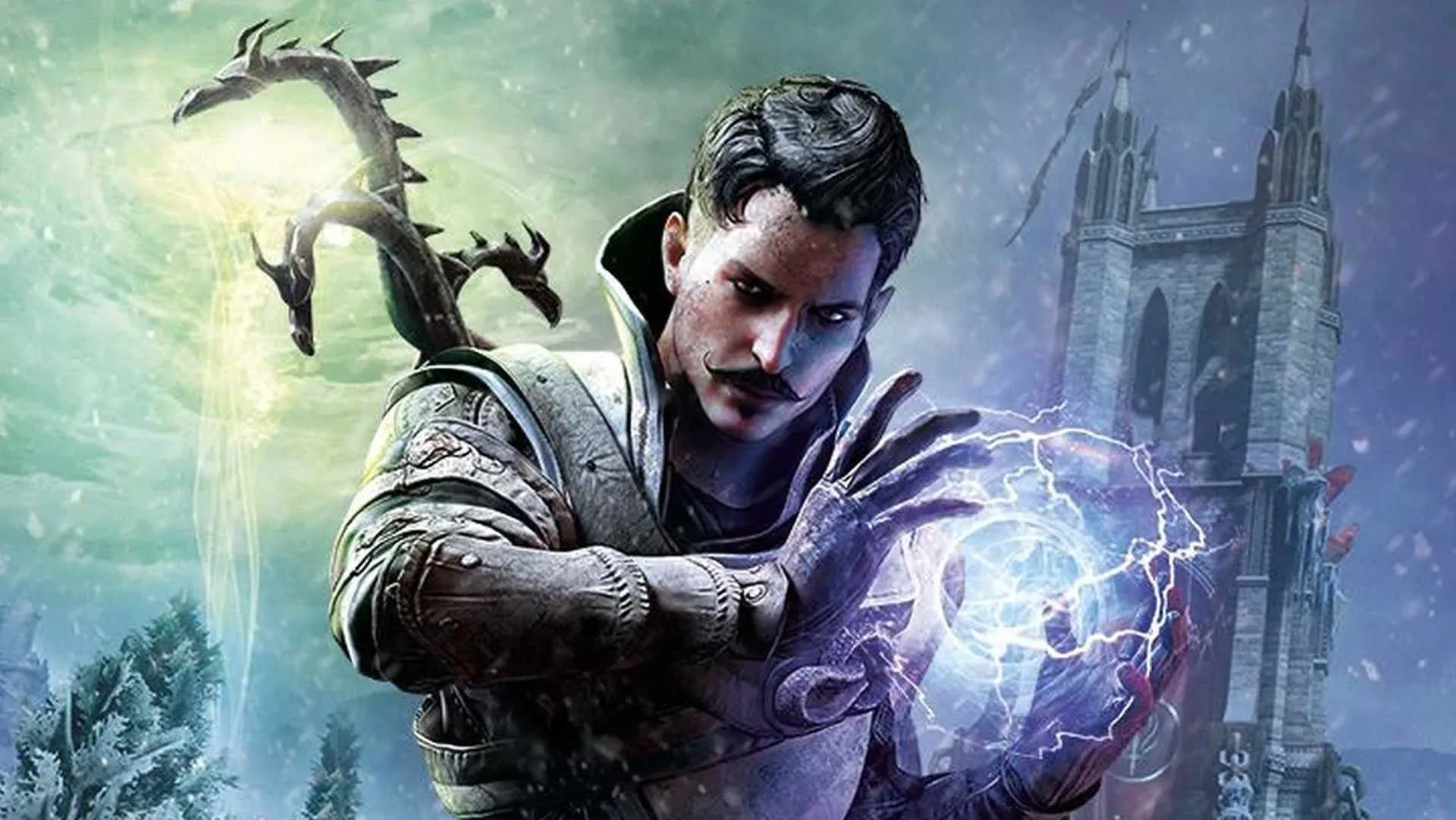
Darrah’s view is that Mass Effect has a clearer advantage on that front. Its value, he says, lies in its worldbuilding: the constructed setting, its established societies, history, terminology and the relationships among its parts. Dragon Age has extensive worldbuilding too, but it operates in a fantasy marketplace shared with other major role-playing series. A studio wanting to make a party-driven fantasy RPG could instead create a new fantasy world and retain far more control over the result.
That does not make Dragon Age interchangeable in a creative sense, nor does it settle what either series would be worth in a real transaction. It does, however, explain why a familiar franchise name is not automatically the most attractive path for a developer or publisher.
Worldbuilding is more than a map and a lore book
Worldbuilding is often used as shorthand for fictional history, locations and proper nouns. In a commercial context, though, it can be more useful to think of it as a framework that gives future stories an immediate identity. It is the set of creative constraints and opportunities a new team receives along with an IP.
Mass Effect’s setting gives a prospective creator a ready-made science-fiction canvas with a specific tone and an established vocabulary. The setting can support stories beyond one protagonist or one plotline while still feeling recognizably connected to the same universe. That is the kind of asset Darrah is describing: not simply a label that can be placed on a box, but a distinct creative foundation.
His comparison does not deny Dragon Age’s depth. Instead, it focuses on perceived differentiation. High fantasy has a huge audience, but it also contains many familiar building blocks: magic, kingdoms, monsters, ancient conflicts and competing factions. Those elements can be arranged in countless compelling ways, yet they can also make a new game easier to position as a spiritual successor rather than an official continuation.
Darrah compared Dragon Age’s competitive space with fantasy worlds associated with Lord of the Rings, Baldur’s Gate and The Witcher. The point is not that these franchises are identical. They plainly are not. The point is that a business deciding whether to buy Dragon Age could see enough overlap in broad genre appeal to ask whether it would be wiser to create its own fantasy setting instead.
Related coverage includes Mass Effect's Worldbuilding Makes It a Stronger IP Than Dragon Age, BioWare Veteran Argues.
The “serial number filed off” problem
Darrah framed the calculation with a hypothetical involving Larian, the studio behind Baldur’s Gate 3 and Divinity. Would buying Dragon Age generate enough additional sales to justify the purchase, compared with making an original fantasy RPG that takes broad inspiration from what audiences like about Dragon Age?
His deliberately fictional name for that alternate project—“Wyvern Era”—gets at a familiar industry concept. A spiritual successor is a new work designed to evoke some of the appeal, structure or sensibility of an earlier game without using its protected setting, title or characters. It may appeal to the same audience while avoiding the cost and restrictions of acquiring an existing franchise.
That alternative is particularly relevant when the appeal people associate with a game is not limited to its canon. Players may want character-focused companions, consequential choices, tactical combat, romance, political conflict or a particular flavor of fantasy adventure. A new project can pursue some or all of those goals without being an official Dragon Age entry.
For an acquirer, that means the price of the IP must be weighed against the incremental value it provides. Incremental value is the extra commercial benefit attributable to the bought property rather than to the developer’s own reputation, marketing, design and ability to reach an audience. If a studio believes its original project would sell nearly as well as the licensed one, the value of the license or acquisition becomes less obvious.
That is Darrah’s central business argument. An established fantasy series may bring awareness and a legacy, but awareness alone does not guarantee that the name will create enough additional demand to outweigh its cost.
An audience is not automatically transferable
Darrah also cautioned that an existing fan base should not be treated as a group that will automatically follow any new developer. Dragon Age has an audience, he said, but a company without meaningful ties to its history should not assume that audience arrives “for free.”
This is an especially useful reminder because franchises are often discussed as if ownership and trust are the same thing. They are not. Ownership can grant the legal ability to make a sequel, use a title and draw from an established fictional world. Trust is built separately through the people making the game, the choices they make and whether fans believe the project understands what mattered about earlier entries.
Darrah singled out former Dragon Age lead writer David Gaider as an example of the kind of established creative connection that could affect that equation. The broader principle is not that one person alone determines a franchise’s future. Rather, recognizable creative continuity can reassure an audience that a continuation is more than a familiar logo attached to a different project.
That concern applies to Mass Effect as well. Darrah’s argument is that its universe is a more differentiated asset, not that a buyer could acquire it and rely on the setting alone. A distinctive galaxy can provide a head start, but any new game would still need a persuasive creative vision and the ability to meet the expectations attached to the name.
Why science fiction can be a more distinct package
The contrast Darrah draws is fundamentally about replacement cost. A developer can invent a new fantasy realm, and audiences may still understand its premise immediately because the genre’s language is so broadly familiar. The risk is not that the game will lack originality; the risk is that an expensive legacy property may not add enough that a fresh setting cannot.
Mass Effect, in Darrah’s estimation, gives a buyer a more clearly defined universe. A new science-fiction game can certainly be made without it, but reproducing the particular appeal of an established setting is a more difficult proposition than simply choosing familiar genre ingredients. The universe itself becomes a product advantage.
That is also why “worldbuilding” should not be mistaken for a measure of how many encyclopedic entries a series has. Dragon Age can possess a large body of lore and still face a different market question than Mass Effect. The relevant question is whether the setting’s specificity changes what a buyer can offer players.
In that sense, Darrah’s claim is less a verdict on which series is artistically superior and more a statement about positioning. One property may have a stronger defense against imitation even if both have passionate communities and considerable narrative history.
What this means for fans hoping for a continuation
There is no indication here of a purchase, investment or new project involving either franchise. Darrah was outlining the kind of evaluation a potential buyer might make, not reporting that a deal is underway. That uncertainty matters, especially when discussion of beloved series can quickly turn into assumptions about what happens next.
Still, the comments identify the factors fans should watch in any future conversation around an established RPG property:
- Creative continuity: Whether people with experience of the series, or a clearly articulated successor vision, are involved.
- Distinctive setting: Whether the IP offers more than a familiar genre pitch and can support new stories without losing its identity.
- Audience confidence: Whether the project gives existing fans a reason to believe its connection to the franchise is meaningful.
- Opportunity cost: Whether a studio could achieve comparable interest with an original game it fully owns and controls.
The final factor is frequently overlooked in fan debates. Players may reasonably want another entry in a favorite series, but companies deciding whether to obtain an IP also compare that route against building something new. Original worlds avoid acquisition costs and allow greater freedom, while established worlds can provide visibility, history and a ready-made framework. The decision is a trade-off, not a referendum on whether a franchise deserves to continue.
For developers working on PC RPGs, the practical pressures surrounding a major release are broader than lore and branding alone; technical performance and configuration can shape how a game is received, too. For a separate example of the PC-side considerations players may encounter, see our guide to testing Windows’ HAGS setting before cutting texture settings.
Darrah’s argument is about differentiation, not dismissal
It would be easy to reduce the comparison to “Mass Effect is better than Dragon Age,” but that is not what Darrah’s reasoning establishes. He explicitly acknowledges Dragon Age’s worldbuilding, fan base, legacy and existing audience. His contention is that its fantasy identity sits closer to other prominent fantasy propositions, making an original alternative more plausible for many companies.
Mass Effect, by contrast, is presented as an IP whose universe itself may be difficult to replace. If a buyer wants precisely that setting and the kind of stories it can support, ownership could have value that an original science-fiction project cannot instantly duplicate.
Whether the market would ultimately agree would depend on details not answered by this discussion: the terms of any deal, the teams involved, the scope of a proposed game and how players respond. But Darrah’s framing offers a sensible way to separate affection for a franchise from the difficult question of its business value. A legacy name has power. A world that cannot easily be recreated may have more.