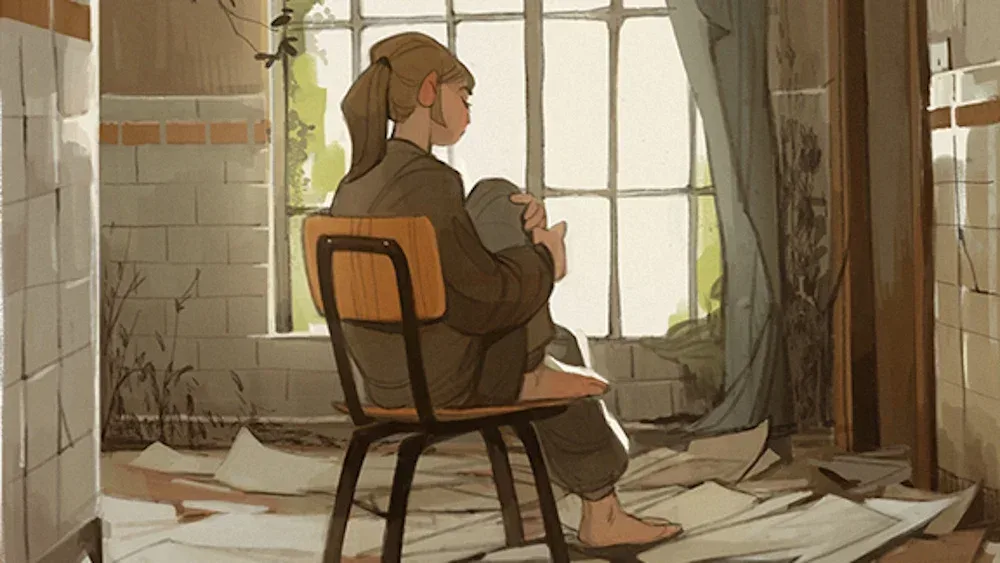
Artist Loish, also known as Lois van Baarle, has used a false accusation of generative-AI use to make a more important point: concern about AI imagery does not excuse careless claims against individual artists.
Loish said she was accused on TikTok of using generative AI for a piece of artwork. Her response on Instagram did not rely on a vague denial. Instead, she pointed people toward the evidence around the image: process videos showing its creation, a post history stretching back to 2003, and a visible record of how her style has evolved over time. The particular work cited in the accusation was made in 2023, and Loish has material documenting its development.
That documentation matters. The artist’s work has appeared in Horizon, and she is also known for sharing educational resources and tutorials with other artists. In other words, this is not simply a dispute over whether a single finished image “looks AI-generated.” It is about what audiences should do when they suspect AI has been used, and how a rush to label can harm the very human creators people say they want to protect.
A real concern can still produce a wrong accusation
Generative AI is a broad term for systems that produce new material, such as text or images, from prompts and patterns learned during training. In image generation, the result can imitate visual characteristics associated with many artists or art traditions. For working artists, the rapid presence of that material in social feeds and creative industries has created understandable alarm.
Loish described the present moment as difficult for artists who must compete with what she called “slop” in algorithms and creative spaces while worrying that their work is being fed into AI systems without consent. She also made the related point that artists’ work has helped create the visual material these systems draw from, only for generated output to compete with and obscure human-made work.
Those concerns are substantial. But they do not turn visual hunches into proof. An accusation about a named artist is not the same thing as a general criticism of a technology or of a company using it. The first is a specific claim about a person’s conduct. It needs specific evidence.
That distinction is especially valuable in games. Visual production is often distributed across concept artists, illustrators, character artists, environment teams, technical artists, UI specialists and external collaborators. Public-facing viewers may see only the final image, not the sketches, iterations, reference work, approvals, revisions and production constraints behind it. A polished or unusual-looking asset can prompt questions, but it cannot, by itself, establish how it was made.
Process evidence is stronger than pattern-spotting
One reason Loish’s response lands is that it demonstrates a practical verification method. Rather than asking commenters to trust a declaration, she directs them to a trail of work that predates the accusation. Process videos are not merely promotional extras in this context. They can show stages of a piece, from earlier decisions through later refinement, and place an image within an artist’s ongoing practice.
Related coverage includes Loish Pushes Back After False AI Art Accusation With a Call for Careful Verification.
A long portfolio history serves a related purpose. Styles develop, but artists often retain recognizable approaches to composition, color, line, shape, lighting or character design. Looking through older work can reveal whether a supposedly suspicious image belongs to a consistent body of human-made art. Loish says she has been posting art since 2003, offering viewers a substantial record to examine rather than a single isolated upload.
None of this means every artist must publish every step of every job. Artists can have privacy, client confidentiality, deadlines and entirely valid reasons not to expose their raw files or working methods. Verification should not become a demand that creators surrender their process in order to be treated fairly. The narrower lesson is that, when public evidence is available, people should actually look at it before presenting an allegation as fact.
Useful terms: false positives and false negatives
Two terms help clarify why this balance is hard. A false positive happens when someone identifies AI use where there was none. That is the danger illustrated by Loish’s experience. A false positive can attach a stigmatizing label to a person’s name, undermine audience trust and place the accused artist in the exhausting position of having to prove that their own work is real.
A false negative is the opposite: missing AI use when it did occur. People who care about consent, creative labor and transparency understandably want to avoid that outcome as well. Yet a system built to eliminate false negatives by accusing first and investigating later will generate more false positives. It shifts the cost of uncertainty onto artists, including artists whose work may themselves be vulnerable to unauthorized AI training or imitation.
The practical goal is not perfect instant detection. It is better judgment: proportionate language, evidence gathering and a willingness to revise an initial impression.
What responsible scrutiny looks like
Loish’s closing advice is simple: click beyond the comments, inspect profiles, watch process material and learn the warning signs of AI-generated imagery. That does not require everyone to become a forensic investigator. It does require resisting the social-media impulse to treat a confident comment as a completed investigation.
- Start with the artist’s own record. Look for prior work, portfolio posts, dated uploads and relevant process material before making a public claim.
- Separate questions from verdicts. “Do you have process information for this?” is materially different from declaring that an artist used AI.
- Check the entire context. A crop, repost or low-resolution image can conceal the surrounding documentation that gives a work its history.
- Use uncertainty honestly. If the available evidence does not establish a claim, say so—or do not make the claim at all.
- Do not mistake a stylistic preference for a detection tool. Smooth rendering, fantasy imagery, unconventional anatomy or highly polished color are not proof of a particular production method.
This approach also keeps criticism aimed at the appropriate target. If a studio, platform or creator explicitly represents work as human-made while using AI, that is a question of disclosure and accountability. If the evidence is unclear, the responsible next step is inquiry. And if the evidence supports human authorship, continuing to amplify an accusation is not vigilance; it is misinformation about an artist.
Why this matters to game audiences
Games are made through creative labor, and players increasingly want to know how that labor is treated. Questions about AI use, consent and credit are likely to remain part of the conversation around game art. That scrutiny can be constructive when it encourages better disclosure and meaningful support for artists. It becomes destructive when individual creators are made into targets on the basis of aesthetics alone.
The industry’s creative work is also not reducible to a finished asset viewed outside its original context. An illustration may be shaped by a brief, an art direction process, production feedback and collaboration. A game’s visual identity depends on people making deliberate choices. Even broader reporting on new projects, such as this look at a turn-based Final Fantasy experiment, reflects how much audience interest still rests on human creative decisions: which inspirations are selected, how a project is framed and what it is trying to become.
Loish’s message is therefore not an argument for ignoring AI-generated imagery or abandoning criticism. It is an argument for treating verification as part of the criticism. Artists deserve an audience capable of noticing troubling uses of technology. They also deserve an audience capable of recognizing their work, their history and their humanity.
“Don’t forget what makes us human!”
That is the useful standard here. Before sharing an accusation, take the extra steps that Loish laid out: leave the comment thread, inspect the work’s history and seek evidence. In an environment full of fast judgments and synthetic output, careful attention is not a minor courtesy. It is a way to protect creative people from being erased by the very panic meant to defend them.