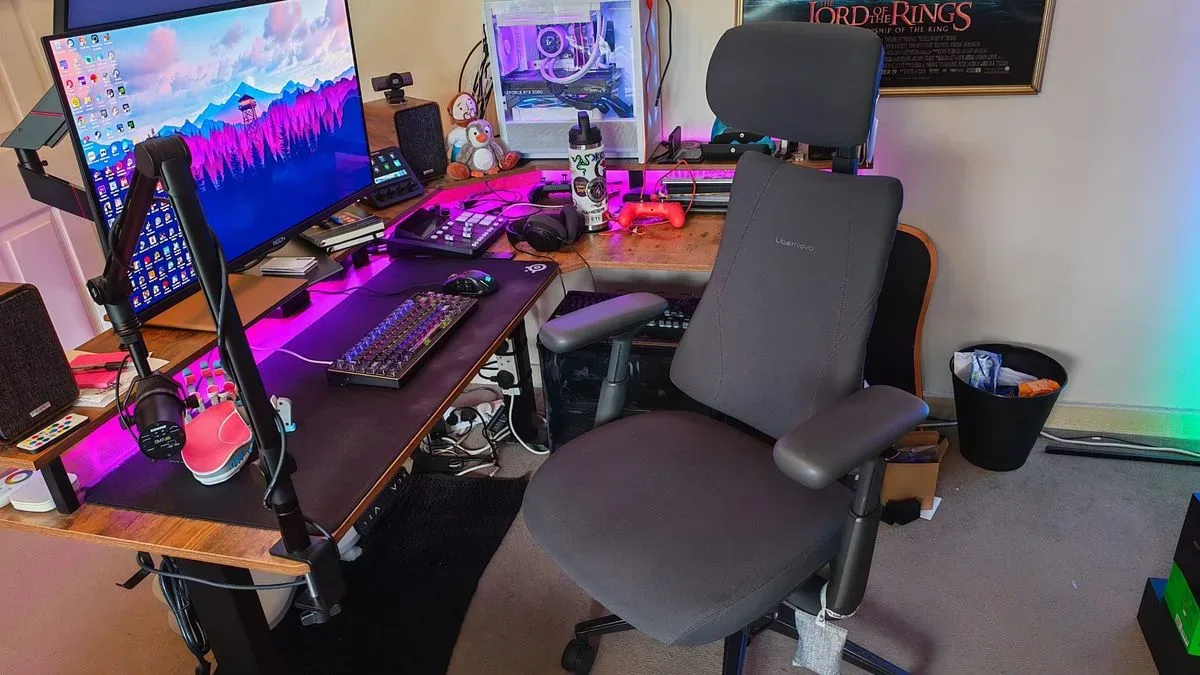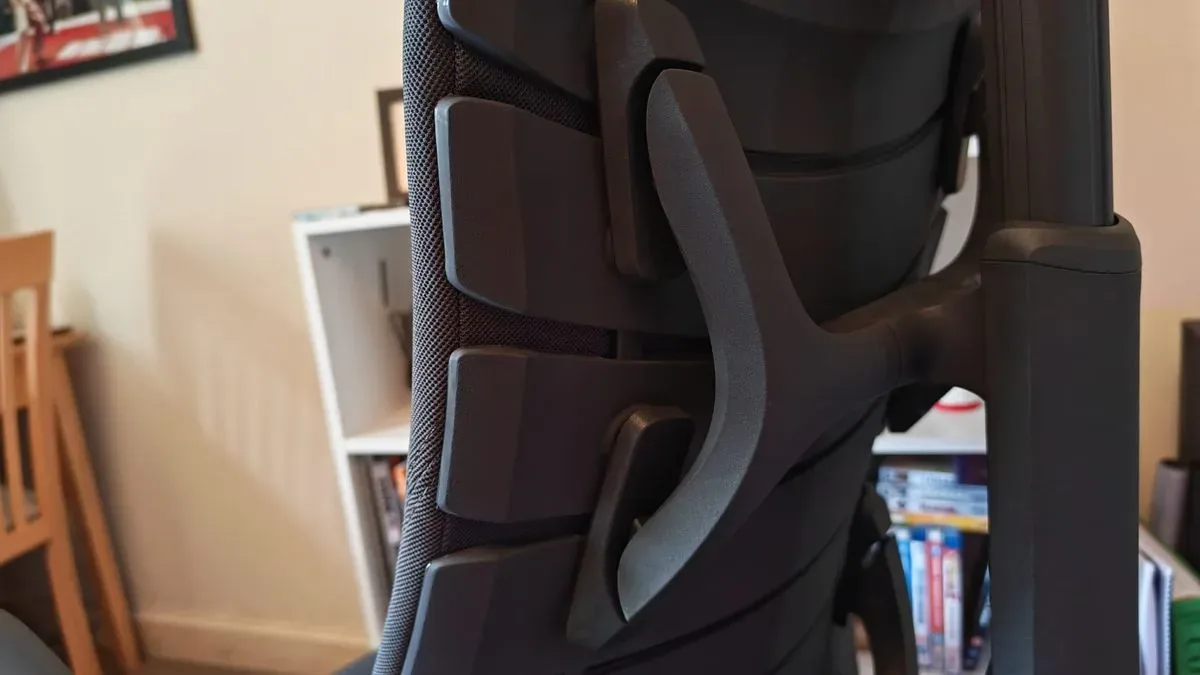
Gaming-chair marketing has spent years trying to persuade us that a race-car bucket seat is the natural habitat for a person playing a space wizard, driving a pretend hatchback, or losing an argument with their own ranked teammates. LiberNovo took a different route with the Omni: it made a conspicuously ergonomic chair whose back moves, flexes and pivots rather than asking its occupant to conform to a fixed slab.
Now comes the LiberNovo Omni Pro, a more expensive version of that already high-end idea. Its defining oddity is a pair of upward-facing fans housed in the seat cushion. Yes, the gaming chair has fans. No, this is not a sentence anyone particularly expected to read outside a fever dream involving RGB thermal paste. Yet the feature may be more useful than it first sounds—especially for warm rooms, hotter climates, and marathon desk sessions where the phrase “sitting comfortably” begins to feel less like an aspiration and more like a boss fight.
The catch is as enormous as the chair’s ambition. The Omni Pro is listed at $1,109, while adding the optional step-sync footrest raises that total to $1,183. That makes it difficult to call a broadly sensible purchase, however impressive its design may be. It is competing in an ultra-premium office-chair space, not casually jostling with the usual gamer-throne crowd.
The central Omni idea: a chair that refuses to sit still
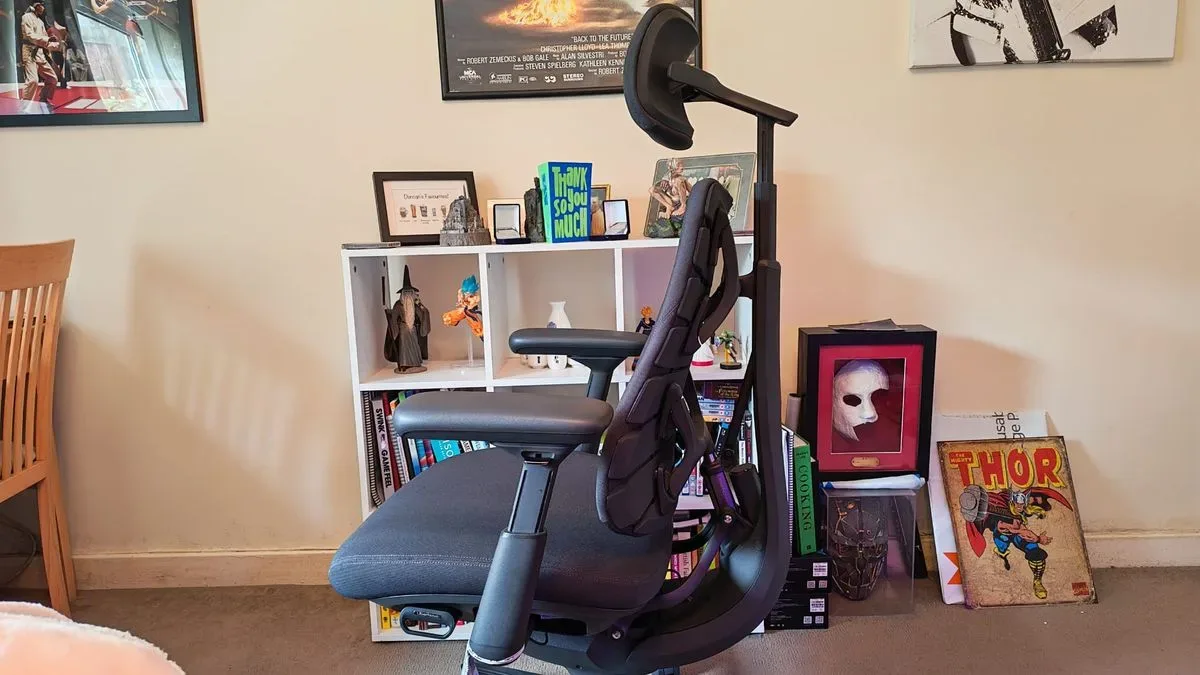
LiberNovo’s original Omni attracted attention after its Kickstarter run in 2025 because it approached support differently from conventional gaming chairs. Instead of relying on one static backrest and a single lumbar bulge, the chair uses a segmented, dynamic construction designed to move along with the sitter. Its back can flex between upper and lower sections and shift side to side, with slats intended to distribute pressure and follow changes in posture.
Plastic panels may initially sound like a questionable choice on furniture costing roughly four figures, but their role is functional rather than ornamental. The flexibility is the point. The Omni’s backrest is designed to adapt as someone twists, settles, leans, or repeatedly performs the universal desk-chair ritual of trying to find a new position while technically remaining in the same position.
The current Omni range also has more backrest slats than earlier units. The goal is additional flex and broader support distribution. That change is not exclusive to the Pro, but it matters because it shows that this is not merely the base chair with a fan bolted into its posterior. LiberNovo has revised the underlying platform, including the recline behavior and certain physical components.
A recline system built for desks rather than naps
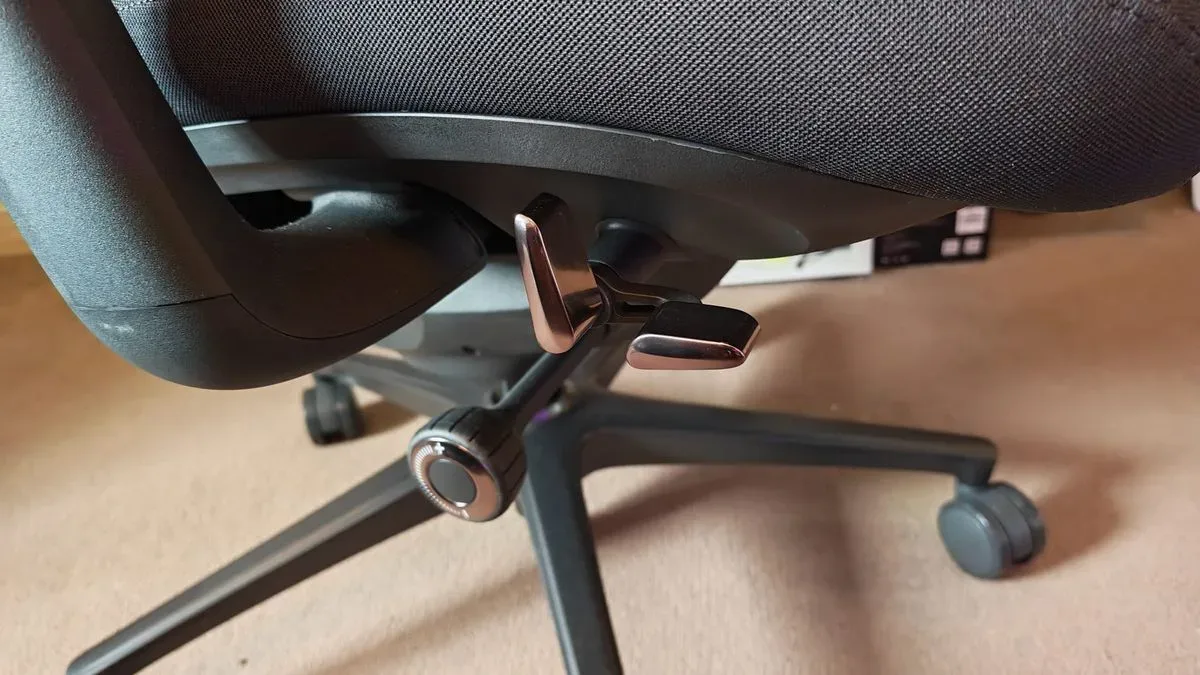
The Omni’s recline mechanism remains one of its most interesting claims. When reclining, the armrests travel backward with the chair while the head position stays comparatively level. The backrest is also intended to retain its supporting shape at different angles. Traditional chairs often turn recline into a negotiation: lean back, slide forward, discover the armrests no longer line up with the desk, and decide whether reaching for the mouse is worth the shoulder angle.
For PC players, armrest placement matters more than a dramatic “gaming chair makes you better” slogan ever will. A chair cannot conjure aim from thin air, but consistent support and desk alignment can help a person maintain a setup that feels natural for keyboard-and-mouse use. The Omni Pro’s revised range now includes four recline levels plus its upright state. The first recline stage is presented as a gaming-focused position: a small step back from fully upright, without moving into a lounge-like angle.
Related coverage includes LiberNovo Omni Pro Review: Premium Gaming Chair Adds Seat Fans Without Losing Its Ergonomic Edge.
That distinction is genuinely practical in theory. A slightly relaxed position may suit focused mouse-and-keyboard play, while deeper recline settings make more sense for controller use, videos, or a break between matches. It is also a useful reminder that gaming furniture has to serve a mixed routine. A desk can be an office, a multiplayer arena, a streaming station, and a place to stare quietly at a loading screen that has stopped at 97%.
For players preparing their spaces for the packed season covered in our fall 2026 gaming calendar, that flexibility may be more compelling than cosmetic “gamer” flourishes. Plenty of people will use the same chair for work before the game library gets its evening shift.
So, about those seat fans
The Omni Pro’s signature addition is an integrated cooling system that pushes air upward through the seat. It offers two power levels and is weight-activated: if the fan function has been left on when nobody is sitting in the chair, the fans stop; they resume when the seat is occupied. It is an unexpectedly thoughtful detail, preventing the chair from spending battery charge cooling an empty room with all the determination of a tiny air conditioner that has developed office hours.
Fans in chairs have an understandable gimmick problem. Heated and cooled seating can easily become a feature that sounds amazing in a product listing but ends up as a rarely used novelty. The Omni Pro’s ventilation is described as capable of producing a noticeable cooling effect even through heavier clothing, which gives it a stronger practical case than an ornamental breeze.
That does not mean everyone needs it. In a cold climate, the feature may spend months waiting patiently for its one big summer moment. On its higher setting, the fans can be audible and are expected to reduce battery life more quickly. It is also difficult to say that cooling alone justifies the step up to a chair priced at $1,109. Rather, it appears to be a useful luxury layered atop an already sophisticated ergonomic platform.
For someone whose room regularly becomes uncomfortably warm, or who simply dislikes heat buildup during extended sessions, that luxury could land closer to a quality-of-life upgrade than a punchline. For everyone else, the standard Omni models may be the more rational route.
What else changes on the Pro model
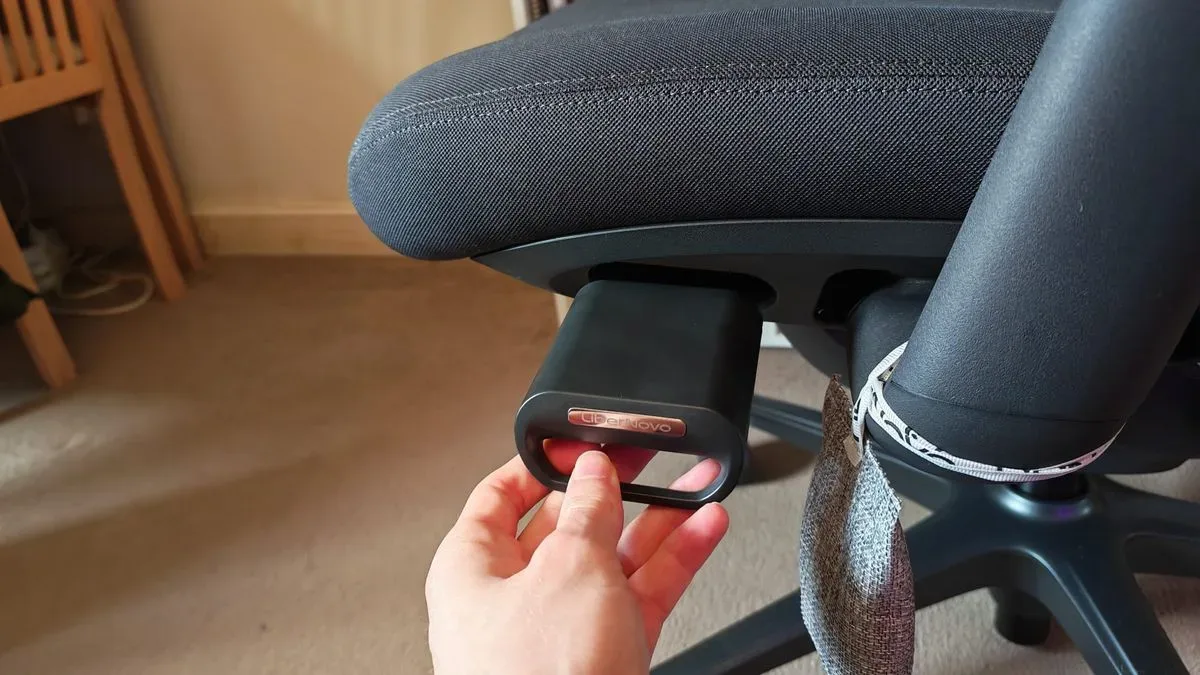
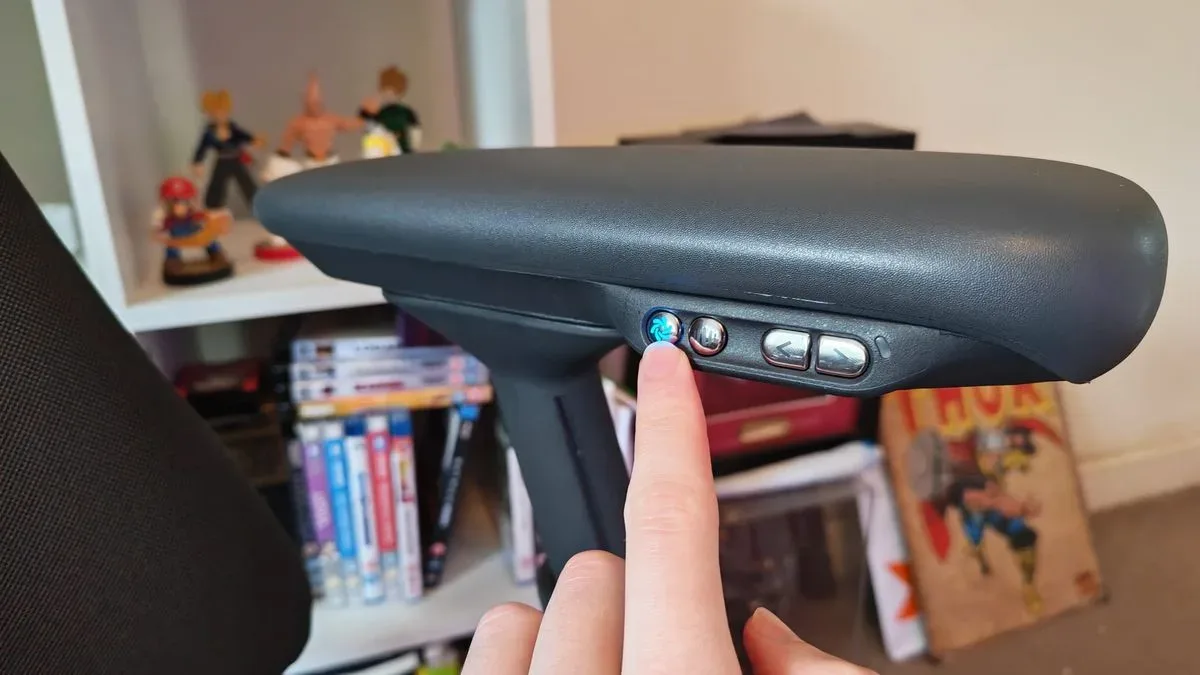
The Pro retains the broader set of adjustments associated with the Omni family: seat-depth adjustment, tilt tension, height adjustment, 4D armrests, and a height-adjustable headrest that pivots with the sitter. Two seat-depth sizes are offered, at 45 cm and 48 cm. The optional footrest is designed to work with the reclining system, while the chair also includes a built-in stretch function intended for a brief, leaned-back lumbar decompression break.
Reports on the newer version also point to thicker yet still flexible upholstery, sturdier controls, and more robust-feeling battery and electrical elements. The armrests have reportedly been improved as well, with smoother forward/back movement and rotation. Those refinements are less flashy than powered seat ventilation, but they may be the more meaningful upgrades over years of daily use. Premium products live or die by the mundane contact points: the lever, the arm pad, the mechanism you touch every afternoon, and the fabric that has to survive innumerable snacks that were definitely not meant to be eaten at the desk.
Assembly has apparently been improved, too. The Omni’s unusual central spine, wiring, and articulated backrest make it more involved than putting together a basic office chair. The attachment method for the backrest has been revised, and clearer video instructions are now available. It still is not a two-minute unboxing experience, but the components are relatively light and the process should be manageable for people comfortable with ordinary flat-pack furniture.
Where the Omni Pro still leaves room for improvement
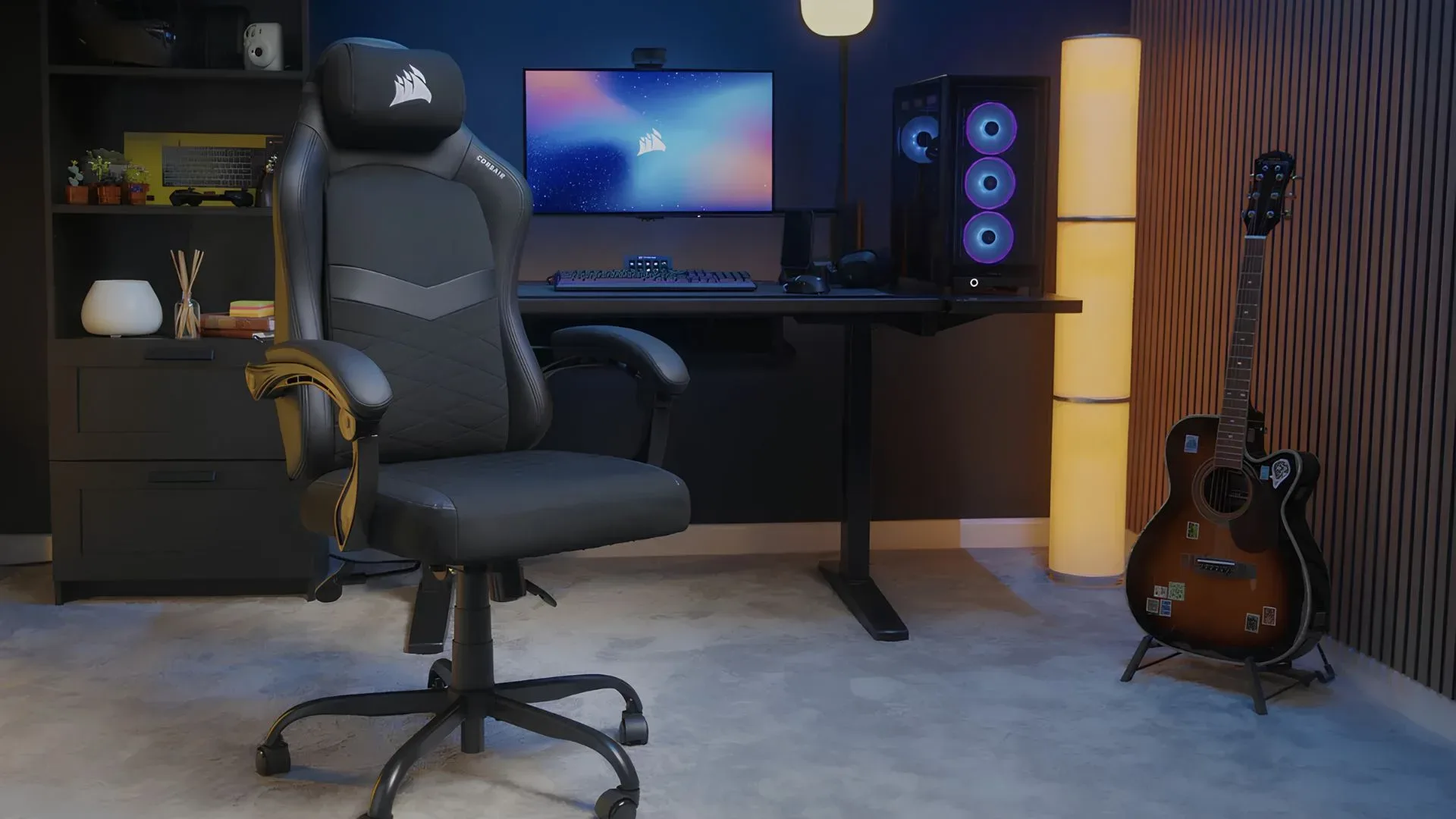
For all its movement-focused engineering, lumbar adjustment is not as granular as it could be. The chair allows the lumbar curve to be raised or lowered, but its height and depth are not independently controlled. Competing premium models such as the Secretlab Titan Evo NanoGen and Corsair TC500 Luxe separate those adjustments. Bodies are annoyingly individual, and lumbar support is one place where an extra degree of customization can make a real difference.
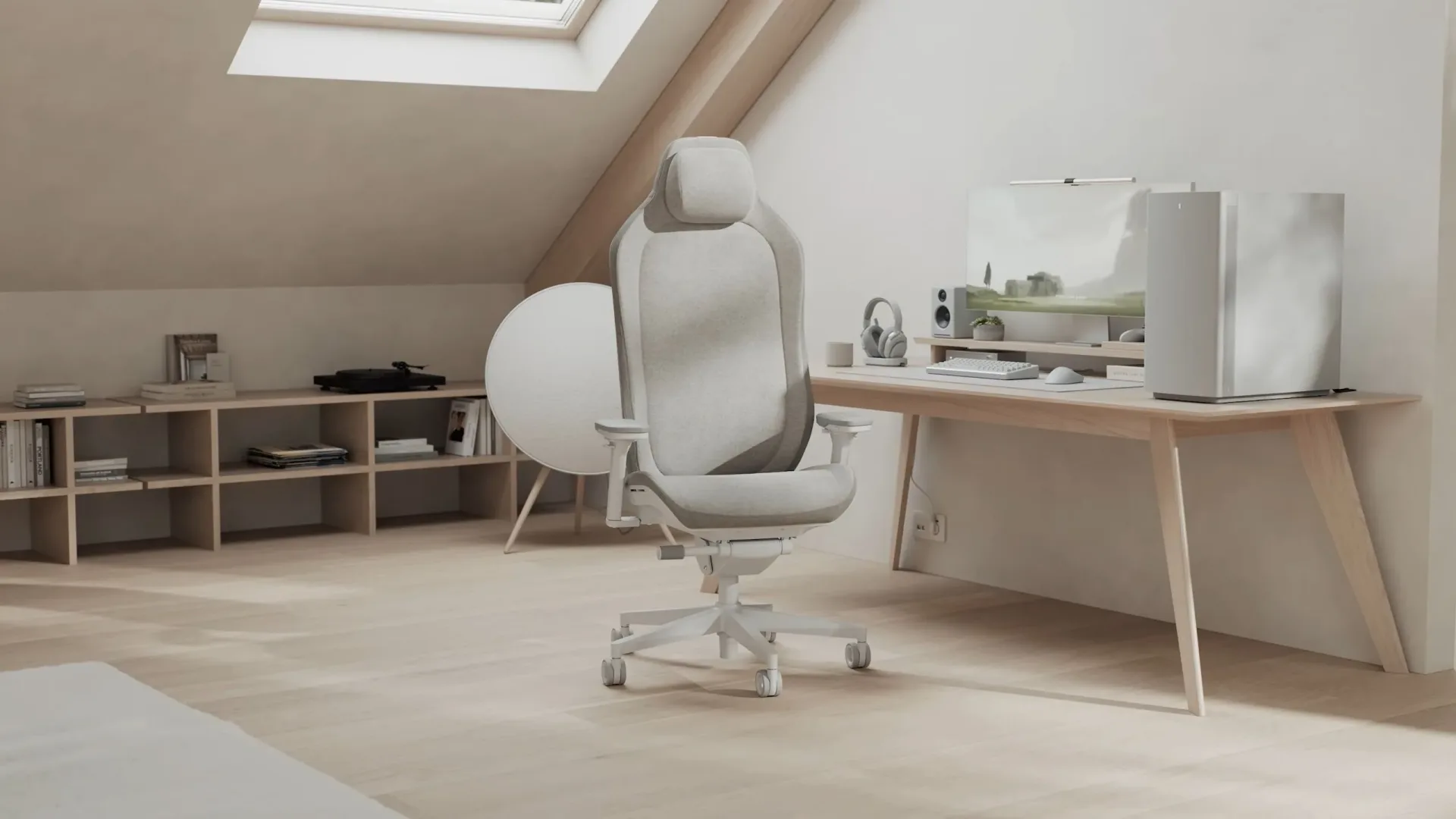
Color selection is another limitation. The Omni Pro comes in Graphite black or Glacier grey/white. Both are restrained, versatile choices, but the base Omni has received a deep-green option that is absent from the Pro range. It is hardly a deal-breaker next to the four-figure price, yet gamers who have assembled an intentionally colorful setup may reasonably wish the most expensive model offered more personality instead of fewer options.
Who should actually consider it?
The Omni Pro makes most sense for someone already willing to shop at the top end of ergonomic seating, who spends long stretches at a desk, and who values dynamic support more than a traditional padded racing-seat silhouette. It is particularly easy to understand for users in consistently warm environments, where the fans may be regularly useful rather than a seasonal curiosity.
- Consider the Omni Pro if a highly adjustable, movement-friendly backrest and cooling seat ventilation appeal to you, and the $1,109 entry price is realistic for your budget.
- Consider another Omni model if you want the core dynamic-backrest concept, added recline setting, and revised slat structure without paying extra chiefly for fans.
- Look elsewhere if independently adjustable lumbar depth and height are essential, or if a simpler chair with lower cost and faster assembly better fits your setup.
LiberNovo also sells the Omni SE, standard Omni, and larger-body Omni Maxis, giving buyers alternatives within the same general design philosophy. That range matters because the Pro is a compelling demonstration of what the platform can do, but not necessarily the automatic best-value choice.
Ultimately, the Omni Pro makes a surprisingly credible case that seat fans are not inherently silly. They remain nonessential, potentially noisy at higher power, and very expensive in context. But paired with a flexible backrest, desk-aware recline behavior, upgraded materials, and a useful gaming recline level, they become part of a chair that is aiming for more than a novelty. It is a spectacularly costly place to sit—but it sounds like LiberNovo has made the extra features count.