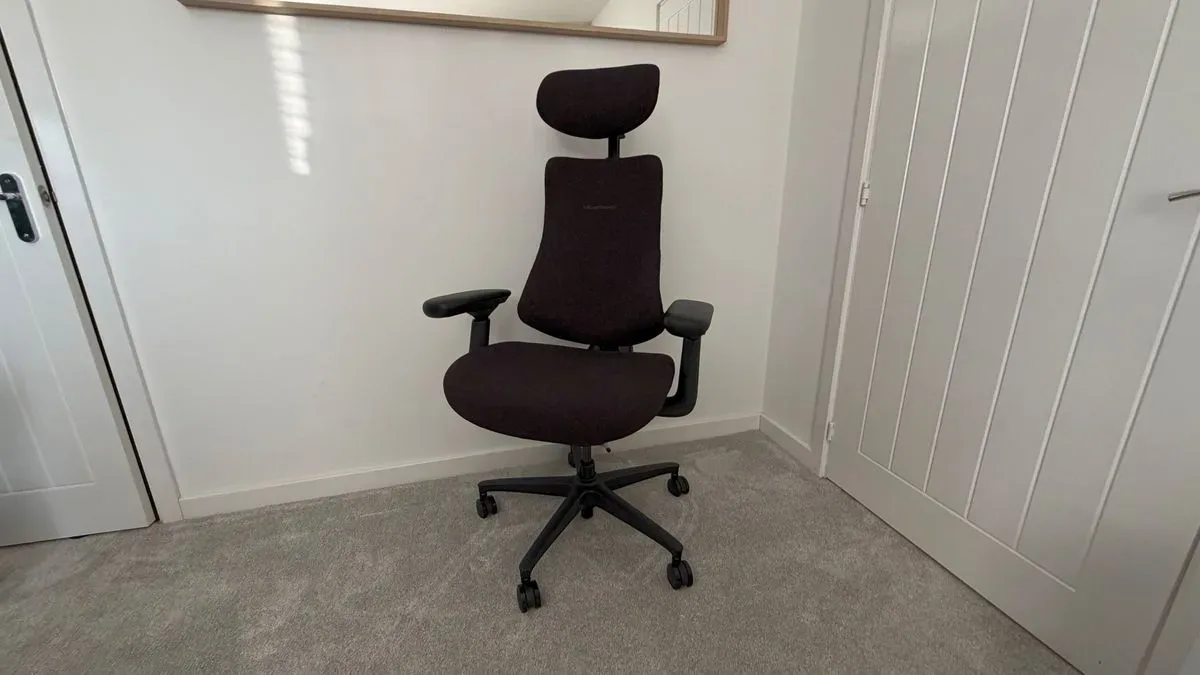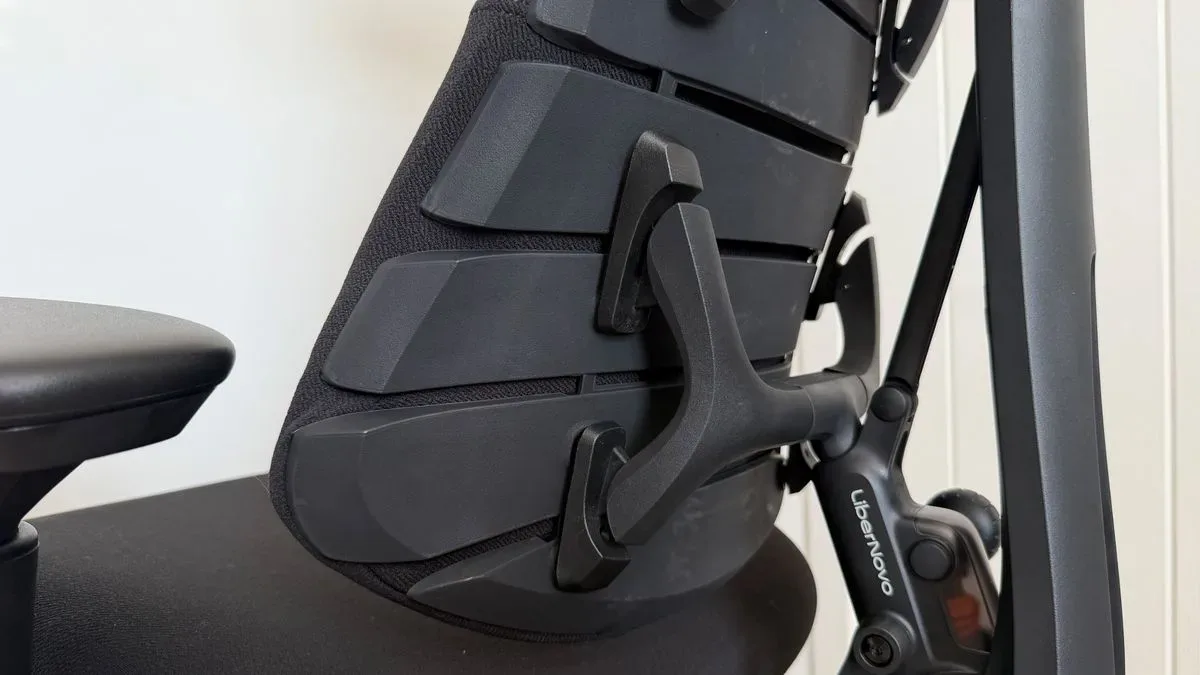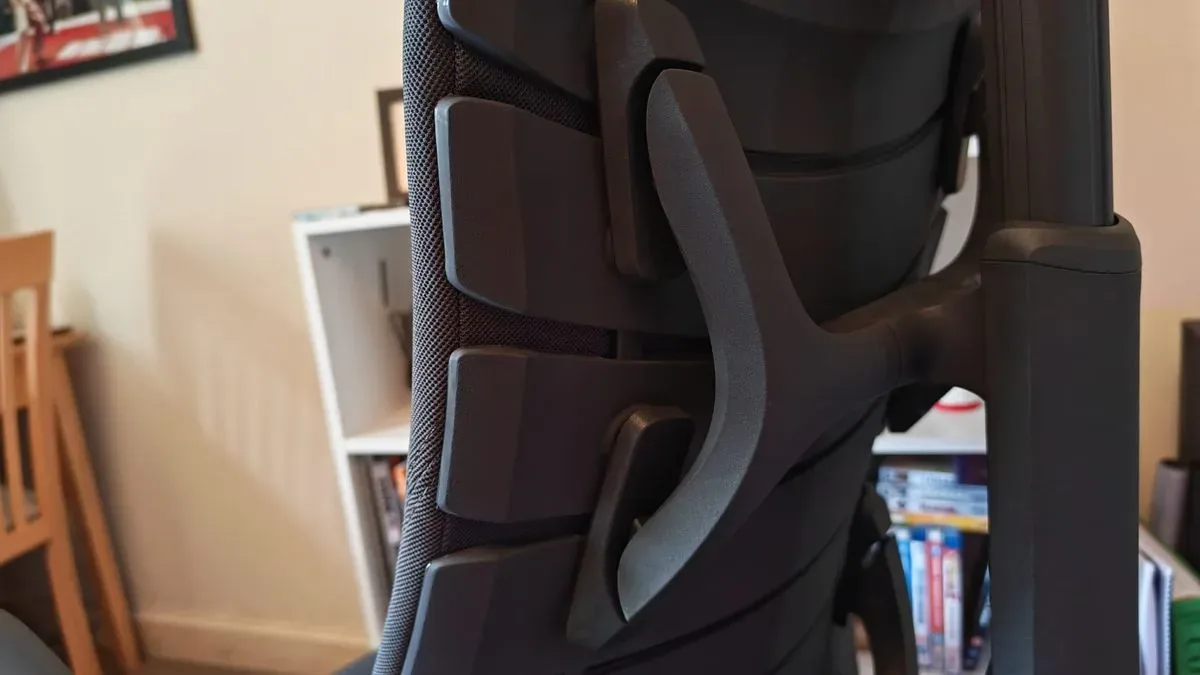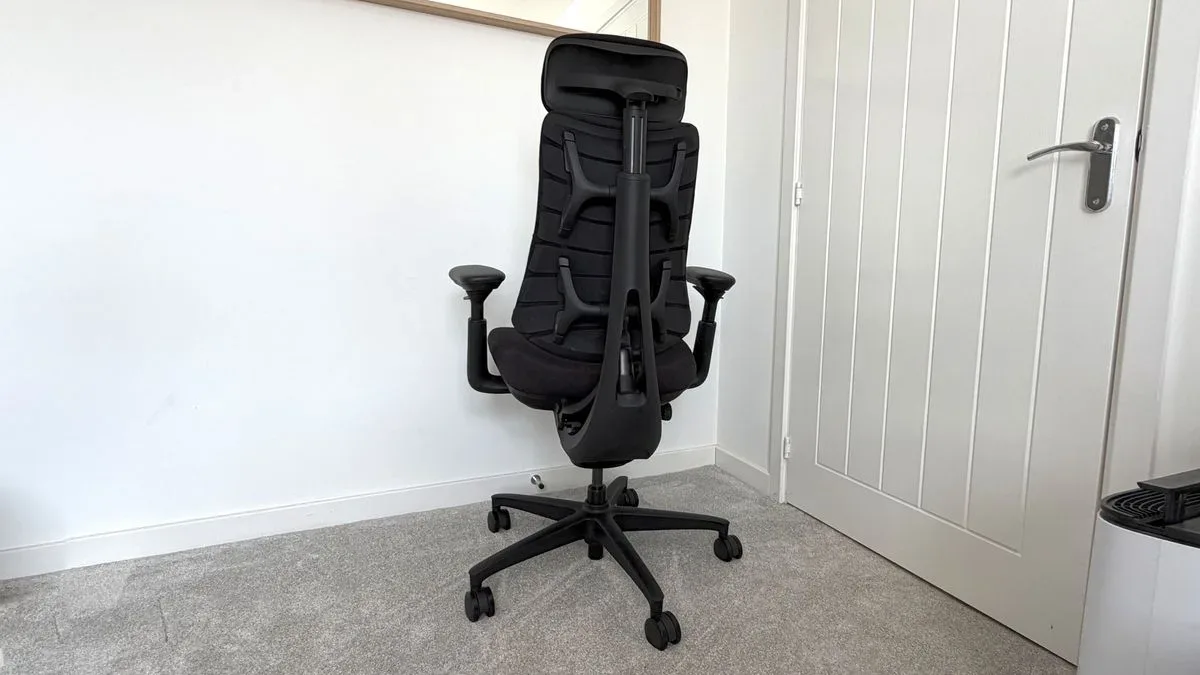
Gaming chairs have spent years chasing the silhouette of a race seat: firm foam, pronounced side bolsters, and a collection of adjustment levers promising that one more tweak will finally make a long session feel reasonable. The LiberNovo Omni SE takes a conspicuously different route. Its defining feature is not RGB, a detachable cushion, or a particularly dramatic recline. It is a backrest made from several linked panels, intended to move as the person in the chair moves.
That approach is central to LiberNovo’s broader Omni line, which expanded after the original Omni Kickstarter raised more than $10 million. The current range includes the updated Omni Gen, the actively cooled Omni Pro, and the larger Maxis series. The Omni SE is positioned as the entry point: it removes the motor found on some siblings and lists for $899 in the US and £839 in the UK. That is a lower price within this family, not a budget-chair price. The real question is whether deleting the most attention-grabbing electronics leaves the chair’s actual ergonomic idea intact.
The answer appears to be largely yes. The Omni SE’s Bionic FlexFit backrest remains its best argument, delivering a substantially different feel from a conventional rigid-backed gaming chair. But the chair also carries compromises that matter at this price: a narrow-fitting backrest, warm fabric, controls that do not consistently stay put, and a plastic construction that can sound less premium than the cost suggests.
The core idea: a backrest that does not ask the user to stay still
Ergonomics is the practice of designing equipment around the way people use it. In a desk-chair context, that generally means supporting the body while allowing changes in posture, rather than treating one perfectly upright pose as the only acceptable option. Most chairs approach that with a single back frame, adjustable lumbar support, and a reclining mechanism. The Omni SE approaches it with a multi-panel structure linked by joints.
The Bionic FlexFit system is designed so its sections flex as the seated user shifts. Rather than one fixed surface behind the torso, the chair aims to keep support in contact across changing positions. That sounds like the sort of marketing phrase that can collapse under the first extended workday, but the reported result is unusually positive: the chair feels supportive without asking for frequent readjustment, and the dynamic backrest is considered its key strength.
Its recline behavior also differs from many familiar gaming chairs. The backrest tilts independently of the seat cushion, while the armrests travel rearward with it. There are five recline settings spanning 105 to 160 degrees. Crucially, those settings act as limits for how far back the backrest can travel, rather than fixed angles that lock the user into a single reclined position. That distinction is useful for buyers. Someone looking for a chair that holds a specific recline angle indefinitely should not assume these five positions work that way; they are stops in the recline range.
The reported comfort benefit is not merely that the chair moves more. It is that the pronounced shape of the backrest can feel accommodating instead of restrictive. Traditional bucket-style chairs may hold a user in a defined position, whereas the Omni SE’s panel system is said to create more of a feeling of sitting in the chair. For desk work, lengthy games, or any routine involving regular posture shifts, that is the practical appeal of the design.
Manual lumbar support may be the sensible simplification
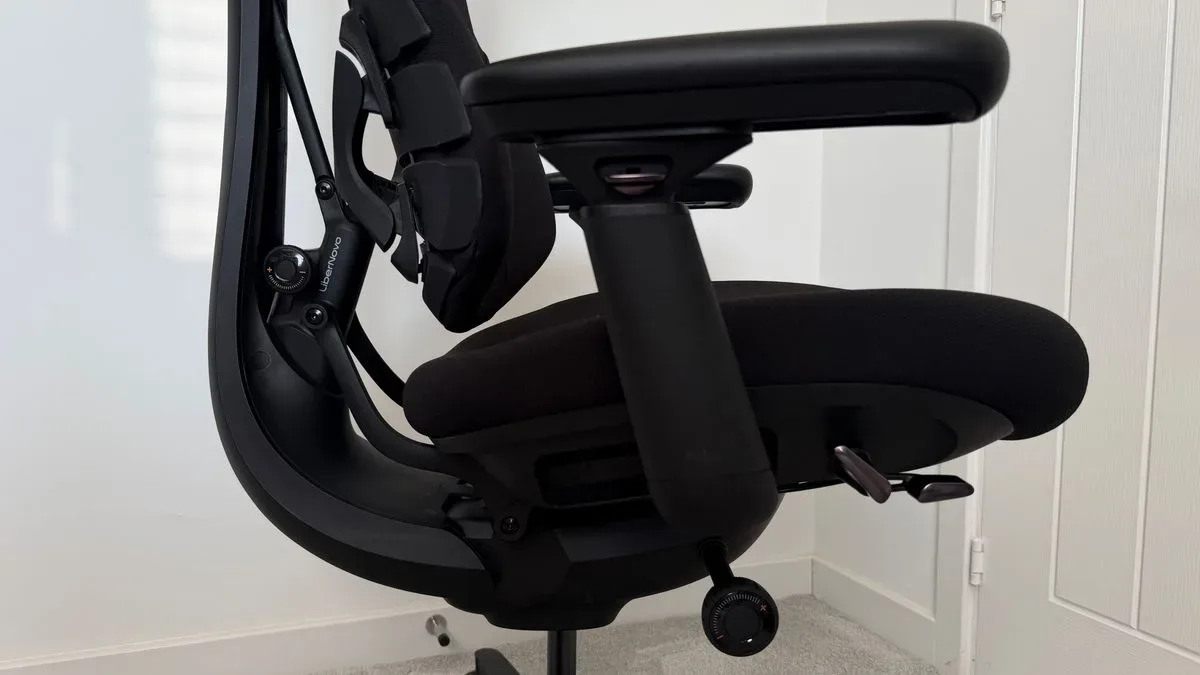
The SE omits the motorized adjustment found in the original Omni and Pro models, replacing it with a manual lumbar dial. On paper, this is a specification downgrade. In daily use, it may be one of the least consequential cuts.
Related coverage includes LiberNovo Omni SE Review: Dynamic Ergonomics Make This Premium Gaming Chair Stand Out.
Lumbar support refers to support around the lower back. It is often implemented as a firm bar or pad that pushes forward into a relatively small area. Some people appreciate that direct pressure; others find it intrusive, especially when the support is not aligned with their body. The Omni SE’s panel-based construction reportedly makes the lumbar adjustment feel more integrated with the rest of the backrest. Instead of a single hard pressure point, it offers broader support through the torso.
The dial is easy to reach, and the logic behind the manual system is straightforward: once a user finds a setting that works, there may be little reason to revisit it. The absence of a motor is therefore less important than the quality of the underlying support. This is the Omni SE’s strongest value proposition. It sheds the battery-powered flourish while preserving the design element that is actually responsible for its comfort.
That does not mean every buyer should dismiss the Pro. The higher-spec model brings active cooling, which may be more than a luxury for users in warm rooms or climates. The SE’s fabric, while soft and pliable, was found to retain more heat than expected during hot conditions. The material’s textured finish also attracts dust and debris readily, so owners should expect to brush off the seat regularly. A fabric chair is not automatically a cool chair, and the Omni SE is a useful reminder that texture, foam, and airflow all influence perceived heat.
Seat comfort changes over a long session
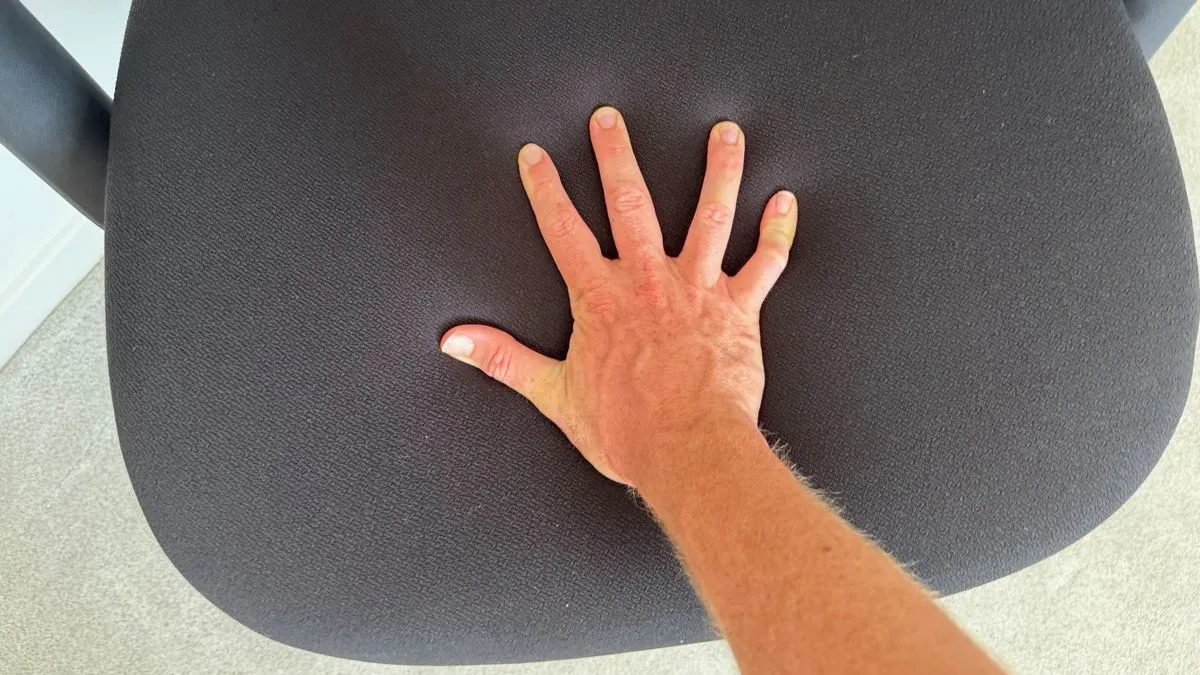
The seat cushion uses three stated firmness zones, although the differences were not especially apparent when seated. The more noticeable behavior is how its foam changes under sustained use. It begins soft, almost squishy, and feels especially pleasant at the beginning of a session. Over time, however, that initial softness fades and the cushion reaches a more compressed state.
This is described as a noticeable “bottom-out,” meaning the foam compresses enough that the user becomes more aware of its underlying support. It does not reportedly turn the chair uncomfortable, but it makes the cushion feel different from firmer cold-cure foam used in some competing gaming chairs. Cold-cure foam is a molded foam commonly used in office and gaming seating; in this comparison, its relevant characteristic is a firmer feel that tends to hold its shape more consistently during a long day.
This is not necessarily a simple win for the firmer alternative. Some people prefer the Omni SE’s softer first impression, while others value a seat that feels nearly the same at hour six as it did in minute one. Buyers who specifically dislike firm cushions may still appreciate the SE, but they should not interpret “soft” as “unchanging.”
Adjustment should not become accidental adjustment
There is an unfortunate tension at the center of the Omni SE. Its headline feature is beneficial movement in the backrest. Yet some of its secondary adjustments move when they should stay still.
The armrests can be height-locked, but their rotation and side-to-side positioning cannot be locked. As a result, they can drift away from the placement the user intended. This is more than a minor annoyance on a chair designed for long desk sessions: armrest position affects where the shoulders, forearms, keyboard, and mouse naturally settle. A flexible armrest can be helpful when deliberately adjusted. It is considerably less helpful when it repositions itself during ordinary use.
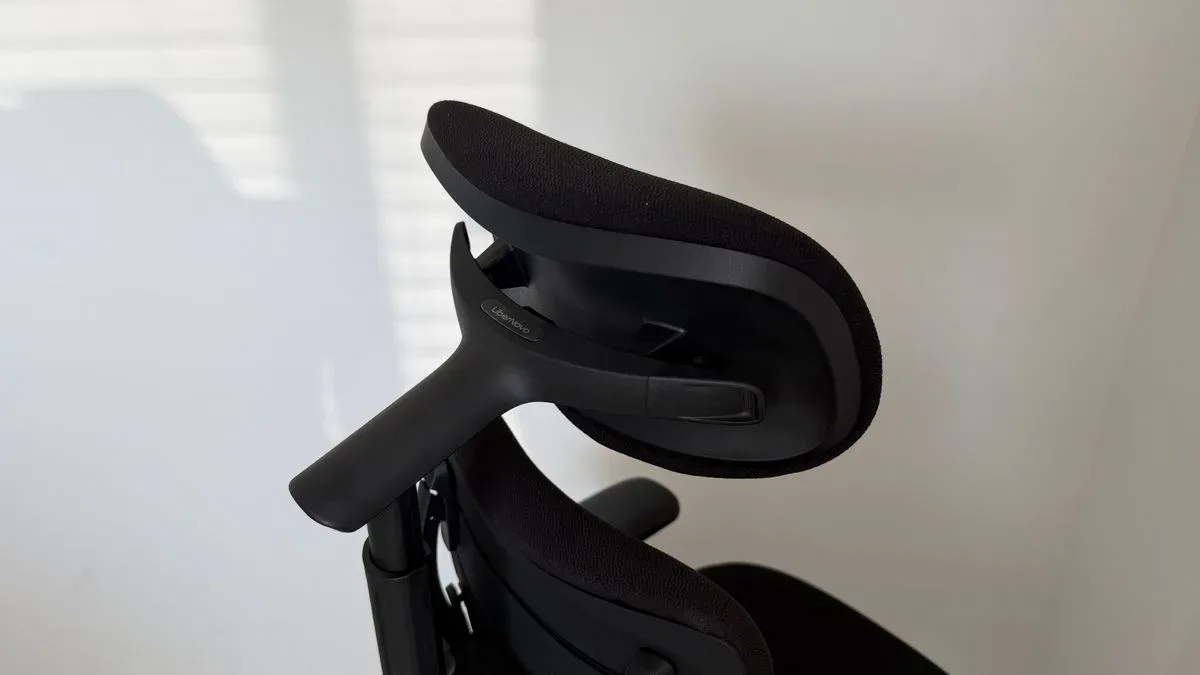
The headrest is the larger concern. It is described as very soft and comfortable when it remains in place, but prone to slipping down under light pressure—even when standing up from the chair. A headrest that will not reliably retain its height undercuts its own purpose. This is especially frustrating because the failure is not a missing feature; it is a feature present in a form that is difficult to trust.
Prospective owners should separate these issues from the backrest’s intentional flex. The FlexFit system’s movement is the chair’s defining advantage. The armrest and headrest movement is unintended looseness. The two may look like a shared “dynamic” philosophy from across the room, but they have very different consequences.
Premium pricing meets a mostly plastic frame
The Omni SE is almost entirely plastic, including its nylon star base. The Omni Pro uses a reinforced aluminum-alloy base instead. Plastic construction does not automatically mean a chair is unsafe or flimsy, and there is no indication here that the Omni SE is likely to fail. Still, reports of creaking, rubbing, and settling noises from the frame affect the experience expected from an $899/£839 product.
There is also an unusual issue with the gas cylinder, the height-adjustment component that connects the seat to the base. It sits low enough to scrape a plastic carpet protector as the chair moves. That may not affect every floor setup, but it is a practical compatibility concern for anyone using a similar protective mat. It is the sort of small mechanical detail that can become impossible to ignore once a workspace is quiet.
Assembly, at least, appears refreshingly uncomplicated. Despite the chair’s visually complex rear structure, it reportedly arrives with relatively few parts and can be assembled in roughly 10 minutes with its large instruction card. That is worth noting for anyone who has wrestled with a bulky chair box and an alarming bag of bolts. The Omni SE comes only in Obsidian Black. LiberNovo lists 45 cm and 48 cm seat-depth options, although a tested cushion reportedly measured 54 cm from the back to the front, leaving an unresolved mismatch between the listed options and that unit’s measurement.
Fit matters more than the product name suggests
The Omni SE’s backrest has slim side wings. That helps it hug smaller and average-sized frames, but it may feel restrictive for broader users. The bigger Maxis series is the more logical branch of the lineup for buyers who need additional room. This is an important caveat because an ergonomic concept can be excellent and still be wrong for a particular body shape.
Likewise, buyers who run warm should take the fabric warning seriously and consider the actively cooled Omni Pro rather than assuming the less expensive SE will be close enough. A person who mainly wants the flexible backrest, manual lumbar control, and a relatively simple setup has the strongest case for the SE. A person who needs a wider shell, locked-in arm positions, a dependable headrest, or quieter premium materials has clearer reasons to look elsewhere or higher in the same lineup.
The broader takeaway is that LiberNovo’s idea is more important than its missing motor. The Omni SE demonstrates that a gaming chair can challenge the familiar racing-seat formula with a genuinely different support system, not merely another name for extra adjustability. Its flaws are tangible and should not be waved away at this price. Yet its backrest and lumbar design offer a persuasive reason to pay attention to what happens between the user and the chair over the course of a day, not just how many mechanisms appear on a product page.
For readers tracking the PC side of the hobby beyond furniture, see our coverage of Wardogs and Bulkhead’s path toward 1.0.