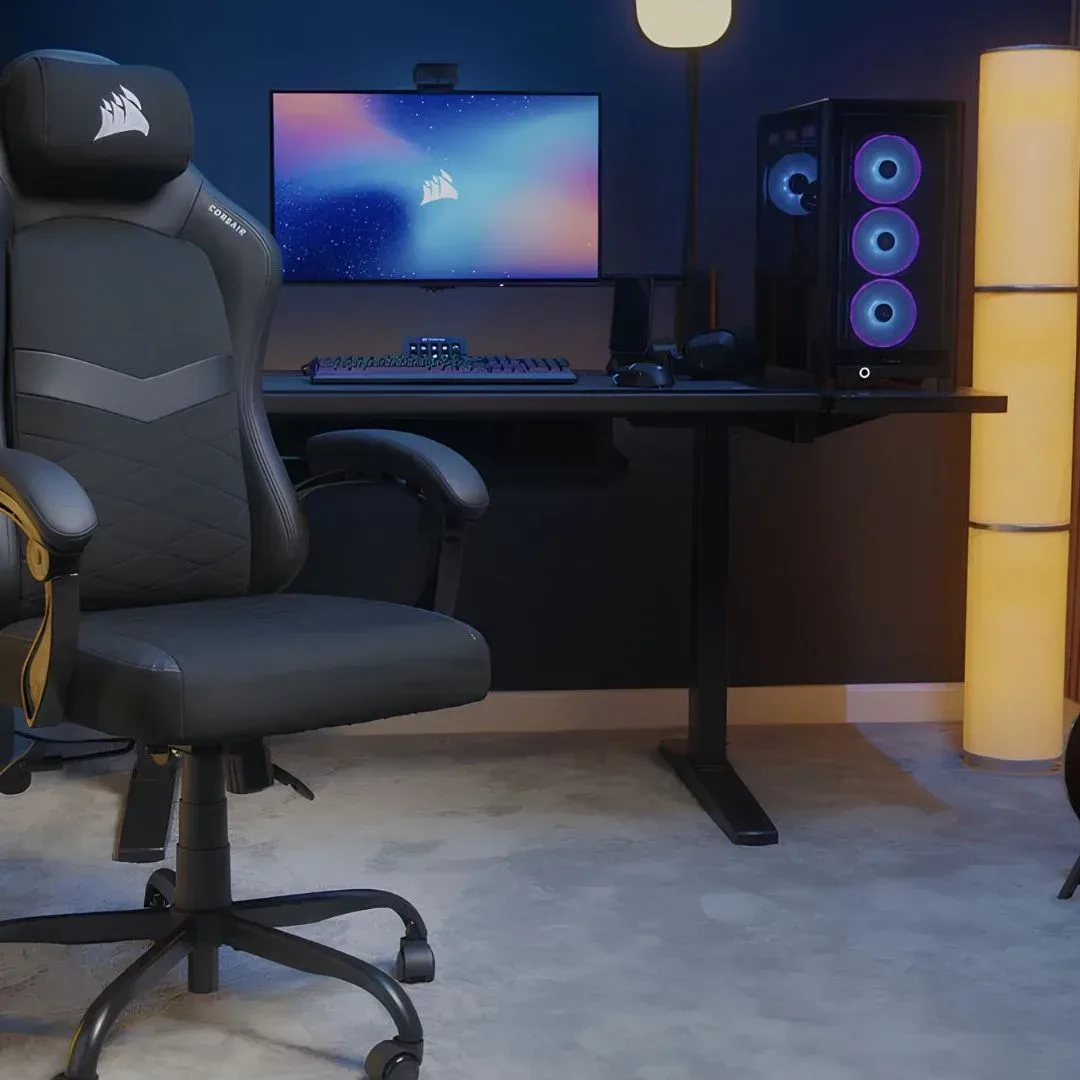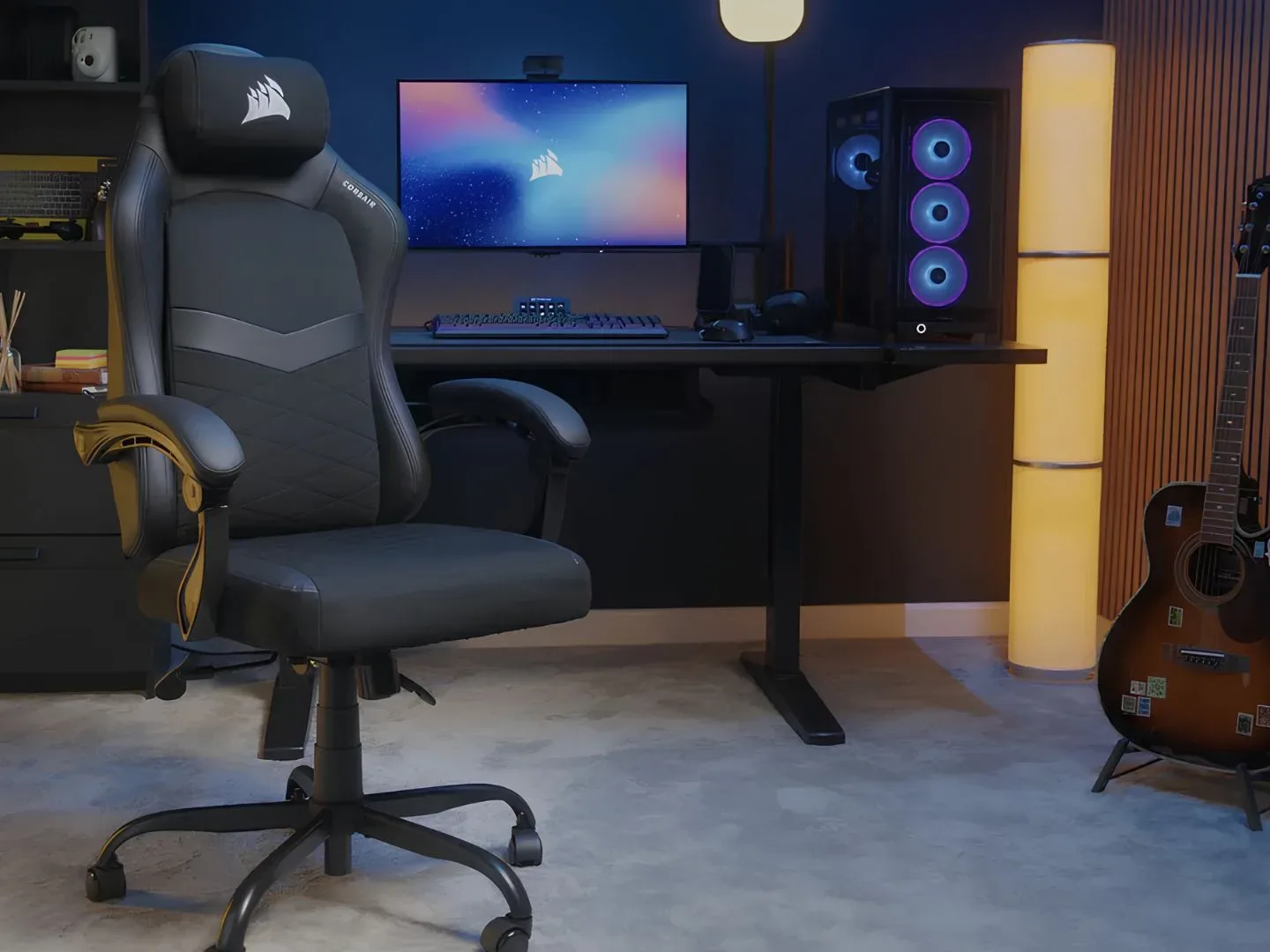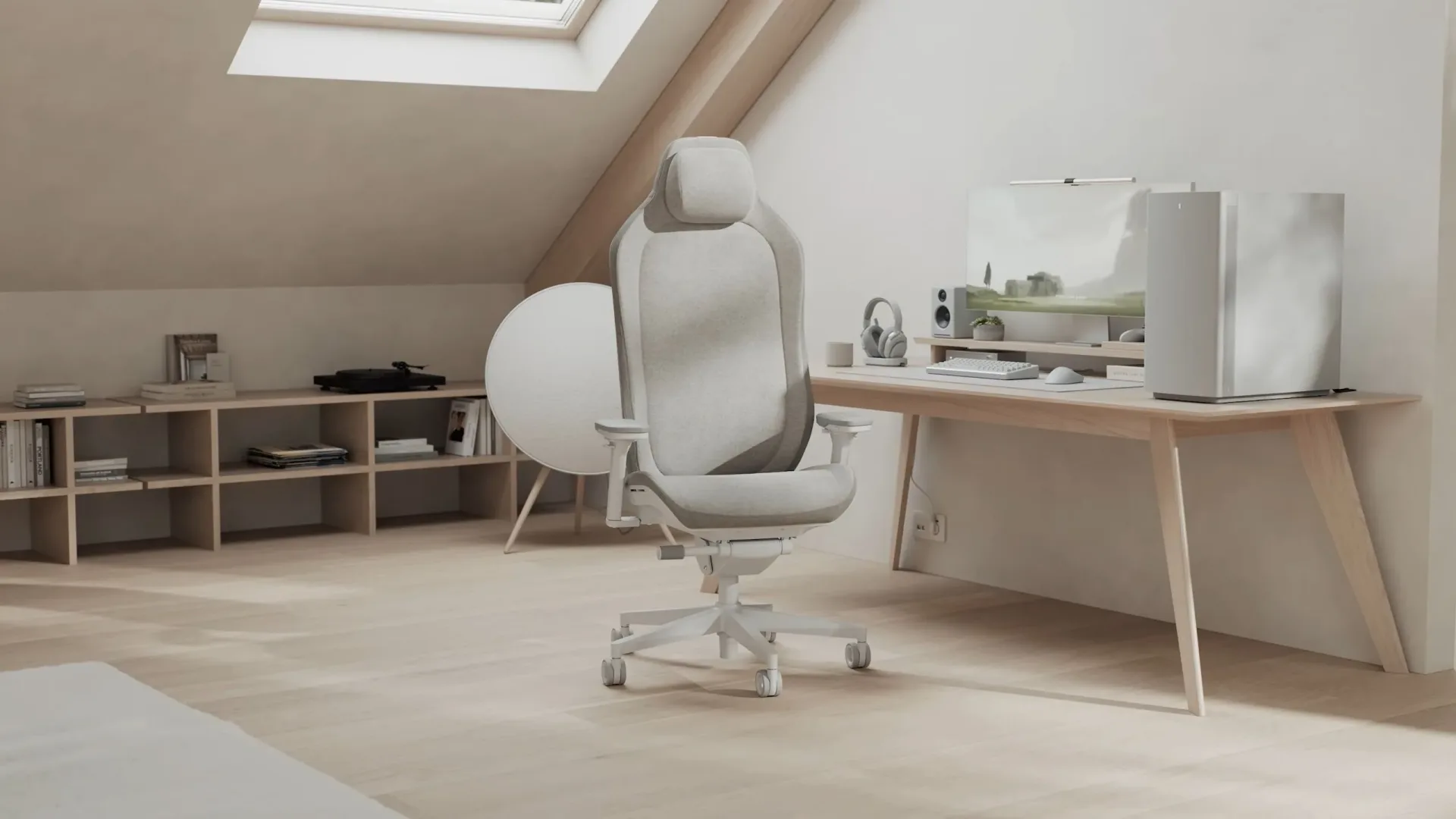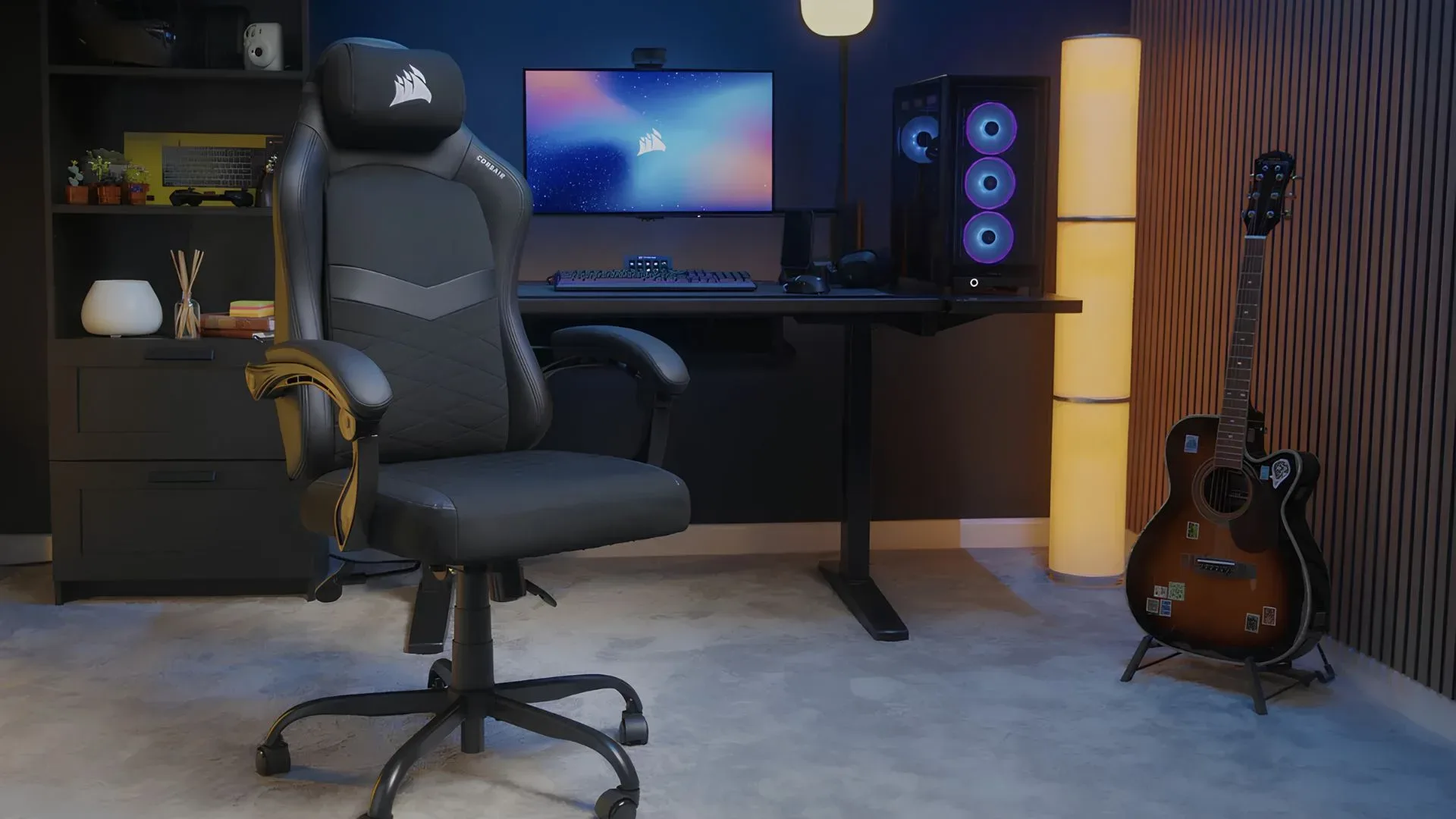
There is nothing wrong with a gaming chair that aims for the affordable end of the market. In fact, it is overdue. A great many players spend more hours at a desk than they would like to admit, whether they are raiding with friends, working from home, editing clips, or putting another long evening into games such as No Man’s Sky. Comfortable, adjustable seating should not feel like a luxury item reserved for the people who can throw $500 at a PC setup after buying a graphics card, monitor, desk, keyboard, and everything else.
That makes Corsair’s new TC80 an understandable product on paper. It is positioned as a lower-cost gaming chair from a company with a familiar name in PC hardware. Its stated price, however, is $199.99 in the US and £169.99 in the UK. Those numbers put a spotlight on an increasingly awkward question: what exactly counts as a budget gaming chair now?
The TC80 does not appear to be asking buyers to pay solely for wild styling, elaborate mechanisms, or a checklist full of adjustment levers. Its design is closer to the entry-level racing-style chairs that are common through mass retailers and online marketplaces. That is not automatically a criticism. Simple designs can be perfectly sensible, and a recognizable manufacturer may offer shoppers greater confidence about support, materials, assembly documentation, and long-term durability than a completely unknown label.
But at $199.99, the basic proposition needs to be more convincing than “it is a chair, but it has a gaming logo and hopefully will not become a wobbly goblin after six months.” The TC80’s reported feature set makes that value calculation difficult.
The TC80’s price is not the issue by itself
Two hundred dollars is not a trivial sum. For plenty of people, it is a carefully saved purchase, an upgrade made after a cheaper chair finally gives up, or a hard limit for a setup budget. Yet $200 is also no longer an impulse-tier price in seating. At that level, buyers can reasonably compare construction, ergonomics, warranty terms, adjustability, upholstery, cushions, and sale pricing rather than simply taking the first chair that looks suitably dramatic.
Corsair says the TC80 has undergone durability testing across more than 30 categories and has been held to high standards. That emphasis matters. A chair has to carry a person, move repeatedly, recline, and survive the everyday wear that comes from sitting in it for years. Reliability is a real feature, even if it is less exciting than a neon-trimmed silhouette or a named lumbar system.
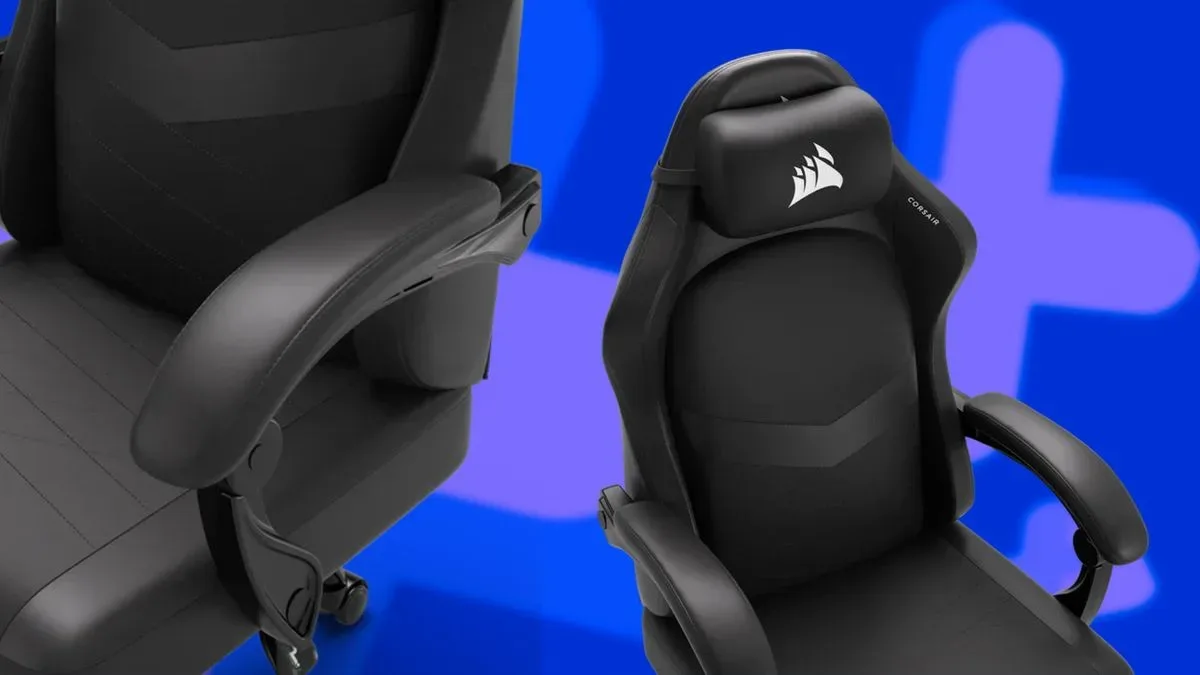
Still, durability is often the floor buyers expect from a product sold by a major brand. The decision becomes harder when the visible and ergonomic extras feel thin for the money. The TC80 offers the core chair functions: swivel movement, height adjustment, tilt, and a recline range of 90 to 115 degrees. Those basics are useful, but they are also the expected starting point for conventional office seating.
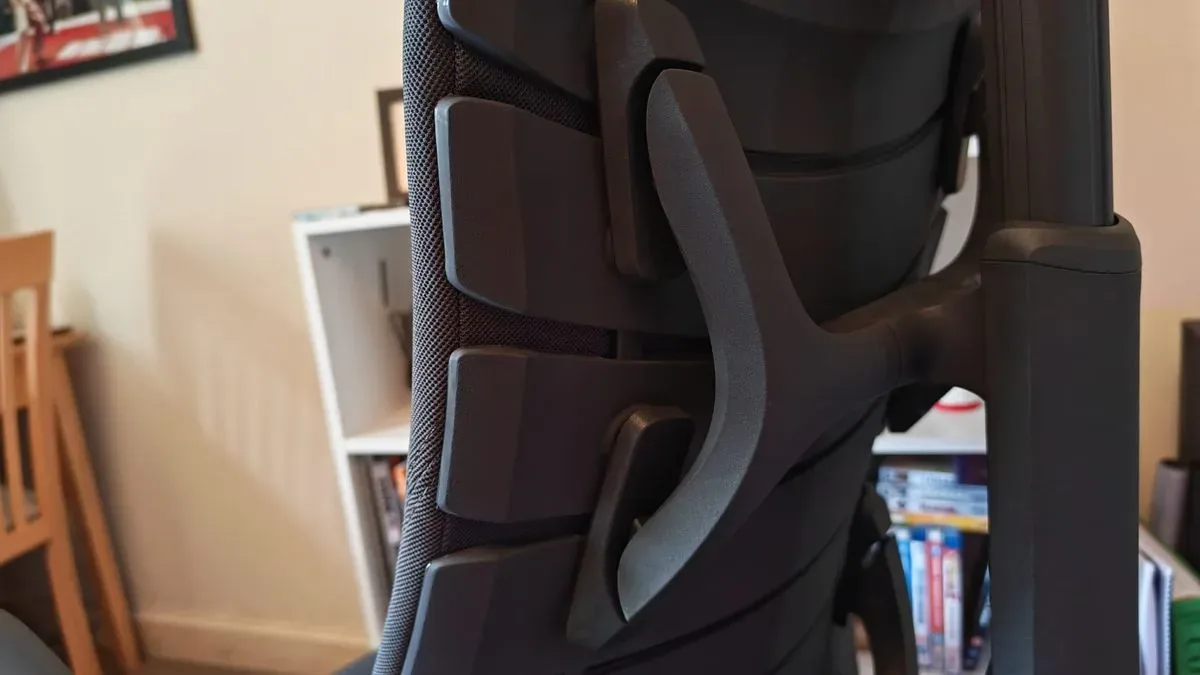
Its armrests are fixed between the seat and backrest rather than offering directional adjustment. It includes a strapped head cushion, a format that can be prone to slipping out of the most useful position depending on a user’s height and posture. The backrest cushioning may appeal to buyers seeking a plusher feel, but cushioning alone does not solve every fit issue. A chair can feel soft in a store listing and still fail to position an individual’s arms, shoulders, or lower back well over a long session.
Related coverage includes Corsair TC80 Arrives at $199.99, Raising Fresh Questions About "Budget" Gaming Chairs.
Adjustability is where the “gaming” premium needs to earn its keep
Not every player requires adjustable armrests, a removable lumbar pillow, or a complicated recline system. Some people simply want a stable chair with a familiar bucket-seat profile. There is value in a straightforward product if the price is appropriately straightforward too.
The problem is that the TC80 arrives in a price neighborhood where shoppers can find more features, especially when established models receive routine discounts. Adjustable armrests can make a meaningful difference when trying to align elbows with a desk surface. Lumbar support is not a universal cure-all, but it can provide another point of personalization. Choices of fabric, finish, or color do not improve posture, yet they matter when a chair becomes a large, permanent part of a room.
These are the details that turn an entry-level purchase from “good enough for now” into something that can remain useful as a setup evolves. They are also precisely why a low sticker price must be judged in context rather than celebrated in isolation. Calling a chair budget does not make it a bargain. The market around it decides that.
Corsair’s toughest rival may be another Corsair chair
The obvious complication is the Corsair TC100 Relaxed. It has frequently been seen around $199 or lower, despite a higher nominal price that can sit above $210. Pricing changes by retailer and time, so nobody should assume a sale is permanent. But when the TC100 Relaxed and TC80 are close in real-world cost, the older model creates an uncomfortable internal comparison.
The TC100 Relaxed brings 2D armrests, both lumbar and head cushions, different upholstery and colorway options, and a more feature-forward appearance. None of that means it will be the ideal chair for every body type or every room. Nor does it make $199 cheap in an absolute sense. It does, however, give buyers clearer evidence of where their money is going.
That distinction is crucial. Value is not merely the lowest number printed beside a product. It is the relationship between that number and the features, confidence, and flexibility a purchaser receives. If one chair at roughly $200 includes more adjustment and accessories than another chair at roughly $200, the simpler model needs an equally clear advantage elsewhere. The TC80’s claimed durability credentials may help its case, but consumers will likely need to see a sharper price difference for that case to become easy.
“Affordable” has become a strangely elastic word
The TC80 is part of a wider gaming-chair issue rather than an isolated oddity. Major brands have spent years nudging the category toward premium prices, sometimes with genuinely substantial ergonomic features and sometimes with styling that is more theatrical than practical. As a result, a sub-$300 chair can be framed as approachable even though it remains an expensive purchase for a huge portion of the audience.
There is a gap between manufacturer language and household budgets. A buyer replacing a broken $80 office chair may see $200 as a dramatic jump, not an entry point. A college student, younger player, or parent putting together a shared desk setup may be choosing between a chair and several other necessities. For them, the difference between $100, $150, and $200 is not cosmetic.
This does not mean every branded chair must cost $99. Design, shipping, quality control, materials, customer service, and safety testing all cost money. It does mean brands should be cautious about presenting modestly priced premium hardware as though it has suddenly solved accessibility. A $199.99 chair is less expensive than a $500 chair, certainly. That does not automatically make it inexpensive.
Buyers should compare the chair, not the label
For shoppers considering the TC80, the practical move is to ignore the broad “budget” label and make a direct feature comparison at the price actually available on the day of purchase. The TC100 Relaxed is an especially important reference point, but it is not the only one. The AndaSeat Novis and Razer Iskur V2 X are also competing around this value-focused territory, sometimes at a somewhat higher cost.
- Check armrest adjustment: Desk height and shoulder comfort can make this more important than it sounds.
- Look at support options: Consider whether fixed cushioning, a strapped neck pillow, or a separate lumbar cushion suits the intended user.
- Compare sale prices, not just list prices: An older chair frequently discounted to the same amount can be a better-equipped purchase.
- Read dimensions and weight limits carefully: A chair cannot be judged by a promotional image alone.
- Consider ordinary office chairs too: The best fit for a gaming space does not always need a racing-style profile.
Corsair deserves credit for keeping an option under $300 in a category that too often treats premium pricing as normal. The TC80 may become much more compelling if discounts create genuine breathing room below its better-equipped competition. At its stated $199.99 price, though, it illustrates the central problem with today’s desk-chair market: entry-level branding is not enough. Buyers need entry-level prices—or features that make the extra money feel justified.