No Man’s Sky is taking a much bigger swing at the part of itself with “space” in the name. Hello Games’ new Cosmos update launches free on September 9, following the game’s 10th-anniversary festivities, and puts a long-neglected frontier at the center of the experience: the void between planets.
That shift is not merely about prettier starfields or a few extra rocks to collide with while looking for the boost button. Cosmos adds player ownership of space stations, salvage operations involving dangerous resource-packed wrecks, alliances capable of building station networks, additional orbital points of interest, and even the possibility of mounting a perilous journey toward the center of a system’s star. It is a substantial list for a game that has already accumulated 40 updates across its decade-long life.
The headliner is easy to understand: players can purchase a space station and make it their own. Hello Games has described station ownership as one of the most frequently requested additions since No Man’s Sky launched. For a game built around leaving a footprint on an effectively unimaginable number of worlds, getting the keys to an orbital property is a remarkably logical next step.
Space stations become personal projects
A purchased station can be constructed and decorated both internally and externally. The intent is broader than a functional stop for upgrades, trading, or refuelling. Players can create themed spaces, treat a station as a social clubhouse, and invite friends aboard. Cosmos therefore turns a familiar piece of interstellar infrastructure into a potentially recognizable home base—one with more personality than a standard procedural dock where every pilot has apparently agreed to park at an angle.
The station system also feeds directly into the new alliance feature. Alliances allow players to work together on a connected empire of multiple stations. Those groups can pursue new leaderboards focused on becoming the largest, wealthiest, or most prominent alliance. Hello Games has said the scale can reach communities numbering in the tens of thousands, making the update as much a framework for collective ambition as it is a building toolkit for solo space architects.
There is an important difference between simply letting players make bases and letting them establish a wider network in space. A personal outpost can be a destination; a chain of stations suggests routes, shared resources, recurring social hubs, and a larger reason to care about which systems an alliance occupies. Cosmos appears designed to make the galaxy’s travel lanes feel more inhabited without removing the game’s core sense of lonely discovery.
The update’s broader technology may matter beyond No Man’s Sky as well. Hello Games has framed Cosmos as future-facing groundwork, and the studio’s next project has already been linked to the technology behind it. For more on that connection, see how Hello Games has connected Light No Fire to No Man’s Sky Cosmos technology.
Space hulks turn salvage into a race against disaster
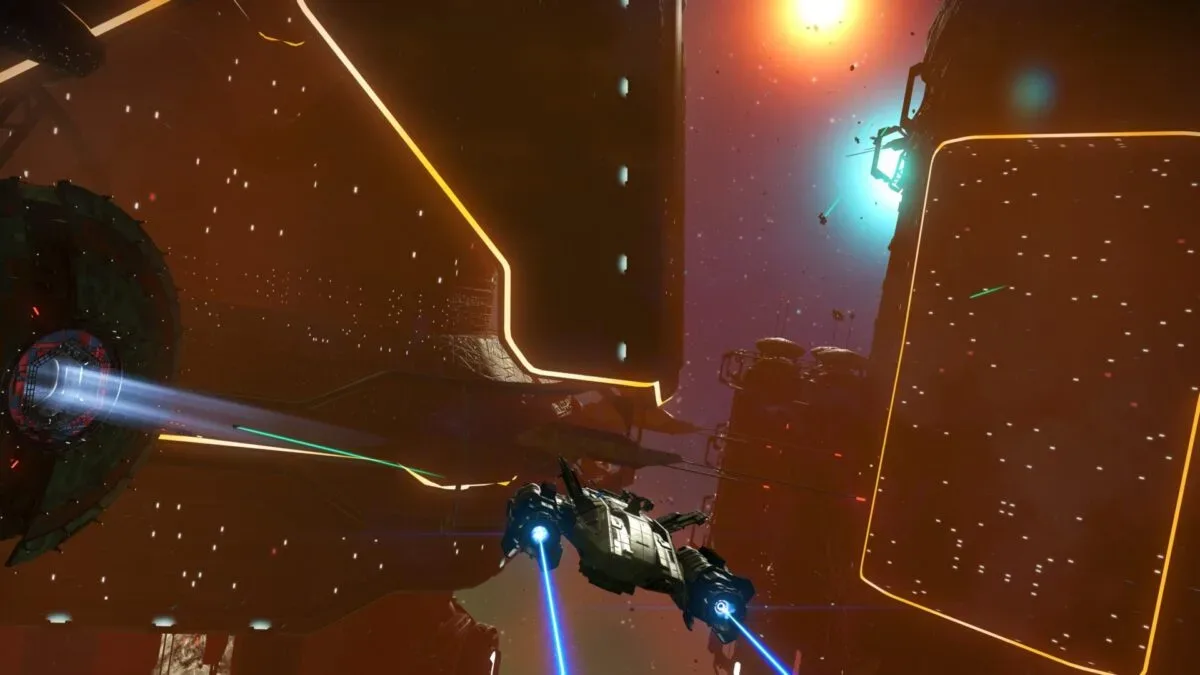
Building a station needs materials, and Cosmos introduces an especially dramatic way to obtain them. Space hulks are large floating clusters of salvageable resources. Players can use a gravity gun and a newly fitted ship tractor beam to tear useful components free. The process is not a calm afternoon of orbital recycling, however. Deal too much structural damage and the hulk can enter meltdown and explode.
Related coverage includes No Man's Sky Cosmos Update Lets Players Own Space Stations and Salvage Explosive Hulks.
That condition gives the new activity a tactical element. Players will need to decide what to extract first, work quickly, and weigh the risk of further damage against the reward waiting inside. It is a useful contrast to the game’s usual resource gathering: rather than steadily mining until a deposit is empty, hulk salvaging carries the threat that impatience or poor prioritization may erase the remaining loot in a fiery vacuum-bound tantrum.
Space hulks also provide a showcase for new volumetric lighting technology. The setting is a natural match. Dense debris fields, huge industrial remnants, and limited light spilling through damaged structures should make an already unfamiliar region of the game feel more atmospheric. Cosmos is presenting space as a place with hazards and activities of its own, not only the loading corridor between the fun planets.
A new star map points toward more to do
The revised star map is another foundational piece of the update. Whenever players warp into a system, it can reveal points of interest along with new mission and exploration paths. That should make the decision of where to travel feel more informed, while preserving room for players to choose what kind of activity they want to pursue.
Among the additions are several new destinations:
- Outposts, where players can trade with alien inhabitants.
- Bio-wrecks, which can be cleared and reclaimed.
- Asteroid belts containing rare crystals.
- Orbital bases that can be built anywhere in space.
The orbital-base rule is especially flexible. A player can even establish a star base on a rare large asteroid. It is the sort of detail that makes an immense procedural universe feel less like a sequence of places to pass through and more like somewhere worth claiming. A large enough asteroid is no longer simply a rock; it can become an address.
These systems also create a stronger relationship between discovery, construction, and trade. An alliance might identify a system with useful asteroid resources, establish stations around it, invite visitors, and support further expeditions into surrounding areas. Even for players uninterested in organized groups, a clearer map of opportunities could make casual exploration more purposeful.
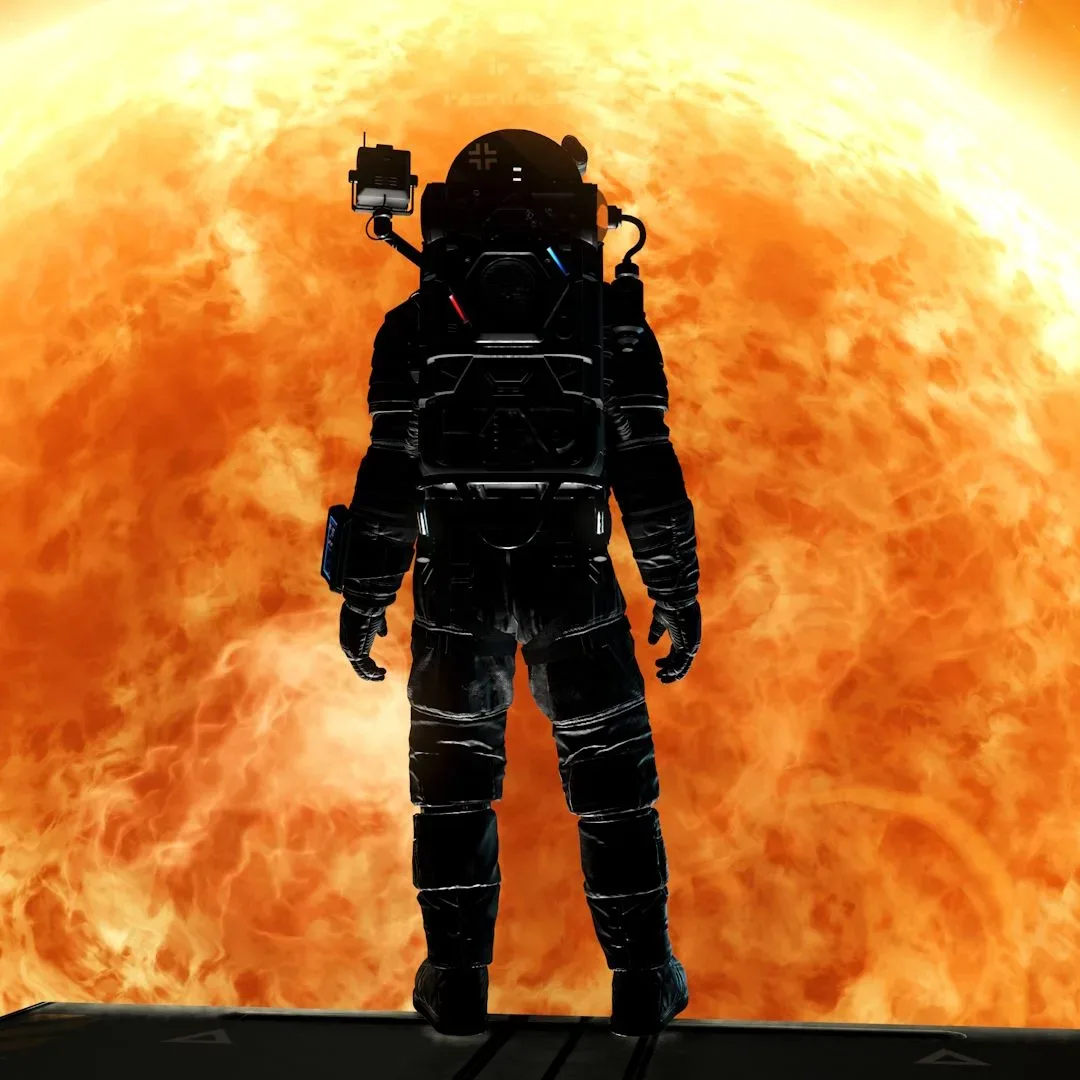
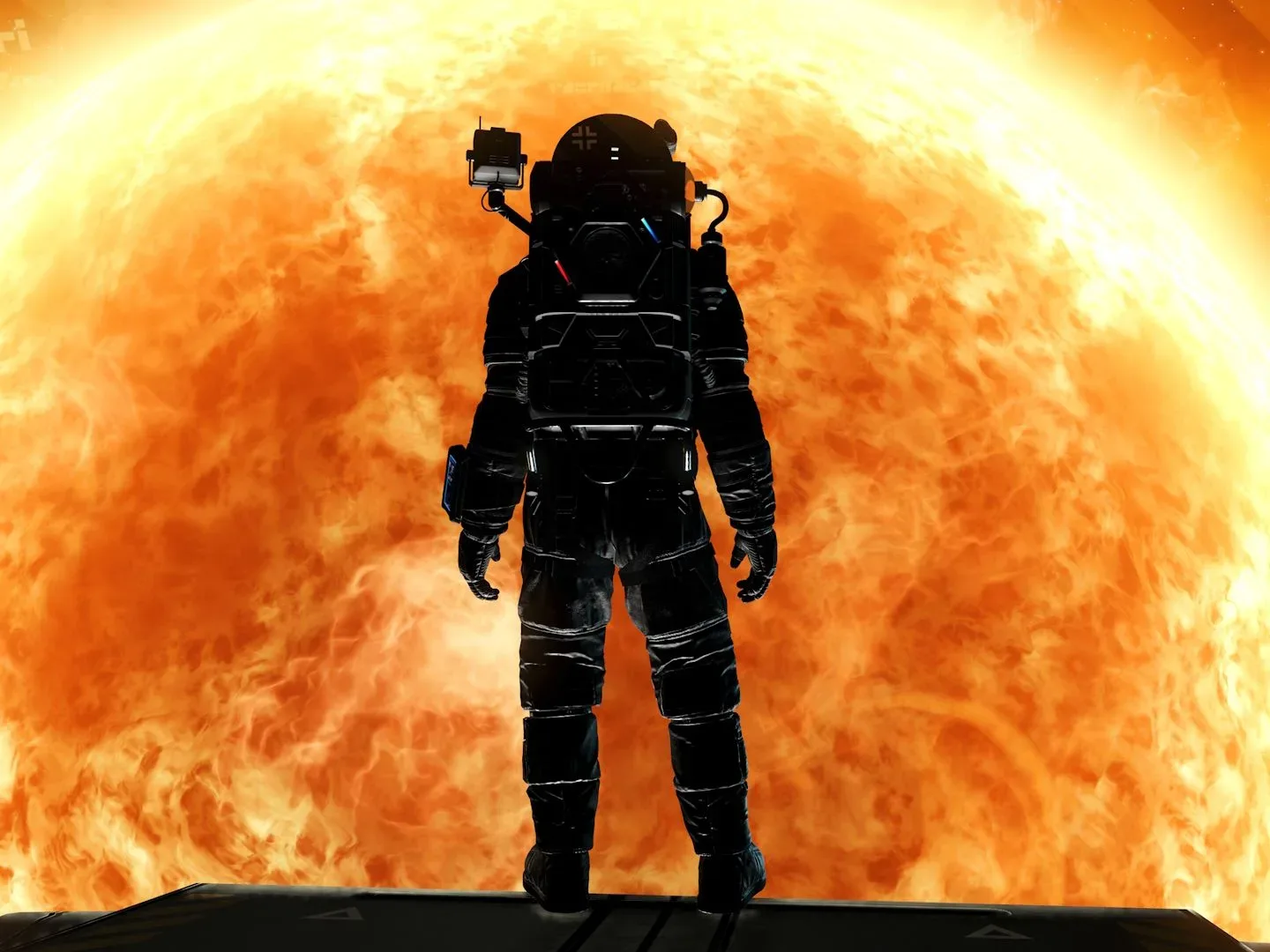
Yes, Cosmos lets players head toward the sun
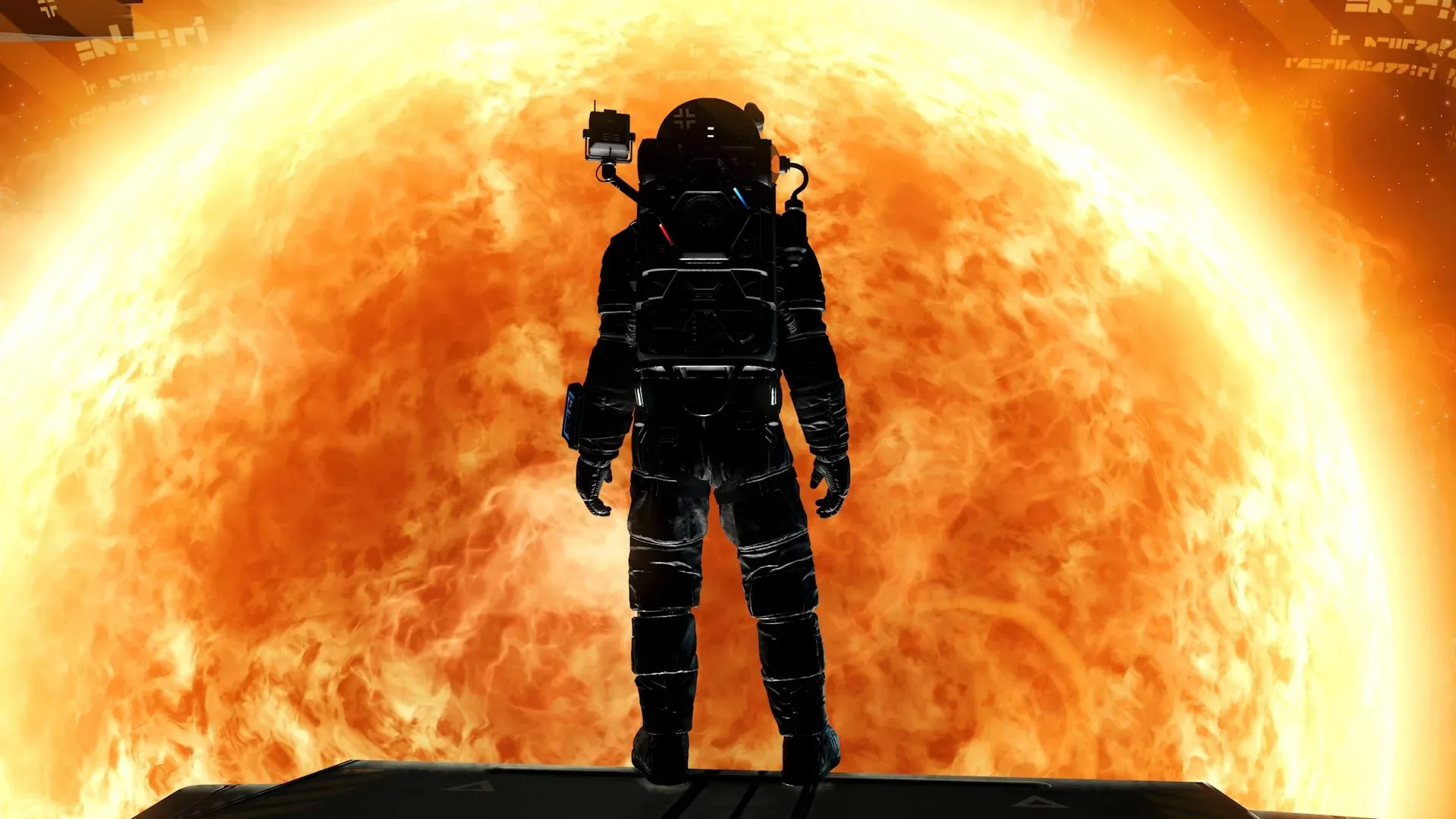
Cosmos is not restricting its ambitions to orbital real estate and wrecking operations. Players can attempt a dangerous trip toward the center of their own star system. The promise is appropriately simple and alarming: go to the sun, if you dare. No Man’s Sky has long let players cross enormous cosmic distances, but putting a system’s star forward as a destination is a meaningful reframing of the scenery players have spent years flying past.
How close anyone can safely get is part of the intended tension. The journey is described as perilous, so this is not being framed as a relaxed sightseeing route. Still, it is exactly the kind of feature that suits No Man’s Sky’s persistent curiosity about boundaries. If a bright, searing ball dominates every system, eventually somebody is going to ask whether it can be visited. Cosmos appears ready to answer with a cautious, probably heat-resistant “sort of.”
An expedition built as a playable history lesson
To accompany its new additions, Cosmos includes an Expedition that assembles the game’s 10-year evolution into a playable museum. It draws from all 40 updates released during that period, giving returning players a structured way to revisit ideas and milestones that helped reshape No Man’s Sky over time.
That format is notable because No Man’s Sky’s history is inseparable from ongoing reinvention. Players who have followed it closely will recognize how dramatically its systems have grown. Players who arrived later may have missed earlier turning points entirely. A museum-style Expedition provides an opportunity to encounter that history through activities rather than a menu timeline or commemorative plaque hanging in a station corridor.
Cosmos is a strikingly literal expansion of No Man’s Sky’s premise: own a piece of the void, connect it to other players’ territory, strip dangerous wreckage for parts, then consider pointing the ship at the sun.
With station ownership, alliances, destructive hulk salvage, upgraded navigation, new orbital destinations, and a decade-spanning Expedition all in one free release, Cosmos is clearly aiming to make outer space feel as changeable as the worlds below it. The galaxy has always been huge. Starting September 9, it may also feel considerably more like a place players can organize, decorate, compete over, and accidentally blow up while trying to redecorate.