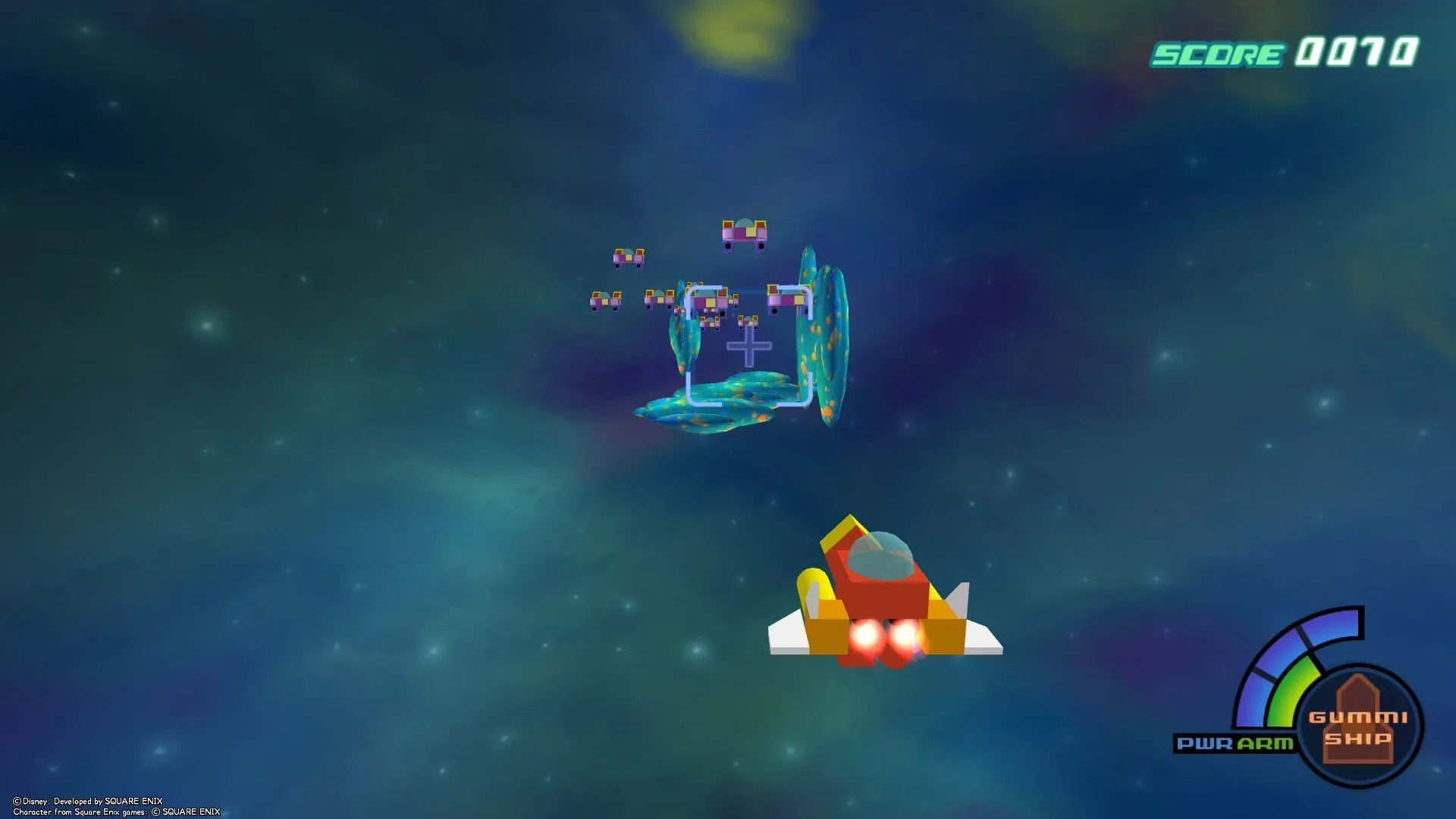
The original Kingdom Hearts Gummi Ship has spent years living in the category of franchise complaint that needs no further explanation. Mention it to someone who remembers Sora’s first adventure and the response is often immediate: the ship bits were bad, next question. But a closer look suggests a more specific verdict. The Gummi Ship is not necessarily catastrophic. It is an awkward, low-energy piece of game design whose ambitions are much more elaborate than the moments players actually spend using it.
That mismatch is the heart of the problem. The Gummi Ship is how Sora, Donald and Goofy travel between worlds, so it occupies an important place in the adventure’s structure. Yet the flights themselves can feel light on impact: enemies arrive, shots are fired, obstacles pass by, and the journey has little of the urgency or tactile weight that would make the shooting satisfying. It is space travel as a corridor, not necessarily space travel as a destination.
There is an important distinction there. A disappointing system is not automatically a useless one, and a famously disliked feature is not always as all-consuming as memory makes it seem. The original game’s ship sequences appear to be a case of a feature that causes annoyance in concentrated bursts, then becomes far less intrusive once the game gives players a way around repeat journeys.
A customizable spaceship attached to modest shooting
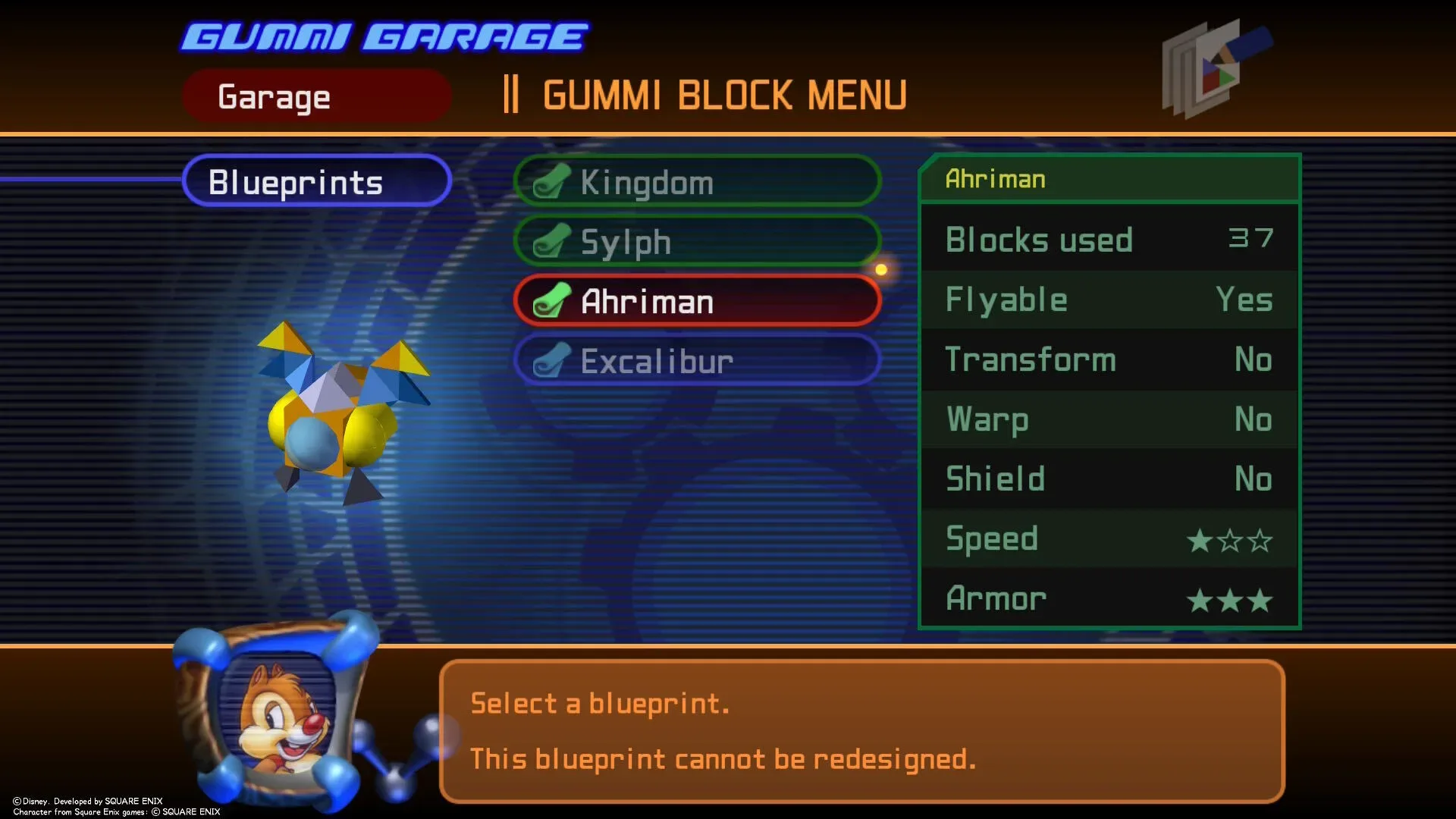
On paper, the Gummi Ship system is much stranger and deeper than the basic travel segments imply. Players can collect gummi blocks and use them to build and alter a ship, with statistics tied to the resulting craft. Chip and Dale are part of the upgrade process, and the setup clearly reaches for a role-playing-game interpretation of spaceship construction: find parts, adjust a build, improve performance, make something recognizably your own.
For more context, explore GMKtec G10 Mini PC Is Listed at $290, but Casual Gaming Expectations Need to Stay Grounded.
That is a lot of machinery for a transit activity. It also represents a particular kind of early-2000s design confidence: if the party is going to fly between fantasy worlds, why not give the vehicle an inventory-driven customization layer? The game does not merely ask players to pick a ship from a menu. It provides building blocks and stats, inviting experimentation and optimization.
Optimization, in this context, means arranging equipment or parts to get stronger in-game results, such as a better-performing craft. It can be compelling when the activity being optimized rewards those improvements in a clear, enjoyable way. If the core flights are already exciting, then tinkering with the ship gives players another meaningful path to mastery. If those flights feel dull, the same customization can register as a surprising amount of optional detail supporting an activity many players would rather complete quickly.
That seems to be the Gummi Ship’s central contradiction. Its construction system has more depth than its immediate use appears to demand. A player can make an impressive-looking, high-performing vessel, but the source-supported criticism is that the act of flying and shooting still lands somewhere between bland and tedious. Building a better tool does not automatically make the task feel better.
Related coverage includes Kingdom Hearts' Gummi Ship Wasn't a Disaster, But It Was a Very 2002 Kind of Detour.
There is still value in recognizing what the system attempts. The Gummi Ship is not an absent-minded loading screen wearing a cockpit. It is a genuine mechanical detour, complete with progression and player expression. Its reputation comes less from a lack of ideas than from the fact that its ideas do not consistently translate into compelling moment-to-moment action.
Why it does not dominate the whole game
The strongest defense of the original Gummi Ship may be its limited long-term burden. After completion of one of the early worlds, players can obtain the Warp-G gummi block. As the name suggests, Warp-G enables warping back to worlds that have already been visited. That materially changes the rhythm of travel: return trips no longer require replaying the same sort of flight sequence.
The practical result is significant. Gummi Ship stages are reduced by more than half, because they remain necessary chiefly when moving on to a new destination. Rather than repeatedly making players traverse the same space combat lanes during routine backtracking, the game eventually allows them to skip much of that repetition.
It is hard to call this an ideal solution. A mechanic becoming easier to avoid is not the same as it becoming better. But it does complicate the conventional shorthand that the Gummi Ship makes the entire game miserable. The annoyance is front-loaded. It can be irritating early on, especially when a player wants to keep the story moving, but it is not an unavoidable demand at every stage of the adventure.
This is also why players’ memories can differ so sharply. Someone who recalls the early trips, their muted combat, and the interruption to world-hopping may remember the Gummi Ship as a major drag. Someone who internalized Warp-G and used it liberally may remember a weird diversion that stopped overstaying its welcome. Both reactions can emerge from the same system because the game’s friction changes as progress unlocks a workaround.
Friction as an old-school design habit
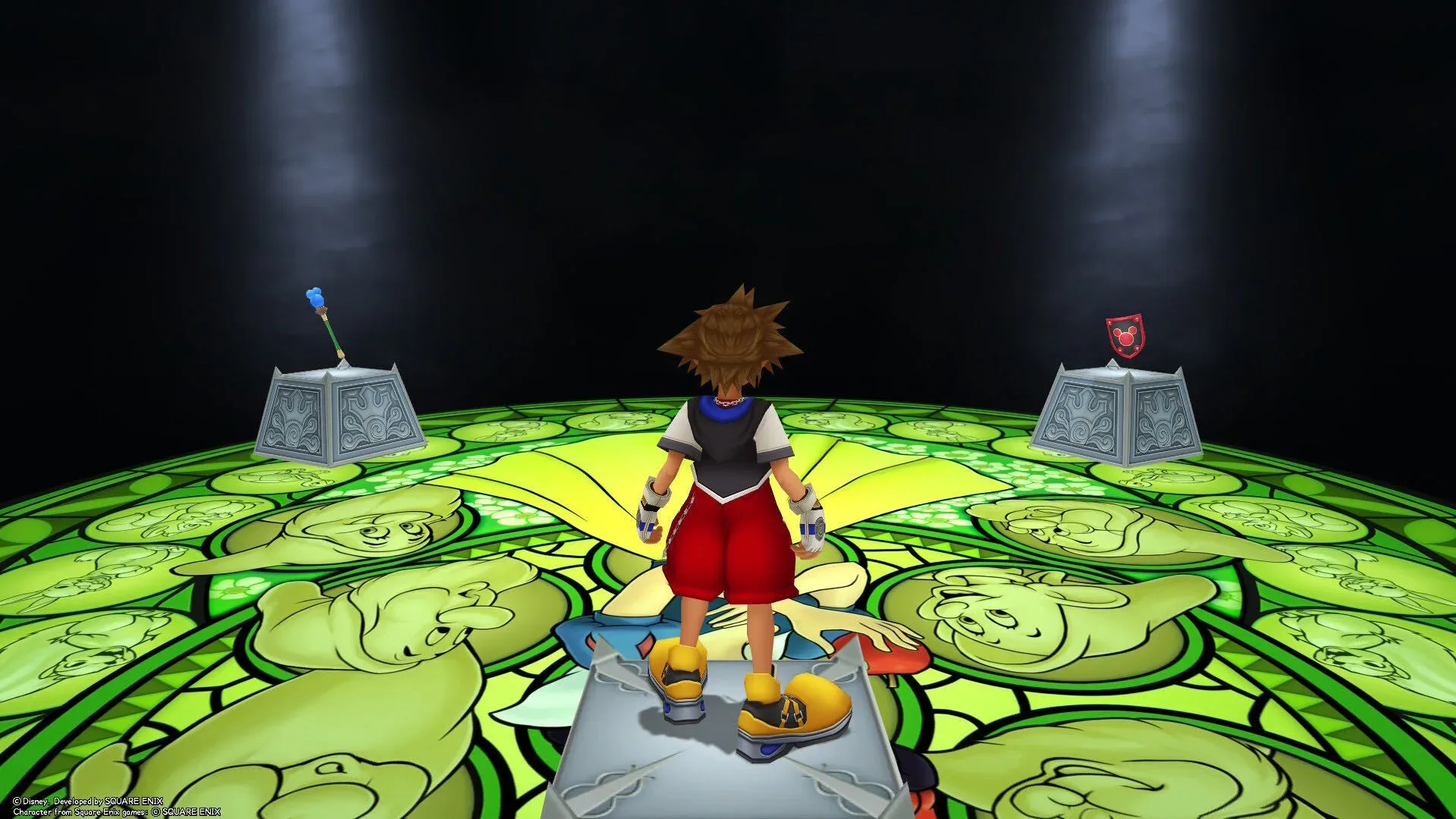
The Gummi Ship’s rough edges sit alongside several early-game choices that can feel archaic by current action-game standards. One cited example is the Guard Armor fight in Traverse Town. Guard Armor can hit hard enough to knock Sora down, creating a battle where a reliable evasive tool would be particularly useful. Yet Sora does not receive a dodge roll until after that boss encounter.
A dodge roll is exactly what it sounds like: a quick evasive movement intended to help a character avoid attacks. Modern players often expect that type of defensive option to be available near the outset, particularly in an action RPG with large enemy attacks. Locking it behind an early unlock makes the opening combat feel deliberately less flexible, whether or not that was the intended experience.
Sora can jump, but the source material characterizes his jump as notably floaty and not especially dependable as an escape from a large armor suit swinging at close range. That creates a common design frustration: the game presents a problem, withholds the response players naturally expect, and then awards that response after the immediate test is over.
The item system has a similar wrinkle. The Stock mechanic requires players to equip potions before a battle if they want to use them during that battle. That is another form of preparation-based friction. It does not make item use impossible, but it asks players to anticipate their needs rather than simply reach into an unrestricted inventory in the middle of combat.
Donald’s healing behavior has likewise become a long-running community joke. The tension comes from the gap between expectation and observation: Donald is a magic user, yet players can feel stranded when they need Cure and it does not arrive. The contrast is especially striking given Donald’s ability to cast Zettaflare in Kingdom Hearts III, though that later feat does not change the first game’s early combat pressures.
Put together, these details point to an opening stretch built around restriction. Travel takes time. Combat defense is limited. Consumable recovery requires advance setup. Party support may not arrive on a player’s preferred schedule. None of these elements is necessarily indefensible alone. In combination, they can make the original game feel like it is withholding convenience just long enough for players to notice the absence.
Padding, pacing and the difference between inconvenience and failure
Padding is content that extends play time without delivering a comparable increase in meaningful challenge, story, discovery or satisfaction. It is a useful term for understanding why the Gummi Ship draws criticism. A voyage between worlds can enrich pacing if it builds anticipation, introduces an interesting mechanical challenge, or gives progression choices clear value. It feels like padding when it mainly delays access to the next place a player actually wants to explore.
The original Gummi Ship can look like padding because its shooting segments do not always offer much weight, while its customization does not appear necessary for ordinary progress through the early trips. The player is shown a fairly involved building system, then may reasonably decide there is little reason to engage deeply with it. The optional layer is substantial; the incentive to use it is less obvious.
Still, calling it a total failure would overstate the evidence. The system does serve a structural purpose: it makes worlds feel geographically separate and turns travel into something more tangible than a menu selection. It also provides an avenue for players who enjoy construction and stat management. The issue is that the game does not make a powerful enough case that everyone should care about this avenue.
That leaves the Gummi Ship as a design curiosity. It is not merely a punishment, because it contains real customization and eventually loses much of its repetitive demand through Warp-G. It is not a triumphant centerpiece either, because its action lacks the energy needed to justify its place between major Disney-world excursions. It is an elaborate side system squeezed into the connective tissue of an action RPG.
The later games change the calculation, not the question
The space-travel concept continues in Kingdom Hearts II and Kingdom Hearts III, with the series leaning further into crossing the space between worlds. Those later flights are described as more frantic and involved. That is a meaningful evolution, but it does not settle whether every later version is good; more activity is not automatically better activity.
What it does reveal is that the original system was not a dead-end idea. The series continued to pursue the basic premise rather than abandoning it. The first game’s Gummi Ship therefore works as an early draft of a recurring solution to a recurring problem: how do you connect self-contained Disney worlds while preserving the feeling of an actual journey?
Its answer is unmistakably of its era. The game is nearly 25 years old, and some of its choices carry the texture of that age. Modern quality-of-life expectations tend to favor earlier access to essentials such as evasive movement, smoother repeat travel, and less punitive management of healing items. Quality of life is not just about making games easier. It is about reducing avoidable administrative friction so players can focus on the decisions and challenges a game most wants them to engage with.
By that measure, the Warp-G block is a revealing compromise. It does not rebuild the Gummi Ship’s flight mechanics, but it recognizes that repeating those sequences can be a burden. The game solves the practical inconvenience after exposing players to enough of it for the complaint to form.
So, was the Gummi Ship actually that bad?
Probably not in the simple, all-purpose way the meme implies. The original Gummi Ship earns skepticism: its combat can feel lifeless, its elaborate ship-building has limited apparent payoff for players simply trying to advance, and its early placement interrupts the momentum of traveling to new worlds. Those are real criticisms, not just impatience with an older game.
But it is also a complaint with boundaries. Warp-G prevents repeat travel from becoming a permanent obligation, which means the ship is more nuisance than omnipresent disaster. Its customization contains more ambition than the shorthand reputation gives it credit for, even if that ambition is not fully realized in the flights themselves.
The fairest reading is that the Gummi Ship is a very specific kind of awkward: a mechanically dense transit feature attached to light, often uninvolving combat, in a game that only requires players to tolerate it heavily for part of the journey. That may not make the flights fun. It does make them more interesting than the usual punchline suggests.