There is a special kind of betrayal that occurs when a game displays a 95% chance to hit and then watches, without apology, as the attack sails into another postcode. Mathematically, the miss is ordinary: a five-percent outcome remains possible every time that number appears. Emotionally, however, it can feel like the game has reached through the monitor and flicked the player directly on the forehead.
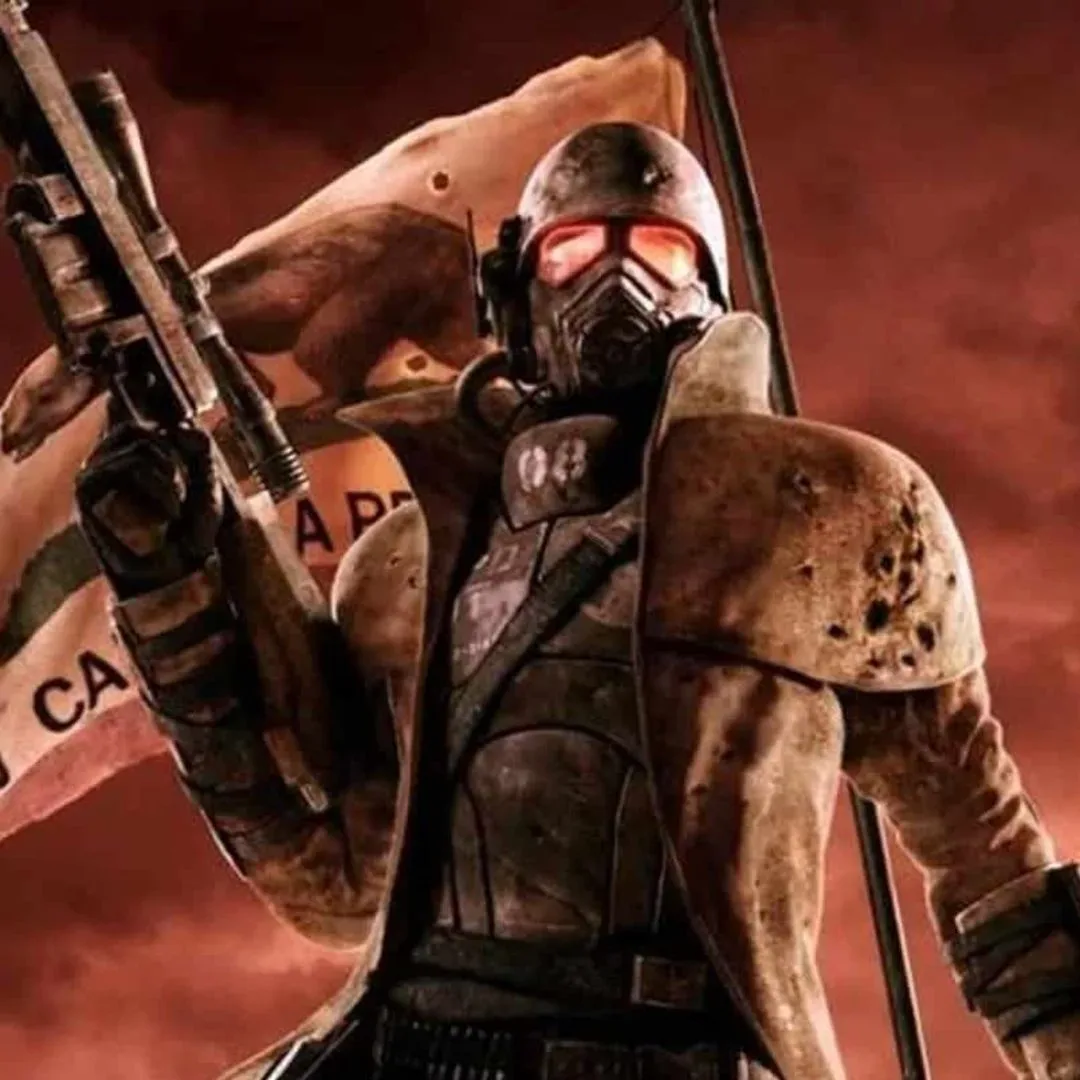
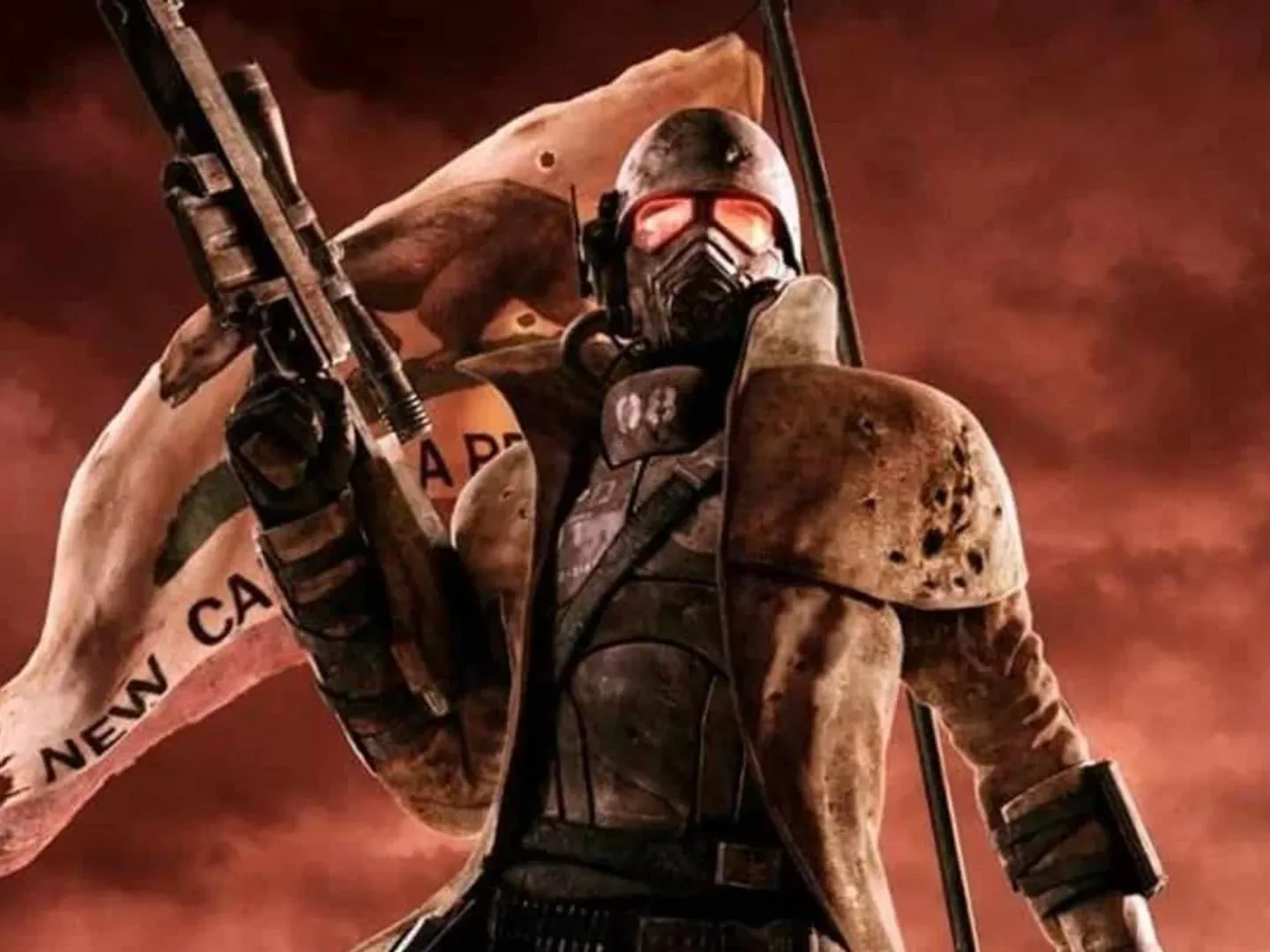
Josh Sawyer, the RPG director associated with Fallout: New Vegas and Pillars of Eternity, has put that mismatch between math and feeling at the center of a broader design argument. His concern is not just that people misunderstand probability. It is that game mechanics can invite players into habits they dislike, then leave both the player and the designer frustrated by the resulting routine.
The immediate subject is save scumming: reloading a save after an unwelcome result to chase a better outcome. But the underlying issue is much bigger. A role-playing game can present a meaningful resource decision, a risky lock, a combat loss or a moral fork in a quest. If the most reassuring response is always to reload, retreat, restock or otherwise erase the uncertainty, the game’s carefully constructed decision may become an inefficient ritual instead.
Sawyer says he does “just about everything” he can to avoid encouraging save scumming. That phrase matters because it does not frame players as doing something improper. Reloading is often the sensible response to the incentives a game supplies. The harder design task is anticipating that response before deciding how an ability, penalty or choice should work.
A percentage is not a promise
At the simplest level, a 95% hit chance means an action should succeed most of the time across many attempts. It does not mean the next attempt is protected from failure. Random-number generation, often shortened to RNG, is the process a game uses to generate uncertain results such as hit rolls, critical strikes or loot outcomes. If each roll is independent, a previous success or miss does not force the next result to balance out immediately.
That distinction is easy to explain and difficult to feel. People naturally treat a very high percentage as near-certainty, particularly when failure carries a visible cost. A miss can mean a dead party member, expended ammunition, a lost turn, or an encounter that suddenly looks unwinnable. The number on screen may be technically honest while still failing to communicate the lived experience of risk.
Sawyer has argued that designers sometimes respond by building systems around an instinctive—but inaccurate—sense of how probability ought to behave. That may make a game feel fairer in the moment, but it can also make the underlying rules less clear. The important point is not that a designer must always use uncompromising random outcomes. Rather, the presentation and consequences of randomness must be considered alongside the arithmetic.
Baldur’s Gate 3 offers a useful contrast in the material Sawyer discussed. Like tabletop Dungeons & Dragons, it shows a die roll. Watching a one appear produces the same broad category of bad result as a low-probability failure in another system, yet it has a physical explanation that players instantly recognize: the die came up badly. The interface turns an abstract percentage into a familiar event.
Related coverage includes Josh Sawyer Explains Why RPGs Must Account for Save Scumming and Player Psychology.
That is not a cure for disappointment. A one is still a one. But it is an example of how feedback changes perception. Players can see the process rather than merely receiving a result they suspect is arbitrary or hostile. In games with vulnerable saves, that transparency can matter as much as the probability itself. It also helps explain why save-related friction is such a sensitive subject, whether the issue is a tactical reload or a technical problem such as the save errors addressed in recent fixes for The Witcher 3 Remastered.
When the player’s optimal move is a chore
Sawyer’s clearest examples are not really about a player refusing to accept a 95% miss. They are about systems where avoiding risk is possible but tedious. These are the moments when designers must distinguish between a cost that creates interesting tension and a cost that simply sends someone through repetitive administrative work.
In Fallout: New Vegas, locked containers cannot simply be shot open. That requires players who want access to invest in Lockpick rather than treating a weapon as a universal substitute. Sawyer describes Lockpicking as, admittedly, a “skill tax,” an illuminating choice of words. A skill tax is an investment made partly because the game places desirable content behind that capability. It can be a real character-building trade-off: choosing one specialty means giving up something else.
The alternative found in some RPGs—destroying a lock with a firearm while risking the contents—looks like a flexible solution. Yet it can create a strange incentive. If blowing the lock has a chance to destroy valuable loot, a player who values that loot may save beforehand, try the destructive method, and reload when the result is unfavorable. The supposed choice between investing points and accepting a risky shortcut becomes a choice between investing points and repeatedly performing a reload loop.
That is Sawyer’s point about being cynical regarding player psychology. “Cynical” does not have to mean contemptuous. It means recognizing that players are resourceful, loss-averse and often unwilling to accept a cost when a workaround exists. They may not consciously state the calculation. Still, if a system says “you can risk losing treasure” and the game permits easy reversal of that loss, many players will understandably test the risk until the treasure survives.
There is no universal rule that games should prevent this. For some players, the ability to reload is part of the pleasure of an RPG: it allows experimentation, protects limited leisure time and makes severe outcomes less intimidating. The issue is whether the game’s other systems assume that players will treat failure as permanent while simultaneously giving them a low-friction way to undo it.
Pillars of Eternity and the cost of avoiding defeat
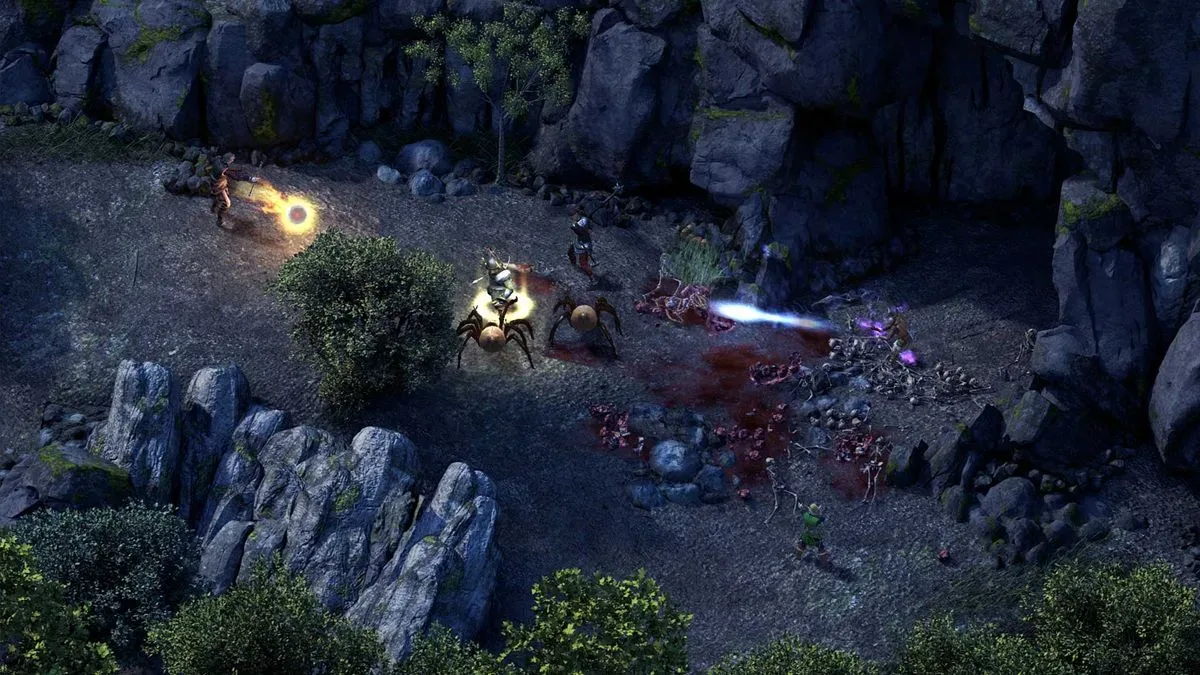
Pillars of Eternity shows a related problem through its rest structure. Health and certain ability uses return when the party rests. Players can use camping supplies at camp, or return to an inn in town for a small gold payment. On paper, this gives adventuring resources a finite quality. Per-rest abilities can be powerful because they cannot be used endlessly without stopping.
In practice, players may expend those abilities freely in every battle, rest afterward, and then make the return trip for more supplies. Sawyer’s regret is that he did not more aggressively anticipate how strong the aversion to losing can be. For some people, the prospect of a difficult fight—or even the prospect that a difficult fight might occur—feels worse than repeatedly walking out of a dungeon to prepare again.
This is a useful distinction: a game can impose a nominal cost without imposing a meaningful decision. If supplies are consumed but are easily replenished, the resource is not necessarily testing whether players can ration it. It may be testing whether they will endure a long return journey. The player then experiences the trip as punishment, while the designer may see it as the predictable result of overusing powerful abilities.
Neither reaction is irrational. The friction emerges because the system is being used differently from how it was intended. A player views an available safety valve as the correct way to avoid a catastrophic loss. A designer may have wanted the party to choose when a powerful ability is worth spending. The mechanics need to account for both perspectives.
Loss aversion is doing real work here
Loss aversion is the tendency to feel a potential loss more sharply than an equivalent gain. In an RPG, losing a combat encounter can mean replaying content, reconsidering tactics, spending consumables again or seeing a plan collapse. A ten-minute supply run may be objectively repetitive, but it is predictable. Many players will choose predictable tedium over uncertain defeat.
That behavior is not a failure of intelligence or commitment. It is a response to what the game makes visible. The cost of retreat is known. The cost of pushing ahead may include a fight that goes wrong, an unlucky sequence of rolls or an outcome that triggers a reload anyway. Once a player starts treating retreat as insurance, every encounter can become a reason to cash in that policy.
The practical lesson for players is modest: if a rest-and-reload cycle is draining the enjoyment from a single-player RPG, it can be worth deliberately setting personal limits. Continue after an imperfect result. Save powerful resources for encounters that actually demand them. Let a failed roll create a new route through a quest rather than immediately treating it as an error. These are optional approaches, not moral obligations; accessibility, time constraints and individual tastes all matter. But they can restore the uncertainty the system was trying to create.
Choices need reasons, not just labels
Sawyer extends the same thinking to narrative decisions. A quest menu with options A, B and C is not automatically a meaningful choice merely because three buttons exist. Designers need to ask why someone would pick C. Sometimes an option belongs simply because its absence would feel unnatural in the scene. Often, though, the goal is to give the player competing values to weigh.
That does not require every decision to be agonizing. It does require that an option be legible as something other than a trap, a joke, or an obviously inferior path. If one response produces rewards, approval and clean outcomes while another only causes punishment, players have little reason to reflect; they have been handed an answer key. Conversely, when the advantages and costs touch different priorities—loyalty, safety, money, principle, speed or trust—the choice has room to express a character.
Save scumming complicates narrative design because players can inspect consequences after the fact and rewind toward the preferred version. Again, that can be desirable for people who want to see alternate branches. But a game seeking role-played uncertainty has to decide how much it will accommodate consequence-shopping. The answer can involve autosaves, restricted save rules, transparent outcomes, softer penalties, or simply writing branches where no result is cleanly optimal. The supplied examples do not establish that any one approach is best; they show why the question cannot be left until after the choices are written.
Sound, visibility and perceived fairness
The discussion also points to a lesson outside RPGs. In Wolfenstein: Enemy Territory, players believed a particular gun was excessively strong. The response was reportedly not to change its damage or accuracy, but to reduce how powerful it sounded. Complaints then subsided.
That anecdote is a reminder that players do not encounter a balance spreadsheet. They encounter animation, audio, timing, interface feedback and the drama of being on the receiving end of an action. A weapon that sounds enormous may feel more dangerous than its numbers justify. A visible die can make a failure feel more comprehensible. A 95% label can feel like a guarantee even when it plainly is not.
For designers, this means balance is partly communication. For players, it means a strong feeling that a game is cheating may be a prompt to look at what the game is showing—not necessarily proof that the numerical system is wrong. The feeling still matters, because it shapes whether people enjoy the game and how they respond to its challenges.
Sawyer’s comments are especially timely because Obsidian has been announced as the developer of a new Fallout game, though it has not been officially confirmed whether he is leading that project. It would be premature to infer specific mechanics from one designer’s public reflections. Still, his body of examples makes one philosophy very clear: good RPG decisions are not created just by adding consequences. They depend on understanding the small, very human shortcuts players will take when consequences become uncomfortable.
Sometimes the hardest opponent in an RPG is not the monster, the dice roll or the locked chest. It is the part of us that would rather walk ten minutes back to town than risk finding out what happens next.