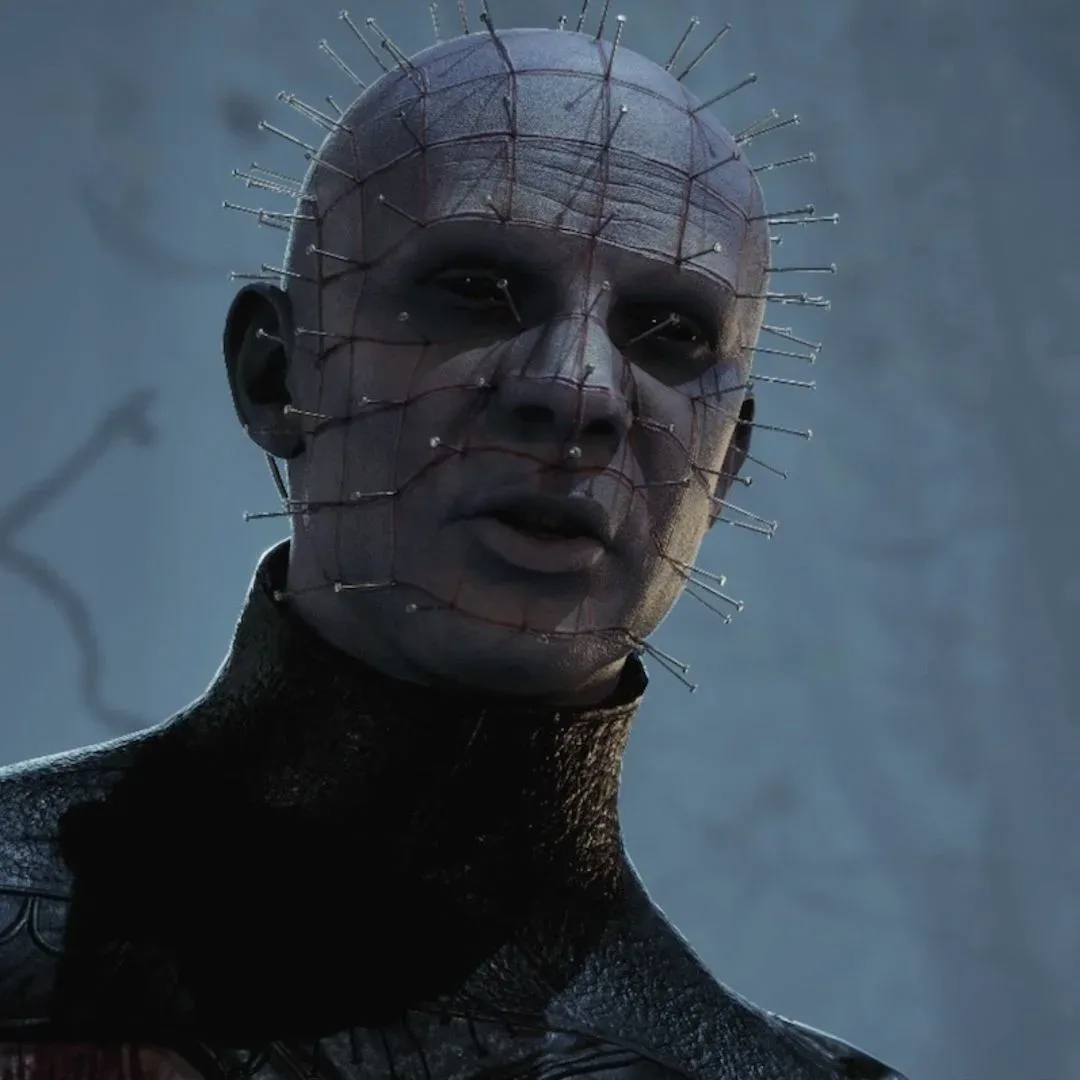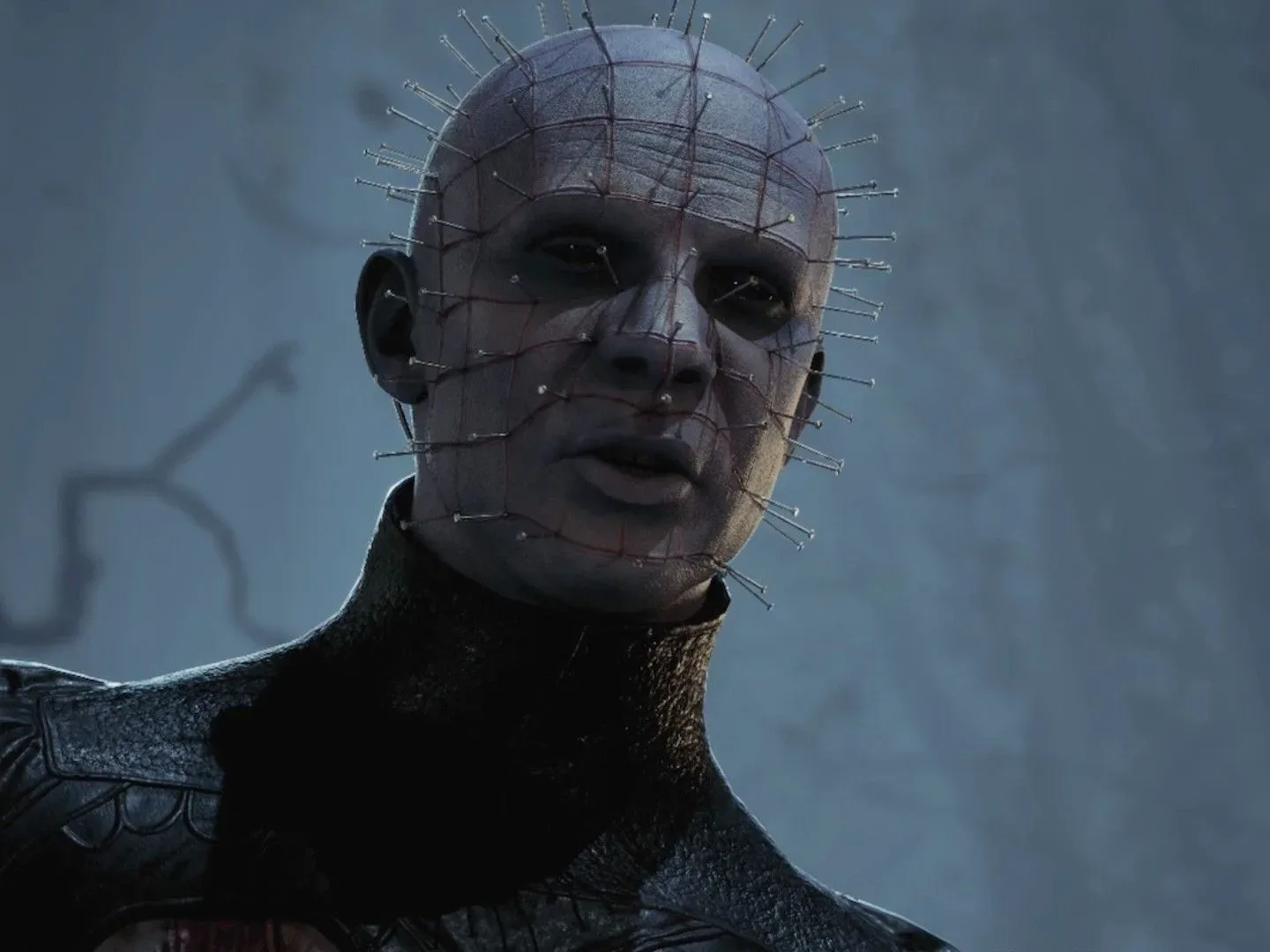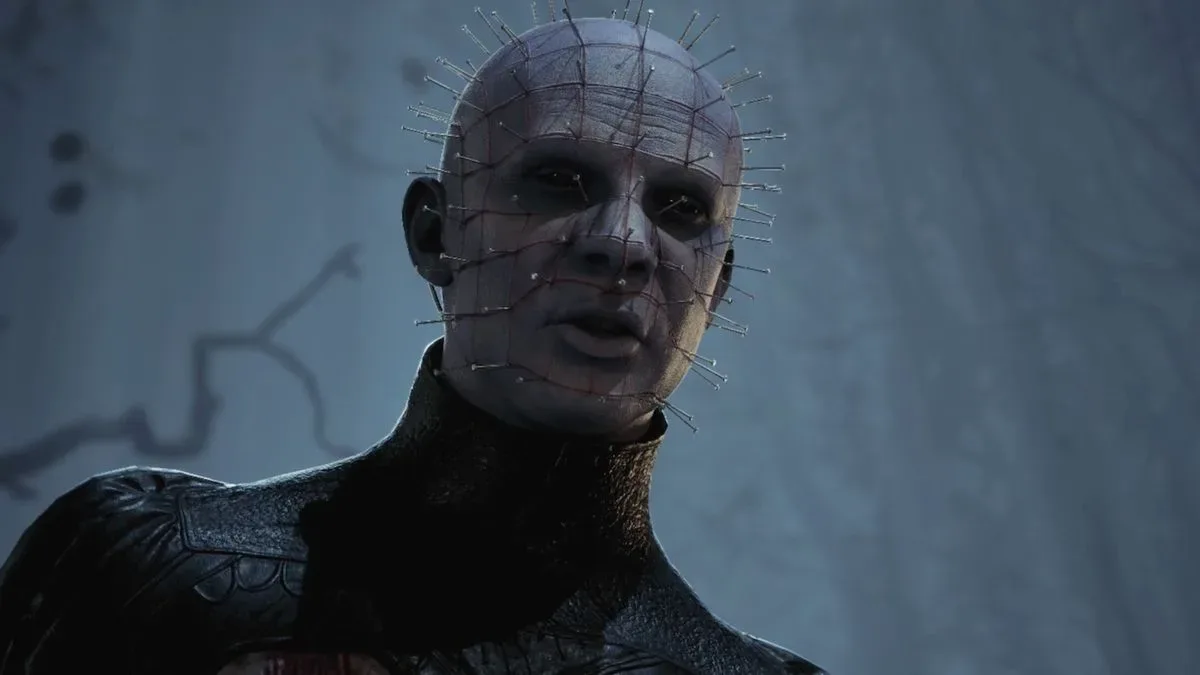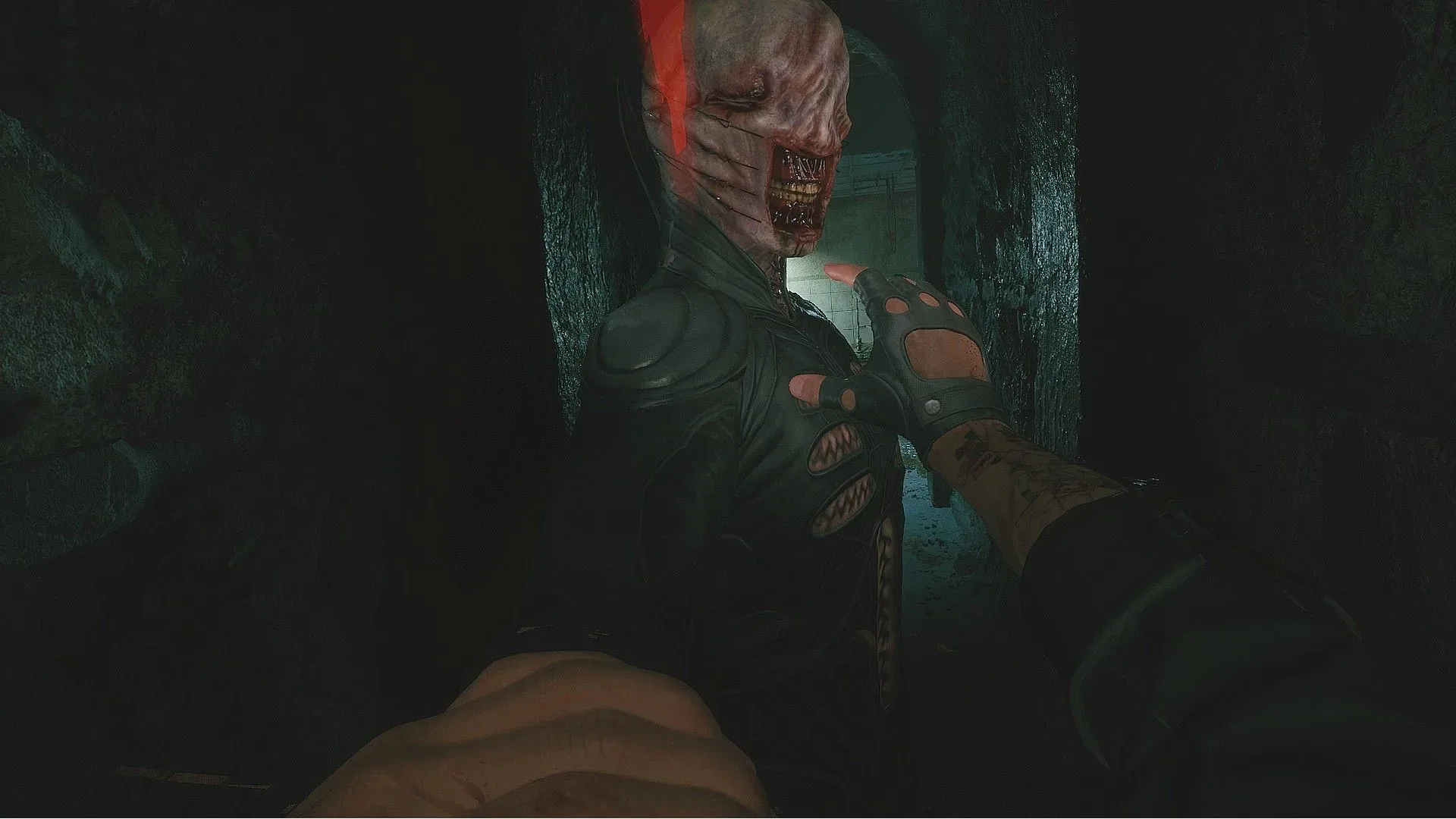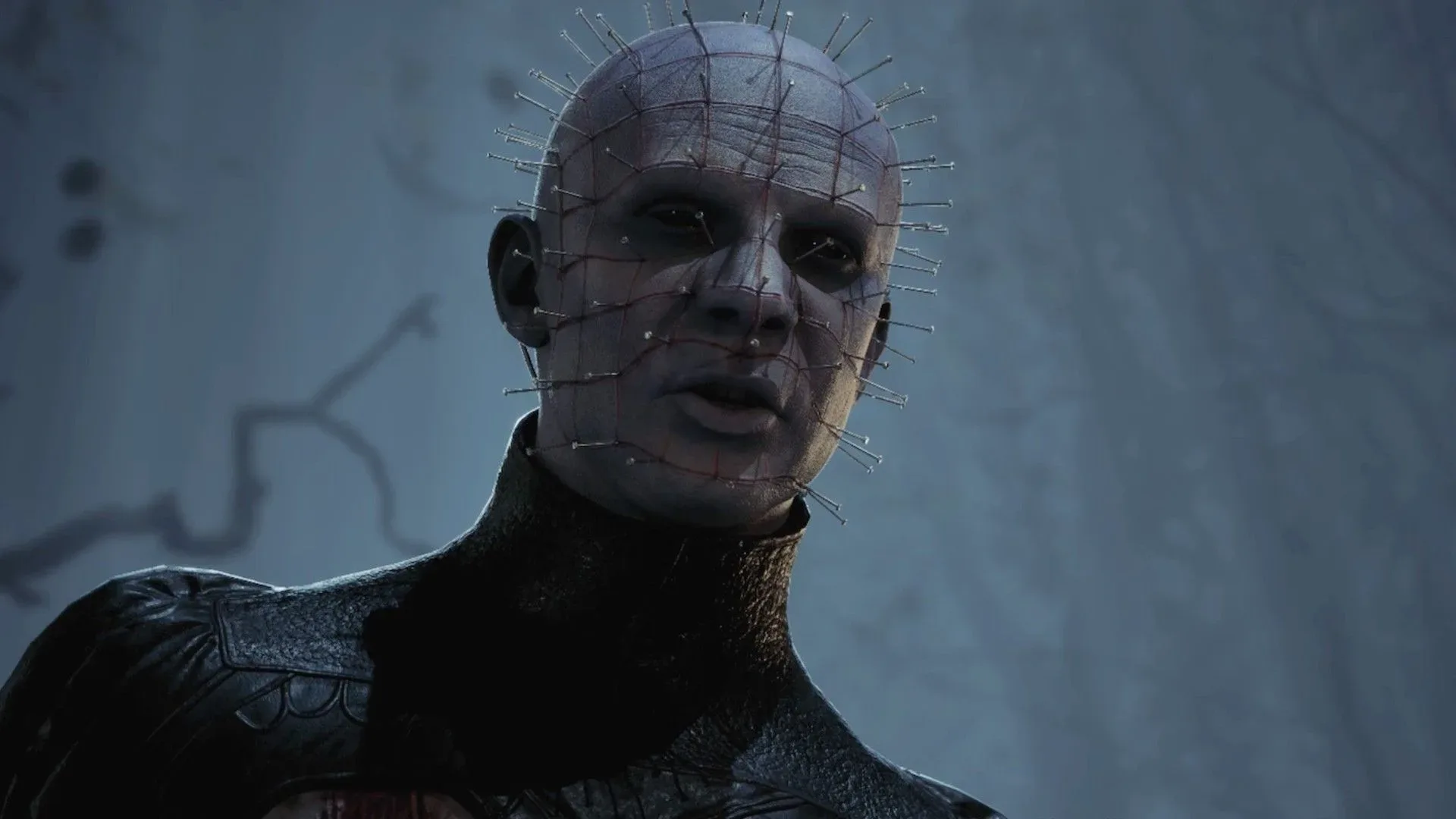
Clive Barker’s Hellraiser: Revival is built around a familiar but deliberately uncomfortable horror proposition: what happens when the search for sensation stops recognizing a limit? Its imagery of ritual, bodily violation, desire and devotion gives the game a natural thematic neighbour in Warhammer 40,000, particularly the followers of Slaanesh and the Emperor’s Children.
The connection is not that the two settings are the same. Hellraiser’s Cenobites and Warhammer’s Chaos Space Marines come from distinct fictional traditions, with different cosmologies and stakes. But both use excess as something more disturbing than ordinary villainy. The horror is not simply that characters commit violence. It is that violence, beauty, pain and pleasure are fused until their usual moral and emotional boundaries have been erased.
That is the territory Revival enters through Aidan’s attempt to reach Sunny. It is also why the game’s Scarlet Church, its cult imagery and its journey into the Labyrinth can feel so immediately legible to readers familiar with Slaanesh’s corner of the 41st Millennium.
A horror story where sensation is the threat
Revival opens in an explicitly adult, BDSM-inflected setting before bringing in Hell Priest Pinhead and the Cenobites. Sunny is violently torn apart while Aidan watches in horror, but the scene’s discomfort rests partly on the apparent disconnect between Aidan’s reaction and Sunny’s. The game establishes early that its world is not governed by ordinary assumptions about suffering, consent, pleasure or salvation.
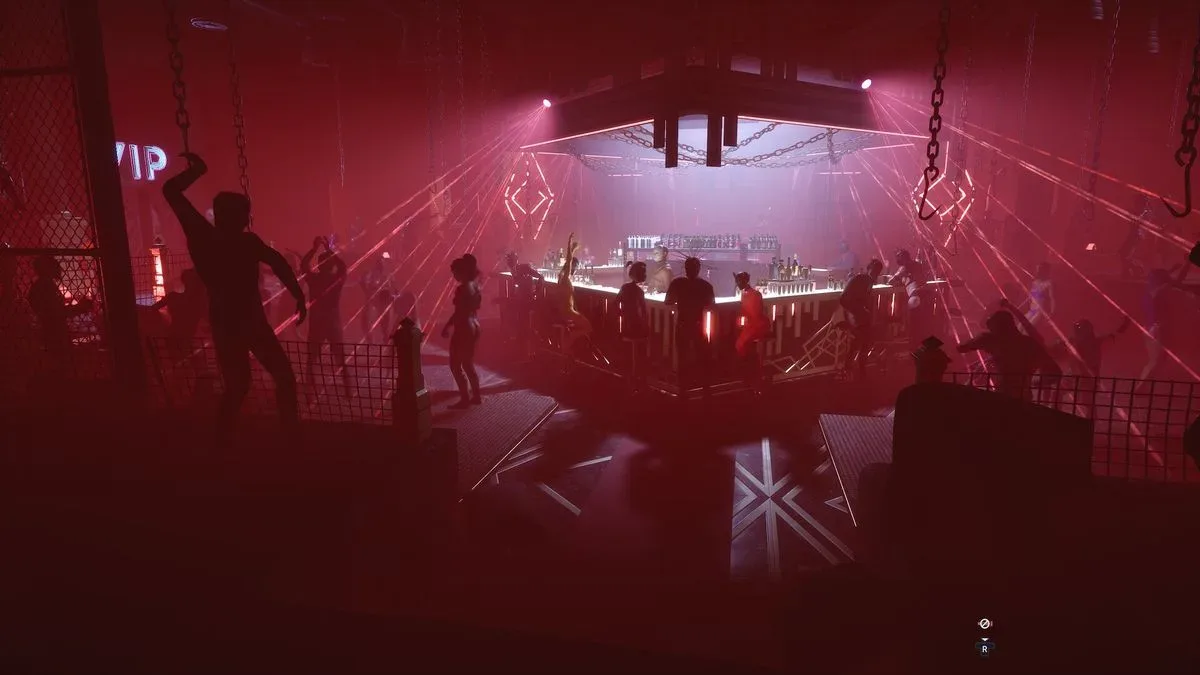
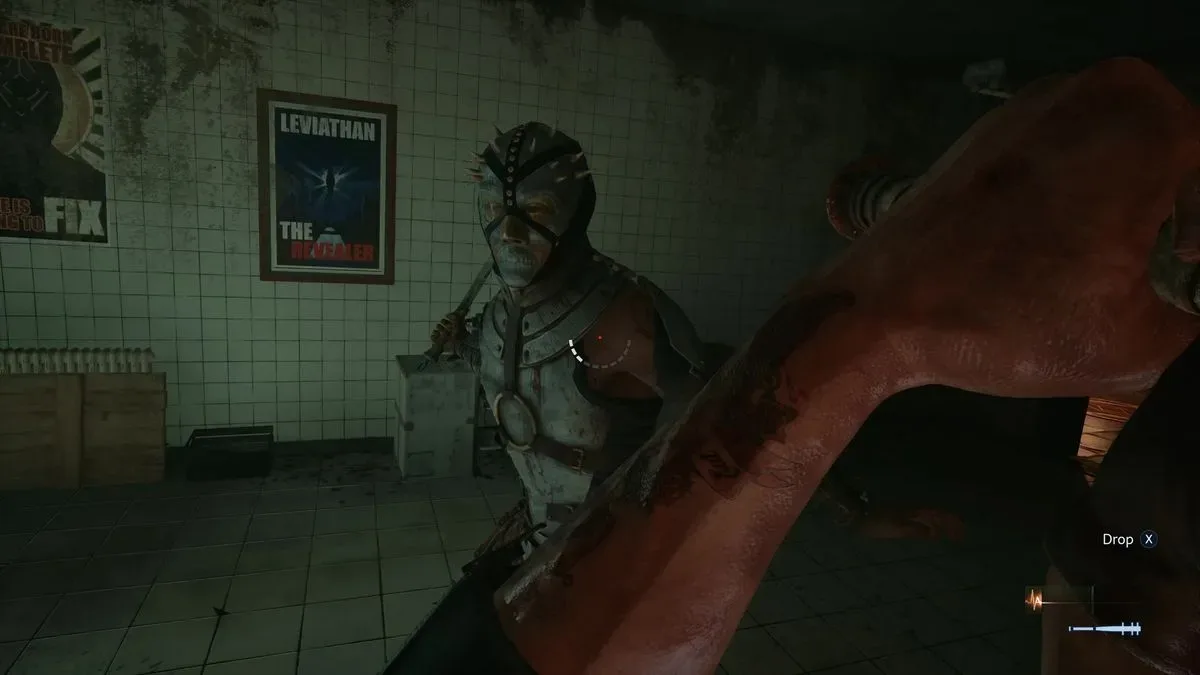
Aidan subsequently escapes a torture chamber and encounters a sex club connected to the Scarlet Church, a cult devoted to the Cenobites. When he is seemingly ready to leave this nightmare behind, Sunny’s disembodied voice draws him back with the promise of liberating her. That premise makes the pursuit personal, but it also makes it unstable. Aidan is not merely fighting monsters in a hostile place; he is following someone whose relationship to that place may no longer be comprehensible to him.
That uncertainty is central to Hellraiser’s flavour of horror. The Cenobites are not presented as simple predators who want the same thing from every victim. They represent an extreme encounter with sensation, one that turns the pursuit of experience into a grotesque spiritual and physical endpoint. In Revival, the Scarlet Church gives that idea a human social structure: worshippers who have made transgression into doctrine.
What “hedonism” means in this comparison
In ordinary conversation, hedonism can mean the pursuit of pleasure. In these horror and science-fiction contexts, the word is more useful when understood as obsession without restraint. The issue is not pleasure itself. It is the collapse of every other value—empathy, proportion, safety, identity and human connection—before an endless demand for a greater stimulus.
That is why the imagery around Revival’s cult is so effective. Hanging mutilated bodies, displayed paintings and invasive surgery are not random background gore. They suggest a culture that has made aesthetic expression, ritual and cruelty inseparable. Horror arises from that totalizing worldview: there is no private boundary left untouched by the need to turn sensation into ceremony.
Related coverage includes Hellraiser: Revival Finds a Grimdark Echo in Warhammer 40,000's Slaanesh.
Why the Emperor’s Children are the obvious Warhammer parallel
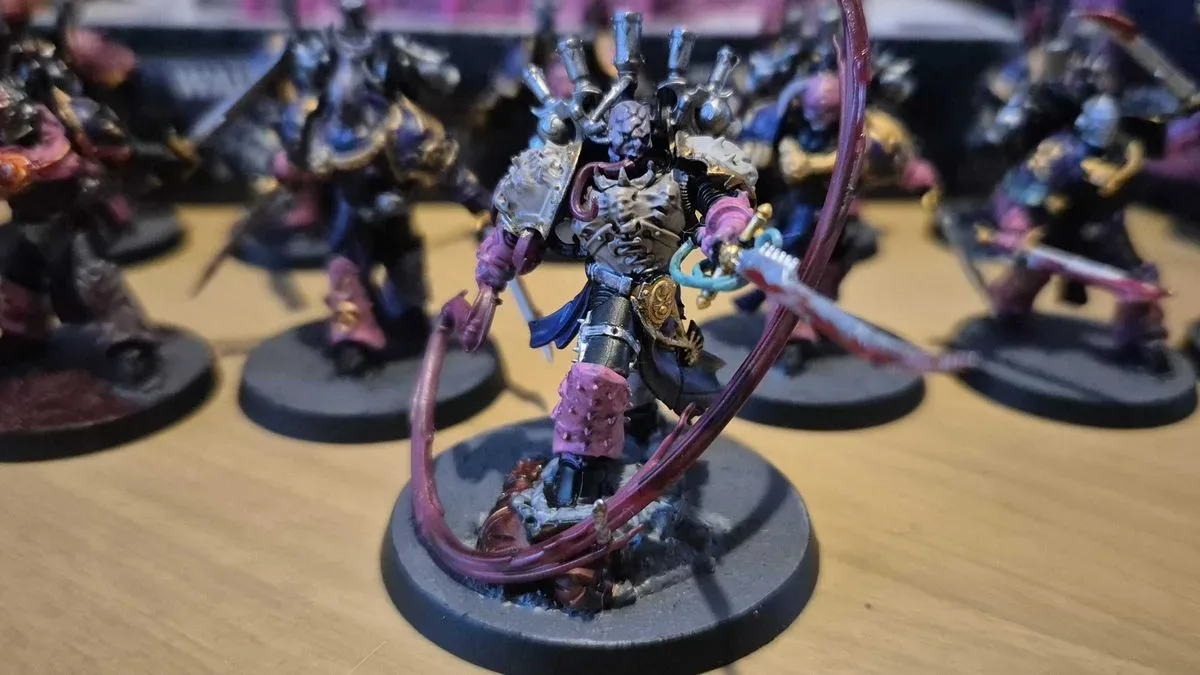
The Emperor’s Children are enhanced human soldiers, Space Marines who become devoted to Slaanesh, the Chaos deity associated here with pleasure and sensation. Their fall is tied to an encounter with the Laer, beings found in a temple of hedonism amid ecstatic ritual. A seductive, siren-like call draws the legion further toward a force beyond their comprehension.
The echoes with Aidan’s situation are clear at the level of theme. Both narratives involve people responding to a call that is alluring precisely because it is not fully explainable. Both present violence not just as opposition, but as a means by which characters enter more deeply into a corrupting pursuit. And in both, curiosity is dangerous because it is tied to desire rather than ignorance alone.
In Warhammer terms, Slaanesh is often reduced to a shorthand for sexual excess. That is too narrow for the comparison at hand. The more relevant idea is the compulsion to exceed: to pursue a stronger experience, finer beauty, harsher pain, more perfect art, greater bodily alteration or more extreme emotion. This is what makes the Emperor’s Children an especially useful lens for Revival’s environments. The cult’s ritualized flesh-and-art presentation reads less like plain murder-scene decoration and more like a belief system that regards boundaries as defects to be cut away.
The Emperor’s Children also sharpen the tragedy in that kind of story. Their identity as warriors does not protect them from temptation; force becomes one more route to intensity. Similarly, Revival’s leather-clad enemies react violently when their enjoyment is interrupted. Their aggression can be read as defense, but also as an extension of their pursuit of sensation. Combat is not separate from the cult’s values. It has been absorbed into them.
The Labyrinth as a grimdark space
Once Aidan enters Revival’s Labyrinth, the Slaaneshi comparison becomes more visual. The setting is frightening, but it is also designed to exert a pull. That mixture matters. A merely repulsive world would make the player’s response straightforward: look away, escape, destroy the threat. A world that combines revulsion with allure instead asks why anyone would stay, worship or return.
That question is a major part of grimdark storytelling. Grimdark is a term commonly used for settings where violence, decay and moral compromise are pervasive rather than exceptional. It does not simply mean a story is dark. In a grimdark world, institutions, landscapes and ambitions may all be corrupted enough that clean solutions are difficult to imagine.
Warhammer 40,000’s Slaaneshi material expresses that mode through extravagant, horrific excess. Revival arrives at a comparable atmosphere through the Cenobites and their worshippers. The otherworldly space is not only a dungeon to escape. It is an invitation from a worldview that makes horror feel like revelation. The player’s caution is therefore paired with curiosity: every new room could contain something dreadful, but it may also reveal the logic of the place and the hold it has over its inhabitants.
That tension is stronger than a direct visual similarity. It is a shared dramatic mechanism. Both Hellraiser and Slaaneshi Warhammer rely on the fact that transgression can be seductive before it becomes visibly catastrophic. If the forbidden world had no appeal, the characters who enter it would seem foolish rather than vulnerable. If it were only appealing, there would be no horror. The friction between the two is the point.
Flesh, art and devotion in the Scarlet Church
Revival’s Scarlet Church also calls to mind the Emperor’s Children because it treats mutilation and display as connected acts. Bodies hang overhead, while painted canvases are given an equally prominent place. The juxtaposition recalls the Emperor’s Children’s association with violence and artistry in the Horus Heresy novel Fulgrim, including imagery aboard their ship.
This is a useful distinction from a generic cult-horror backdrop. The Scarlet Church is not described merely as violent; its violence is curated. Art and atrocity sit beside one another, suggesting that the cult has developed standards of taste that are incomprehensible—or intolerable—to an outsider. The game appears to use that presentation to make the church feel like a complete culture of devotion rather than a collection of enemies waiting for Aidan.
A high-ranking cult figure performing surgery on a living person deepens that reading. The image evokes Fabius Bile, the Emperor’s Children character notorious for surgical experimentation. Again, the point is not that the character is a one-to-one equivalent. Instead, both settings use bodily transformation to show how expertise can become monstrous once it is untethered from care for the person on the operating table.
There is an important practical implication for players approaching Revival: the game’s material is likely to be intensely graphic and sexually charged. Anyone interested because of Hellraiser’s mythology or Warhammer’s Chaos lore should understand that the appeal being described is thematic and aesthetic, not a promise of conventional action-horror escapism. The setting’s discomfort is intentional, and the Scarlet Church’s imagery is part of the story’s larger fixation on sensation pushed past recognizable limits.
What the comparison adds to Revival
Viewing Revival through Slaanesh and the Emperor’s Children does not require prior Warhammer knowledge. The game’s central conflict remains Aidan’s attempt to find and free Sunny after her encounter with the Cenobites. But the comparison offers a vocabulary for what makes its spaces and enemies distinctive.
- The Cenobite-worshipping Scarlet Church resembles a culture that has elevated excess into a sacred ideal.
- Sunny’s voice drawing Aidan onward parallels the dangerous narrative role of an alluring call whose source and consequences are beyond the listener’s grasp.
- The Labyrinth’s appeal as well as its terror reflects the way Slaaneshi fiction makes corruption feel tempting rather than merely ugly.
- The blend of surgery, violence and art recalls the Emperor’s Children’s capacity to turn refinement and creation into expressions of cruelty.
It also explains why the game’s horror can feel intoxicating rather than simply bleak. Hellraiser’s most potent imagery has long depended on contradiction: ecstasy and agony, attraction and revulsion, invitation and threat. Warhammer’s Slaaneshi stories explore a similarly unstable space. In each case, characters do not necessarily fall because they want to be evil. They fall because they mistake the removal of limits for liberation.
That makes Aidan’s return after Sunny’s call especially charged. The path ahead is not only dangerous because of the Cenobites and the cult. It is dangerous because the story has established that what Aidan wants—Sunny’s freedom—may be entangled with the very force he needs to resist.
For readers who enjoy the Emperor’s Children at their most unsettling, Revival’s imagery offers a familiar kind of dread: a lavish, bodily nightmare where every promise of transcendence comes with a hook in it. And for players keeping an eye on how they play horror games more broadly, our look at GameSir’s mobile controller designs is a separate reminder that the hardware side of gaming can be much less macabre than the worlds games ask us to enter.