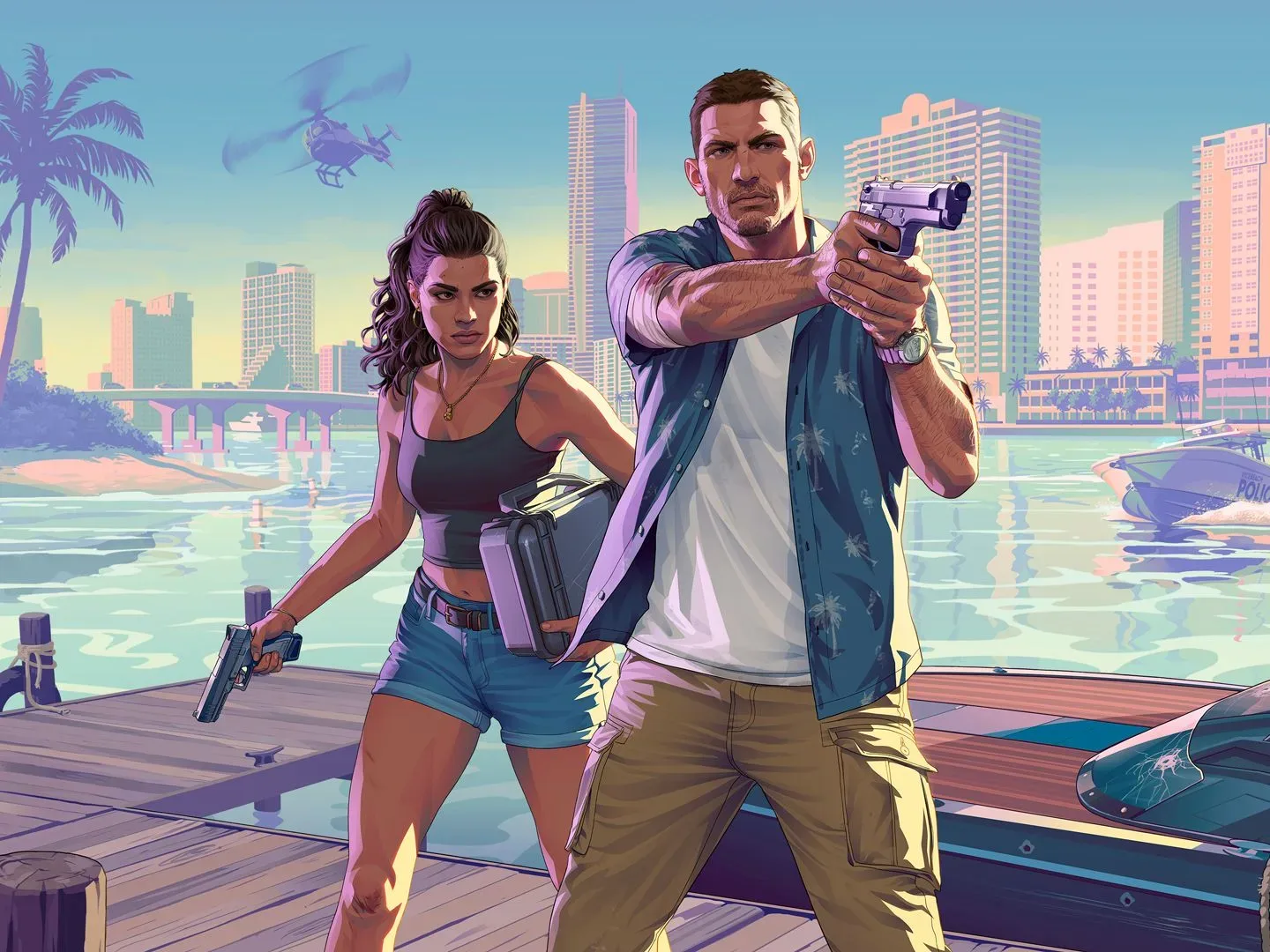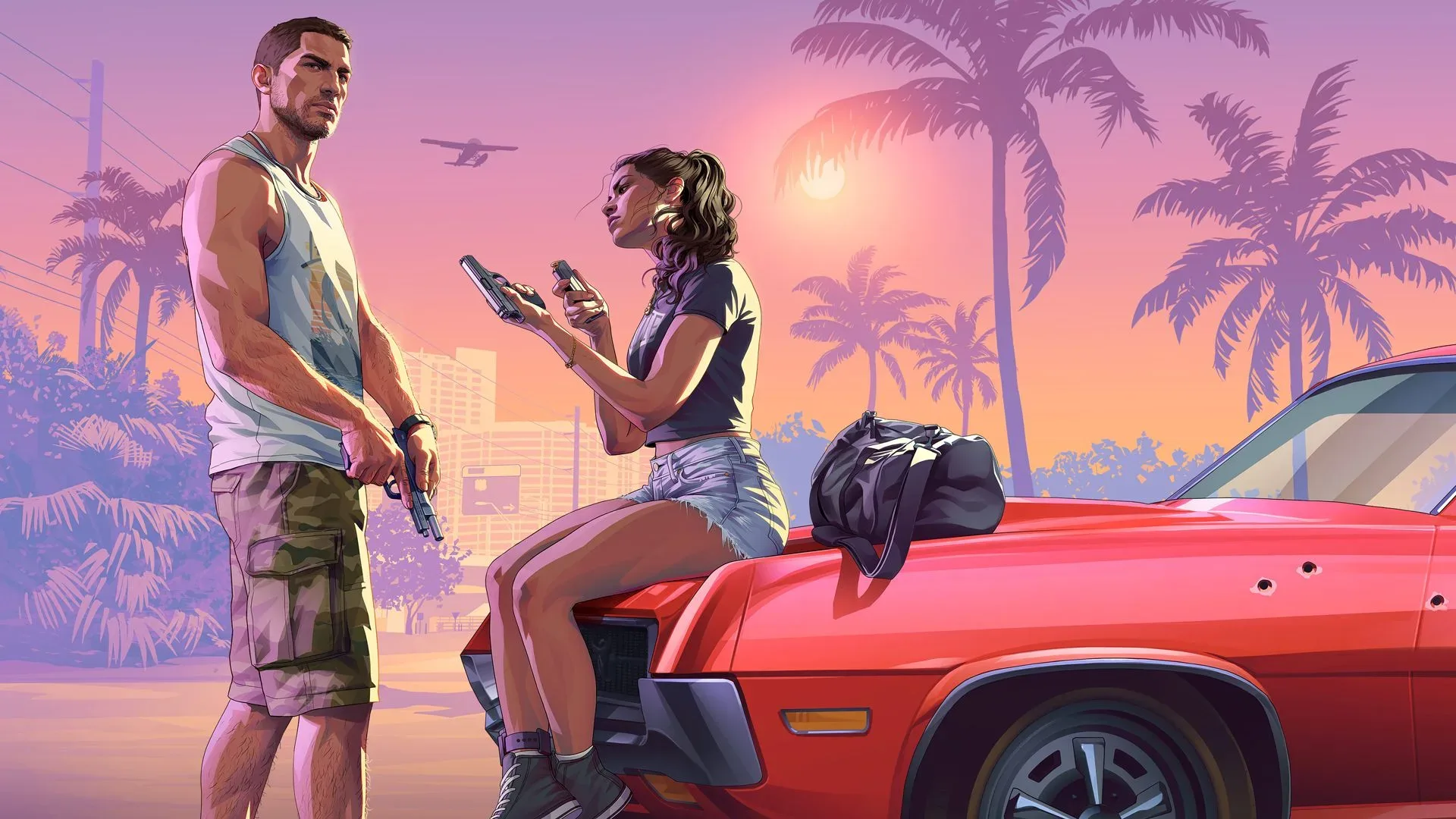
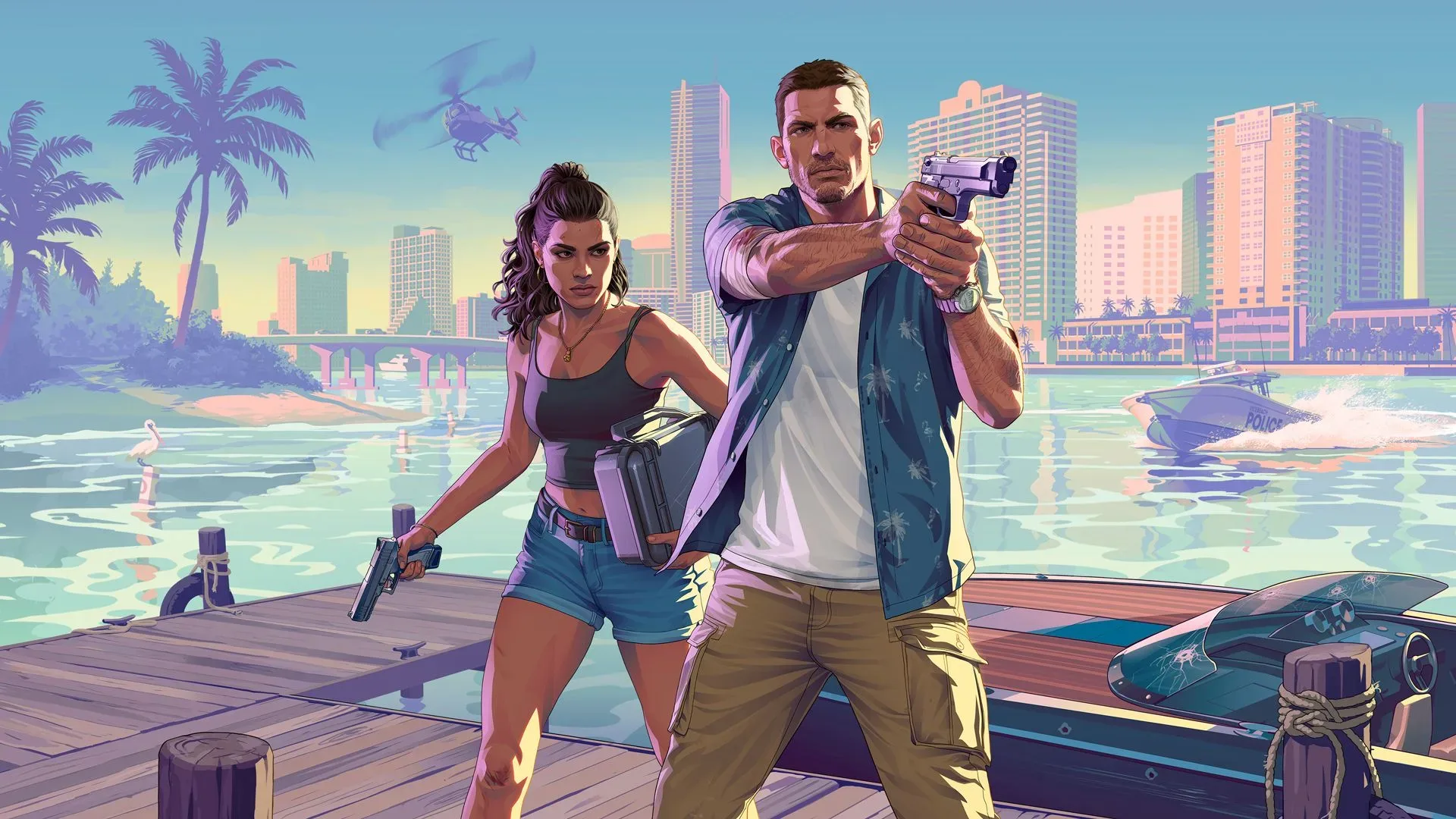
Grand Theft Auto has never struggled to give players large things to do. There are crimes, vehicles, missions, arguments, errands, escapes and the usual civic-minded act of turning a perfectly parked car into a cautionary sculpture. What appears especially striking about GTA 6, though, is the attention paid to tiny decisions and tiny consequences—the bits between the fireworks where a game either feels like a map full of activities or a place with habits.
Early observations from Leonida describe a game that is willing to make room for the unglamorous, the absurd and the oddly considerate. Jason can apparently use turn signals. He can snack while carrying beer. He can repair a home and pick up groceries before Lucia’s release from prison. He can attempt an errand with a gun in hand yet stop short of actual violence. And, somehow, he can meet a decorated runaway cow that says “save me,” which is the sort of sentence that makes an ordinary animal-retrieval job immediately feel like an ethics seminar with hooves.
None of those moments changes the broad premise of a Grand Theft Auto game. Together, however, they suggest why detail matters. The most memorable open worlds are not necessarily those with the most icons, but those that keep producing little reactions when a player pauses, notices an implication, or chooses to act against the easy impulse.
A reputation system where restraint still counts
The clearest early example is an apparently flexible rent-collection mission for Brian. A shop owner reportedly draws a baseball bat, only to back down when Jason displays a pistol. The confrontation is logged as illegal activity, but the response is said to recognise restraint and improve Jason’s standing as a composed, professional criminal.
That wording matters. A reputation system is a mechanic that records or evaluates player behaviour, often changing how characters respond or how a protagonist is framed. Its weakness is usually bluntness: it divides actions into saintly and villainous columns, even when a role-playing game is asking the player to inhabit someone far more complicated.
Here, the reported distinction is not that pulling a weapon suddenly becomes morally clean. It remains illegal. But the system can reportedly tell the difference between an escalating threat and a violent outcome. That is a useful wrinkle for a game centred on criminals. It gives players room to define Jason as calculating, volatile, reluctant, intimidating or some uncomfortable blend of all four, rather than forcing every mission into a single predetermined personality.
It also makes the ordinary choice meaningful. If an objective can be completed through conversation or a show of force, then choosing not to turn every disagreement into a full-blown disaster becomes an expression of character rather than merely a self-imposed challenge. For more on why choice systems and their consequences remain such a difficult design problem, see this look at preserving player choices without letting one decision dominate everything.
Driving details that invite role-play—and anxiety
The car-focused details seem designed to support two very different types of player: the chaos agent who will use the nearest sedan as an airborne bargaining chip, and the person who stops at a red light because they enjoy the bit.
Related coverage includes GTA 6’s Small Details Make Leonida Feel Alive.
GTA 6 reportedly allows players to activate a vehicle’s indicators with the D-pad on PlayStation 5, with the signal switching itself off after the turn. It is a tiny feature with no obvious need to exist in a game synonymous with gleeful traffic violations. Yet that is precisely why it has charm. It acknowledges that some players enjoy treating a virtual city as a place to inhabit, not just a playground to demolish.
Using an indicator is role-play in its purest low-stakes form. There may be no reward beyond the private satisfaction of behaving like a responsible citizen during the brief gaps between criminal errands. The game does not need to reward every act of make-believe with experience points or loot. Sometimes it only needs to let the player do the thing.
At the other end of the road-safety spectrum is reported vehicle damage that makes even minor impacts feel expensive. A post-box nudge can leave a visible dent, while squeezing through traffic may produce long cosmetic scrapes. This is not just a visual flourish. Persistent-looking damage changes player behaviour because it makes the vehicle feel less disposable. The same driver who treats cars as ammunition when no damage carries over may suddenly become protective of a freshly painted truck.
Leonida’s roads reportedly help sell that feeling too. Patchwork surfaces, confusing turn lanes and hastily paved strip-mall entrances have been noted as part of the state’s Florida-inspired texture. Road design is easy to overlook because it is scenery players cross rather than scenery they stop to admire. But it can quietly shape navigation, speed and the overall mood of a region. A highway that feels imperfectly maintained tells a story without a mission marker blinking above it.
Food, repairs and the importance of low-stakes animation
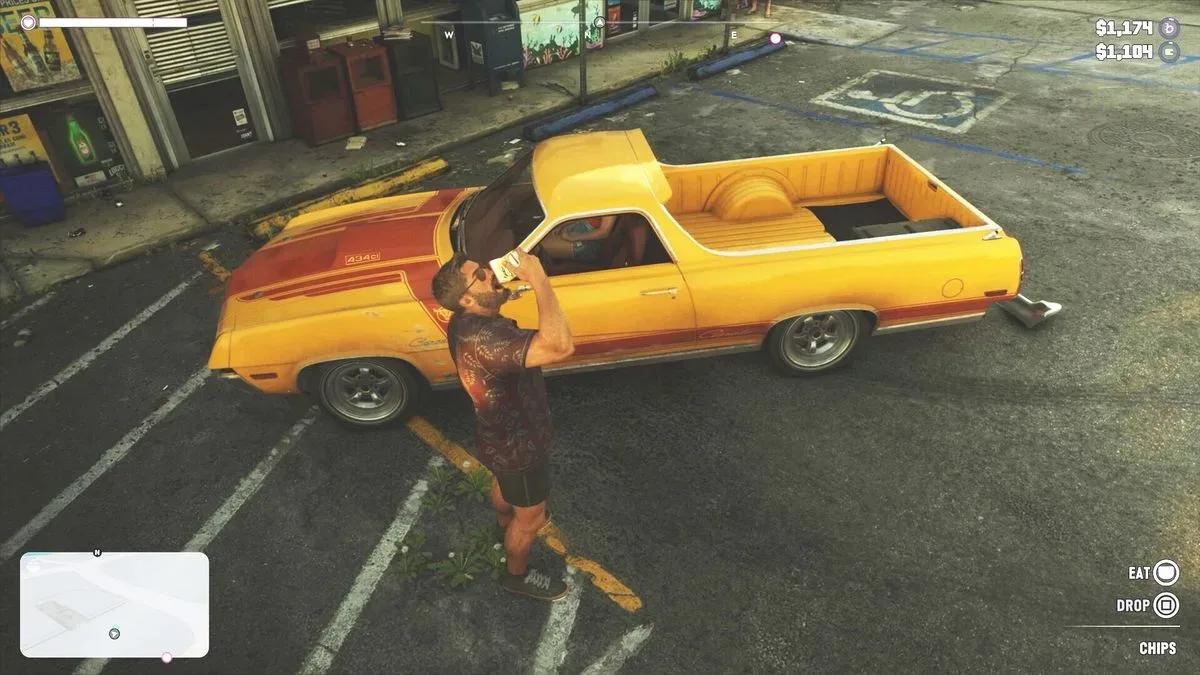
One-handed chip eating may not sound like a defining technical achievement until the mental image arrives: Jason carrying a crate of beer, opening the bag with his mouth, then pouring bites into it a little at a time. It is needlessly specific in the best way. The animation is not simply “consume snack”; it reflects what the character is already holding and turns an otherwise functional health item into a small bit of personality.
Food is also said to restore health, stamina and focus. Those are conventional game buffs—temporary or practical benefits applied to a character’s abilities—but the context around them adds flavour. Drinking coffee while sneaking around or raiding a neighbour’s fruit bowl may sound like a joke, but the tactile actions make the systems feel situated in a physical world. A buff is less abstract when it comes with an apple core left on a counter.
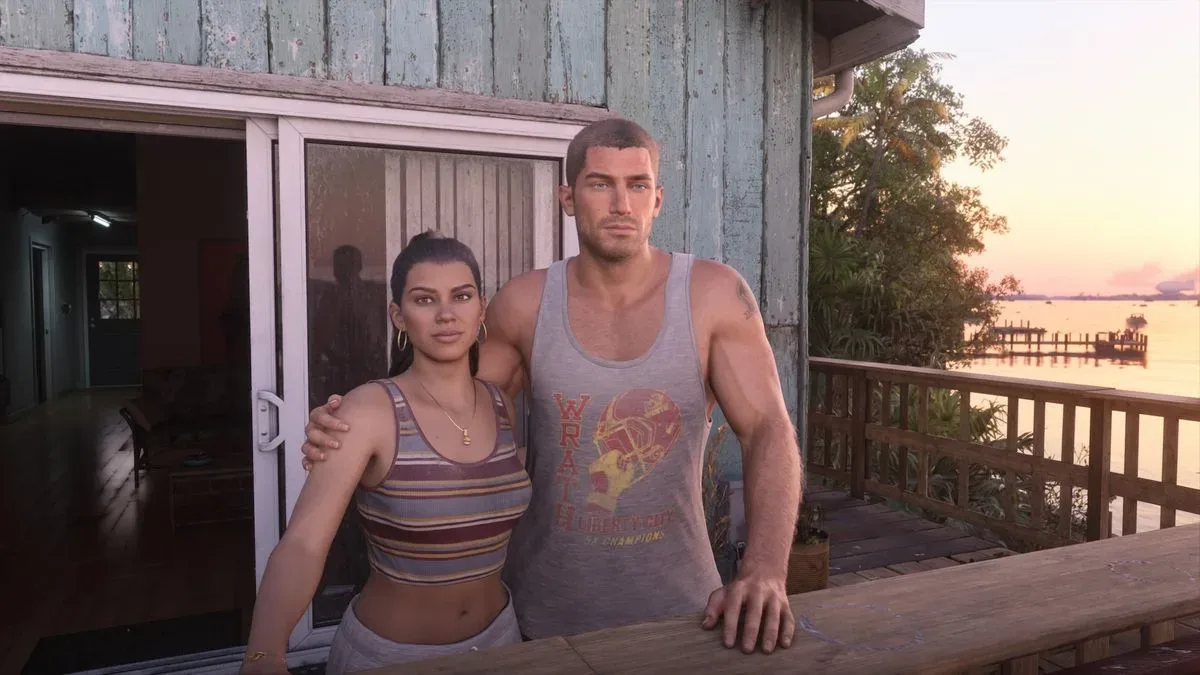
The reported domestic activities go further. Before Lucia returns home, Jason can repair the house, paint bare walls, fix roof shingles, buy flowers and groceries, and order a gold necklace. These actions sound modest because they are. That is their value. They put care, maintenance and anticipation alongside the game’s violence and satire.
Calling these elements “life sim” does not mean GTA 6 has suddenly become a quiet domestic simulator. It means the open world has made space for routines whose emotional purpose is different from combat or driving. Repairing a roof can establish that a home is more than a spawn point. Buying a gift can show a relationship through action instead of an exposition-heavy speech. Players may still prefer theft, speed and mayhem, but the alternative is visible enough to make the characters’ quieter priorities legible.
Leonida’s social feed is part joke machine, part local archaeology
Snapmatic, the in-game social platform, is reportedly full of resident photos, videos and aggressively silly posts. The details cited include fast-food bodily-function complaints, absurdly online captions and a self-aware jab at the long-running “we got this before GTA 6” meme format.
The surface-level purpose is obvious: it is a satire engine. Grand Theft Auto has long used fictional brands and media to turn a funhouse mirror toward contemporary culture. A feed built from slang, bad jokes and context-free nonsense is an especially direct way to mimic online life’s tendency to flatten everything—from local drama to serious events—into scrollable noise.
But Snapmatic may have a second purpose. It can work as ambient storytelling, meaning narrative information delivered through the environment rather than a mandatory cutscene. A player scrolling the feed can encounter the sense that Leonida’s residents have relationships, grudges, humiliations and terrible posting instincts even when Jason is elsewhere. The city gets to talk behind his back, which is about as authentic to social media as it gets.
The most effective parody does not need every joke to land. In fact, a feed where some posts are terrible, baffling or too cursed to share at dinner is closer to the experience it is spoofing. The algorithm itself becomes part of the character comedy: Jason’s phone apparently delivers precisely the kind of stuff a person did not ask to see, cannot explain, and will somehow scroll past three more times.
Sound and social spaces do work that missions cannot
Several early moments point to music and crowd behaviour doing heavy lifting for Leonida’s sense of place. At an artists’ market, Elton John’s “I Guess That’s Why They Call It the Blues” is reported to be audible from a speaker, giving a player a reason to linger before dealing with a local client. Shops have their own radio music, while a local band at an early bar party reportedly plays covers, including Hall & Oates’ “Out of Touch,” rather than simply reproducing recorded tracks.
That distinction matters because cover performances can make a scene feel specific to its venue. A polished original recording says “licensed song playing.” A band working through a familiar tune says “small bar, uneven room acoustics, somebody’s friend is at the mic and everyone has opinions.” It is a shortcut to social texture.
The party itself is described as a sequence where groups form, split and reconvene, with the room’s energy changing over the night. Even a pool mini-game becomes less of a detached diversion when belligerent attendees can interfere by taking the ball just before a crucial shot. This is controlled chaos, but it creates the illusion of a social setting that continues to exist instead of waiting politely for the player.
That is an important distinction for open-world immersion. A world feels active not merely when non-player characters walk around, but when they appear to have their own timing, social friction and capacity to ruin a pool game through drunken entitlement.
The cow is funny until it is not
Then there is Tootsie, a runaway pageant cow wearing red decorations and a floral hat. The task begins conventionally enough: find her, calm her down and return her to the farmer. It becomes stranger when the cow reportedly says “save me.” The player in this instance chose to send Tootsie away rather than help load her into a trailer, provoking the farmer’s anger and leaving the cow’s fate uncertain.
It is an excellent miniature of GTA’s tonal range. The setup is ridiculous, the line is unsettling, and the choice does not arrive with a clean moral label. Is the farmer lying? Is Tootsie magically articulate? Is the moment a joke, a clue, an uncanny glitch in the world, or all of those at once? The available account does not resolve it, and it should not pretend to.
What it does demonstrate is the potential power of a small encounter that refuses to be merely collectible content. The player does not just tick off “cow returned.” They carry away a question. In a game full of massive set pieces, that nagging uncertainty may be the detail that lasts.
Early impressions can only cover a fraction of a huge game, and individual systems may reveal different limits over time. Still, the pattern is clear. GTA 6’s apparent strength is not only spectacle. It is the confidence to let a turn signal, a dented door, a bad post, a bowl of fruit, a bar-band cover and one deeply alarming cow make Leonida feel like somewhere players can briefly live—before accidentally driving into a strip-mall entrance at 70 miles per hour.