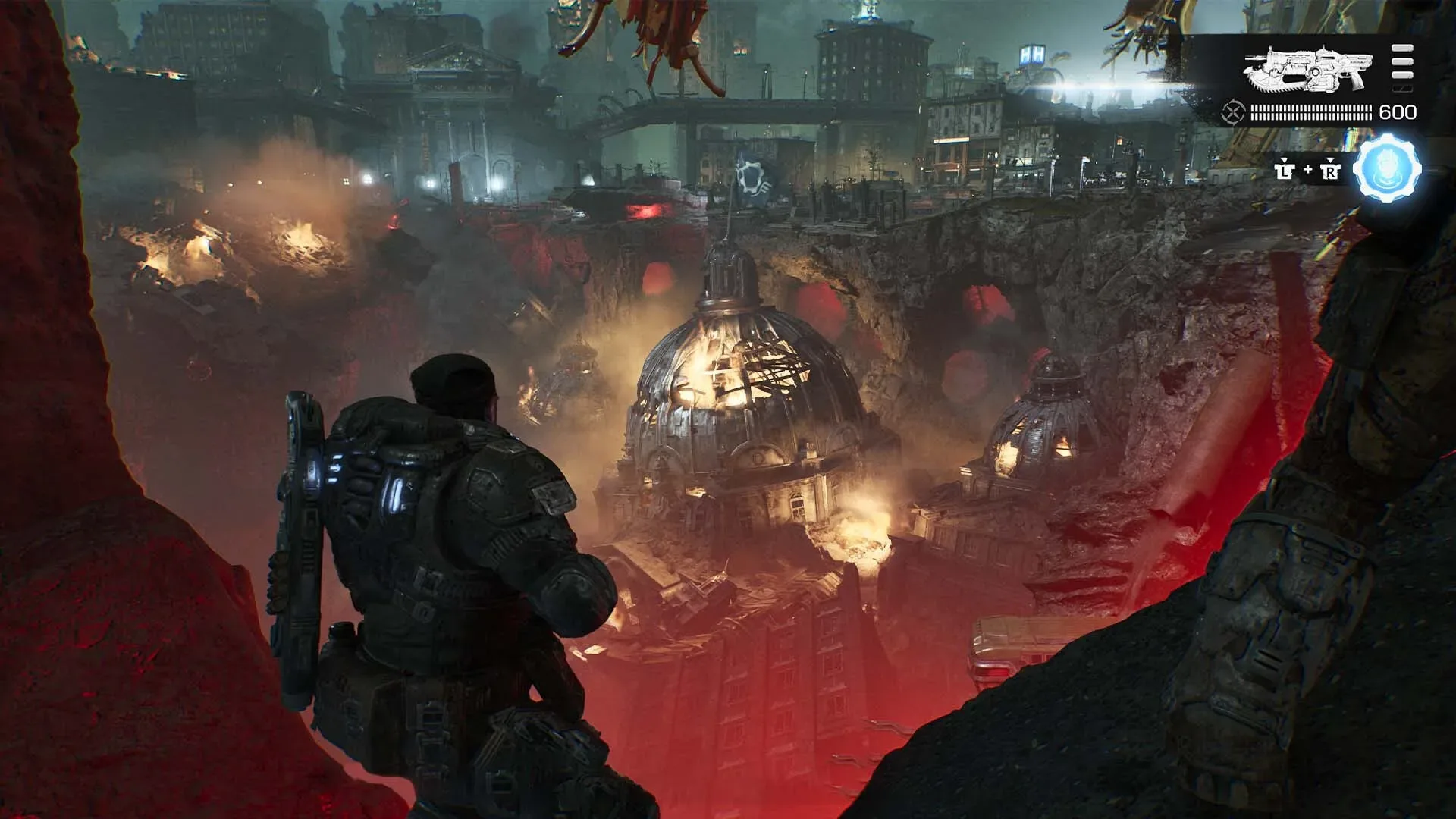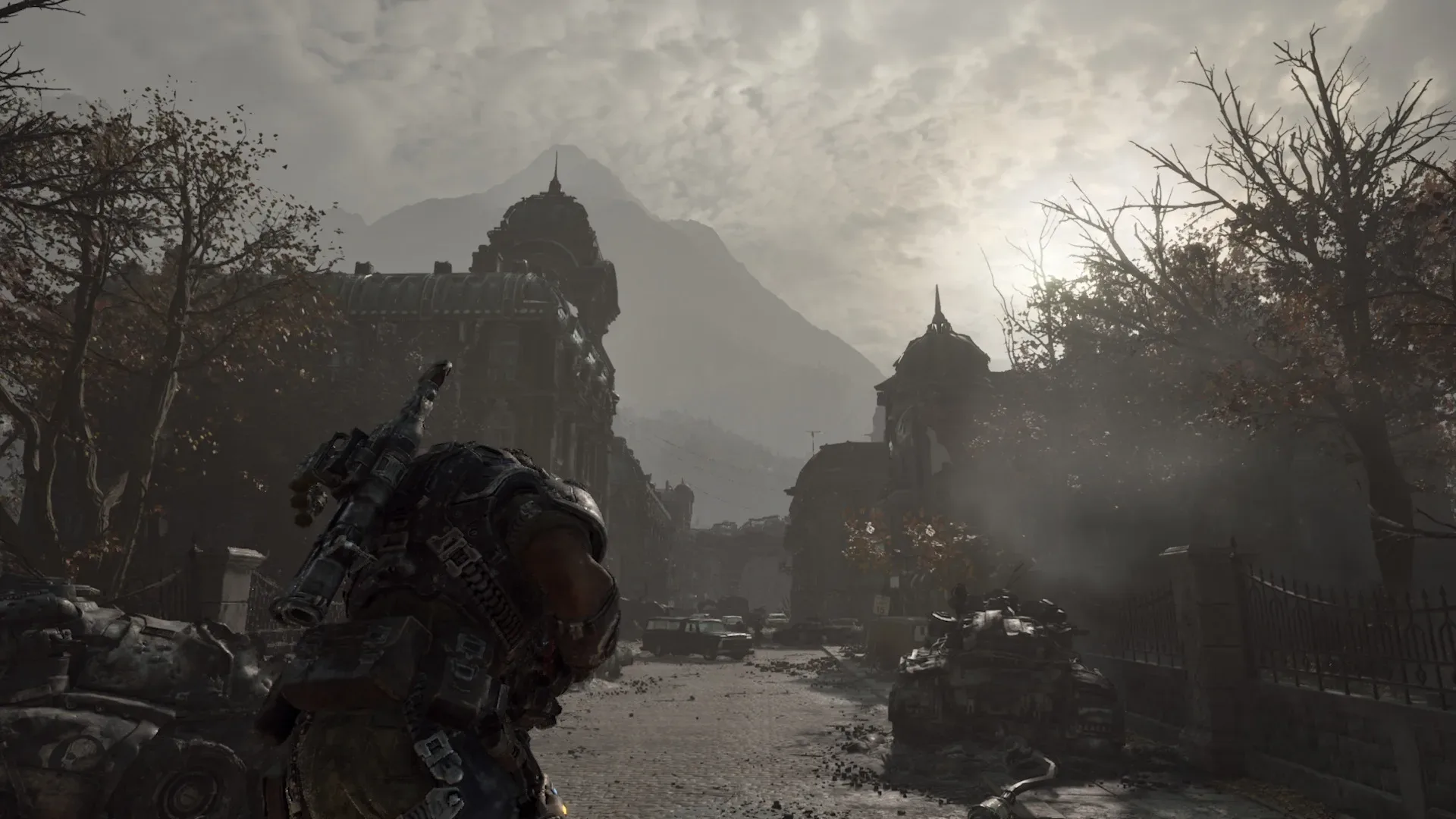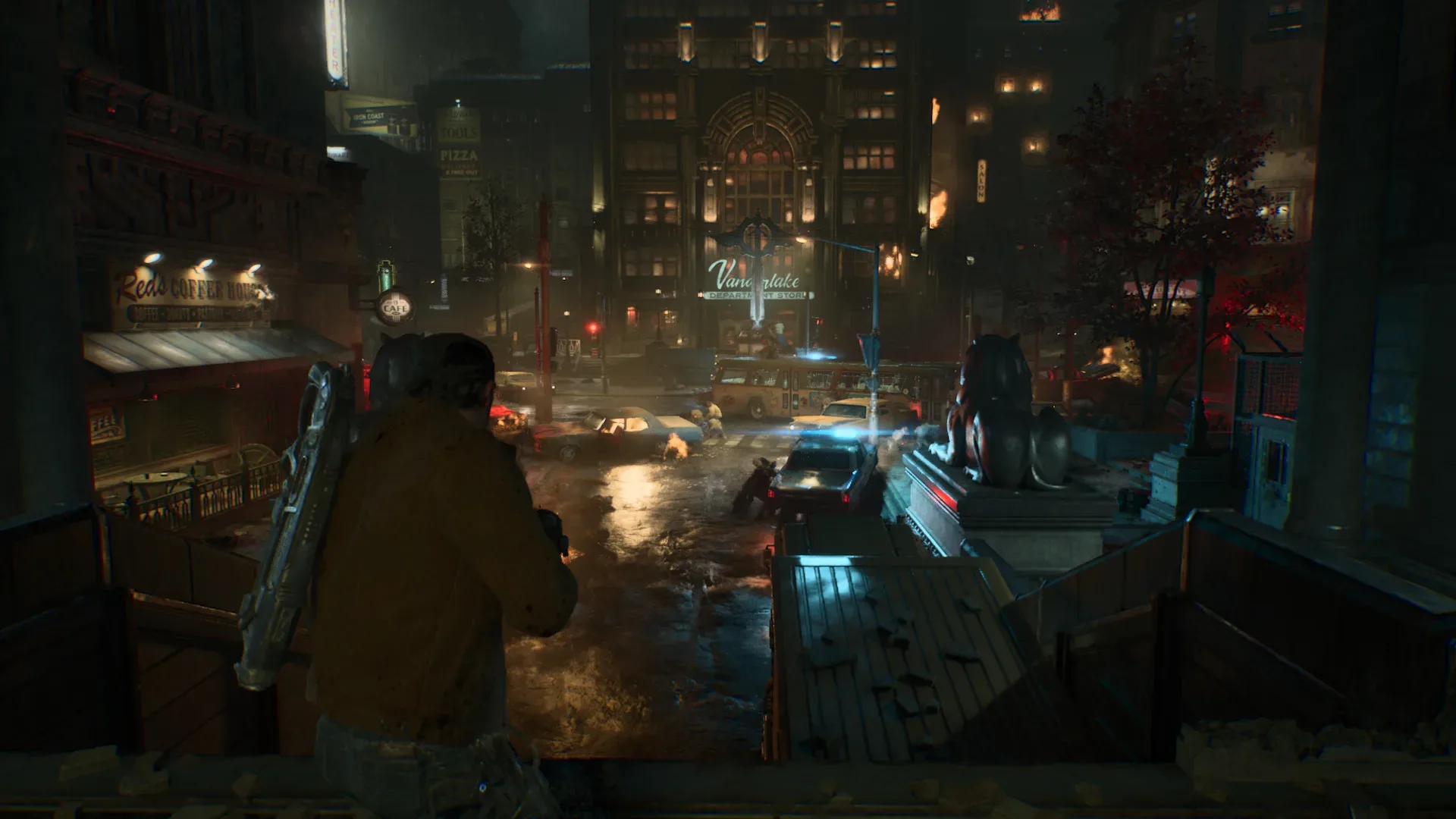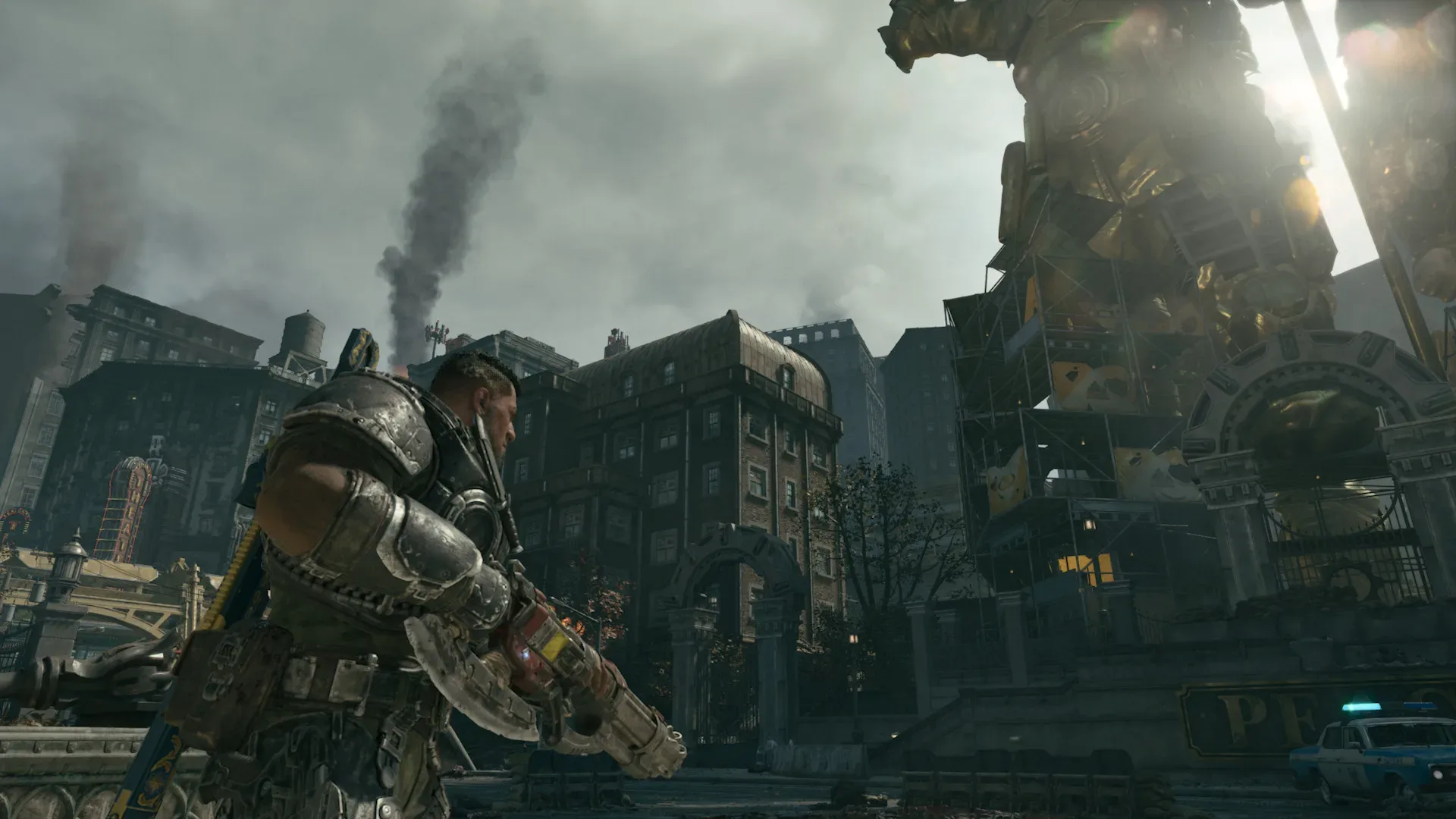
Gears of War: E-Day has a visual problem of the most flattering kind: its environments appear built to make players stop, look around, and reach for a camera tool the game does not currently provide. The new Xbox entry has no photo mode, continuing a series-wide absence even as its city locations, lighting, and natural scenery make a persuasive case that it should.
That omission matters because a photo mode is not merely a pile of filters for social posts. At its useful best, it is an accessibility and presentation feature: a way to pause an action-heavy game, remove interface elements, reposition the camera within permitted limits, and preserve a scene without having to time a console screenshot around subtitles, dialogue, or combat. For a game whose visual strengths include carefully rendered architecture and lighting, standard screenshots can feel like a rough substitute.
A new technical era for a famously grim series
The older Gears games were closely associated with the Xbox 360 generation’s tough, muted visual language: grey metal, brown rock, and battle-damaged industrial spaces. That look suited the series’ war setting, but it could also make its worlds feel visually narrow. Later installments, including Gears 4 and Gears 5, introduced more color and memorable skyboxes—the distant background environments that establish the scale and atmosphere of a level.
E-Day, the first new series entry of the Xbox Series X/S console cycle, pushes the setting toward a more elaborate vision of a Gears city before the war with the Locust has fully reduced it to rubble. The result described here is not just another stretch of wrecked concrete and steel. It is an urban sandbox with ornate architectural details, substantial lighting work, and a sense of a city in its prime at the outset of catastrophe.
The game is built with Unreal Engine 5, a modern game-development engine. An engine does not guarantee a particular visual result by itself; art direction, asset creation, optimization, hardware targets, and development decisions still determine what appears on screen. But Unreal Engine 5 is relevant context for why detailed surfaces and striking illumination stand out so prominently in E-Day. The technology is being used in service of spaces that invite closer inspection, even when the player is meant to be moving through them under pressure.
There is a tension there that a photo mode solves elegantly. Third-person shooters are designed around urgency, cover, enemy pressure, and forward momentum. The best environmental moments can occur while a player is trying to survive rather than compose an image. A dedicated camera mode creates a separate, optional moment for appreciation without asking the underlying game to slow down for everyone.
The appeal goes beyond ruined-city spectacle
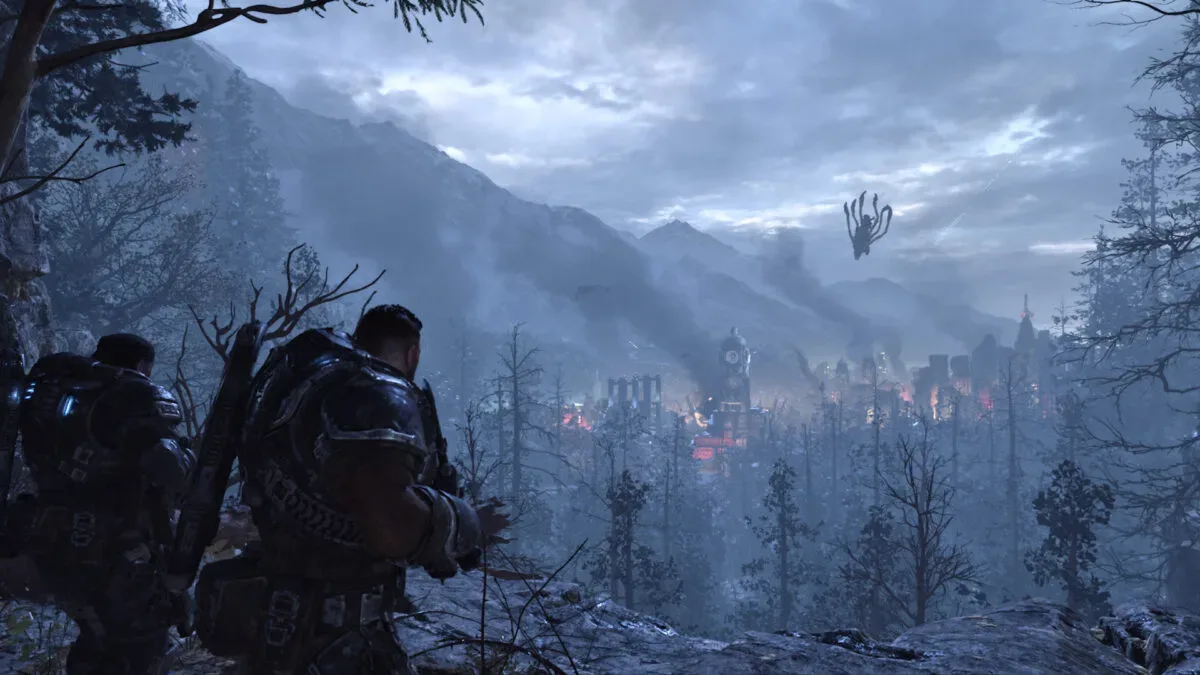
The visual argument for a camera tool is not limited to the series’ familiar mix of gothic heaviness and industrial warfare. One mid-game woodland sequence at night is singled out for the way moonlight catches leaves and tree bark. That is exactly the kind of transient image that can be difficult to capture through ordinary platform-level screen recording or screenshots: a player needs to avoid on-screen prompts, HUD components, caption text, and character movement while also finding the precise angle before the scene changes.
Lighting is especially important to how a game world communicates mood. Rather than being only a technical decoration, it tells players what to notice: a silhouette against a bright opening, texture in a wet or reflective surface, depth between foliage layers, or a route through a dark space. In a nighttime forest, the interaction of moonlight with bark and leaves can make an otherwise functional traversal area feel distinct. It is the type of small environmental craft that players often want to revisit, isolate, and share.
Related coverage includes Gears of War: E-Day's Visuals Make Its Missing Photo Mode Hard to Ignore.
Console capture features can preserve an image, but they do not replace the controls associated with a true photo mode. A screenshot button records the frame currently on screen. A photo mode generally provides an intentionally composed alternative: freezing the action, hiding the interface, and offering photographic controls. The exact options vary from game to game, so none should be presumed for E-Day. The key point is simpler: even basic composition tools would be far more useful than trying to snag a clean frame in real time.
Why HUD cleanup is more practical than it sounds
The need is not just aesthetic. During normal play, a HUD—short for heads-up display—delivers useful information such as objectives, ammunition, health, prompts, and other status indicators. Ambient dialogue captions can also appear as players travel through an area. These are appropriate and often important during gameplay. They are much less welcome when someone wants an uncluttered landscape image or a close look at a building façade.
Without a photo mode, the alternatives are awkward. Players may have to search menus for HUD settings, wait for a lull in ambient conversation, stand in a safe place, and then attempt a screenshot before an animation or lighting condition shifts. If a scene involves action, that task becomes even harder. An in-game camera function would consolidate that process into one deliberate feature rather than turning visual appreciation into a small technical chore.
This is why the missing feature feels more noticeable in a game praised for real-time presentation. A screenshot can document a moment, but it may not convey the full effect of moving through a scene: shifting illumination, depth, material detail, and the relationship between foreground and background. Still images routinely lose something from the live experience, yet that is not an argument against a photo mode. It is an argument for giving players the best possible tools to preserve what can be preserved.
Series S results make the request broader than a flagship showcase
The visual appeal is also not presented as an Xbox Series X-only showcase. On Xbox Series S, E-Day is said to remain impressive despite lower resolution. Resolution refers to the number of pixels used to form the image; lower resolution can reduce fine detail or clarity, particularly on larger displays. Yet it is only one element of image quality. Lighting, art direction, contrast, geometry, texture work, and animation can all shape how striking a game looks.
There have also been reports of choppy frame rates on Series S in some sections. Frame rate is the frequency at which a game produces new images per second. When it is unstable, motion can look uneven and controller response may feel less consistent. That performance concern should not be flattened into a claim that the game runs smoothly on the smaller console. Instead, it underlines a useful distinction: strong art and lighting can remain visible even where performance is imperfect.
For players on Series S, a photo mode could be particularly welcome. It would offer a controlled way to appreciate the game’s scenery without requiring a perfectly timed capture during uneven real-time movement. A frozen, cleanly framed image would not fix frame-rate problems, of course, and it should not be treated as a substitute for performance work. But it could make the game’s artistic detail easier to enjoy and document on the lower-powered machine.
What an eventual addition could accomplish
There is no confirmation that developer The Coalition will add a photo mode, so it should be treated as a player-facing request, not an announced roadmap item. The game is also described as having other missing features, but no specific additions should be assumed. Still, photo mode is a sensible candidate for a later update because it does not need to alter the core shooter loop to add value.
A thoughtfully implemented version would let the game’s scenery speak for itself. The immediate practical wins would be a way to remove HUD clutter and avoid capturing subtitles over an otherwise striking image. More broadly, it would acknowledge that players do not only experience a Gears campaign through firefights. They notice skyline composition, ornamentation in the city, the contrast between pre-war grandeur and approaching disaster, and the quieter natural spaces between the explosions.
That attention to place is a meaningful evolution for a franchise once strongly defined by an intentionally drab palette. Gears of War: E-Day appears to retain the weight and severity expected of Gears while providing richer city detail and atmospheric outdoor scenes. When a game makes people want to press the capture button repeatedly, the absence of a purpose-built photographic tool becomes conspicuous.
Until anything changes, players can still use their console’s standard capture functions. But those captures will remain constrained by whatever the live game is showing at that moment: its HUD, its captions, its camera position, and its pacing. For a game with this much emphasis on ornate environments and dramatic light, that feels like a missed opportunity rather than a minor checkbox feature.
For more Xbox coverage, see Arc Raiders’ Frozen Trail update and its free trial across PC, PlayStation and Xbox.