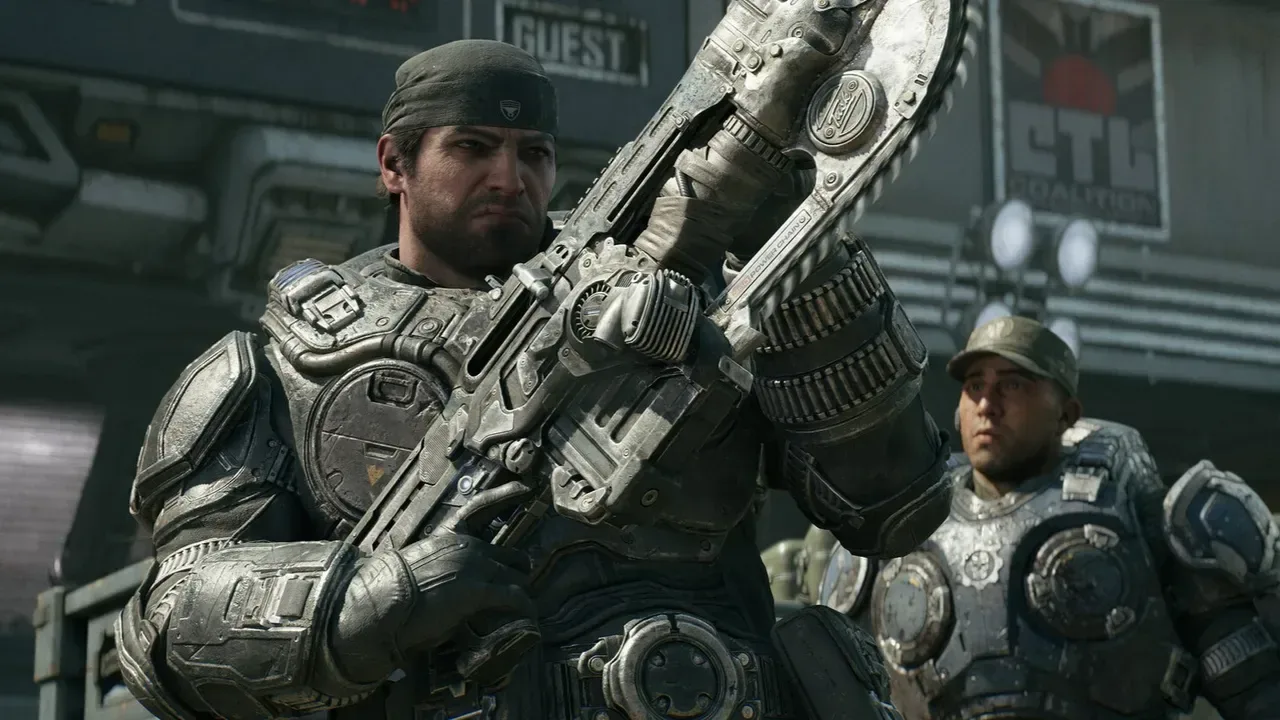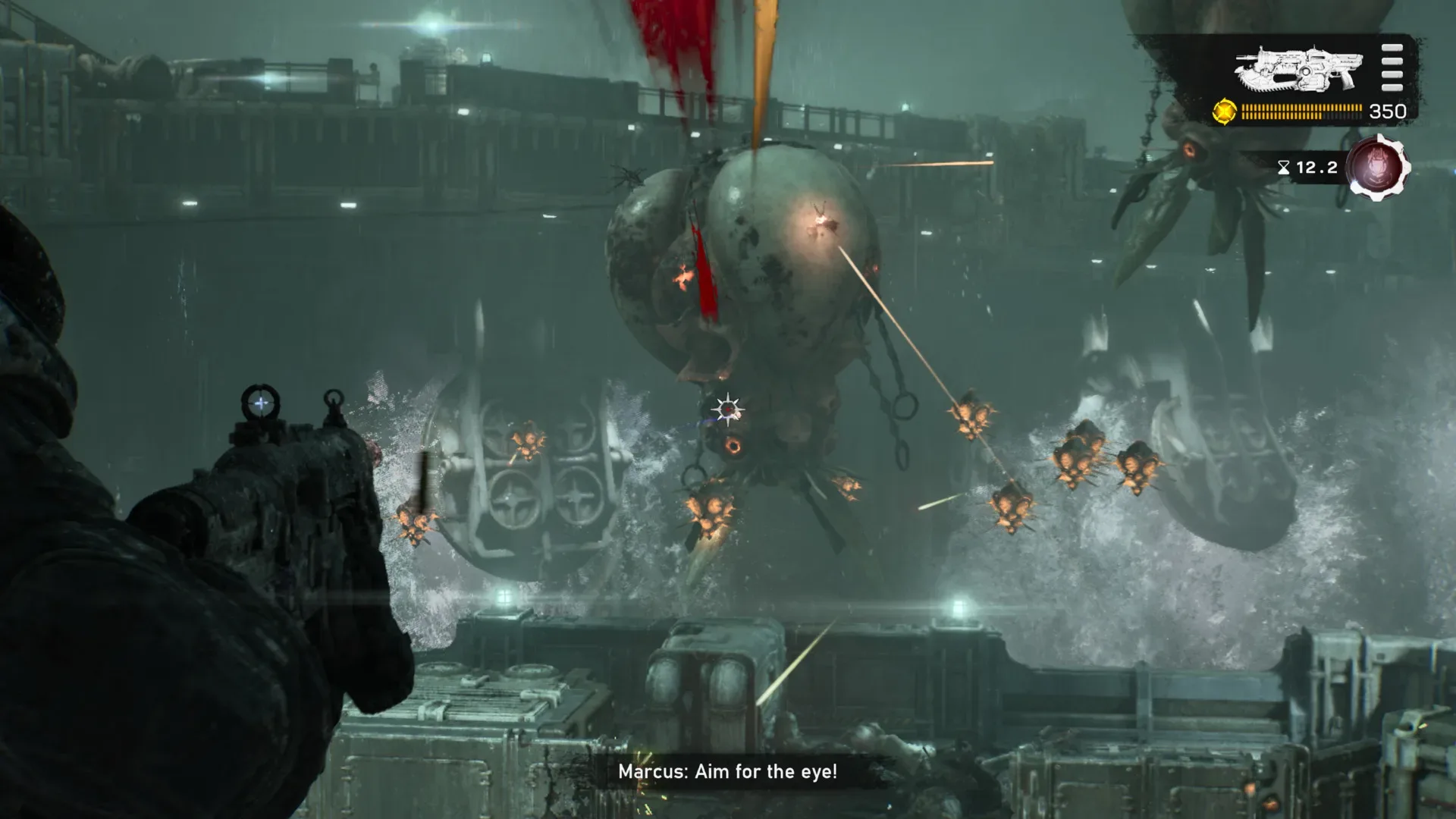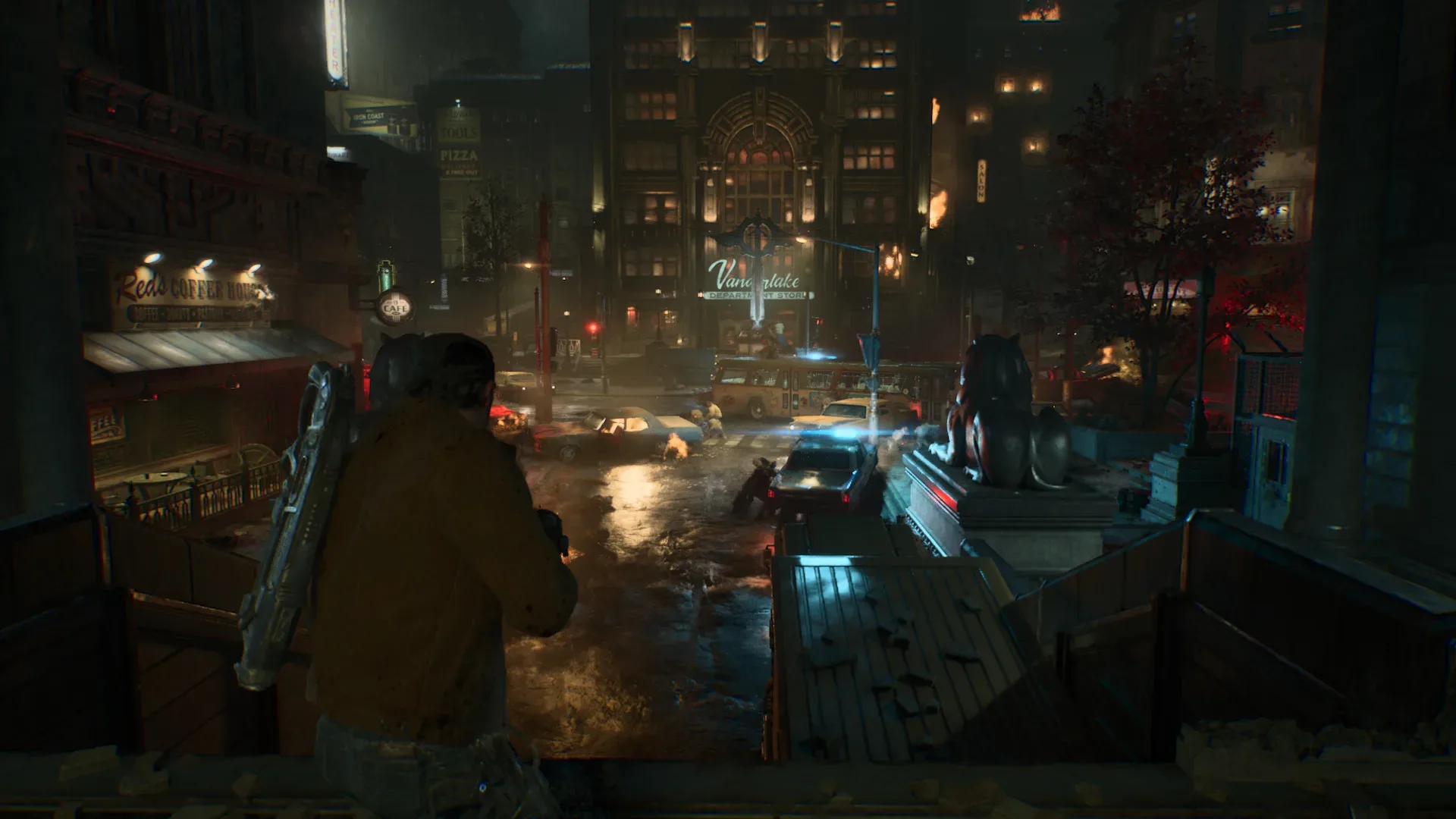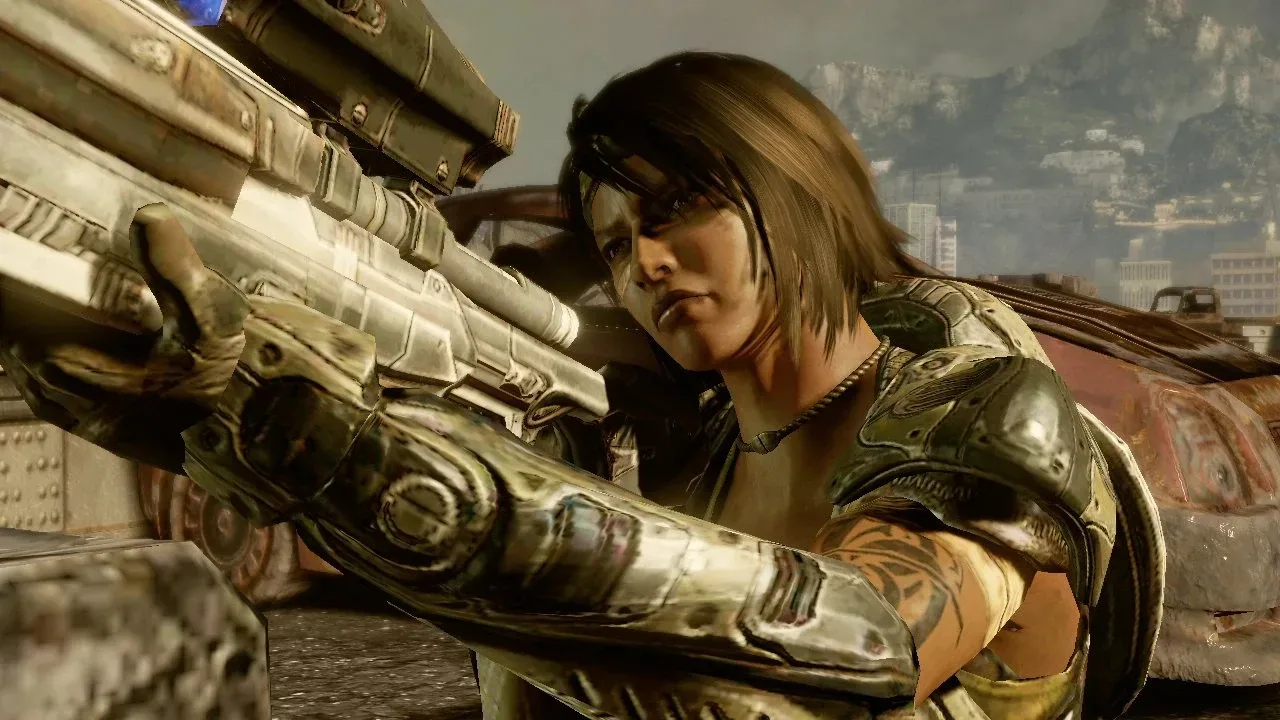
Gears of War has never been a franchise without women. It has often presented itself through the deliberately hulking silhouettes of Marcus Fenix, Dominic Santiago, Augustus Cole and Damon Baird, but the series’ actual cast, military and antagonists have included women from its Xbox 360 beginning onward. That distinction matters as Gears of War: E-Day attracts claims that a female commander or Mags, a gay Black woman in the squad, represents some unprecedented change to the series.
It does not. A player can discuss whether a particular character is well written, whether a story gives someone enough agency, or whether a campaign uses its supporting cast effectively. Those are ordinary critiques. But the narrower claim—that women do not belong in Gears because they are a new, supposedly externally imposed addition—is contradicted by the franchise’s visible history.
That history is not limited to one late-game redesign, an expanded-universe footnote, or an isolated cameo. Women have been command voices, soldiers, antagonists, medics, playable characters and central links in the series’ long-running family and Locust narratives. The record is also more complicated than a simple victory lap: early representation did not always give women the same physical presence or narrative latitude as the men. Both points can be true at once.
Anya Stroud is the clearest starting point
Anya Stroud was present in the original Gears of War, released on Xbox 360, and served as the voice supporting the player through the first two games. Her early role was primarily communications and coordination: an important job within a military campaign, but one that literally placed her off the battlefield while Marcus and Delta Squad occupied the camera’s focus.
That framing is worth acknowledging rather than smoothing over. A recurring female character who is chiefly heard through comms has less direct opportunity to define the action than the armoured men carrying it out. Calling Anya’s early position a battlefield secretary is blunt, but it identifies the limitation: she was essential to the operation while initially being kept outside the shooter’s most visible fantasy.
Gears of War 3 changes that equation. Anya takes up a Lancer, wears armour and fights on the front line. Her evolution does not retroactively make the earlier treatment perfect, but it definitively defeats the argument that the series only recently decided women could fight in the Coalition of Ordered Governments, or COG.
COG is the military and political force at the centre of much of Gears of War’s human side. Because the franchise is a cover shooter—a game built around moving between protective positions, firing, flanking and surviving hostile advances—the COG soldier is also one of its most recognisable visual roles. Anya occupying that role in Gears of War 3 is not background decoration; it places her in the core action language of the series.
The original game also established Queen Myrrah
The other foundational example is Queen Myrrah. Introduced in the original game and developed further across the trilogy, Myrrah is a human woman who appears to lead the Locust Horde. Her significance is not simply that a woman exists on the opposing side. She stands at the centre of the larger conflict and has connections to Kait Diaz and Kait’s mother, women who become important in later Gears stories.
Related coverage includes Gears of War’s History Makes Its Women Characters Nothing New.
That gives the franchise a continuing line of female characters across different positions of power and allegiance: Anya within the COG, Myrrah among the Locust, and Kait and her mother in the later narrative. It is a far broader foundation than the internet shorthand of “the old games were only about men” allows.
It is also useful to separate a protagonist from a major supporting character. The claim that Mags is secretly the main character of E-Day despite Marcus and Dom filling that role is not a serious reading of ensemble storytelling. A squad member can be meaningful without displacing the people a game places at the centre of its campaign. Treating the existence of a gay Black woman in the unit as proof of a bait-and-switch says more about the complaint than it does about the cast structure.
Gears of War 3 makes the military picture even clearer
By Gears of War 3, Anya is not alone. Bernadette “Bernie” Mataki helps Marcus and the group defend a key fort later in the game. Samantha “Sam” Byrne fights alongside Cole and Baird for much of the campaign, and remains active in Gears of War 4. Their presence matters because it expands the series beyond one familiar woman elevated into an exceptional case. The COG’s war effort contains multiple women with distinct places in the conflict.
Sam is especially useful evidence against the idea that women appeared only as distant command staff before a recent entry. She is a combatant operating alongside established members of the ensemble. Bernie, meanwhile, is tied to a substantial defensive moment in the campaign rather than merely appearing as an incidental civilian or administrator.
The franchise’s timeline further undercuts an attempt to confine women’s combat roles to the period after Gears of War 3. Gears of War 2 includes an unnamed female COG soldier working as a field medic alongside infantry. That may be a small role, but it still matters: it shows women serving with frontline forces before the third numbered game made Anya’s combat role much more prominent.
Two prequel-era stories add more direct examples. Sofia Hendrick, a member of the COG’s elite Onyx Guard, is playable in Gears of War: Judgment. Alicia, a member of Zeta-Six, appears in a Gears of War 3 downloadable-content storyline and dies at the hands of General RAAM. Judgment and that DLC are set before or during the events of the original game, showing on-screen that women were part of the COG military during the era that established the series.
Onyx Guard refers to the COG’s elite force. Sofia’s place in that unit is important context. The franchise is not merely saying women are permitted somewhere in its war machine; it depicts one in an elite formation and makes her playable.
The wider series does not stop at the numbered trilogy
Gears Tactics adds Dr. Mikayla Dorn and allows players to recruit women COG soldiers. As a tactical entry, it frames its characters through a different gameplay format from the main cover-shooter campaigns, but the point remains straightforward: women are part of the roster and part of the COG force the player manages.
That broader list—Anya, Myrrah, Bernie, Sam, Alicia, Sofia, Mikayla, Kait, Kait’s mother and unnamed COG personnel—does not claim every portrayal has been equally substantial. Nor does it suggest every woman has had the same amount of screen time as Marcus or Dom. It demonstrates something simpler and more decisive: Gears has repeatedly included women in its world, its armed forces and its story stakes.
The very premise of E-Day also makes the argument about “sudden” inclusion particularly flimsy. A story set around the franchise’s earlier era cannot erase what the games have already shown about that era. If a commander gives orders during missions, that is consistent with a series that introduced Anya as a key operational voice from the first game. If squadmates include women, that fits a setting where female COG soldiers, medics and elite guards have already appeared around the original game’s time period.
What the complaint gets wrong about continuity
Much of the noise around this subject depends on a selective memory of Gears: only the broadest image of grim men with oversized weapons is retained, while everyone who complicates that image is discarded. It is an easy picture to circulate because it is visually familiar. It is not an accurate summary of the games.
There is a practical lesson for players entering E-Day, too. A franchise’s marketing image is not the same thing as its complete canon. Before accepting a claim that a cast member is unprecedented, it is worth checking the games’ characters, setting chronology and roles. In this case, even a brief tour of the franchise turns up women in command, in combat, in medical support, in elite units, on the Locust side and in major family connections driving later stories.
None of that requires audiences to pretend the series was flawless. Anya’s transition from radio support to frontline soldier is memorable precisely because the early games had constrained her role. Recognising that limitation makes the historical correction stronger, not weaker. Representation can develop over a series while still having existed from day one.
Gears of War: E-Day can be evaluated on its missions, writing, character work and place in the franchise. But a female commander and Mags do not amount to evidence that the series has abandoned its past for a “modern audience.” They sit within a history that has always been more varied than the loudest complaints suggest. For more on the project’s Xbox positioning, see The Coalition’s comments on Gears of War: E-Day’s Xbox exclusivity.
The honest version of the conversation is therefore not “Why are there women in Gears now?” It is “How will E-Day use characters in a series where women have long been present?” That is a worthwhile question. The first one has already been answered by nearly two decades of Gears games.