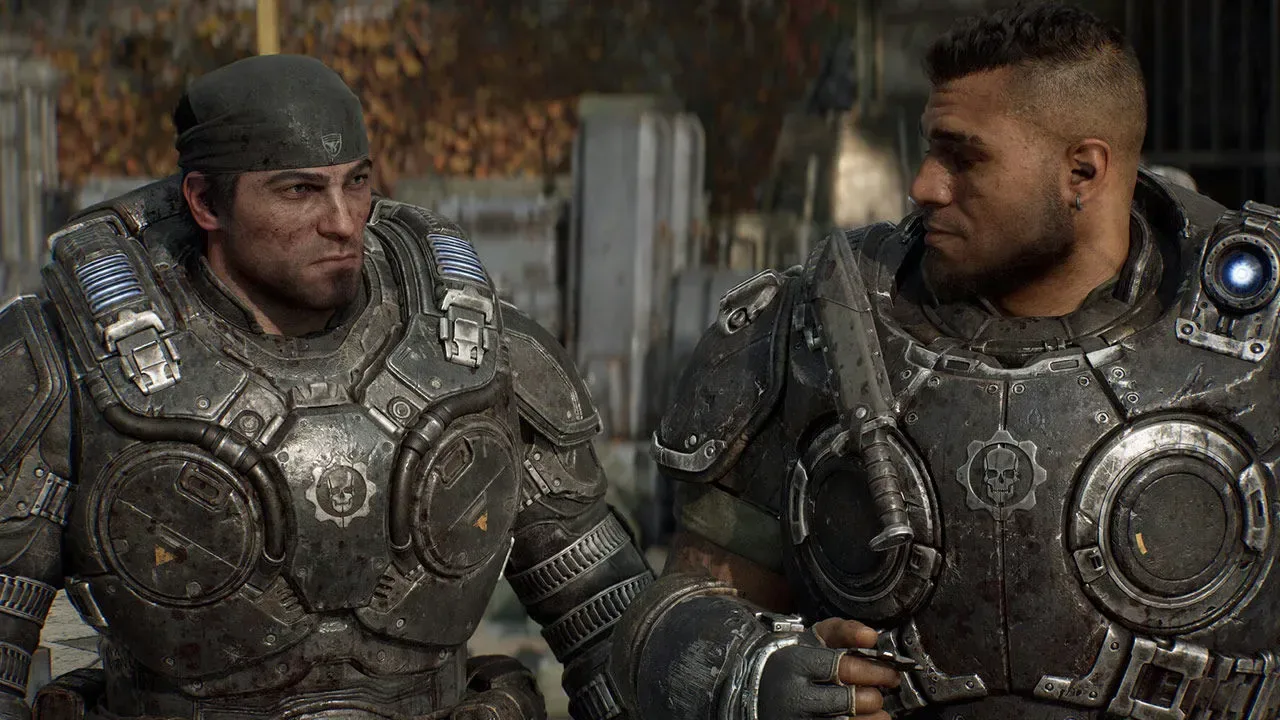
Gears of War: E-Day is built around a particularly volatile point in the series timeline: the beginning of Emergence Day, when the Locust burst onto the surface and humanity is still trying to understand what it is fighting. The Xbox and PC prequel reunites Marcus and Dom, while adding squadmates Mags and Lucas, for a campaign said to run roughly 12 to 15 hours across the first days of the invasion.
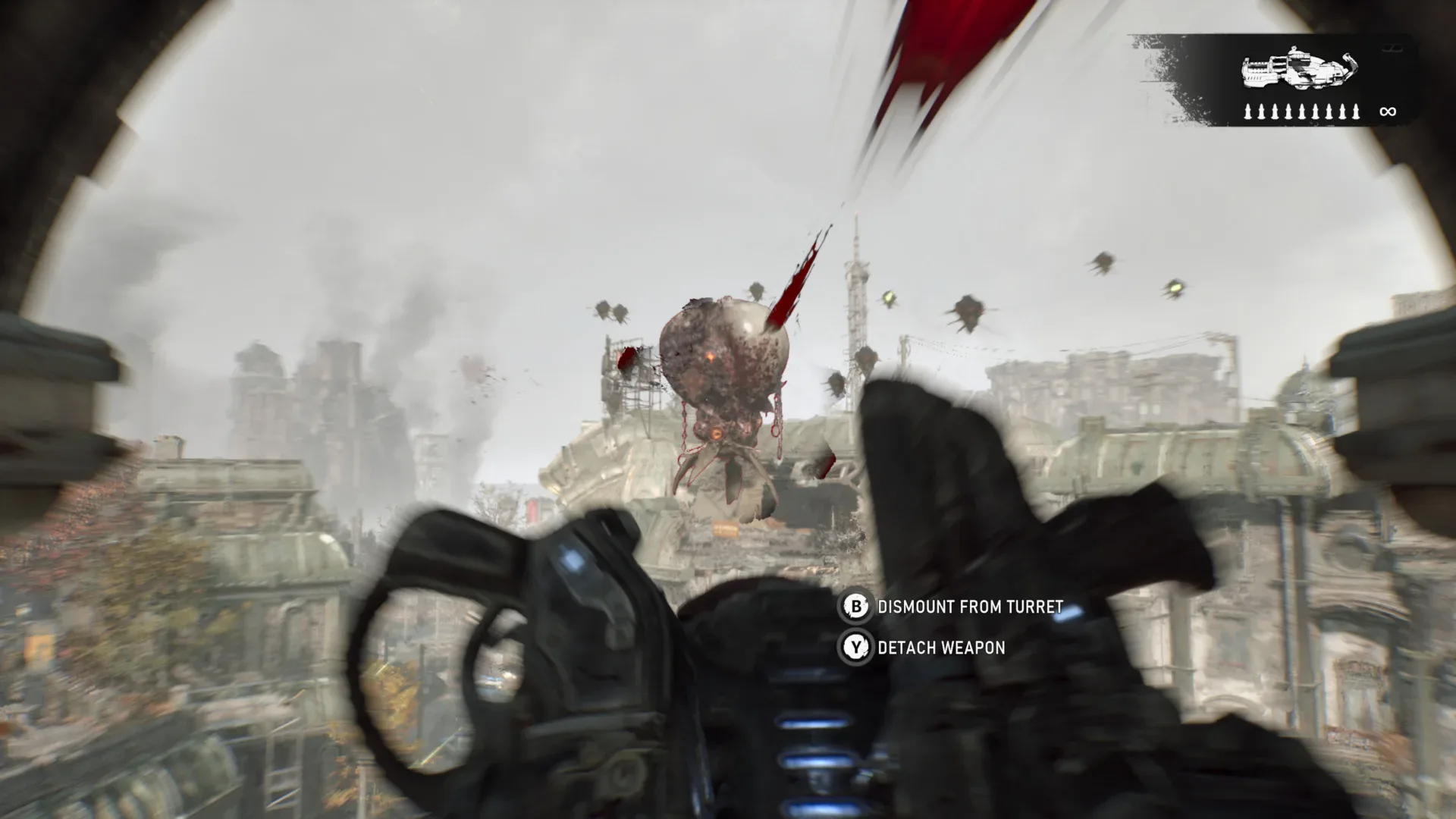
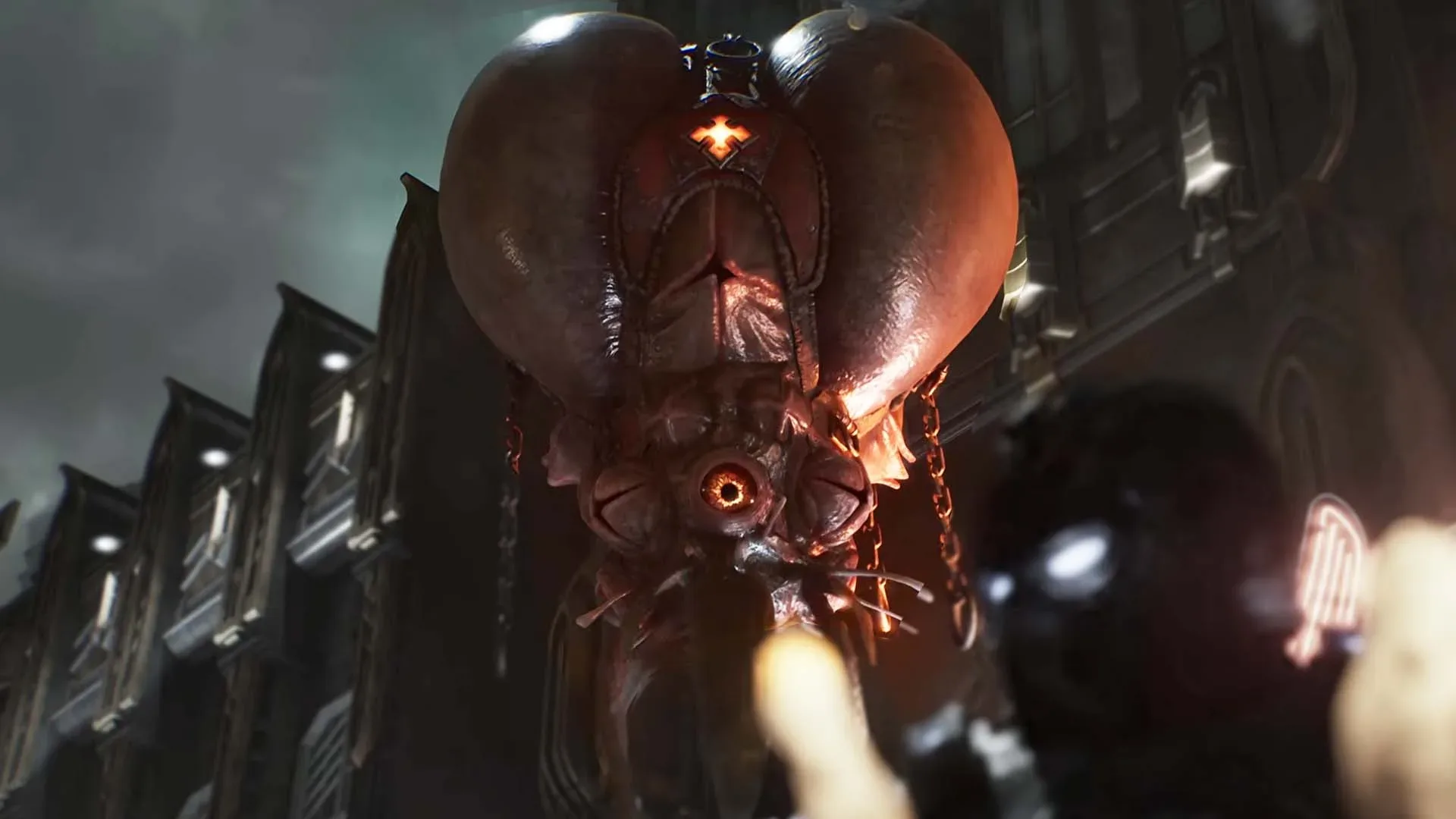
That setting provides a natural reason to put familiar Locust forces beside threats that have not been encountered before. Drone soldiers, Boomers and Wretches return, but one newly introduced creature appears positioned to make an outsized impression: the Spore Maiden. It hovers, resembles a large fleshy balloon, has an eyeball weak point, absorbs an unexpectedly enormous amount of ammunition and continually releases smaller airborne spores that fire needles at the player.
It is also the sort of enemy that can make a combat encounter feel less like a tense Gears firefight and more like a forced expenditure of every useful resource in the inventory. The crude nickname used in-game for the creature tells its own story: Spore Maidens are memorable, but perhaps not for the reason a new enemy wants to be.
A fragile-looking enemy with an unusually deep health pool
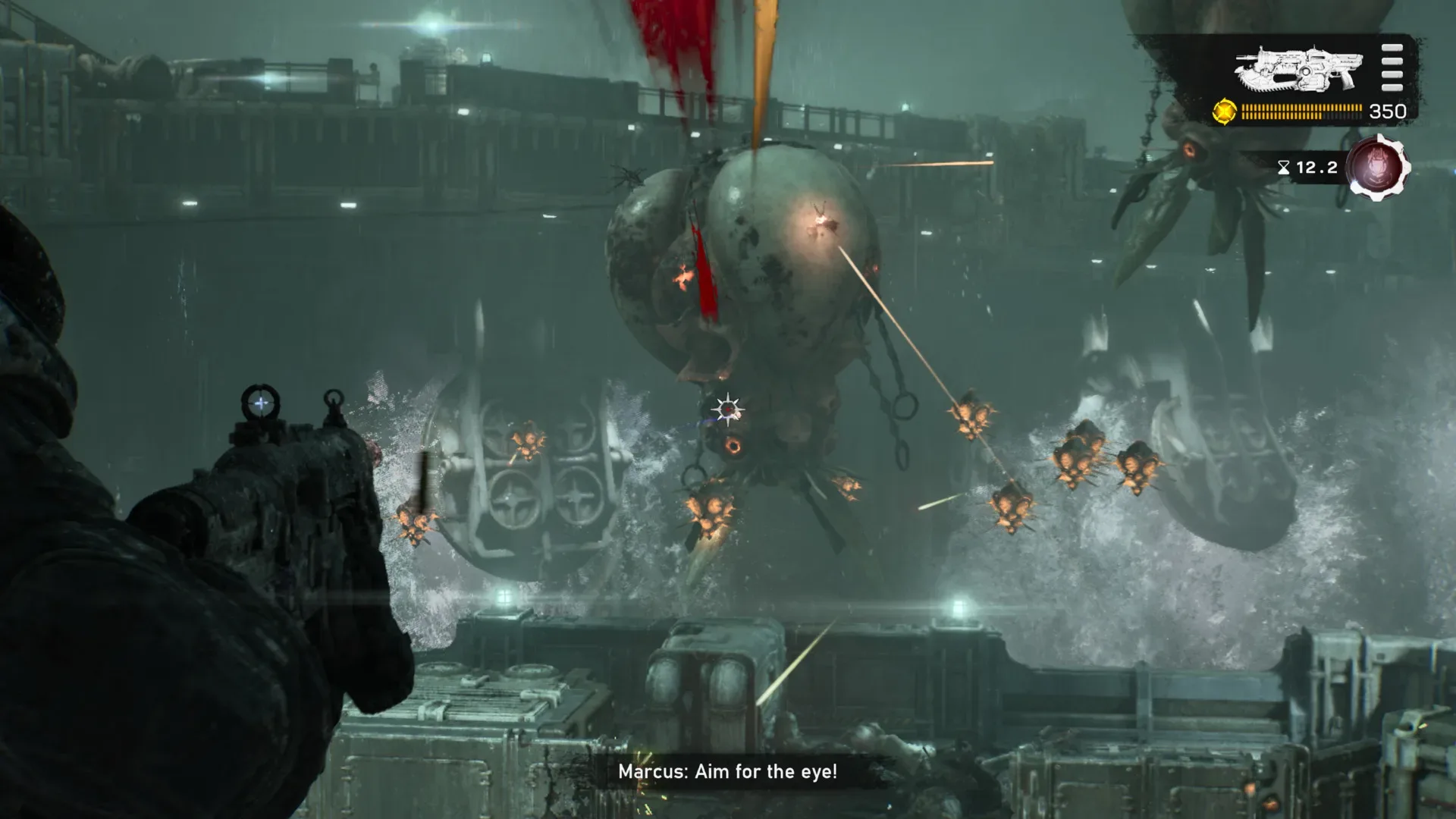
The core frustration is the mismatch between presentation and durability. The Spore Maiden’s inflated organic body suggests an enemy that should pop quickly under sustained fire. Instead, on standard difficulty, taking one down can reportedly require more than 200 Lancer rounds, even when shots land on the eye.
In shooter language, a weak point is a visible target that rewards accuracy with more damage than ordinary body shots. Weak points can make large enemies more satisfying because the player has a clear skill-based route to ending the threat efficiently. Here, the eye theoretically fulfills that function. But if precise Lancer fire still consumes a great deal of ammunition, the practical reward may feel insufficient.
That is not merely a complaint about a creature taking a long time to die. Gears combat has long depended on fast judgment calls around weapons, cover, targets and advancing enemies. Ammunition is part of that decision-making. A foe that compels extensive rifle fire creates an immediate question: keep firing, switch to a more valuable explosive weapon, or try to clean up the surrounding Locust first? With a Spore Maiden continuously worsening the arena, none of those choices sounds especially comfortable.
The creature’s presence may be especially disruptive because it looks like it ought to invite a different response. Visual design teaches players what to expect before a game explains anything. Armor commonly communicates durability; an exposed soft-looking body commonly communicates vulnerability. If an enemy is secretly one of the toughest creatures in the campaign, the visual language can work against the player’s intuition. The proposed fix is straightforward in principle: obvious armor that can be stripped away would explain its endurance, while creating a readable progression from protected threat to exposed weak point.
The real danger is the sky filling with needles
Raw durability would be manageable if the Spore Maiden were simply a floating bullet sponge. Its second trait is what turns it into a priority target. It produces smaller spores that remain airborne and shoot needles. Left alive, the larger monster can keep adding these organic turrets to the battlefield.
Related coverage includes Gears of War: E-Day's Spore Maidens Turn Familiar Combat Into a War of Attrition.
This is a form of battlefield escalation: an enemy becomes more dangerous not simply because it attacks directly, but because it expands the number of separate hazards players need to monitor. Rather than one target floating above an encounter, a surviving Spore Maiden can create a screen of smaller ranged attackers. The longer attention is spent elsewhere, the more punishing the situation can become.
That directly challenges the cover-centered rhythm associated with Gears. Cover normally provides a way to break line of sight, regroup and choose which target matters most. Needle fire from above makes that safety less reliable. The player may be protected from enemies at ground level while still being harassed by aerial spores. The result is pressure from an angle that can make established defensive habits less useful.
There is a solid design purpose behind a threat like that. A flying unit that disrupts static cover play can stop encounters from becoming too predictable. But disruption needs a counterweight. If eliminating the source demands a huge reserve of rifle ammo or explosives, and the source keeps generating needle-firing minions until it falls, players can get pinned into a losing loop: ignore it and the airspace becomes worse; focus it and other Locust forces are free to pressure the squad.
The source material describes the spores as the most frequent reason both the player character and AI-controlled squadmates are downed over the campaign. That matters because the frustration is not isolated to the monster’s health value. It is about how a long time-to-kill combines with accumulating threats. In a game where teammates may need rescuing amid an active fight, a single runaway encounter can become a difficult scramble to recover control.
Explosives stop being a choice and become a tax
Explosives appear to be the intended shortcut against Spore Maidens. The issue is that an effective answer is not always the same as a satisfying one. If a particular creature makes explosive ammunition feel mandatory whenever it appears, then that weapon category is no longer a flexible tool for handling an emergency or a cluster of conventional foes. It becomes the entry fee for dealing with the floating threat.
This is the difference between a counter and a tax in combat design. A counter gives players a useful option against a danger: perhaps a weapon performs well, but careful shooting and movement remain credible alternatives. A tax is a resource the game effectively requires, even when the player might reasonably have wanted to save it. The reported Spore Maiden encounters lean toward the latter, particularly when multiple creatures arrive together.
One side mission reportedly pits the squad against four of them. In that circumstance, the math is easy to understand even without a detailed damage chart. Four highly durable airborne foes potentially mean four sources of spawning needle shooters, all while the rest of the Locust encounter continues. A fight designed around target prioritization can become a pure war of attrition.
That does not necessarily make the encounter impossible. It does mean players may need to change priorities immediately when one appears. The available evidence supports a few practical principles, without pretending there is a universal build or hidden trick:
- Prioritize the Spore Maiden early when it begins producing airborne spores, since leaving it alive lets the encounter increase in complexity.
- Use the eyeball weak point whenever there is a safe firing window. It remains the clearest indicated vulnerable target, even if the creature still absorbs substantial damage.
- Consider explosives as an immediate answer rather than a last-resort reserve if a fight is already crowded or more than one Maiden is present.
- Do not treat cover as complete protection. The small airborne needle shooters can undermine a position that seems secure from ground-based Locust.
- Keep the wider encounter in view. A Maiden wants full attention, but a player who tunnels completely on it can still be overwhelmed by the conventional Locust around it.
These are not guaranteed solutions; the enemy’s complaint-worthy design is precisely that its demands do not fit neatly into the rest of the fight. Still, recognizing the escalation pattern makes its danger more legible. The Spore Maiden itself is not just a large target. It is a spawning source whose survival changes the tactical shape of the arena.
A prequel’s awkward question: where did they go?
Spore Maidens also create a continuity question. E-Day is a prequel to the original Gears trilogy, yet these hovering creatures are described as absent from the later games. A prequel can certainly introduce one-off threats; a world at the start of an invasion has room for creatures and events that may not recur. But a highly durable enemy that can turn the sky into a field of needle-shooting spores is difficult to dismiss as a minor detail.
That tension may make the creature feel more conspicuous than a standard new addition. The campaign’s premise is about first contact with an enemy humanity has never seen. New Locust variants belong in that frame. But if the new variant is especially potent, players naturally wonder why Marcus and Dom do not encounter it in subsequent chapters of their lives.
There is no supplied explanation for the creature’s apparent absence, so it would be speculation to claim it was wiped out, replaced, confined to a region or omitted for a specific story reason. As it stands, the Spore Maiden is an intriguing but awkward piece of the prequel’s monster roster: powerful enough to dominate fights in E-Day, yet seemingly disconnected from the later chronology.
Its visual identity raises a related issue. The classic Locust lineup has a relatively coherent brutal, subterranean military look. Spore Maidens instead read as an overtly fantastical organic horror design, closer to a floating aberration than a soldier in the horde. That contrast can be useful for immediate recognition—players will not mistake one for a Drone—but it can also make the creature feel like it drifted in from another genre.
The enemy that changes what a Gears encounter asks of players
E-Day’s broader campaign is presented as an effective depiction of civilization collapsing under the surprise Locust assault, and its returning cast and classic enemies anchor it in recognizable Gears territory. Spore Maidens stand apart because they alter the resource and attention economy of a fight more aggressively than their appearance initially suggests.
They are difficult targets with a weak point that may not feel rewarding enough, spawners of secondary aerial attackers, a threat to the usual value of cover, and a potential drain on explosive ammunition. When several arrive together, their problems compound. A player is not merely fighting more enemies; they are fighting more sources of a mechanic that multiplies enemy pressure over time.
There is a potentially compelling monster underneath the annoyance. An airborne enemy that forces movement and prevents comfortable cover camping is a sensible way to shake up a third-person shooter. More transparent armor behavior, a more forgiving health pool, or a tighter cap on spawned spores could make the challenge easier to read and less exhausting without removing its tactical purpose.
For now, the practical lesson is blunt: when a Spore Maiden enters an E-Day firefight, do not judge it by its balloon-like silhouette. Treat it as an urgent battlefield controller, conserve nothing by accident, and expect the sky to become dangerous if the fight drags on. For more on the technical side of E-Day’s Xbox development, see our coverage of its SSD overflow strategy for Xbox Series S memory pressure.