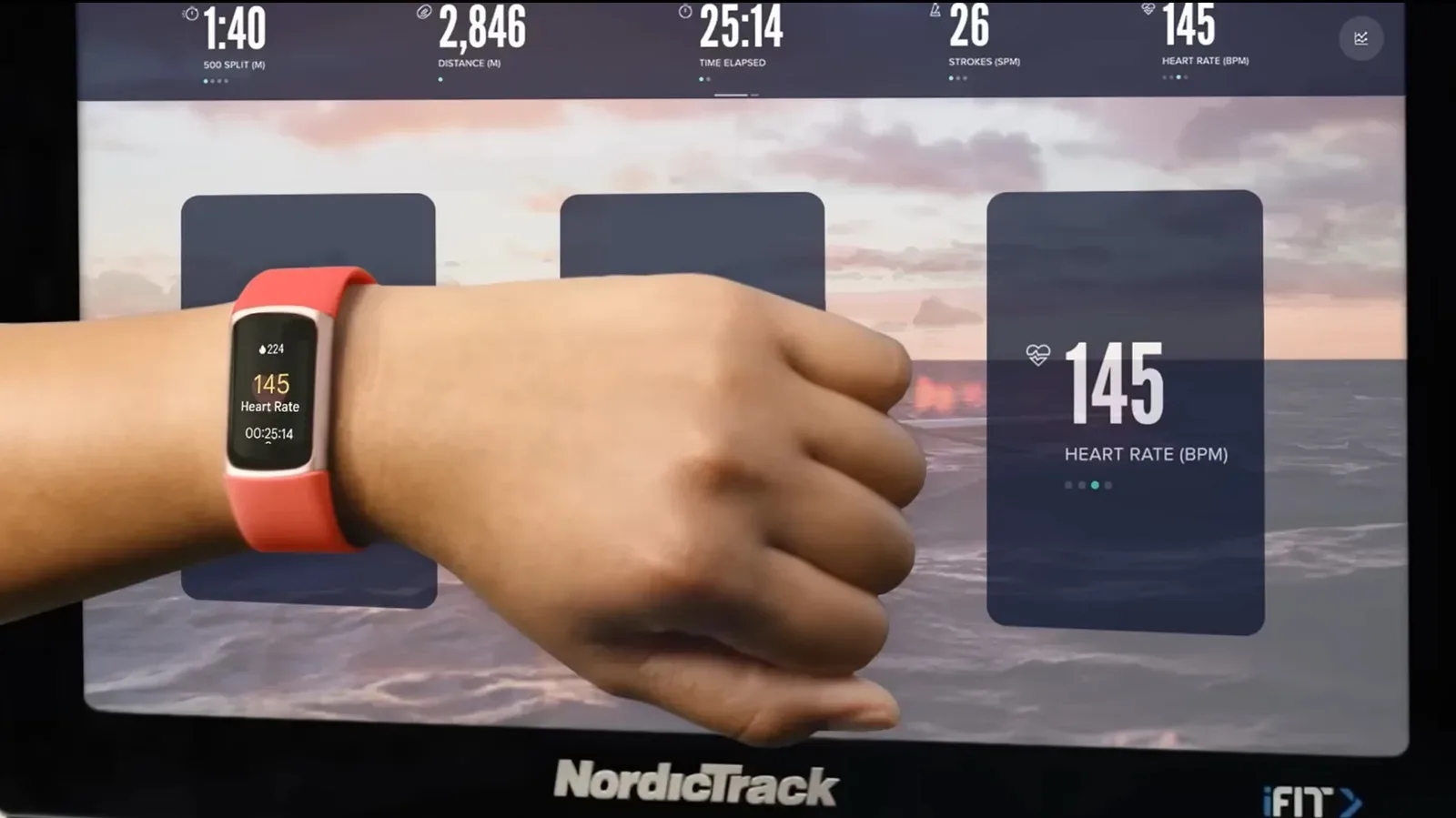
A Fitbit heart rate variability reading can look deceptively simple: one number, measured in milliseconds, sitting near more familiar health figures such as resting heart rate. That simplicity can invite the wrong question. If one person sees 24 ms and another sees 80 ms, it is tempting to assume the larger result is automatically better.
It is not a leaderboard. Heart rate variability, usually shortened to HRV, is much more useful as a record of change within one person’s usual pattern. Age, fitness and individual physiology can all affect the number. A reading that is normal for one wearer may be unusual for another. The practical value of Fitbit’s measurement is therefore less about beating somebody else’s result and more about spotting whether your own result has shifted meaningfully over days and weeks.
That distinction matters for anyone using wearable data to make everyday decisions about rest, exercise and workload. A single low HRV result does not diagnose illness or identify a specific cause. It can, however, become a useful prompt to look at the bigger picture: sleep, recent training, stress, alcohol consumption, resting heart rate and how you feel.
What heart rate variability actually measures
Heart rate is usually expressed as beats per minute, or bpm. If a wearable reports 60 bpm, it is describing an average rate over a period of time. It does not mean each heartbeat arrives on a perfectly fixed one-second schedule.
HRV measures the small differences in timing between consecutive heartbeats. Fitbit reports this value in milliseconds, not beats per minute. Those slight timing changes are influenced by the autonomic nervous system, the part of the nervous system involved in regulating responses associated with stress and relaxation.
This is why HRV should not be read like a live exercise metric. A heart-rate number can be watched while activity is happening, while Fitbit’s HRV figure is derived from a qualifying sleep period and is intended to describe a different kind of pattern. It offers a window into how the body may be responding to strain and recovery, but it does not provide a tidy explanation for why a number moved.
Fitbit’s optical heart-rate sensor estimates the intervals between beats. The resulting data is then calculated using root mean square of successive differences, or RMSSD. The name is technical, but the important user-facing detail is simple: Fitbit’s HRV result comes from differences between successive beat intervals and is presented in milliseconds.
Why Fitbit calculates HRV during sleep
Fitbit uses the longest sleep period in the previous 24 hours for its HRV calculation. The sleep period must last longer than three hours. This approach helps explain two common experiences: the figure may not appear immediately after a short or disrupted night, and it is not a measurement designed to update as you go about the day.
Related coverage includes How to Read Fitbit HRV Trends Without Chasing a Perfect Score.
If there was not enough qualifying sleep, or the sensor did not gather enough usable information, there may be no HRV value for that day. Missing data is not itself a health verdict. It means the device did not have the required sleep duration or adequate sensor data to produce the reading.
Optical measurement also comes with practical limits. The sensor is estimating heartbeat timing through an optical signal, rather than recording the heart’s electrical activity directly. Movement and sensor placement can affect readings. An ECG, by contrast, measures electrical activity directly. This does not make an optical wearable useless; it does mean users should regard the number as a wearable trend measurement with real-world variables, not laboratory certainty.
For a broader reminder that consumer device details and methods matter before interpreting their outputs, even routine tasks such as identifying an AirPods generation by model or serial number benefit from checking exactly which product is in use. With HRV, the calculation method matters just as much.
RMSSD is not the same as every other HRV number
One reason cross-device comparisons can become confusing is that “HRV” is an umbrella label, not necessarily one identical measurement everywhere. Fitbit uses RMSSD. Apple Health’s standard HRV measurement on the Watch 12 uses SDNN, a different HRV calculation.
That means an HRV figure from one platform should not automatically be compared with an HRV figure from another as if they were interchangeable scores. The safest comparison is generally within the same person, on the same device and measurement method, over time. Switching brands or calculation methods can make a perceived improvement or decline difficult to interpret.
A 2024 study of the Fitbit Charge 4 found moderate-to-strong agreement with reference HRV measurements, while also finding a tendency for the device to underestimate HRV. That is another reason not to turn a displayed number into an absolute judgment about health or fitness. Consistency and direction of change are often more informative than treating any one value as a precise universal benchmark.
Your baseline is the number that gives HRV meaning
There is no single Fitbit HRV number that qualifies as universally “good.” A person whose usual value sits around 25 ms would not necessarily be surprised by a 20 ms result. For someone whose normal pattern is closer to 70 ms, the same 20 ms reading would be a much larger departure.
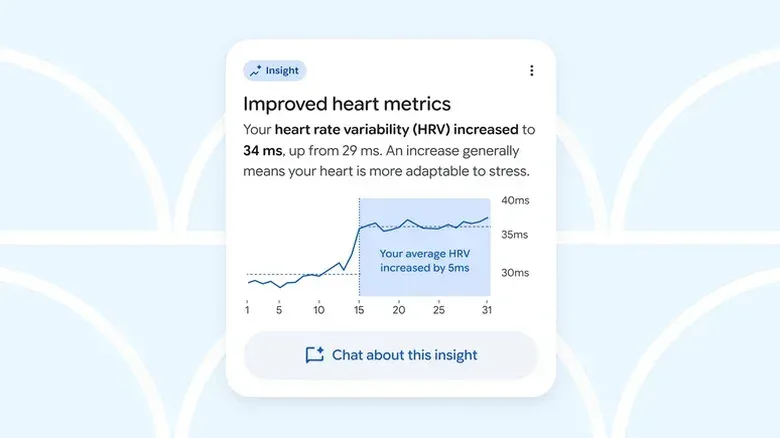
Fitbit provides day-to-day and longer-term trends, along with a personal range based on up to 30 days of data. That personal range is the useful frame of reference. Instead of asking whether a particular result is impressive, ask whether it is typical for you.
A practical way to review the data
- Start with the longer trend. One result can be noisy. Look for whether readings remain around your established range or depart from it repeatedly.
- Check the sleep context. Because Fitbit calculates HRV from the longest qualifying sleep period, a poor or short night is directly relevant to how much confidence to place in a day’s reading.
- Pair it with resting heart rate and sleep patterns. A persistent HRV decrease is more meaningful when resting heart rate or sleep is also changing.
- Consider recent strain without assuming a cause. A demanding workout, stress, alcohol consumption and bad sleep can all coincide with HRV changes. The wearable cannot identify which factor was responsible.
- Respond proportionately. After several demanding days, easing back may be sensible. A lower HRV number by itself does not mean you are sick.
This is a deliberately less dramatic way to use a wearable, but it is more defensible. HRV is most helpful as context for a pattern you can observe, not as an instruction delivered by a single morning notification.
How HRV fits into Fitbit Readiness
Google’s Readiness score combines HRV with resting heart rate and sleep to estimate recovery. That combination is useful because it avoids treating HRV as the only relevant signal. Google classifies a Readiness score below 30 as low.
Even so, a combined score remains an estimate rather than a diagnosis. Wearable summaries can organize information that might otherwise be easy to overlook, but they do not establish the reason behind a result. A low score may encourage a user to reassess recovery and consider taking things easier; it does not confirm infection, overtraining or any other particular condition.
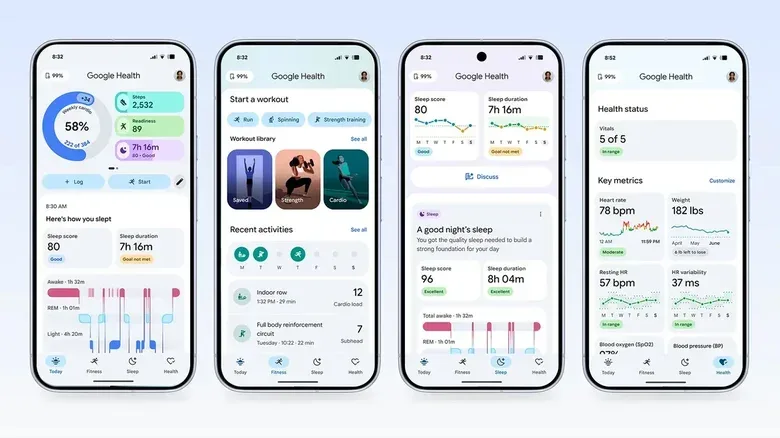
Compatible Fitbit devices can track basic HRV without a Google Health Premium subscription. The measurement can be found in Google Health, formerly the Fitbit app, through Health > Vitals > Heart rate variability. The important feature is not merely finding the latest number, but using the app’s longer-term view to establish what “normal” has looked like for you.
What a change can—and cannot—tell you
A lower HRV result can follow poor sleep, a particularly hard workout, stress or alcohol consumption. Those are plausible contexts supplied by the data, not a checklist that can prove a cause in any individual case. Several factors may overlap, and the device cannot untangle them.
Likewise, a lower reading alone does not establish that something is wrong. Wearable measurements are better at showing that a change occurred than explaining why it occurred. That is the key limitation to remember before reacting to an isolated figure.
A sustained decrease deserves more attention, particularly when it arrives alongside changes in resting heart rate or sleep patterns. If changes continue, especially if symptoms are also present, the appropriate next step is to speak with a health care provider. A Fitbit can help track a pattern, but it cannot replace clinical evaluation or determine the cause of that pattern.
The useful takeaway: track the trend, not the trophy
Fitbit HRV is not a score to chase and not a universal measurement of who is more recovered, fitter or healthier. It is a sleep-based estimate of beat-to-beat timing variation, calculated with RMSSD and expressed in milliseconds. Its greatest use is personal: building enough history to recognize what is normal for you, then noticing when several related signals start to move together.
That approach makes the data less flashy, but more practical. Treat an unexpected result as a reason to check the surrounding context. Treat a persistent pattern, especially one accompanied by symptoms or shifts in sleep and resting heart rate, as a reason to seek professional advice. And treat another person’s number as exactly what it is: their baseline, not yours.