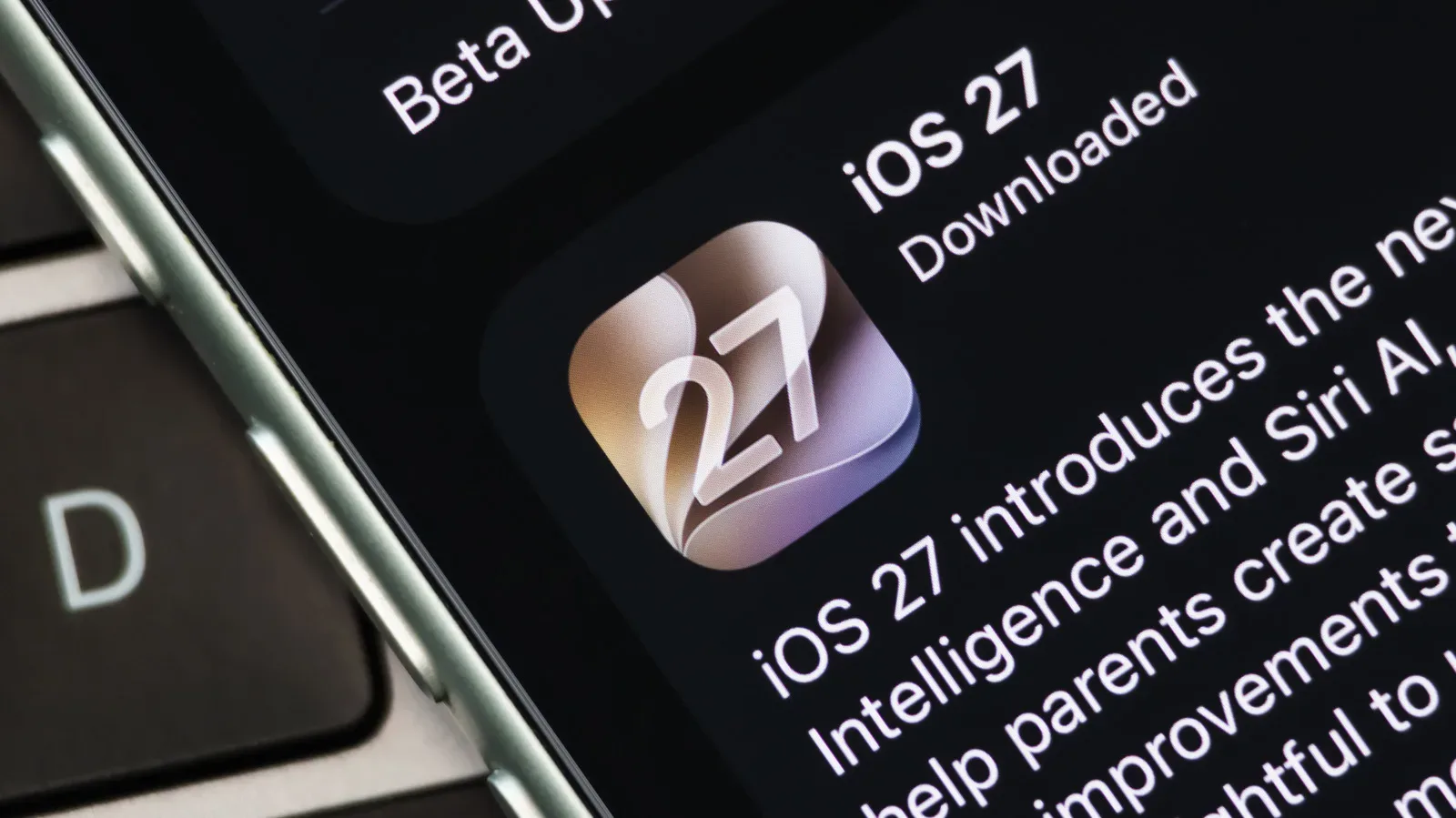
European Union iPhone and iPad owners may need to keep waiting for Apple’s upgraded Siri AI experience. A reported best-case estimate puts the remaining delay at roughly five months, with the possibility that access could take longer as Apple works through compliance questions related to the EU’s digital rules.
The important caveat is that this is not a confirmed launch timetable. It is a reported assessment of a moving regulatory situation, not a date Apple has publicly guaranteed. Still, the difference between a five-month best case and an open-ended longer delay matters: EU customers could be looking at a prolonged platform split in which the same family of devices does not receive the same Siri AI availability at the same time.
What is and is not available in the EU
The reported availability picture is unusually specific. The upgraded Siri AI is not available in the EU on iPhone or iPad, while EU users can access it on Mac. That means this is not described as a blanket regional absence across Apple hardware. It is instead a device-category gap inside one ecosystem.
For people who use several Apple products, that distinction is likely to be the practical frustration. A feature’s availability may depend not only on the country or region attached to an account, but also on which device a person happens to be holding. Someone moving between a Mac at a desk and an iPhone on the go could encounter different Siri AI access despite remaining in the same region and using the same broader Apple environment.
That kind of mismatch can make a product transition feel less straightforward than a simple “available” or “unavailable” label. Customers considering an iPhone or iPad purchase in the EU cannot assume that an AI-related Siri capability accessible on a Mac will be present on those mobile devices as well.
Why the delay is being linked to digital-rule compliance
The reported hold-up is connected to Apple’s negotiations over compliance with the EU’s digital rules. “Compliance” in this context means meeting legal and regulatory obligations that apply in the bloc. It does not necessarily mean that a feature has failed technically, nor does it establish that there is one single obstacle preventing release. The available reporting instead points to an unresolved process in which product availability and regulatory requirements are intertwined.
That distinction is worth keeping clear. Software features can be delayed for many reasons, including engineering readiness, language support, account requirements, regional partnerships, privacy design, or legal obligations. In this case, the supplied information specifically identifies negotiations around EU digital rules as the relevant issue. It does not provide a detailed list of demands, a final agreement, or a fixed deployment plan.
For users, the immediate outcome is simpler than the legal mechanics: iPhone and iPad access remains absent in the EU, and there is no short, certain countdown to change that position. A five-month period is framed as the optimistic end of the reported estimate rather than a target customers should treat as assured.
A familiar shape to the wider Apple Intelligence rollout
The situation has been compared with the delayed EU rollout of Apple Intelligence. That comparison does not prove the two situations are identical, but it does place the Siri AI delay in a recognizable pattern: new AI capabilities can arrive on different schedules depending on region and device.
For anyone trying to make a purchase decision, regional feature timing deserves to be treated as part of the product description, not as a footnote. Hardware specifications generally travel well from one market to another; software services and AI experiences often do not. Their availability can be affected by rules, negotiations and deployment decisions that are separate from the physical device in a shopper’s hand.
The broader lesson is especially relevant when a company markets an ecosystem. Ecosystem benefits rely on consistency: a feature is more valuable when it is predictable across the devices a person owns. A Mac-only route to a particular Siri AI capability may be useful for EU users who already work on a Mac, but it is not a substitute for having the same option on the iPhone and iPad where many everyday requests originate.
Analysis: the customer pressure theory
One interpretation offered in the reporting is that Apple may be withholding the iPhone and iPad upgrade in an effort to put pressure on the European Commission, on the theory that disappointed customers could push for a different regulatory approach. This is analysis, not an established fact about Apple’s strategy.
It is also a difficult theory to verify from the outside. A delayed feature can produce customer dissatisfaction regardless of whether a company intended it as leverage. Equally, public pressure rarely resolves a complicated regulatory issue quickly or predictably. The key point for readers is that the reported motive should not be confused with a formal statement of intent or a guarantee that complaints would alter the timeline.
There are two separate questions here. The first is why the mobile-device version is delayed; the reporting presents an interpretation centered on negotiations and pressure. The second is when it will arrive; the only timing indication is that around five months would be an absolute best-case scenario, and even that may prove too optimistic. Neither question currently has a definitive public resolution in the information available.
What EU iPhone and iPad users can reasonably take from this
- Do not treat a five-month wait as a promise. It is described as the most favorable scenario, not a confirmed release window.
- Expect device differences to matter. Siri AI access in the EU is reported as available on Mac but unavailable on iPhone and iPad.
- Separate present access from future expectations. A future rollout is possible, but the timeline may extend beyond the best-case estimate.
- Be cautious about ecosystem assumptions. Access to an Apple feature on one product does not automatically mean it is enabled on every Apple device in the same region.
There is no practical workaround or alternate release route established by the available information, so it would be unwise to infer one. The clearest current position is simply that EU users who want the upgraded Siri AI on iPhone or iPad remain in a waiting period, even though Mac access is available.
Apple users tracking several small changes across the company’s services may also be interested in the reported expansion of iCloud Mail alias limits. That is a separate matter, but it is another reminder that Apple’s software experience is assembled from many individual capabilities, each with its own rollout conditions and limitations.
What to watch next
The meaningful developments will be signs that the compliance discussions have reached a workable outcome, along with clear confirmation that iPhone and iPad availability in the EU has changed. Until then, customers should avoid reading the Mac availability as proof that mobile access is imminent. The product distinction is explicit, and the time estimate remains uncertain.
For now, the upgraded Siri AI has created an awkward split for European Apple users: available on Mac, absent on iPhone and iPad, and potentially still months away from parity. The next update that matters is not another optimistic estimate, but a definitive change in availability.