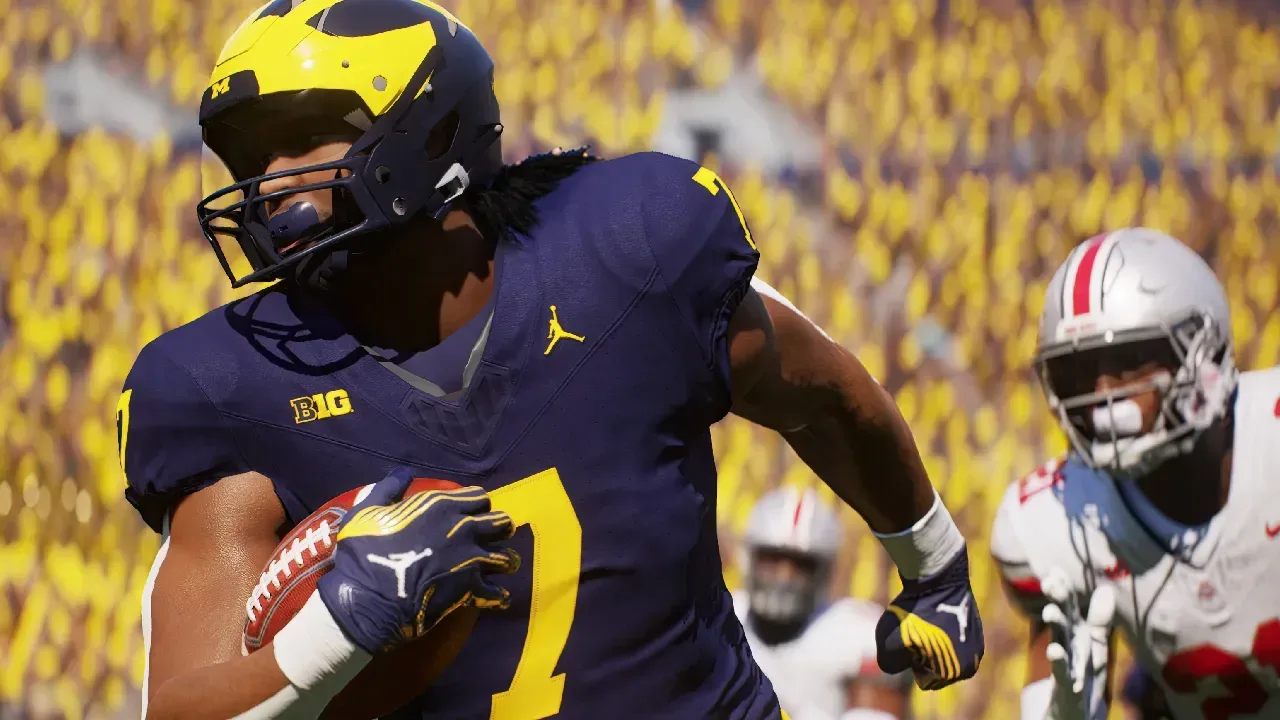
EA Sports College Football 27 arrives with the kind of expectation normally reserved for a highly ranked junior quarterback: the flashes are already there, the crowd knows the ceiling, and the next step has to turn promise into a full-season performance. On the field, this installment does exactly that more often than not. The action is faster, rougher, and more dependent on timing, while its new coaching-and-program-building tools make Dynasty particularly compelling. Yet a troubling emphasis on paid progression casts a large shadow over Road to Glory and Dynasty, modes that should thrive on patience, growth, and the stories players create over many seasons.
The result is a college football game capable of producing spectacular Saturdays, from wet-weather fourth-quarter drama to absurd mascot sprints, while also asking uncomfortable questions about what happens when monetization reaches modes built around long-term investment. CFB27 is not short on reasons to play. It is short on reasons to welcome every new shortcut placed in the path of playing it naturally.
The field is where CFB27 earns its cheers
College football is an emotional, high-speed sport where tiny decisions can become enormous highlights or immediate disasters. CFB27 leans into that volatility. Receivers and rushers look for their advantage right as the ball is snapped. Defensive backs get physical with wideouts, both at the line and through routes. Quarterbacks can sell out near the goal line, and defensive stops ask for more active control than a simple button press.
One especially welcome change is the stick-based approach to wrapping up larger ball carriers. It brings a more tactile feel to pursuing and finishing tackles, fitting a game that wants every encounter to carry force. Passing also benefits from the stronger focus on narrow windows, timing, and risk. Threading a throw between defenders or attempting a time-sensitive catch can create the kind of moment that demands an instant replay, whether the opponent is a person or the CPU.
The game’s presentation supports that energy. Severe weather makes contests feel even more volatile rather than merely decorating the stadium. Sudden rain or snow can turn a routine late-game possession into a dramatic sequence, and the pageantry remains a central strength. Clemson’s run down The Hill, complete with night pyrotechnics and a Tiger formed by drones above the stadium, is exactly the kind of scene a college football game needs to sell.
Better still, EA Tiburon has included a detailed skills trainer in the main menu. With fresh interactions and adjustments across offense and defense, that accessible teaching space is an important addition. Football games can sometimes mistake complexity for depth and leave newcomers to learn by losing. A dedicated trainer gives players a practical route to understand the systems before they are thrown into a rivalry game with the stadium roaring.
Road to Glory expands the positions, not the life around them
Road to Glory benefits substantially from the improved football itself and from new position options: edge, free safety, and tight end. Each offers a distinct relationship to the action. Edge players are near the ball constantly, fighting through double teams and chips while trying to beat blockers or chase runners. That proximity makes their progression feel more immediate; pressure and production are never far away.
Free safety provides the opposite experience. The role can be strategically meaningful, but it is also dependent on what an offense chooses to do. When opponents do not test deep zones, there may be little opportunity to affect the game. A safety positioned too far back to help against the run can spend long stretches waiting for a pass that never comes. That is authentic to the position in one sense, but it can be frustrating in a player-career format that needs steady engagement.
Tight end appears to strike the most enjoyable balance. The position can contribute as a pass catcher and blocker, shifting from contested receptions over the middle to flattening rushers in the run game. It suits the fantasy at the heart of Road to Glory: becoming a versatile campus star rather than simply chasing a stat line.
Off the field, though, Road to Glory struggles to make the rest of a student-athlete’s week matter. Academics, leadership, health, fitness, and brand responsibilities sound like the foundation for a rich career structure. In practice, they do not carry the same weight as the actual games. Weekly practices and matchups dominate, while occasional invitations from teammates, coaches, classmates, or sponsors often amount to selecting an option for a temporary buff or penalty. Skip class for a party, watch film, appear in a commercial: the choices have flavor, but not enough lasting consequence.
Presentation inconsistencies make that shallow structure harder to overlook. A coach can react as though a player failed despite a dramatic winning touchdown, while a campus newspaper may discuss a character as a quarterback despite that character being a linebacker. Those details may sound small individually, but Road to Glory depends on maintaining the illusion that the player’s specific career is being recognized. When the game loses track of the position or moment, the story loses credibility.
Dynasty’s Blueprint is a true program-builder
Dynasty is the clearest argument for CFB27’s ambition. Dynamic athletic director expectations give programs more individual character and alter what success means from school to school. Alabama expects playoff appearances and has little patience for decline. Kent State, following a middling 2025 season and a major talent loss, is positioned as a slower rebuild where progress should be measured in seasons, not instantly transformed into a title chase.
That difference can turn identical results into entirely different stories. A loss to Ohio State while controlling Michigan can create immediate job pressure. At a smaller school, landing a first three-star recruit after a bowl victory can make a coach feel like the center of a local revival. These are the college football stakes that a mode like Dynasty needs: not every team should have the same runway, and not every win should be valued equally.
Blueprint pushes the mode further by granting more direct control over the machinery behind a program. Dynasty Points can be devoted to resources such as ice baths that reduce player wear, or toward support staff in areas like sports performance to improve offseason development. Recruiting, retaining, and developing talent becomes a more readable and satisfying long-term process because players can see how their choices shape the institution around the roster.
There is a recruiting-balance problem, however. Major programs with enormous NIL resources can hoard elite prospects to an immersion-breaking extent. Georgia bringing in 25 four-star recruits and nine five-star recruits in a single year is less a healthy competitive landscape than a talent vacuum with a fight song. College football’s real distribution of resources is undeniably uneven, but Dynasty still needs guardrails to stop its world from becoming hopelessly concentrated.
Paid acceleration is the game’s most damaging call
The larger problem is that CFB27 introduces microtransactions directly into progression in Road to Glory and Dynasty. Road to Glory allows ability points to be purchased, letting players bypass the gradual development that should be central to a career mode. Dynasty similarly steers coach progression toward spending after removing options to accelerate it through ordinary play. Players can either advance slowly across a 30-year career or pay to open preferred skills sooner.
This is a particularly strange choice because both modes are at their best when the climb is meaningful. The appeal of Road to Glory is earning growth through performances and decisions. The appeal of Dynasty is building a program piece by piece, from the training infrastructure to the recruiting board. Selling a faster route risks turning systems designed to reward investment into systems that quietly encourage players not to invest.
College Football Ultimate Team remains the most overtly monetized area, built around challenges, currency, card packs, and the appeal of obtaining stronger players. It is a familiar structure and will suit some competitive players. But advertisements for Ultimate Team spread across the main menu, making its presence difficult to ignore even for those who would rather spend their time coaching, recruiting, or building a single athlete’s career.
It is worth remembering that couch play has its own unwritten etiquette, especially when one person has just discovered a hilariously overpowered move; the rules of couch multiplayer are often as important as the game itself. CFB27 provides a prime venue for that kind of shared chaos through Mascot Mashup.
Mascot Mashup provides the necessary nonsense
Mascot Mashup revives the spirit of the old arcade-style NCAA Football diversions. More than 100 teams of mascots can take the field, and unlocking them only requires winning a Play Now game with the corresponding college. It is deliberately silly relief from recruiting spreadsheets, rivalry pressure, and elaborate depth charts.
An Indiana Hoosier juking a Stanford Tree and breaking free for 60 yards is not a simulation breakthrough. It is something better: an acknowledgement that sports games need room for stupid, memorable joy. Mascot Mashup is a fine solo distraction and an even better reason to hand over a controller. For anyone planning a local session, it pairs naturally with a quick refresher on couch multiplayer’s unwritten rules.
EA Sports College Football 27 has a formidable foundation. Its enhanced on-field play captures the snap-to-whistle urgency of the sport, Dynasty’s Blueprint makes school-building deeply engaging, and Mascot Mashup supplies welcome laughs. The game’s major misstep is not a missed assignment on the field but a design decision off it: putting purchasable acceleration into modes whose best qualities depend on progression feeling earned. CFB27 makes enough winning plays to remain exciting, but its next season needs to protect the long game rather than sell players a way around it.