
A reported account of Dario Amodei’s time at OpenAI has revived one of the grimmest thought experiments to attach itself to video games in a while: if artificial intelligence eliminates large numbers of jobs, could sufficiently immersive games keep people content enough to avert political unrest?
The reported suggestion dates to Amodei’s OpenAI years, from 2016 to 2020, and is attributed to discussions reflected in widely circulated Slack messages. It is important to keep the claim in its proper frame. This is an account of an alleged viewpoint from years ago, not a newly stated policy proposal, and there is no indication in the material available here that Amodei still holds it. Even so, the idea has landed with considerable force because the underlying anxiety—AI’s potential effect on work—is no longer an abstract science-fiction prompt.
It also places games in an unusually uncomfortable role. Games can be art, competition, social space, hobby, escape, creative toolkit, and yes, a very effective way to turn “one more mission” into the disappearance of an entire evening. But presenting them as a means of pacifying people who have lost their livelihoods transforms leisure into something else: a substitute for solving the conditions that made leisure necessary in the first place.
The key distinction: entertainment is not an economic plan
The shorthand version of the reported idea is simple: more immersive games might reduce strife caused by AI-related unemployment. The problem is that joblessness is not merely empty calendar space waiting for a large map, a seasonal battle pass, or a truly unreasonable number of side activities.
Work provides income, obviously, but its effects can extend further. It can supply routine, social contact, a sense of contribution, professional identity, and a way to plan for the future. None of those benefits apply evenly to every job or every person, and losing a job does not mean losing all purpose. Still, the public criticism captured in reactions to the report gets at a basic material issue: people need a way to pay for housing, food, healthcare where relevant, devices, internet access, and games themselves. A virtual life cannot casually absorb the cost of the physical one.
That is why the phrase political strife matters so much. Political disagreement arising from economic displacement is not necessarily a design flaw to be smoothed away with better entertainment. It can be a response to real questions: Who receives the gains from higher productivity? Who bears the risk when jobs disappear? What support is available during a transition? Who gets a say over the technologies changing their work?
Games might offer comfort, connection, challenge, and time away from those questions. They do not answer them by themselves. Treating players as an audience that must be kept quiet is very different from treating them as citizens with agency.
Why the remark is resonating now
The anecdote is resurfacing amid broad concern about AI and employment. Survey findings released by Pew Research Center in September showed that respondents in 34 of 37 countries surveyed earlier in the year generally expected AI to result in fewer jobs rather than more. In the United States, the share of people expecting job losses over the coming 20 years rose by seven percentage points over two years.
Related coverage includes Report Revisits Dario Amodei's Alleged Idea of Games as an Answer to AI Job Loss.
Those results do not establish that a particular future of mass layoffs is inevitable. Surveys measure public expectations, not a completed economic forecast. But expectations matter. They reveal skepticism toward a familiar corporate promise: technology will make work more productive, and the eventual benefits will be widely shared. For people who believe the immediate result may instead be displacement, “don’t worry, the games will be amazing” is unlikely to read as reassurance.
There is an additional irony in assigning this civic responsibility to games. The games industry is itself connected to labor: developers, artists, writers, performers, quality-assurance workers, community teams, support staff, and many others make the experiences players value. An argument that imagines AI displacing workers at scale while games absorb the consequences cannot skip the human labor involved in creating, maintaining, and supporting those games.
What “immersive” actually means—and what it cannot mean
Immersion is the feeling that a player is absorbed in a game’s world, systems, story, or social environment. It can come from visual detail, convincing sound, responsive controls, role-playing, cooperation with other players, meaningful decisions, or simply a loop so compelling that checking the time becomes a tactical error. Immersion is not one technology and does not require virtual reality.
Calling a game immersive, however, says little about whether it can provide a fulfilling life. A game can generate real feelings of accomplishment, belonging, frustration, curiosity, and joy. Players can form communities and friendships through them. That is not trivial, and it should not be dismissed as fake merely because it happens through a screen.
But a fulfilling life is wider than sustained engagement. Games can be part of it without being tasked with replacing every other source of security and meaning. The reported premise asks game design to carry an implausibly vast social burden: not just entertaining people, but resolving the anger and instability that can follow a loss of income and influence. No amount of environmental storytelling should be expected to patch that system.
There is also a practical mismatch between voluntary play and managed distraction. People choose games for countless reasons. A society arranging entertainment as a way to defuse economic dissatisfaction is not really celebrating play; it is attempting to use play instrumentally. The difference is not semantic. Choice is central to why leisure feels restorative rather than compulsory.
The post-scarcity answer depends on the part before “games”
Defenders of an AI-heavy future sometimes answer the affordability objection with a theory of abundance. Elon Musk has publicly promoted the prospect of a post-scarcity economy: a condition in which AI makes goods and services so plentiful that conventional labor and money lose their necessity.
Post-scarcity does not simply mean that software can produce more digital content. It describes a much more sweeping proposition: people could obtain what they need without the ordinary pressures of earning money through work because production has become extraordinarily abundant. In the scenario described here, that is the missing bridge between AI-driven job loss and plentiful free time for games.
It is a theoretical answer to a real question, but it is not an answer established by the reported anecdote. It assumes that abundance reaches people broadly and that essentials are available, not merely that automated systems can create more output. If those conditions exist, people may indeed have far more freedom to spend time on games, art, care, study, sport, community, or doing absolutely nothing productive for a while. If they do not, asking whether a game can occupy someone indefinitely misses the central issue.
Put less grandly: before debating whether an open world can keep someone busy forever, it helps to know whether they can afford a home, a machine to run the game, and an internet connection. The controller is not a social safety net.
Why GTA 6 became the obvious punchline
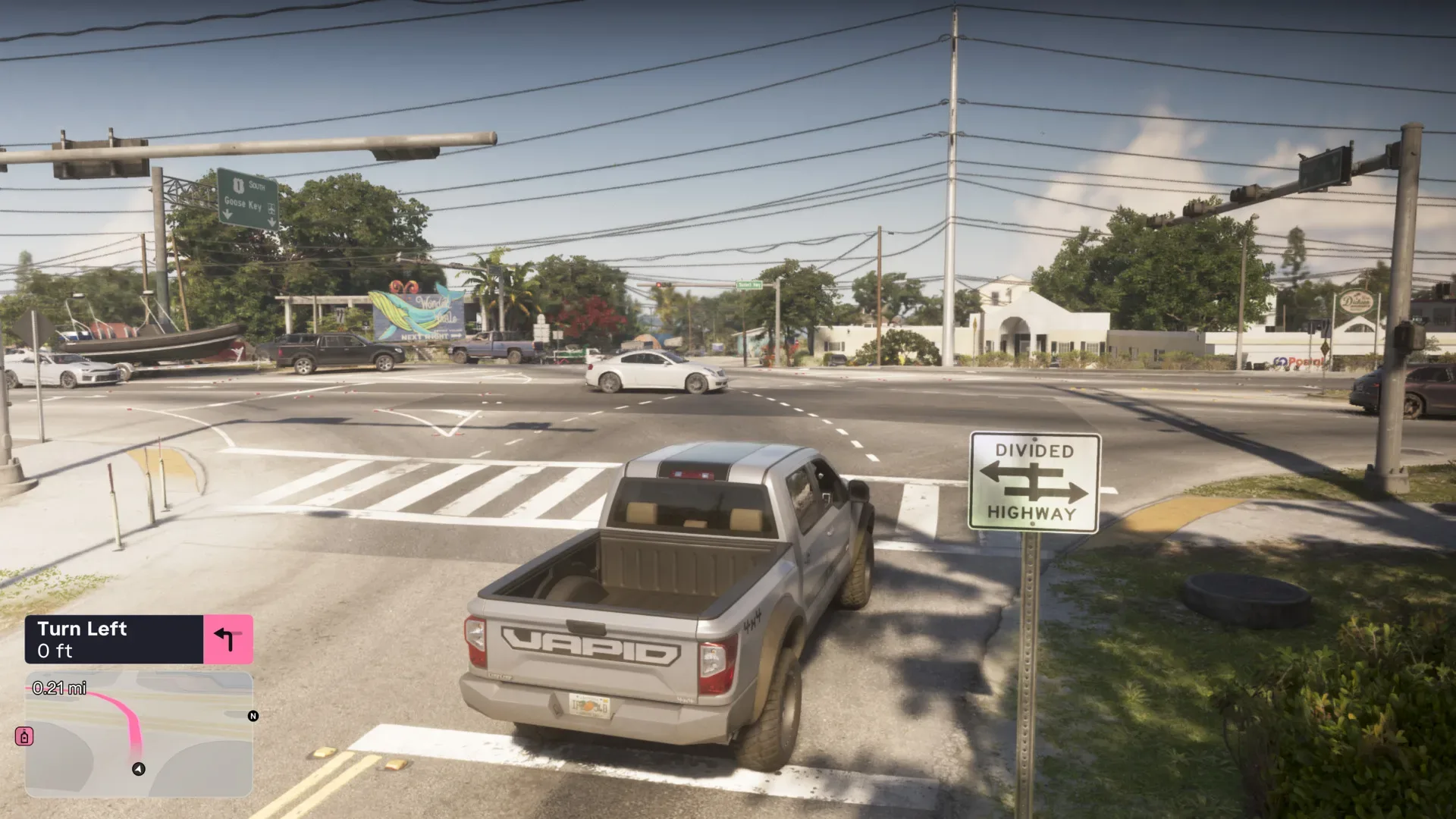
The timing has invited a predictable comparison to GTA 6. A major new open-world game is an easy symbol for the kind of enormous, detailed interactive experience the reported idea appears to have in mind. It is also an easy target for jokes because asking whether any game can keep the public happily occupied forever is a proposition so enormous it makes a 100-percent completion checklist look modest.
GTA 6 is clearly commanding public attention; its cultural spillover has already been visible in unexpected places, including a chart resurgence for Carly Rae Jepsen’s “Run Away With Me”. That kind of attention demonstrates the reach of blockbuster games, not their ability to function as permanent civic infrastructure.
Even the biggest game eventually encounters the player’s limits. People finish stories, exhaust activities, move between games, return after a break, or decide they would rather be outside, with friends, learning something, working on something, or simply not chasing another icon on a map. A game’s ability to hold attention is not a measure of its capacity to replace autonomy or economic stability.
And the most enduring games often endure because players bring their own goals and communities to them. That is a mark of player creativity, not evidence that a commercial entertainment product can resolve structural economic disruption. Turning the question into “could GTA 6 last forever?” makes for a good meme; it also makes the stakes safely absurd. The serious issue is what happens to people if technological change disrupts employment faster than institutions respond.
Games deserve a better role in the conversation
The backlash is not a rejection of games. If anything, it reflects how seriously people take them. Players know games can matter profoundly. They can offer difficult goals, shared jokes, emotional stories, social spaces, and a rare sense that failure is recoverable because the checkpoint is right there. That value is real precisely because games are chosen experiences, not because they are a sedative administered after a social contract has been withdrawn.
A healthier discussion would separate two propositions that are too easily fused together. The first is that AI may reshape employment substantially. The second is that people could have more free time and spend some of it playing increasingly sophisticated games. The second could be true in many possible futures. It does not determine whether the first is just, manageable, or broadly beneficial.
The reported Amodei anecdote is therefore useful less as a blueprint than as a warning about the questions technology leaders need to answer plainly. If AI boosts productivity, how are its benefits distributed? If jobs change or vanish, what protections and opportunities follow? If people gain leisure, is it genuine freedom backed by material security, or merely idleness imposed by exclusion?
Video games can enrich a life. They cannot, on their own, guarantee that life is secure, self-directed, or fair. That distinction is bigger than any virtual city, no matter how much there is to do in it.