
Minor GTA 6 story spoilers follow, including an early Chapter 1 mission.
Grand Theft Auto has always understood that a radio dial can do more than fill silence between collisions with municipal property. In GTA 6, Carly Rae Jepsen’s Run Away With Me is proving that point in a particularly loud, sax-powered way: the 2015 song has returned to music-chart conversation after appearing in the game.
At the start of the week, Run Away With Me sat at No. 84 on Shazam’s music chart and entered the iTunes chart at No. 140. Those positions are a long way from being an all-conquering pop takeover, but they are meaningful for a track that has spent years with a passionate reputation larger than its initial chart peak. The renewed attention also demonstrates how a major game can turn one carefully placed song into a fresh discovery for players.
The track’s original release arrived in 2015. It reached No. 49 on U.S. pop charts at the time, despite widespread acclaim and its standing among many listeners as one of that year’s standout songs. The current uptick does not erase that earlier result; rather, it gives the song a new moment in front of an audience encountering it through Lucia’s story and the neon-tinted world of Vice City.
Why this particular song is sticking
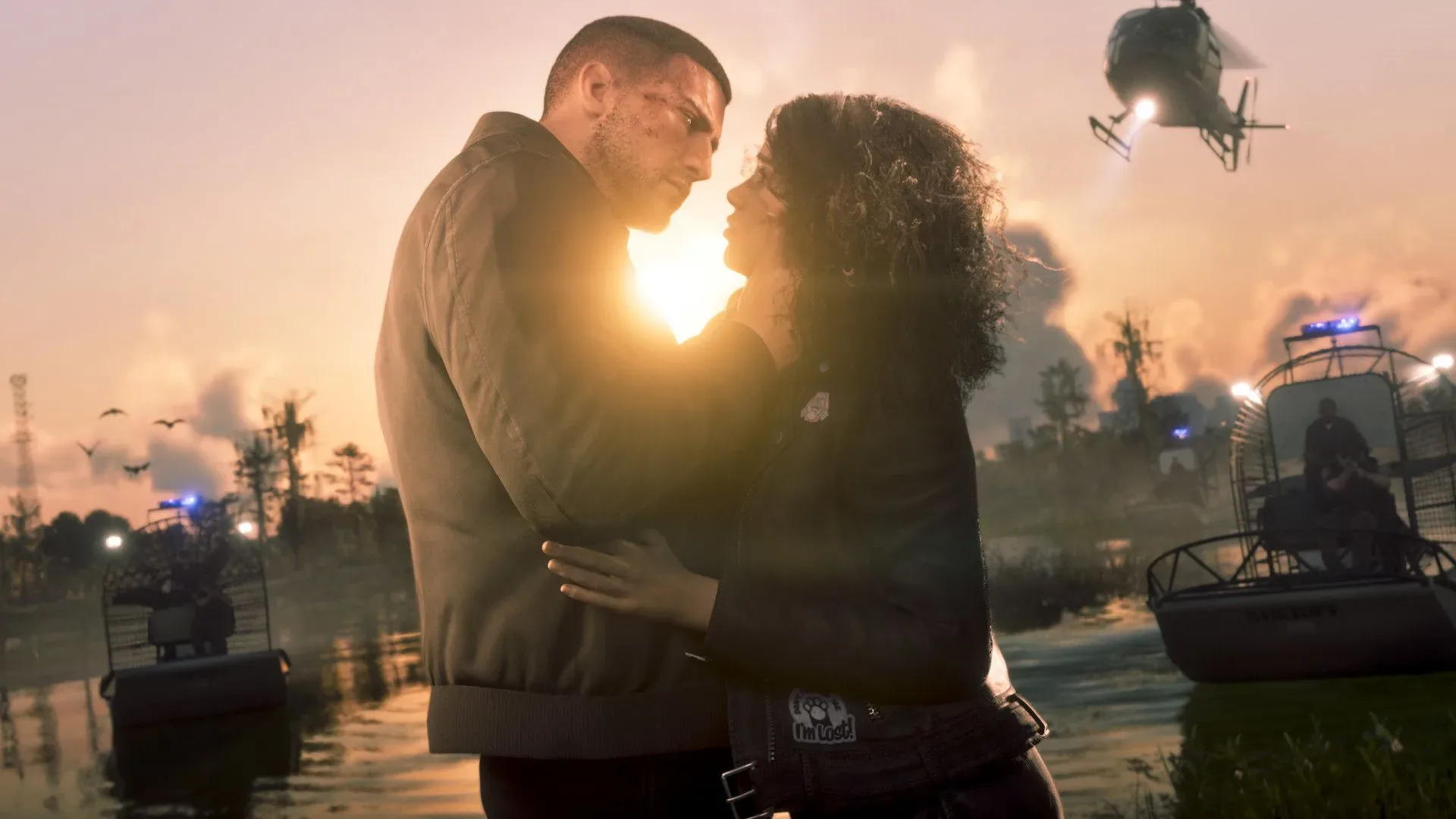
Run Away With Me is available while players scan through GTA 6 radio stations, but its biggest role comes in the Chapter 1 mission Day Release. This is the first mission in which players control Lucia after the prologue. The song plays across the mission and rises in prominence as Lucia takes a jet ski toward a yacht party.
That placement matters. A song heard incidentally while driving can be memorable, but a song tied to a major transition, a playable sequence and an early emotional statement has far more chance of attaching itself to a player’s memory. Here, it accompanies Lucia’s freedom and her hope that a better future could be possible. It is effectively part of the game’s first real welcome to Vice City.
That is the difference between a soundtrack inclusion and a needle drop. The term usually describes a pre-existing recording used at a deliberate dramatic moment in a film, show or game. In this case, the track is not merely background texture for a vehicle ride. Its momentum and sense of release are used to shape how players receive a pivotal early stretch of the campaign.
For a song that many listeners felt was underappreciated on release, that kind of framing can be unusually potent. A player may recognize the chorus, look it up after the mission, add it to a library, then encounter the song’s much-discussed legacy for the first time. The game does not need to explain any of that. The sequence does the persuading.
Related coverage includes GTA 6 Sends Carly Rae Jepsen's 'Run Away With Me' Back Into the Charts.
The GTA 6 music bump reaches beyond one track
Jepsen’s resurgence is part of a broader pattern around the game’s music. Ariana Grande and Zedd’s Break Free is also among the GTA 6-associated songs appearing on the Shazam chart. Flower In A Hurricane, credited to Justice with Tame Impala, SZA, and King Gizzard & the Lizard Wizard, holds the chart’s top spot.
The appearance of several songs at once is important context. It suggests players are not only responding to one nostalgic favorite; they are actively identifying music heard around the game. Shazam is a music-recognition service, so a chart placement there reflects a song being queried by listeners. An iTunes entry, meanwhile, points to activity in a storefront where people can acquire music. They are different measurements, and neither is interchangeable with a single universal definition of popularity, but together they show renewed attention across more than one listening pathway.
Chart positions also move quickly. No. 84 on one chart and No. 140 on another are snapshots, not permanent verdicts on a song’s place in culture. Still, the fact that Run Away With Me has appeared on both following its use in GTA 6 is the clearest point: a song released more than a decade ago has gained a commercial and discovery-driven afterlife from a new interactive context.
A huge game creates a huge listening surface
GTA 6 generated $3.79 billion in its first day, an extraordinary scale that helps explain why the soundtrack is spilling into music charts. The game’s audience is large, and its open-world structure gives players repeated opportunities to hear songs in vehicles, while travelling, and during authored missions. A recording may hit different players at different moments, then become a search, a purchase or an addition to a personal playlist.
There is also an official soundtrack released alongside the game, and it too is charting. Yet the performance of tracks that are not on that album may be the more revealing part of the story. It suggests the game itself, rather than only a companion release, is serving as the discovery engine. Radio selections and mission cues have value beyond the bounds of a conventional album track list.
That distinction matters for players who want to revisit a specific moment. The official soundtrack is one route into GTA 6’s music, but it is not necessarily a complete archive of every track heard in Leonida. If a song catches your ear during a mission or a late-night drive, the most useful detail to remember may be the sequence, station or setting where it played rather than assuming it will appear on the soundtrack release.
What the chart return says about game soundtracks
There is a practical lesson for music fans and game makers alike: placement is context. An old song can feel newly written when it lands beside the right character, location and action. In Day Release, the combination of Lucia taking control of her future, the route toward a yacht party and the track’s expansive pop energy creates a moment viewers and players can mentally replay. The song’s chart movement is the visible result of that replay value.
It also illustrates why soundtrack discussion is rarely just about a list of artists. The same track can have a completely different impact depending on whether it appears for 20 seconds on a station shuffle or is allowed to carry an entire mission. The latter gives a song narrative work to do. It can establish place, express a character’s emotional state, or signal a change in the story without any extra dialogue.
For Jepsen, it is a welcome second run for a recording whose original chart result did not fully reflect the enthusiasm it generated. For GTA 6, it is evidence that the game’s influence is travelling outward: from an early Chapter 1 set piece into searches, downloads and chart placements. And for anyone who first heard the song while steering a jet ski toward Vice City excess, it is a reminder that sometimes the most effective in-game reward is simply the right song arriving at precisely the right second.
Players working through Leonida may also want to keep an eye on ongoing technical changes, including GTA 6 Update 01.002.002’s fixes for crashes, stalled weather and story-blocking phone calls. The music may be making the headlines, but an open-world game this large is also defined by how reliably players can reach its big moments.