Major story spoilers for The Blood of Dawnwalker’s optional Home Sweet Home quest follow.
Some RPG quests are memorable because they hand over a spectacular weapon, introduce a fearsome villain, or produce an absurdly difficult boss. Home Sweet Home, an optional mission in The Blood of Dawnwalker, appears to offer something much less inviting: a dream sequence that takes Coen’s gear away, surrounds him with unusually punishing enemies, and repeatedly sends him back to the beginning.
Yet that aggravation is not merely a detour from the narrative. It is the narrative. The quest’s best idea is its refusal to keep gameplay discomfort and character trauma in separate rooms. Coen is made weak, overwhelmed and unable to reach the people he feels responsible for. Those pressures turn out to be a playable expression of the guilt he has carried since his brother Alin died.
That makes Home Sweet Home a particularly sharp example of ludonarrative design: the relationship between what a game asks players to do and what its story says. The term can sound academic, but the basic question is straightforward: do the mechanics support the drama? Here, the answer is largely yes—even when the result is a mission many players may be glad not to repeat.
A side door into something much more personal
The route into Home Sweet Home is easy to mistake for ordinary exploration. While looking into the clay-baked gargoyles troubling Svartrau, Coen can enter an alchemist’s tower. The main objective points elsewhere, toward bringing the alchemist’s notes to Marat. But climbing farther up the tower and opening a closed door leads somewhere unexpectedly intimate.
Rather than confronting the alchemist, Coen steps into a version of his old family home. His family is gathered at breakfast. His mother, Esme, asks what he wants to eat, and the normality of hearing her voice clearly cuts through his immediate disbelief. The scene establishes the dream’s temptation: this is not simply a hostile illusion, but an opportunity to revisit people and feelings that have been absent from Coen’s life.
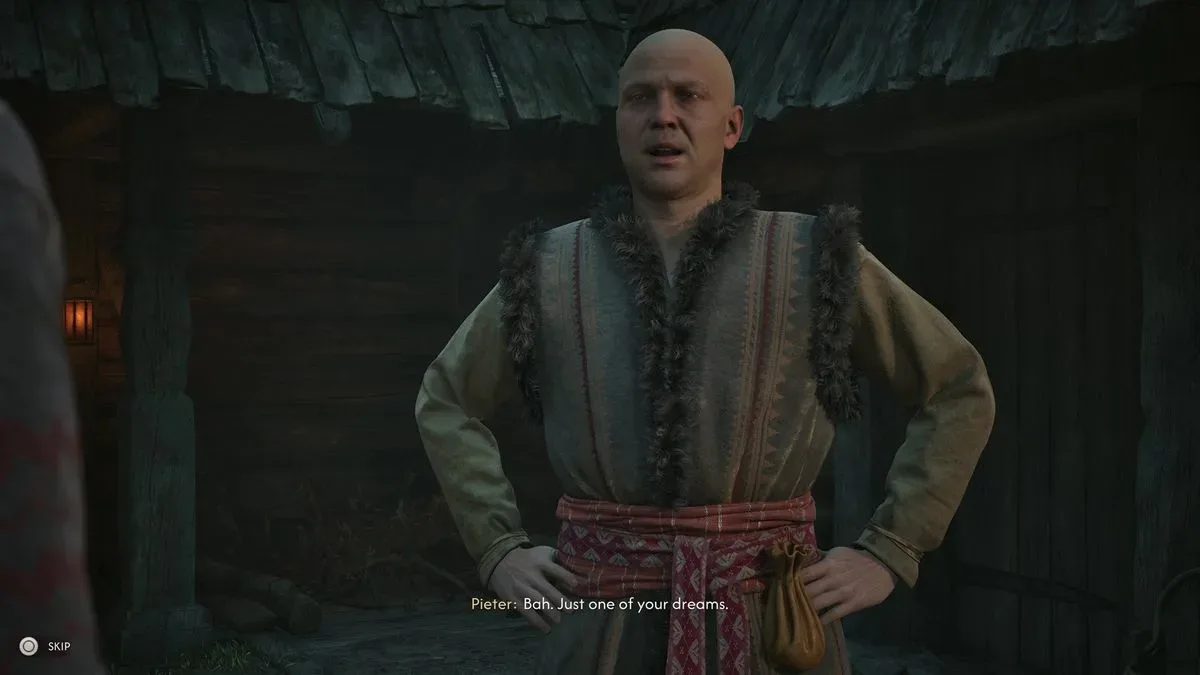
Before this sequence, the game provides fragments about the family. Pieter’s history has begun to emerge, while Esme’s earlier psychological break and the loss of Coen’s younger brother, Alin, are clearly sensitive subjects. Home Sweet Home does not begin by spelling out every missing detail. Instead, it places Coen back in the warmth of a domestic routine that cannot possibly be restored. That contrast does much of the emotional work.
The dream quickly turns violent. Monsters attack, family members scatter, and Coen’s instinct is immediate: save them all. On a plot level, that is a conventional heroic objective. On a character level, it becomes the first clue that the mission is probing an old wound rather than staging a simple supernatural ambush.
Related coverage includes The Blood of Dawnwalker's Most Grueling Optional Quest Turns Trauma Into Gameplay.
Why losing power matters here
Home Sweet Home strips away Coen’s accumulated equipment, potions, trinkets and powerful vampire abilities. In their place is a common sword dealing 40 damage per hit. The difference is not cosmetic. Enemies that would be manageable in Vale Sangora become durable and dangerous, while Coen’s reduced protection makes every hit expensive.
Forced power loss is a familiar RPG trick, and it can feel cheap when it exists solely to manufacture difficulty. Players spend hours building a character; abruptly removing that progress risks making investment feel pointless. This quest earns more patience than most because the loss is thematically specific. Coen is not supposed to feel like an established vampire who can shadowstep out of danger and overwhelm anything in his path. He is returned to a state of helplessness.
The first major fight puts spectral enemies around Esme. With little defense and modest damage output, success relies on directional blocks and parries rather than a comfortable late-game toolkit. A parry is a timed defensive response, generally requiring the player to react at a narrow moment before an incoming attack. It is satisfying when a game gives clear tells and predictable rhythms. It becomes stressful when several fast foes attack at once and one missed beat can remove a major portion of the health bar.
That stress is the point, but it remains a genuine friction point. The quest wants the player to experience Coen’s panic and inadequacy; it also asks them to endure multiple deaths while learning its altered combat conditions. Those are not identical goals. A player can understand the artistic intent and still find the encounter exhausting, especially after becoming accustomed to a far stronger version of Coen.
For anyone returning to the quest, the practical lesson is to treat the dream as its own combat environment. Search the immediate area for consumables, conserve healing items, and do not assume the approach that works in the ordinary world will work here. A quicksave before the larger village-square encounter is also valuable, since the battle is designed to punish unprepared momentum.
The red wraith is the real priority
The village square is where Home Sweet Home shifts from raw attrition into an encounter built around observation. Wraiths emerge in groups, attack quickly and absorb a discouraging amount of damage. Amid the black-cloaked enemies is a red-highlighted spirit. It operates as the priority target: if it remains standing, it can draw health from the other wraiths and continue producing more enemies.
In game-design terms, this is a priority-target mechanic. The encounter appears to be a crowd-control problem—too many enemies, too little damage, too little armor—but its central puzzle is target selection. Beating down ordinary wraiths first only prolongs the danger. Eliminating the red spirit changes the fight’s structure.
That element has a useful narrative echo. Coen’s dream presents a blizzard of emergencies, all demanding his attention at once. But the solution is not to rescue everyone through force of will. The real threat is more central and harder to see: the unresolved grief driving the entire nightmare. The quest does not reveal that connection immediately, but it prepares the player to think beyond the obvious objective marker.
After rescuing his siblings, Coen can head to the church and face a gargoyle. Compared with the wraith swarm, this is a more manageable duel. One opponent allows the player to focus on familiar defensive timing, turning the gargoyle into a brief release valve after the square’s chaos. It also encourages a natural, if mistaken, assumption that the dream is nearly finished.
The loop is not failure—it is denial
Entering the church does not end the sequence. Coen returns to the family home, the breakfast scene begins again, and the dream reveals itself as a loop. A fleeting image of a well provides the crucial clue.
This is where the mission’s structure becomes more deliberate than a standard “beat the enemies, reach the exit” dream level. The first pass establishes the rules of survival. The second offers a chance to engage more deeply with Esme and the family history, while pushing the player to notice that escape requires a different action. The well is not merely a hidden switch. It is the point at which Coen must stop treating the dream as a battlefield and confront what it is showing him.
Interacting with it reveals an angry reflection. Coen calls himself a coward and finally acknowledges that he has neither accepted Alin’s death nor forgiven his own perceived role in it. Calling Alin’s name breaks the loop apart.
That design choice makes the well a strong symbolic device without abandoning player agency. It gives the player an actionable means of moving forward, but the action is confession rather than conquest. The game’s message is not that Coen lacked the combat strength to escape. He lacked the willingness to face the memory he had avoided.
There is also a harsh consequence for overlooking it: ignoring the well can leave Coen trapped in the nightmare loop and lead to one of the game’s secret, bleak endings. That outcome reinforces the quest’s emotional logic. Simply repeating the role of protector does not solve the underlying problem. Coen must recognize the wound beneath that role.
From savior complex to a specific loss
Once the dream begins to fracture, Coen regains his vampire powers and can shadowstep up an icy cliff into a maze of memories. Shadowstep, a movement ability that lets him rapidly traverse otherwise inaccessible space, becomes an apt marker of transition: the powerless loop is over, but mobility alone cannot resolve the past.
The key revelation concerns Alin’s death. The brothers were children playing on a frozen lake when Alin disappeared beneath the ice. Coen’s pain is not framed as proof that he caused the accident. It is framed as the corrosive belief that he should have somehow prevented it—that he should have done more.
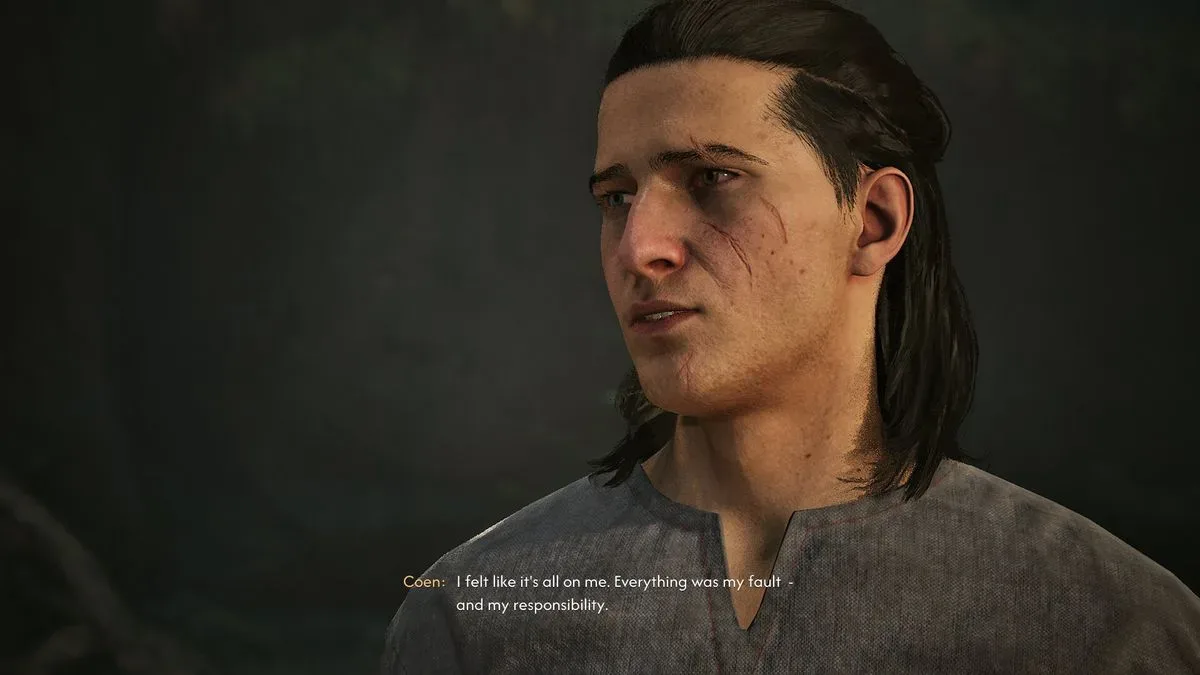
This gives much-needed specificity to Coen’s apparent savior complex. A savior complex is not a formal diagnosis; in everyday use, it describes a compulsive need to fix others’ problems or shoulder responsibility for their safety. In Coen’s case, Home Sweet Home ties that impulse to a childhood catastrophe and to years spent avoiding the place where his brother died.
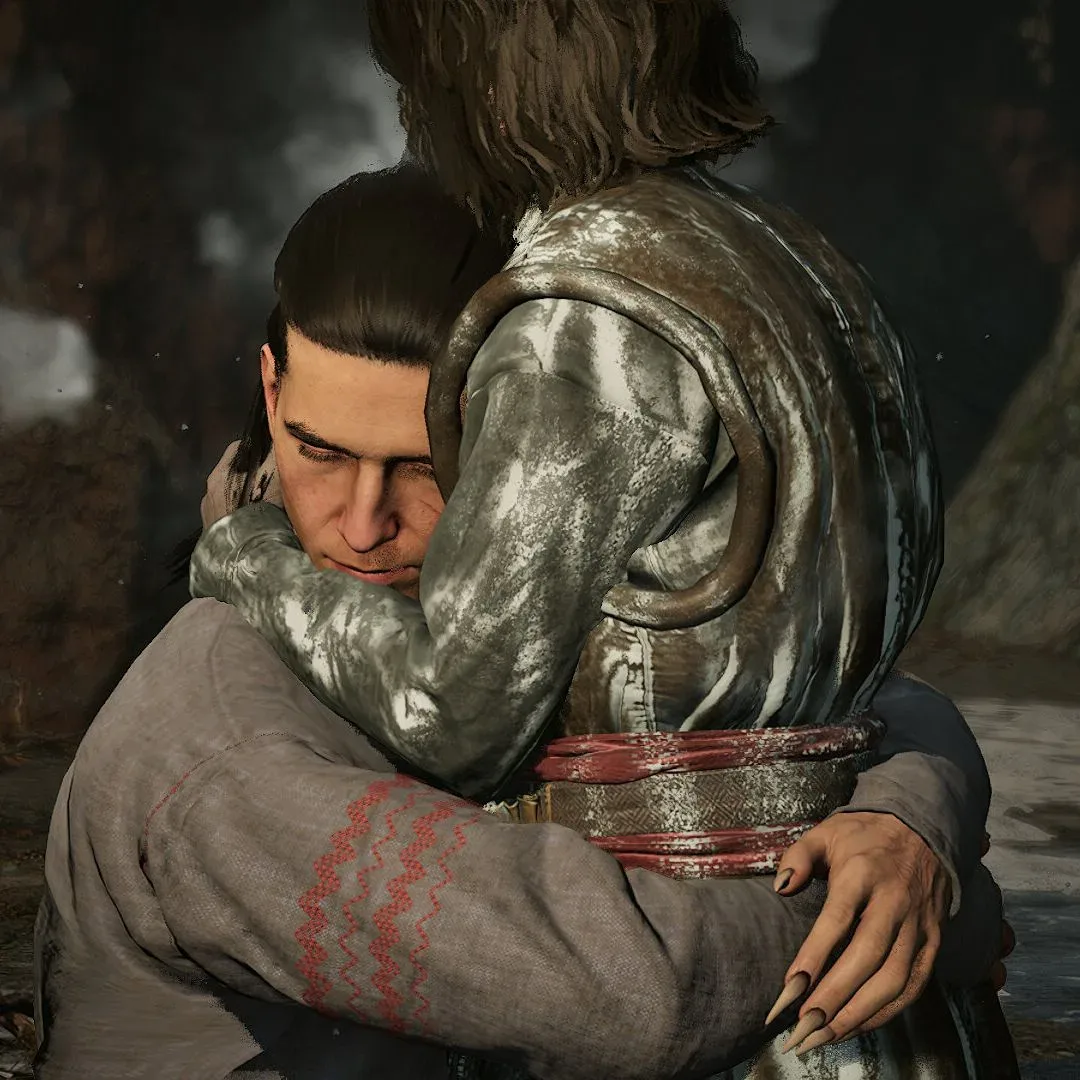
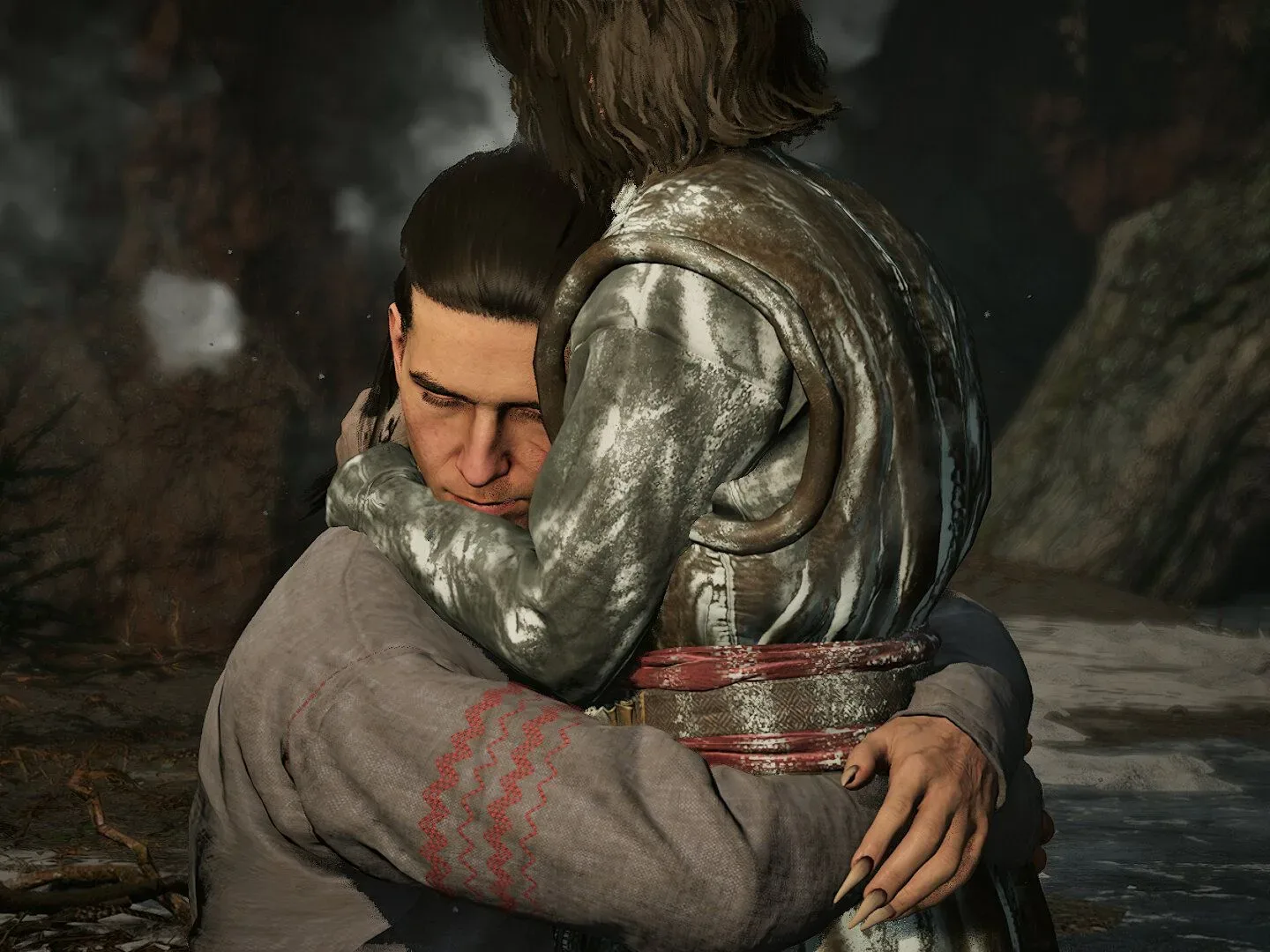
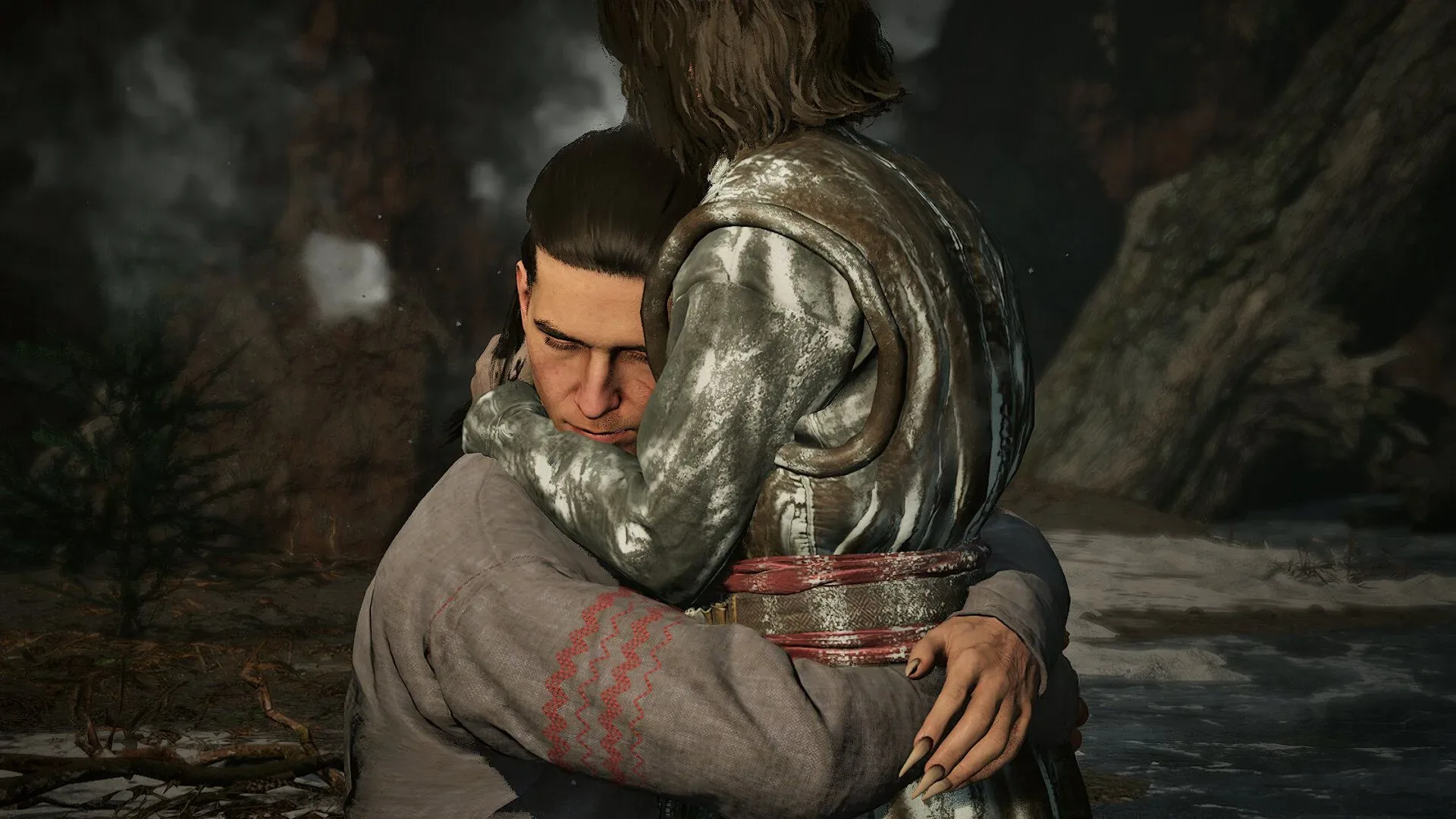
Alin’s appearance does not magically erase what happened. Instead, the emotional breakthrough is modest and humane: Coen is told to forgive himself, and he is reminded that refusing to visit or acknowledge the death has become its own form of abandonment. When Alin embraces him and sends him out of the dream, the quest lands on release rather than a tidy restoration. The family cannot be returned to the breakfast table. What changes is Coen’s ability to stop endlessly reenacting the attempt to save them.
Optional content that meaningfully deepens the protagonist
Home Sweet Home is tied to a branching side quest associated with Xanthe, the deceased boyaress and one of Brencis’ lieutenants. Its optional status is important. Large RPGs often reserve some of their richest character material for detours, rewarding curiosity with context that redefines a protagonist’s motivations.
There is a risk in that approach: players pursuing only the main path may miss an essential piece of Coen’s characterization. But the payoff here is substantial enough to justify the side-route’s existence. The mission does not just deliver more lore about an old tragedy. It changes how players can interpret Coen’s behavior across the wider game—his urgency, his protectiveness and the burden he places on himself.
For players seeking other offbeat PC experiences after surviving this particular nightmare, Joking Joystick’s look at a packed indie week of mechs, mayhem and DVD stores offers a far less emotionally ice-cold change of pace.
Home Sweet Home may be too demanding, too oppressive and too replay-resistant for some tastes. Those criticisms follow directly from its design rather than existing in spite of it. The mission repeatedly denies comfort because it is about a person who has spent years trying to outrun helplessness. By the end, its difficult combat, repeating structure and stripped-down inventory have all served the same purpose: making a buried grief felt rather than merely explained.
That is why this optional nightmare can stand among The Blood of Dawnwalker’s most potent writing. It is not always pleasant to play. It is not supposed to be. But its mechanics and story ultimately speak the same painful language.