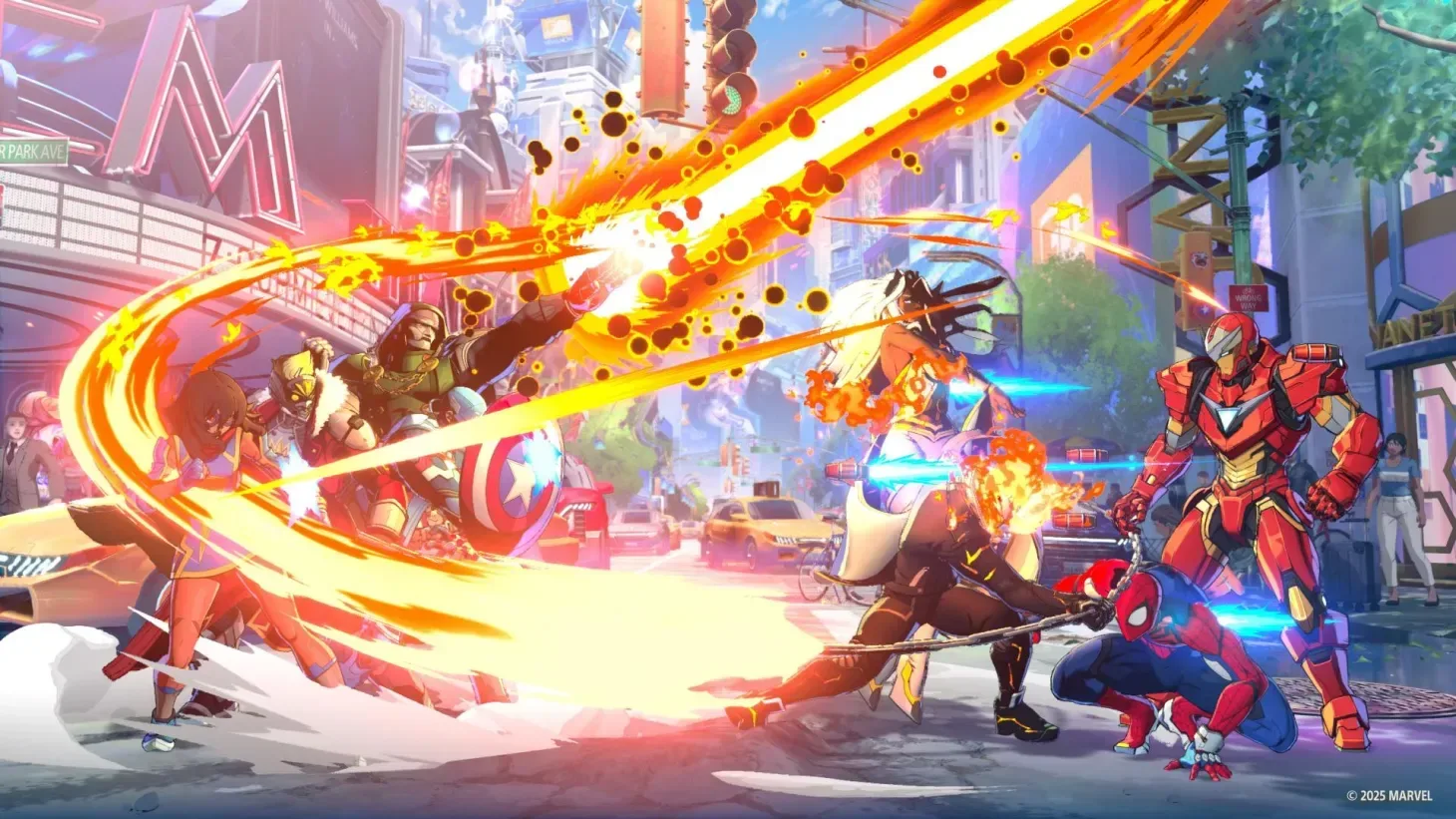
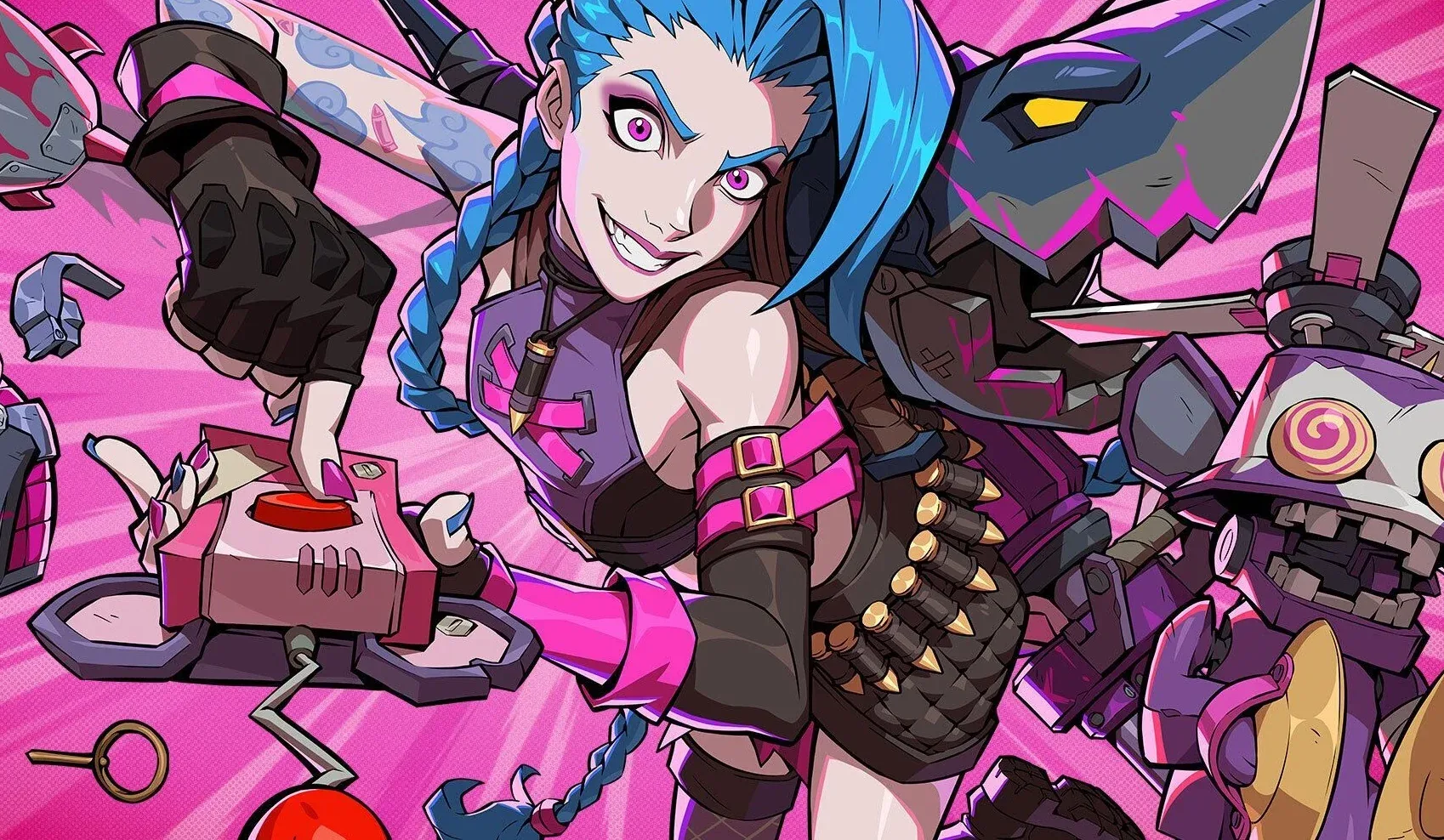
The 2026 Game Awards Best Fighting Game nominees are Marvel Tōkon: Fighting Souls, Invincible Vs, 2XKO, Avatar Legends: The Fighting Game, and My Hero Academia: All’s Justice. On paper, that is a varied list: superhero properties, animation tie-ins and an original fighting-game proposition sit alongside one another. In practice, the field invites a much less cheerful reading. Several nominees are connected to reports of shrinking teams, development winding down, corporate uncertainty or a struggle to retain momentum.
That does not mean the nominated games, their developers or their communities lack value. It does mean the category has become an unusually clear snapshot of a difficult business reality. A fighting game cannot live on launch attention alone. It needs opponents to play, a development team capable of responding to issues, and enough confidence around its future that players feel their time investment is worthwhile. When any of those pieces becomes uncertain, the genre’s competitive loop can turn against the game quickly.
A nominee list with uncomfortable context
The games in contention are not interchangeable, and their reported circumstances are different. 2XKO is described as ending active development in late December, shortly after the awards ceremony. Invincible Vs is reported to have been reduced to a skeleton crew. Avatar Legends: The Fighting Game is linked to a developer who has faced an accusation of sexual harassment; that is an allegation, not a finding established here. Its wider corporate setting is also uncertain amid a shrinking Paramount Games operation following the Skydance merger. Meanwhile, My Hero Academia: All’s Justice has had a relatively low public profile compared with the more recognizable names in the field.
Those facts do not answer the question an award is meant to ask: which game is the year’s best? They do, however, complicate the idea that a nomination is simply a celebration of a thriving slate. Awards recognition can bring visibility, but it cannot by itself restore a team, reverse a strategic decision, settle organizational turbulence or guarantee a healthy population months later.
Marvel Tōkon: Fighting Souls appears positioned as the likeliest winner, yet even it is described as facing a difficult fight around sales and concurrent players. Concurrent players means the number of people playing at the same time. It is an imperfect measure—particularly where games exist across platforms or have private and offline play—but it matters greatly to online fighters. A player who cannot quickly find a suitably matched opponent may leave, making the next player’s wait longer as well.
Why fighting games feel the pressure sooner
Many games need an audience. Fighting games need an audience that is available at the same moment, in the same region or online environment, and ideally at a broadly compatible skill level. That is a demanding requirement. A single-player title may remain satisfying long after launch even if its active-player count falls. A fighting game’s core competitive experience is more immediately affected by whether the matchmaking pool is busy.
Matchmaking is the system that connects players for online matches, commonly attempting to balance connection quality and comparable ability. In a healthy population, it has more possible opponents from which to choose. In a smaller one, it may take longer to find anyone, create more uneven matches, or force players to encounter the same small group repeatedly. None of this proves a game is bad. It explains why a population decline can be particularly punishing in this genre.
That pressure also affects the social infrastructure around a fighter. Competitive games often depend on community learning: players trade strategies, build local scenes, run events, watch high-level competition and encourage friends to keep improving. If a title appears to be losing developer support, a portion of that community may reasonably move toward a game with a clearer long-term outlook. The shift can become self-reinforcing, regardless of the quality of the underlying combat system.
Related coverage includes Best Fighting Game Nominees Expose a Genre Under Pressure.
This is why a licensed universe is not a complete solution. Recognizable characters may win attention at announcement and launch, but familiarity cannot automatically produce the durable cycle of opponents, updates and community confidence that a live competitive game needs. Nor does a nomination offer that foundation on its own. It can be an important spotlight; it is not an operating plan.
The big franchises cast a long shadow
The broader concern is not that every fighting game must be as large as Tekken or Street Fighter. It is that the category seems to have few obvious alternatives with comparable stability. Those series are the reference points because they remain central to the conversation around the genre, not because smaller games are inherently less creative or less deserving of players.
The supplied record also points to Mortal Kombat 1 as a warning about how quickly a major name can lose competitive visibility. The game launched in 2023 with favorable player sentiment, but later declined sharply enough that EVO 2026 was the first EVO main-event lineup since 2011 without a NetherRealm game. EVO’s main event lineup is not a universal scorecard for a game’s artistic or commercial worth. It is nevertheless a meaningful competitive-culture signal, because inclusion places a game in front of an audience already invested in tournament fighting games.
That absence illustrates a central distinction: launch success and sustained viability are different things. A game can create early excitement and still face a harder second test—whether it can sustain attention through the months and years that follow. For a competitive fighter, the latter test may be more important. Players choosing where to learn a complex system, develop match-up knowledge and find practice partners naturally consider whether the game will remain supported and populated.
The collapse or decline of other fighters is part of the same pattern. MultiVersus is cited as an example of a project that failed to maintain its footing. The lesson is not that developers should stop making fighters, nor that players should only support the market leaders. Rather, it is that the genre’s barriers to endurance are unusually high. Entering the space means competing for time and attention against established games whose players, creators and tournament communities are already deeply invested.
Awards can spotlight the problem without solving it
An awards category still has value even in a weak year. It documents what was made, directs viewers toward games they may have missed and gives creative teams recognition for their work. But a sparse or troubled nominee pool changes the meaning of the event. Instead of presenting a clean contest among several games with stable futures, it risks becoming evidence that the pipeline has narrowed.
That is especially awkward when the category may have difficulty assembling a full field at all. The five nominees demonstrate that fighting games are still being made, but their surrounding circumstances suggest a market where making one and keeping one alive are vastly different accomplishments. The question for the years ahead is not merely whether another fighter can launch. It is whether games outside the most entrenched series can earn enough trust—from players, teams and competitive communities—to remain a dependable place to play.
There is a broader awards issue here as well. Nomination lists are often read as a health report for an industry segment, even though they were not designed to be one. A category can reward the strongest work available while still revealing that the available choices came from a constrained year. That tension is also visible in the wider conversation around the 2026 Game Awards’ nomination problems.
What players should take from the nominations
For players, the most practical response is to separate two questions that awards season can blur together: “Is this game worth trying?” and “Will this game have a durable future?” The first can have a yes answer even when the second is unclear. A smaller fighter can offer a compelling roster, a satisfying system or a passionate community. But anyone deciding where to devote serious competitive time should also pay attention to support plans, queue health, regional player activity and the game’s community spaces.
- Look for clarity around support. A game’s future is easier to judge when its development status is communicated plainly.
- Consider your region and play times. An online population can feel very different depending on where and when a person plays.
- Do not treat an award nomination as a longevity guarantee. It recognizes a game in a particular awards cycle, not an assured multi-year future.
- Value communities without assuming permanence. Dedicated players can make a smaller scene welcoming, while still facing real structural limits.
The Best Fighting Game slate may ultimately crown a deserving winner. Yet its bigger significance is the strain visible behind it: games with recognizable brands and creative ambitions can still struggle to secure the stable player base and development backing a modern fighter requires. The genre is not absent, and it is not without talent. Its problem is that survival has become a more demanding contest than a single awards category can convey.