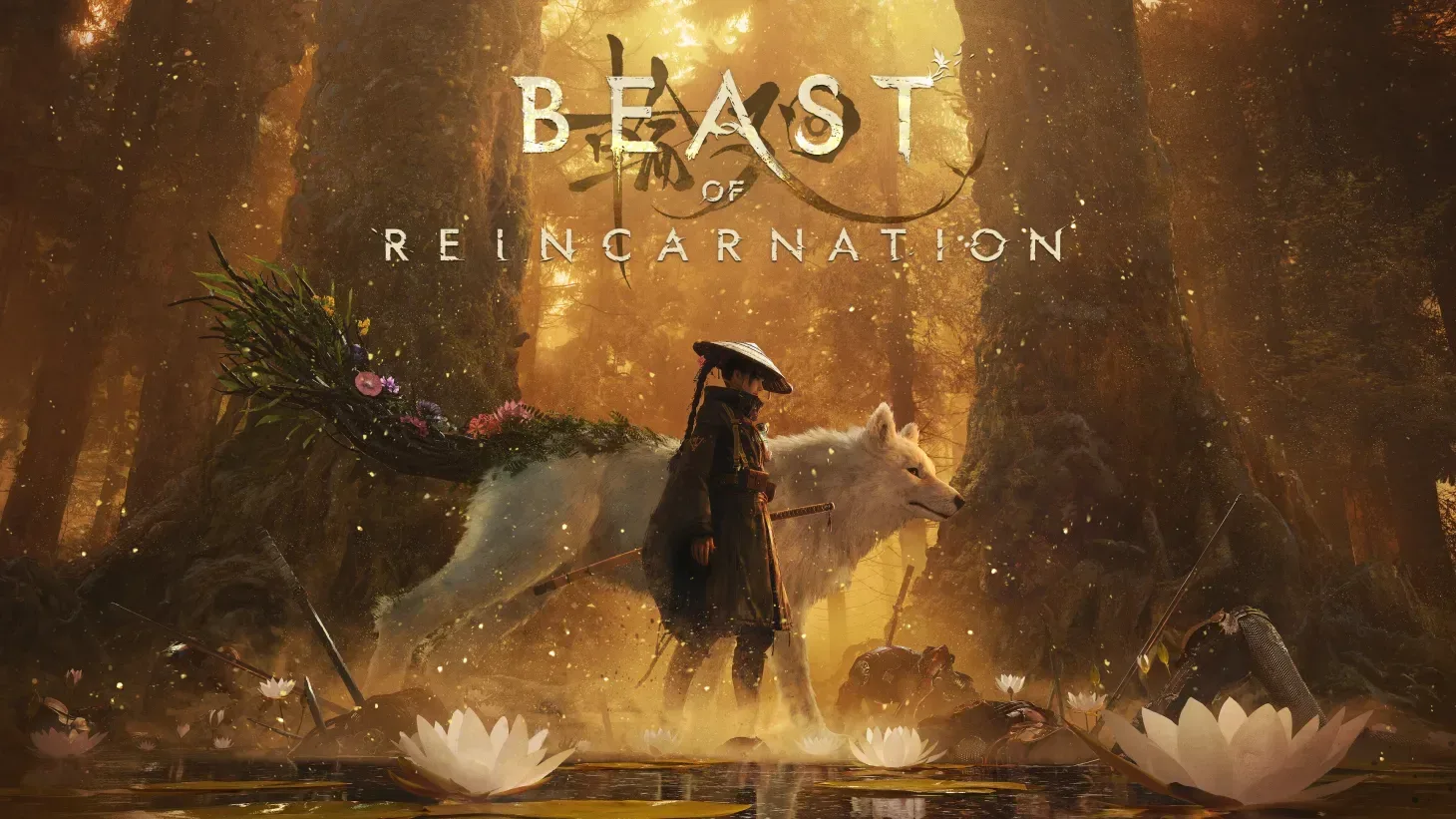
Beast of Reincarnation has a central irony it cannot quite overcome. Its lead, Emma, is a synthetic human searching for something like a soul, but the adventure surrounding her often feels mechanically dutiful rather than emotionally alive. The game’s greatest success is unquestionably its combat: quick, accessible, flexible sword fighting that pairs Emma’s katana with her wolf companion Koo’s elemental support. When the blades are out and an enemy’s stagger meter is ready to break, Game Freak’s action-game experiment has real snap. Between those moments, however, the trek through a blighted future Japan becomes an increasingly narrow procession of corridors, recycled encounters, unimportant supplies, and lengthy scenes that explain themes rather than allowing them to develop.
That contrast makes Beast of Reincarnation easy to admire in bursts and difficult to embrace as a complete journey. It understands the satisfaction of a clean parry, a well-timed dodge, and a carefully arranged elemental build. It is far less convincing when it asks players to care about its characters, investigate its world, or celebrate another chest full of resources that scarcely matter.
A pilgrimage through an oddly inert future
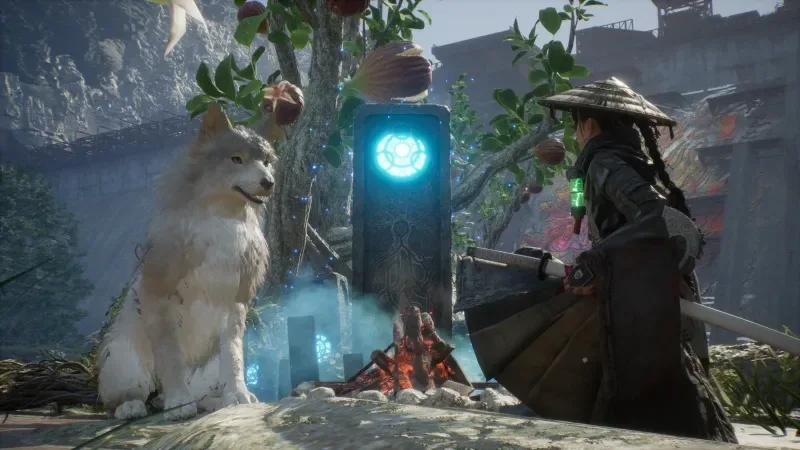
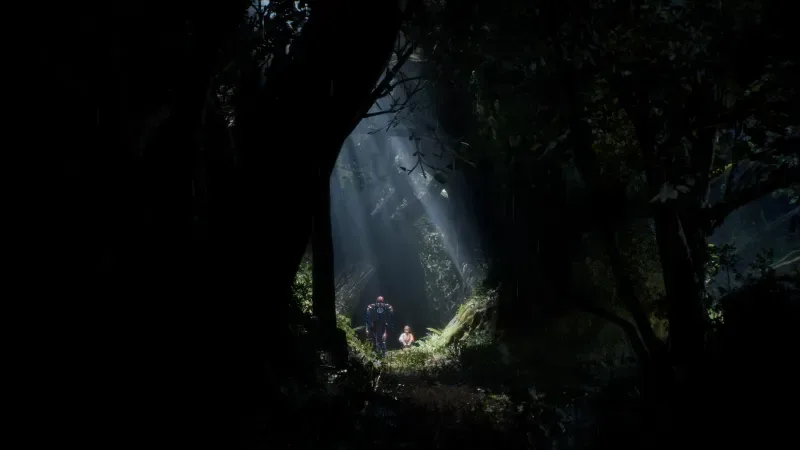
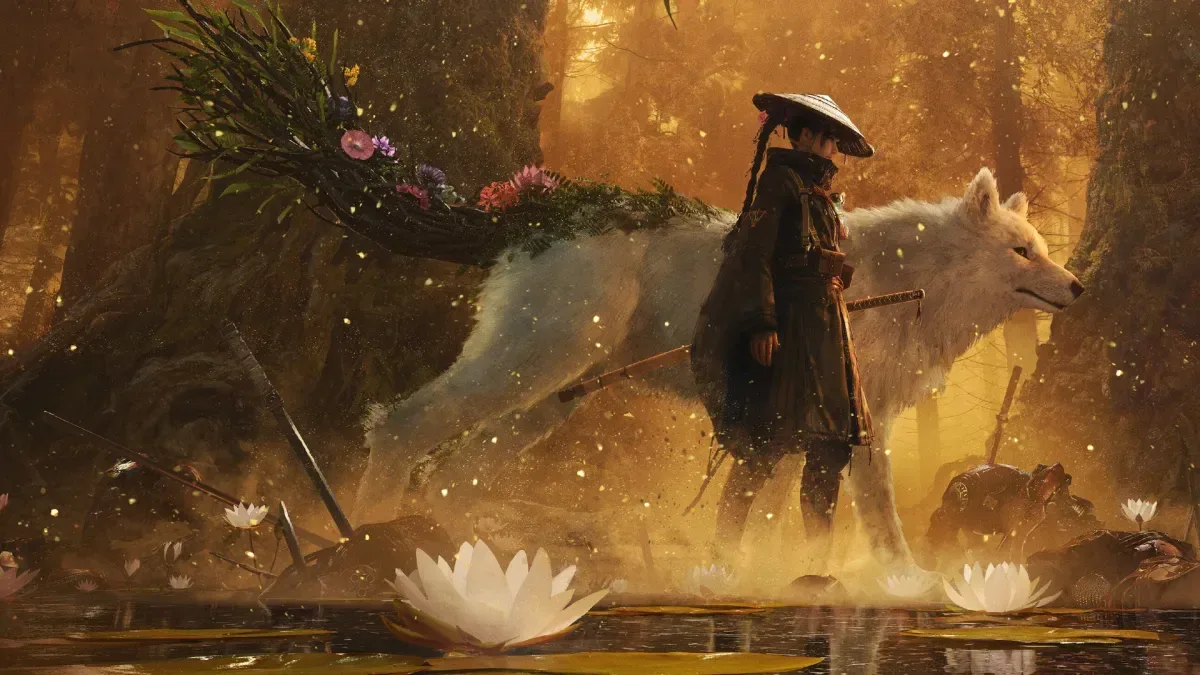
Emma travels with the enigmatic Brad, the young Kagura, and Koo aboard a Cleanse Walker mech. She is a purifier, charged with cleansing beasts corrupted by a destructive blight. Their route runs through Japanese colonies toward the Capitol, where Emma’s mission culminates in a confrontation with the Beast of Reincarnation itself and, potentially, the salvation of humanity.
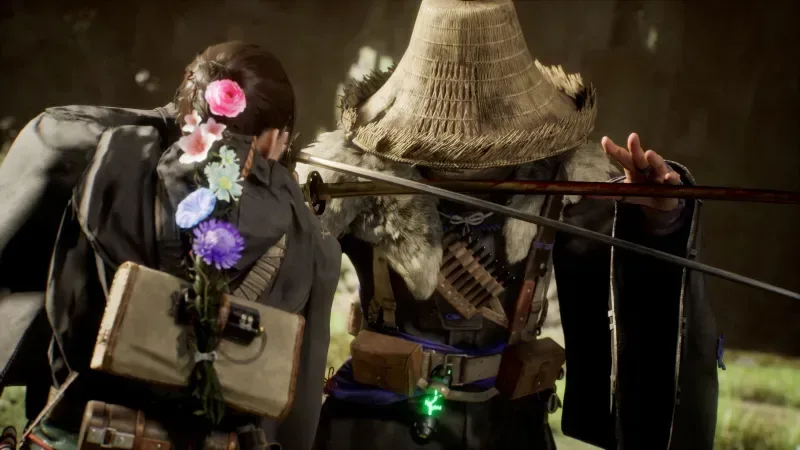
It is a premise with room for strangeness and melancholy. A manufactured person considering what it means to possess a soul could be a powerful starting point, especially in a world living long after catastrophe. Yet the game appears too eager to spell out its concerns. Friendship, family, personhood, sacrifice, and saving others are repeatedly stated in extended cinematic sequences. Rather than create ambiguity around Emma’s identity, these scenes make their points with a blunt instrument.
Brad, Kagura, and Koo accompany Emma throughout the trip, but the group does not gain enough depth to carry the story’s dramatic weight. Character arcs and villain beats are broadly predictable, while developments involving Koo reportedly lean on well-worn canine-companion storytelling. The final stretch does not substantially change that impression: its major reveals are signposted, and its climax is described as anticlimactic rather than cathartic.
The setting likewise has atmosphere in theory but not much discovery in practice. Concrete remnants of the past sit under vines, shrubs, and familiar greenery, suggesting a Japan reclaimed but not fully transformed by nature. The actual spaces, though, are largely broad, repetitive passageways designed to steer Emma toward the next encounter. It is a world that hints at history without making exploration feel like a useful way to uncover it.
The katana does the talking
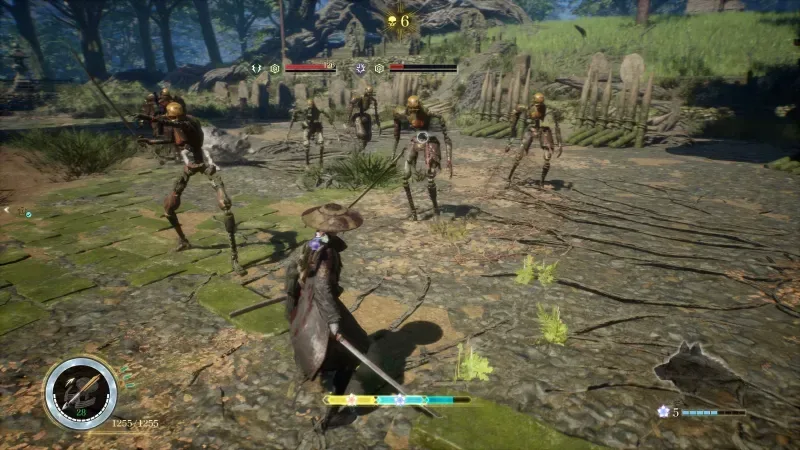
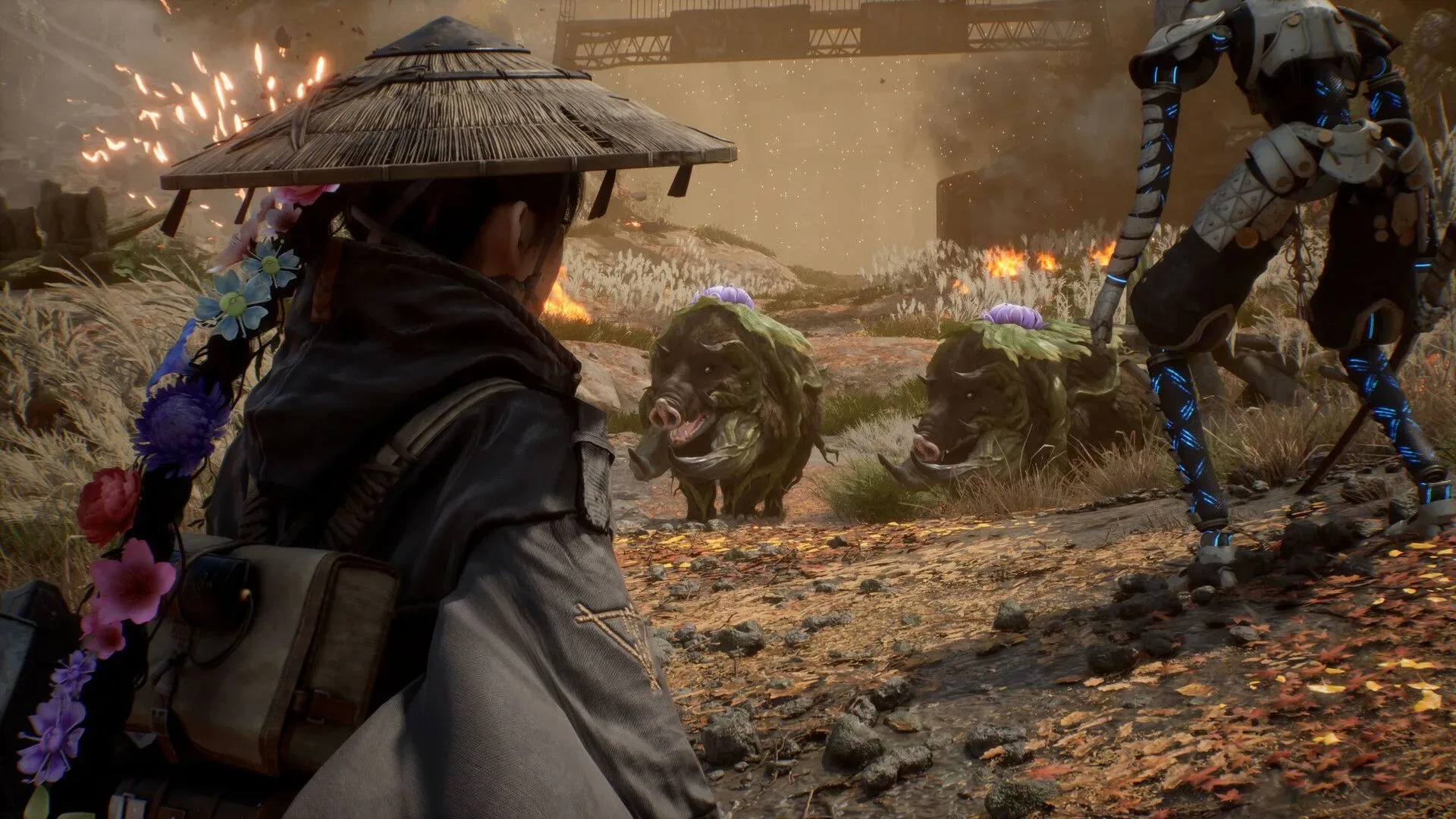
Fortunately, Beast of Reincarnation has a compelling answer whenever its storytelling momentum slows: give Emma another monster to fight. Her fundamentals draw on the parry, dodge, and stagger-bar rhythms associated with modern precision-action games such as Sekiro and Stellar Blade. Koo expands the formula through quick-time elemental abilities, a partnership system that evokes the elemental inputs and combo-minded cooperation seen in Clair Obscur: Expedition 33.
The result is not presented as a punishing imitation of those games. There are three difficulty options, generous health recovery, forgiving defensive timing, and powerful moves that are relatively straightforward to use. That approach makes the game inviting without removing tension from elite encounters and bosses. Less experienced players have room to learn the cadence of incoming strikes; players already fluent in parries and evasions can turn Emma into a frighteningly effective duelist.
The best fights encourage an appealing loop of observation and response. A player can avoid an attack, punish an opening, build stagger, then use the window to unload combos and finishing techniques. Koo is not simply a companion decoration; the wolf’s elemental kit gives the player another layer to consider before the sword comes down. It is the sort of action system that makes build planning feel exciting because the payoff is immediate and visible in battle.
For anyone who enjoys the tiny, wordless negotiations of timing in combat—who attacks first, who flinches, when the counter lands—there is a useful companion piece in The Unwritten Rules of Couch Multiplayer, Now Written Down. The setting is different, but the underlying pleasure of games creating readable, shared rules remains familiar.
Koo turns builds into a proper playground
Beast of Reincarnation’s strongest long-term idea is its range of viable approaches. An elemental setup, for example, can use Koo’s lightning Javelin alongside a modifier that doubles status buildup. With a lightning-infused katana, Shock can be applied quickly, paralyzing targets and opening them to Emma’s heavier strings, finishers, and stagger damage. A single condition effect can become the ignition point for an entire encounter.
Lightning is only one direction. The available options include ranged, stealth, fire, poison, and other styles, while an extensive skill tree keeps adding possibilities beyond the final battle. That design means different versions of Emma can emphasize very different tools. Skill points used to strengthen particular moves and abilities for both Emma and Koo carry more meaningful weight than basic stat increases. Attack, defense, and familiar RPG attributes are plentiful enough that they can feel routine; the ability upgrades are where the sense of growing power appears to be most satisfying.
That distinction matters. A game does not need every progression currency to be thrilling, but it does need players to feel their decisions changing what they do moment to moment. Beast of Reincarnation seems to achieve that when a player commits to a status ailment, movement option, combat technique, or companion ability. It is less successful when it merely asks for more points in standard numerical categories.
New Game+ arrives after the credits, and its presence makes sense given the flexibility of the skill system. A second run could be a reason to test a radically different Emma even if the narrative itself does not supply much reason to revisit the route. The pull is in the swordplay laboratory, not the destination.
Bosses and traversal lose steam through repetition
Bosses initially make excellent classrooms for the combat. Their arenas ask players to recognize attacks, practice defensive timing, and translate a chosen build into a winning strategy. The problem is how frequently the game reuses them. Recurring opponents show up too often for creatures intended to define an area’s big setpiece, and shared animations among enemies further weaken the sense that each duel is a distinct threat.
The stage format also settles into a conspicuous pattern. An area’s major boss arrives early for a brief clash, retreats after taking enough damage, and waits at its lair while Emma clears the intervening route. It is a dependable structure, but one repeated so consistently that it makes progress feel prearranged. The fights retain their appeal because the core systems are good; the surrounding framework just does little to renew their drama.
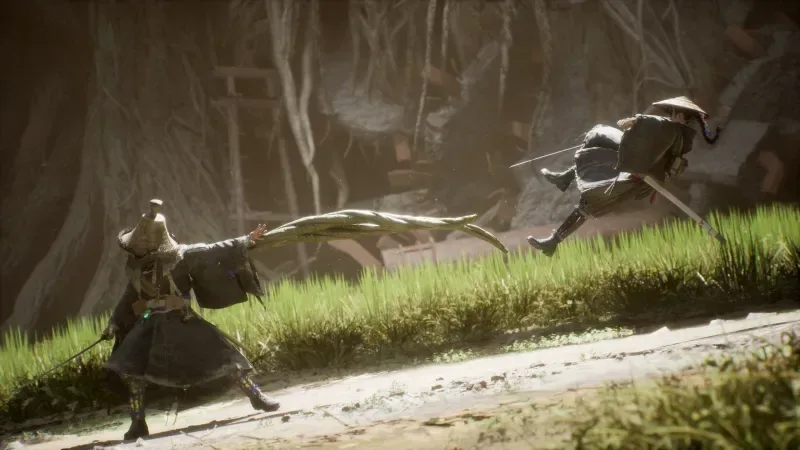
Traversal has a similar issue. Emma can use vines as a distinctive double jump and can whip herself toward elevated ledges or perches. In a fight, that mobility has flair: spring upward, then crash down with Helm-Splitter on enemies below. Outside combat, the movement tools seldom reshape how the player experiences space. Reaching a higher platform frequently just means finding another bland chest amid another bland stretch of hallway.
That is a missed opportunity. Vertical movement can make an action game’s world feel playful, secretive, and alive. Here it more often seems to be a functional route to rewards that fail to justify the detour.
A lot to collect, little reason to care
Beast of Reincarnation fills its environments with systems and materials, yet many do not seem calibrated to create meaningful pressure or anticipation. Seedlings can become crops for Kagura to turn into stat-boosting meals, but the resulting buffs are negligible. Skulls improve the Cleanse Walker, though the mech can be fully upgraded before the midpoint. Books are collectable but cannot be read. Rations support a hunger system with little apparent consequence, while currency accumulates without much difficulty.
The repeated chest-opening loop is therefore more chore than discovery. A take-all command becomes the sensible response, not because gathering is inherently bad, but because individual items rarely deserve inspection. The game has the silhouette of a fuller exploration-and-survival layer without the necessary stakes to make that layer memorable.
For players who value the opposite experience—where objects, shelves, and systems are organized so they stay useful rather than becoming clutter—How to Store Retro Games: A Collection You Can Find and Play offers a practical perspective. Beast of Reincarnation could use a little of that same discipline: fewer things, but more reasons to value each one.
A strong action core waiting for a stronger game
Game Freak has built a combat system worth taking seriously. Emma and Koo’s combined toolset supports experimentation, offers generous access for newcomers, and still leaves room for skilled players to dominate through precise reactions. When a lightning effect freezes an opponent in place and Emma converts that pause into a devastating sequence, Beast of Reincarnation finds a clear identity.
But it spends too much time interrupting that identity. Long, overly explicit cutscenes, paper-thin personalities, formulaic boss progressions, unchanging corridors, and low-value resource loops all make the journey feel less vital than the fighting at its center. Emma may be looking for a soul, yet her blade is the part of Beast of Reincarnation that comes closest to having one.