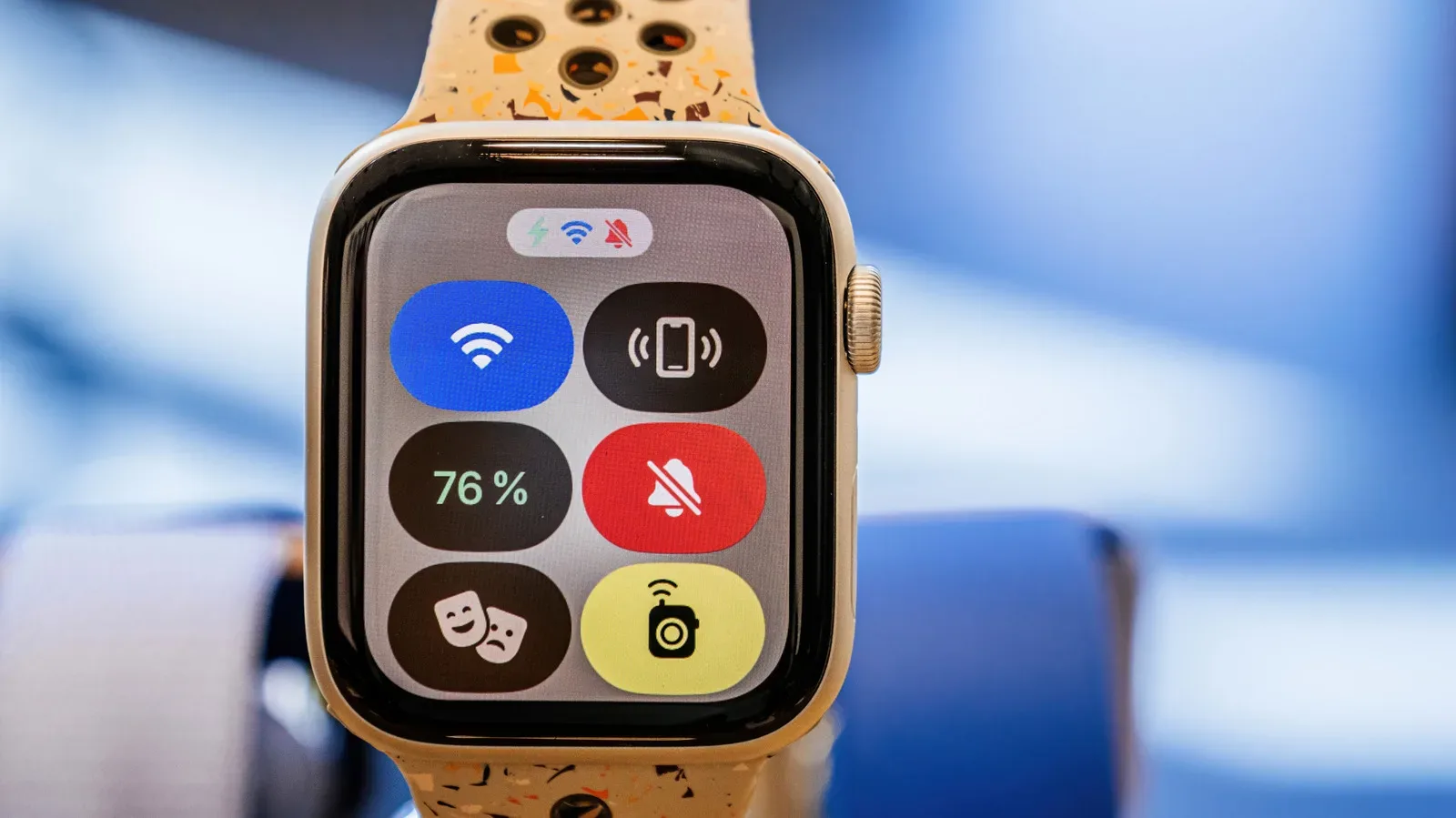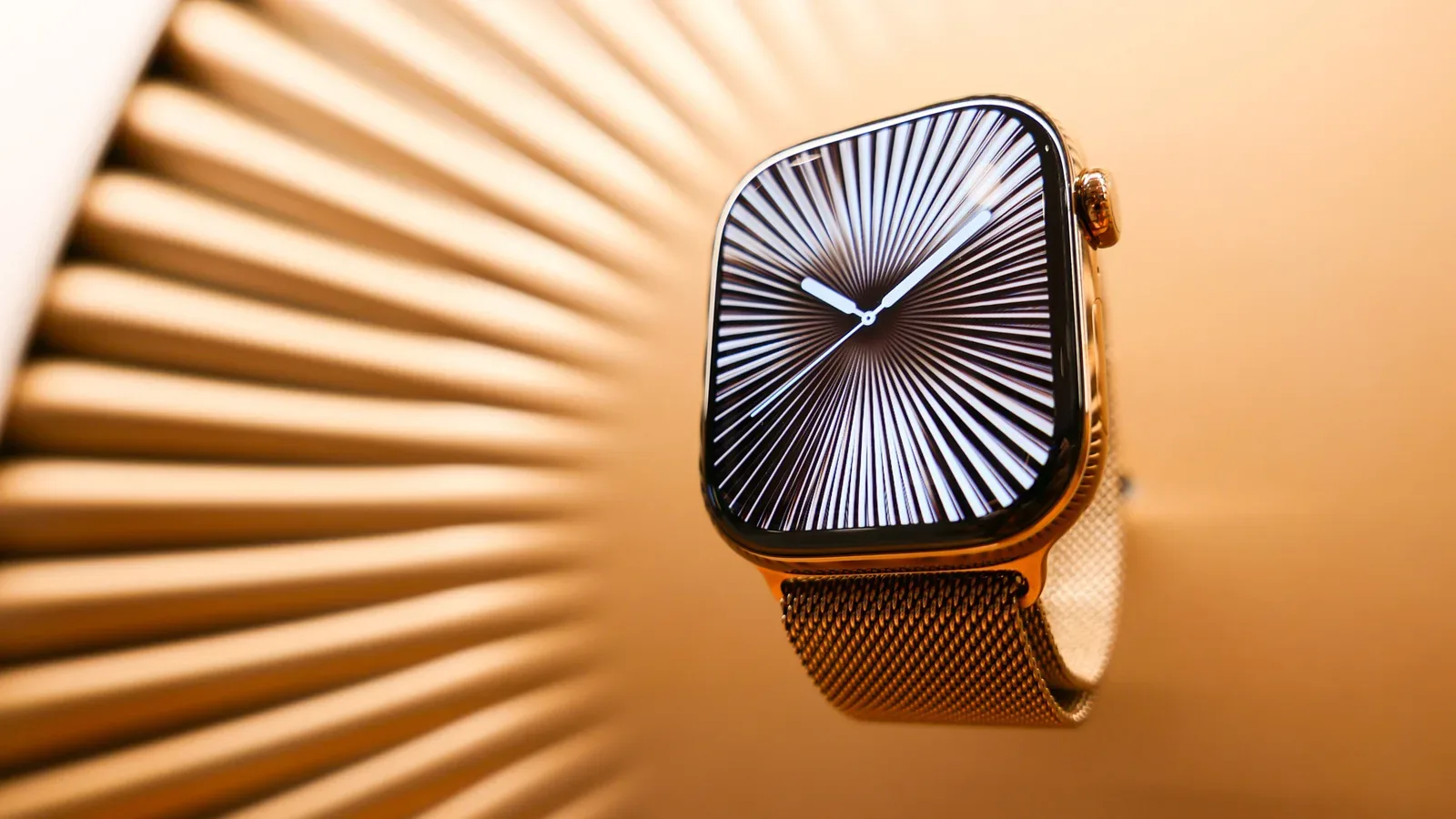
The Apple Watch Series 10 is not suddenly obsolete in 2026. It still offers a bright OLED screen, mature health and fitness features, emergency tools, current watchOS support and the familiar Apple Watch experience. For an iPhone owner looking for a capable smartwatch without paying full current-generation money, it can remain a sensible option.
But “still good” and “good buy” are different questions. The Series 10 was released in 2024, is no longer sold directly by Apple, and is increasingly encountered through third-party listings—sometimes renewed rather than new. That changes the calculation. A buyer is no longer simply comparing features; they are weighing discount, cosmetic condition, battery uncertainty, software longevity and the benefits of paying more for a newer model.
The practical verdict is straightforward: the Series 10 makes the most sense when it is meaningfully cheaper than current Apple Watch options and the seller’s condition details are clear. If pricing drifts close to a newer watch, the newer hardware is the safer long-term purchase.
What remains strong about the Series 10
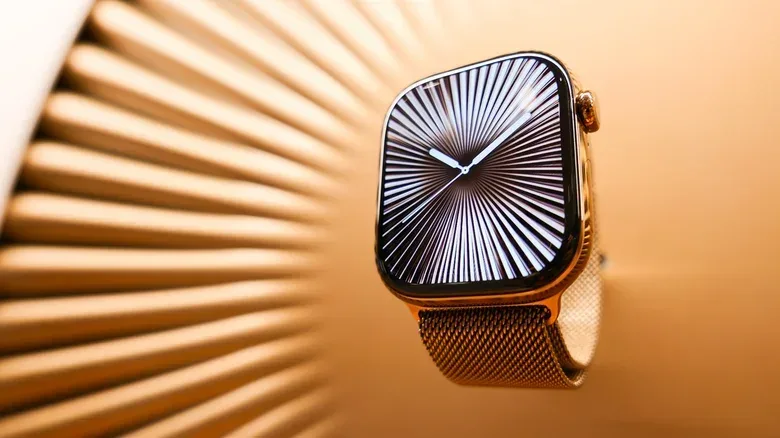
The core experience has held up well. Series 10 is available in the same two size options as the newer Series 12, and its wide-angle OLED display reaches up to 2,000 nits. In plain terms, OLED is a display technology capable of strong contrast because individual pixels can turn off for black areas, while the quoted peak brightness matters most for legibility in bright surroundings.
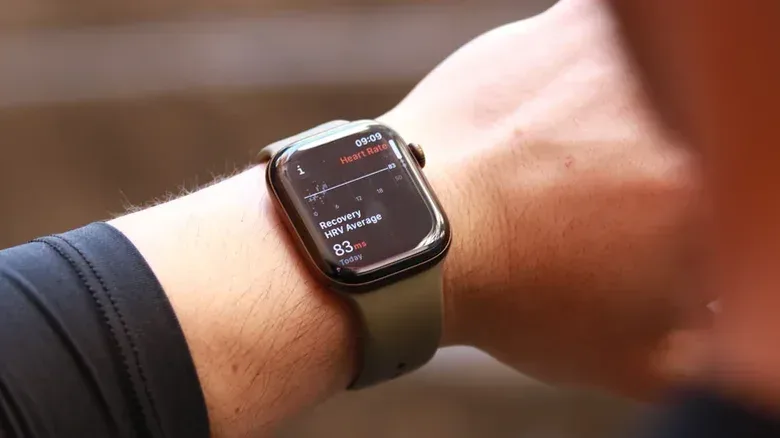
More importantly, the watch retains a broad set of health and activity functions: ECG readings, sleep apnea notifications and cycle tracking are all part of the proposition. It also carries emergency-oriented features including crash detection and fall detection, alongside water resistance and relatively quick charging. These are not minor legacy holdovers; for many people, they are the reasons to wear an Apple Watch in the first place.
Series 10 also runs the latest version of watchOS. That means buyers are not locked out of the newer Liquid Glass interface direction merely because they skipped the most recent hardware. It supports Apple Intelligence and Siri AI as well, so it does not present the immediate feeling of an abandoned assistant platform.
Design may be another quiet point in its favor. Some users have preferred the Series 10’s slimmer-looking display borders to the Series 12’s thicker bezels. Bezels are the frames around a display, and their visual impact can feel greater on a watch than on a phone because the screen itself is much smaller. This is subjective, not a universal advantage, but it is a legitimate preference rather than a spec-sheet footnote.
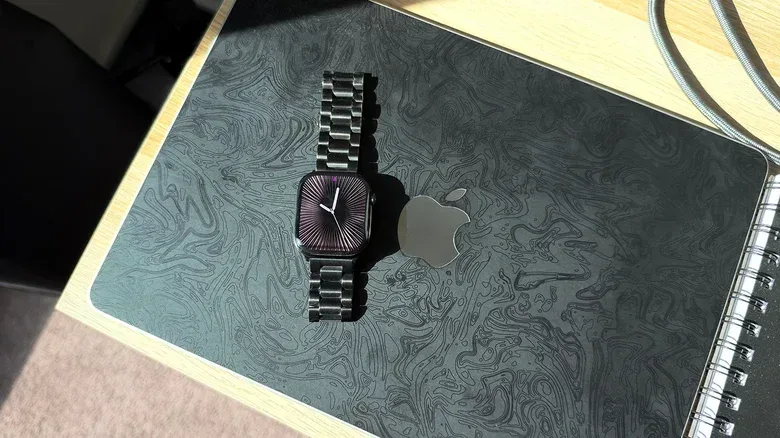
Finish options likewise matter if the watch is something a person intends to wear every day. Series 10’s Jet Black Aluminum has a glossy look, whereas the Series 12’s Black Aluminum uses a different finish. Both models offer titanium options. Series 10 does not offer ceramic, but the supplied comparison does not establish that as a meaningful loss for a typical buyer.
The catch: smartwatch support is harder to predict
The most important limitation is not the screen, color or even its feature list. It is the uncertain remaining life of the software platform. Apple Watch models have historically received roughly four to six years of major watchOS updates, rather than the longer support pattern associated with some other Apple products. Series 10 has already received three major watchOS versions since its 2024 release.
There is reason to think it could continue for around another three years, but that is not guaranteed. The first Apple Watch Ultra, for example, received four watchOS updates. That example illustrates why prospective buyers should treat any projected end date as an estimate, not a promise.
A major operating-system update is more than a cosmetic refresh. It can determine whether a watch receives newer interface changes, app capabilities, platform integrations and security improvements. A Series 10 purchased cheaply today may still provide several satisfying years of use. Yet someone who specifically wants to buy once and keep the same watch for as long as possible has a rational reason to prioritize newer hardware.
This is especially true because Apple does not currently sell the Series 10 directly. A retail listing can make an older model look like a bargain while obscuring how much of its useful support window has already elapsed. Buyers should view the device as a discounted current-capability watch with an uncertain future runway—not as a current watch at a lower price.
Performance is where the newer watches pull away
Another reason to be cautious is responsiveness. Series 10 can show noticeable slowdowns when opening apps or scrolling, even if it is not unusably slow. That distinction matters. A device does not have to freeze or fail to feel dated; small delays in a wrist-worn interface are especially visible because interactions are usually short and frequent.
The Series 12 is built around a newer system-in-package, or SiP. A SiP is the compact hardware package that integrates key processing components in a device such as a smartwatch. Its S11 chip is reported to be based on A20 Pro technology and includes 4GB of RAM—double the 2GB cited for Series 10.
RAM, or random-access memory, is working memory used while software is running. More RAM does not automatically guarantee every task will be twice as fast, but it can give a device more room to handle apps and future software demands. That makes it reasonable to expect the newer model to retain smoother behavior longer, even though exact future watchOS performance cannot be known in advance.
This is not merely a benchmark argument. A watch is an interface device: glancing at a notification, checking a workout, opening an app and moving through menus are the daily interactions. If a buyer already finds Series 10 performance borderline in 2026, a better processor and additional memory may be worth more than a cosmetic preference or a moderate upfront saving.
Health and battery upgrades are no longer trivial
Series 10 is still competitive against the Series 11 in the supplied comparison, with no major health-tracking gaps identified between those two generations. The Series 12, however, introduces several more meaningful changes.
Its redesigned Health Sensing System can take heart-rate readings every five seconds, versus every five minutes on Series 10. That is a substantial increase in sampling frequency. It does not mean every buyer needs to replace a Series 10, nor does it establish any medical outcome by itself. But it does mean the newer device gathers heart-rate data much more often, which may be relevant to users who place a high value on monitoring detail.
The Series 12 also adds readiness scores, improved step-tracking accuracy and Audio Intelligence features. A readiness score is generally an attempt to summarize recovery or preparedness information into an easy-to-read indicator; the key buying point here is that it is a newer capability absent from Series 10, not that it should replace personal judgment or professional medical advice.
Battery claims present another tangible divide. Apple touts up to 24 hours for Series 12, compared with 18 hours for Series 10. Actual runtime varies with settings and use, but a six-hour difference in stated battery life can affect charging habits. The older watch charges relatively quickly, which softens the downside, yet greater headroom can be particularly attractive to people who want overnight wear for sleep-related features or simply dislike planning their day around a charger.
Cellular shoppers should also note that Series 10 has cellular variants but no 5G support. That is not automatically disqualifying: buyers should first decide whether they need cellular service on the watch at all. Still, a person deliberately paying for a cellular model may reasonably see newer connectivity as part of the value of stepping up.
Price and condition should decide the purchase
The Series 10’s strongest case is financial. Renewed examples have appeared from around $250, while Series 12 retails at $400. On those figures, the difference is meaningful: the older watch costs notably less while retaining its bright display, contemporary watchOS, emergency functions and extensive health-tracking toolkit.
That saving is not a blank cheque, however. “Renewed” means the buyer should expect the possibility of cosmetic wear. Since the Series 10 is no longer sold directly by Apple, listings may differ widely in their descriptions of condition. A glossy finish may be appealing on paper, but it also makes an accurate condition description important for buyers who care about visible marks.
A sensible way to assess a listing is to separate the questions a headline price can hide:
- How large is the saving? The lower the Series 10 price is relative to a newer watch, the stronger its value argument becomes.
- What is the listed condition? A renewed unit may have cosmetic wear, so buyers should read the condition language rather than assuming it is equivalent to new.
- How long do you expect to keep it? A short- to medium-term purchase has a different risk profile from a watch intended to last through many future watchOS generations.
- Which newer benefits genuinely matter? More frequent heart-rate readings, readiness scores, improved step tracking, Audio Intelligence, 5G and longer stated battery life are reasons to upgrade only if they fit the buyer’s priorities.
- Does performance tolerance matter? Anyone sensitive to scrolling and app-launch lag should assign more value to the newer SiP and added RAM.
There is a useful collector’s-market lesson in this, even though a smartwatch is chiefly a practical device rather than a display piece: condition and provenance of the listing influence value. The same broad instinct applies when considering older game hardware, where a lower sticker price can be offset by wear or a shorter useful life. For a different kind of aging hardware story, see Sega’s final console era and the Dreamcast.
Who should buy Series 10—and who should pass
Buy Series 10 if the discount is substantial, you are comfortable with a renewed unit, and its existing health, safety and smartwatch functions already cover what you want. It is also a reasonable pick for someone who values its display appearance and glossy Jet Black Aluminum finish, or who does not need 5G, readiness scoring and the Series 12’s longer stated battery life.
Consider Series 12 instead if you want the best chance of a longer software life, smoother performance over time, the most frequent heart-rate measurements, newer wellness features or additional battery headroom. The added RAM and newer SiP provide a concrete long-term rationale beyond simply owning the latest model.
Be especially careful if the Series 10 price is only modestly below newer alternatives. At that point, the buyer is taking on older hardware, a less certain update horizon and possible renewed-condition compromises without receiving enough financial benefit in return.
Ultimately, the Series 10 is still a capable Apple Watch, not an automatic bargain. Its feature set remains strong enough that a well-priced unit can be a smart purchase in 2026. But the best deal is one that acknowledges what the buyer is giving up: a shorter and uncertain software runway, potentially less fluid performance, newer sensing and connectivity features, and the Series 12’s claimed 24-hour battery figure. If the price compensates for those trade-offs, Series 10 remains worth considering. If it does not, the newer model is the more durable bet.
Shop the products
Check current price, model and availability at the retailer.