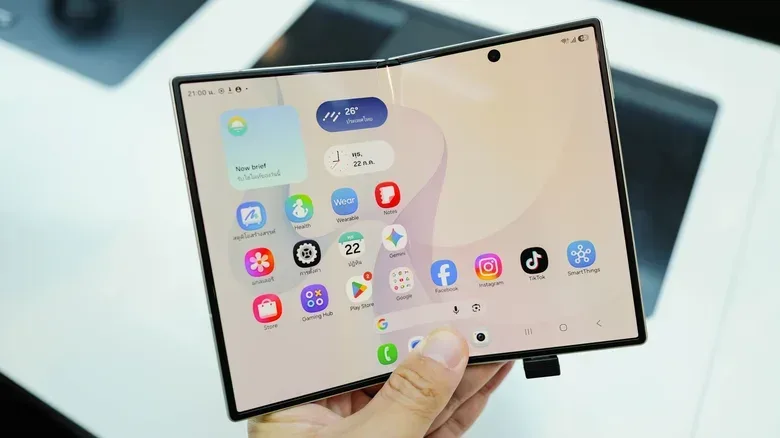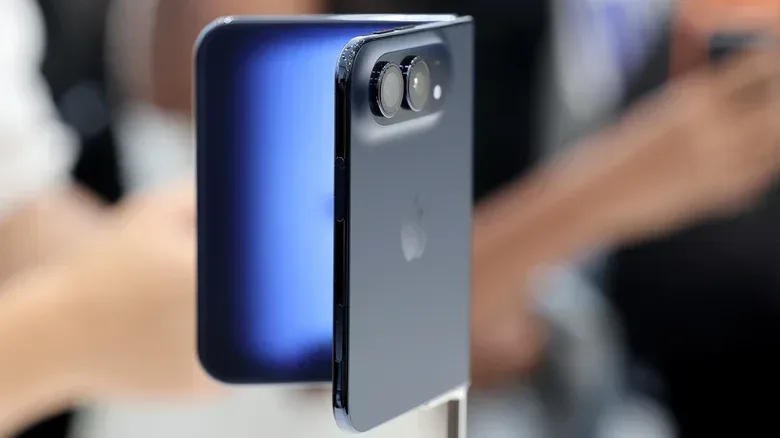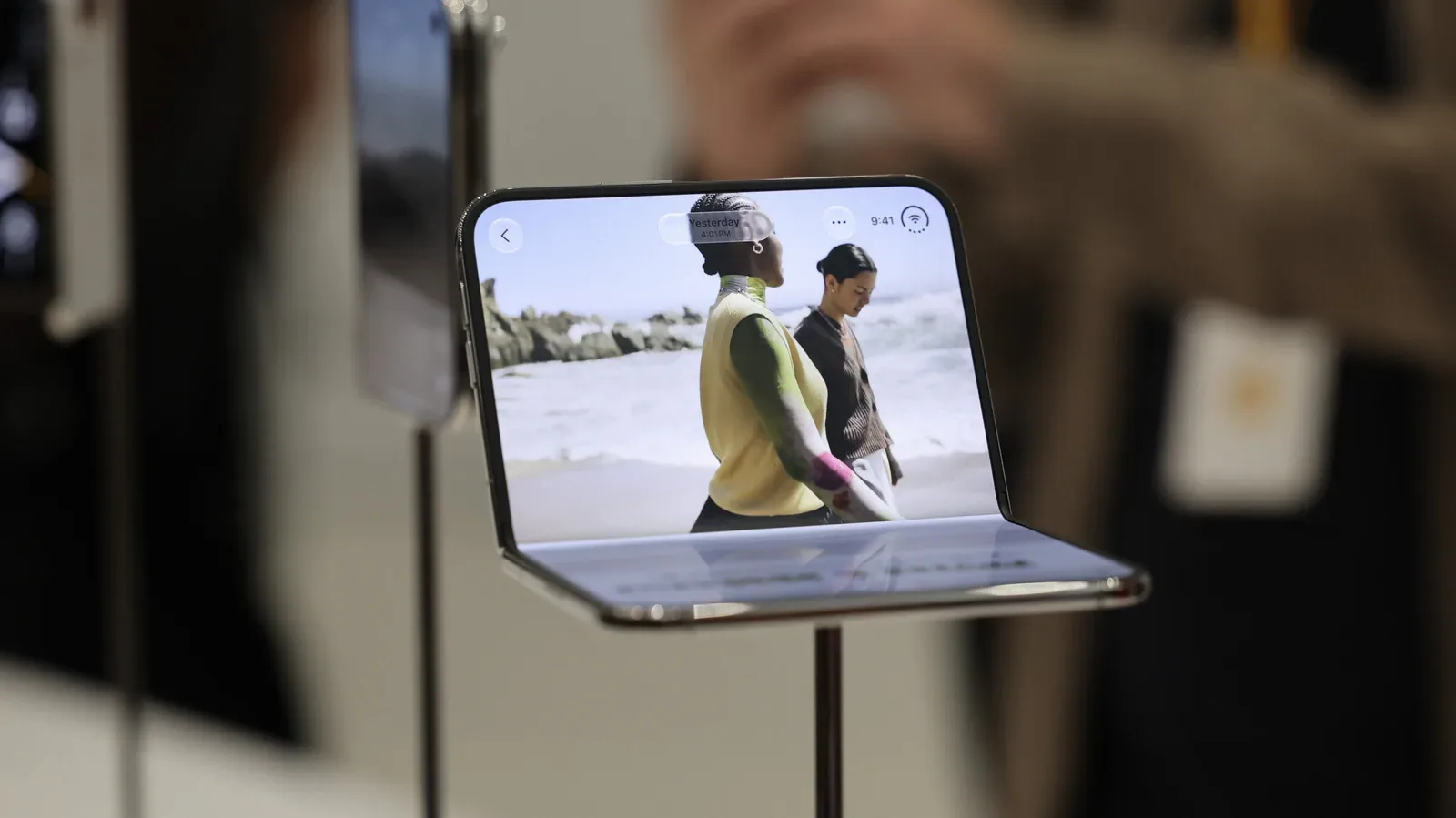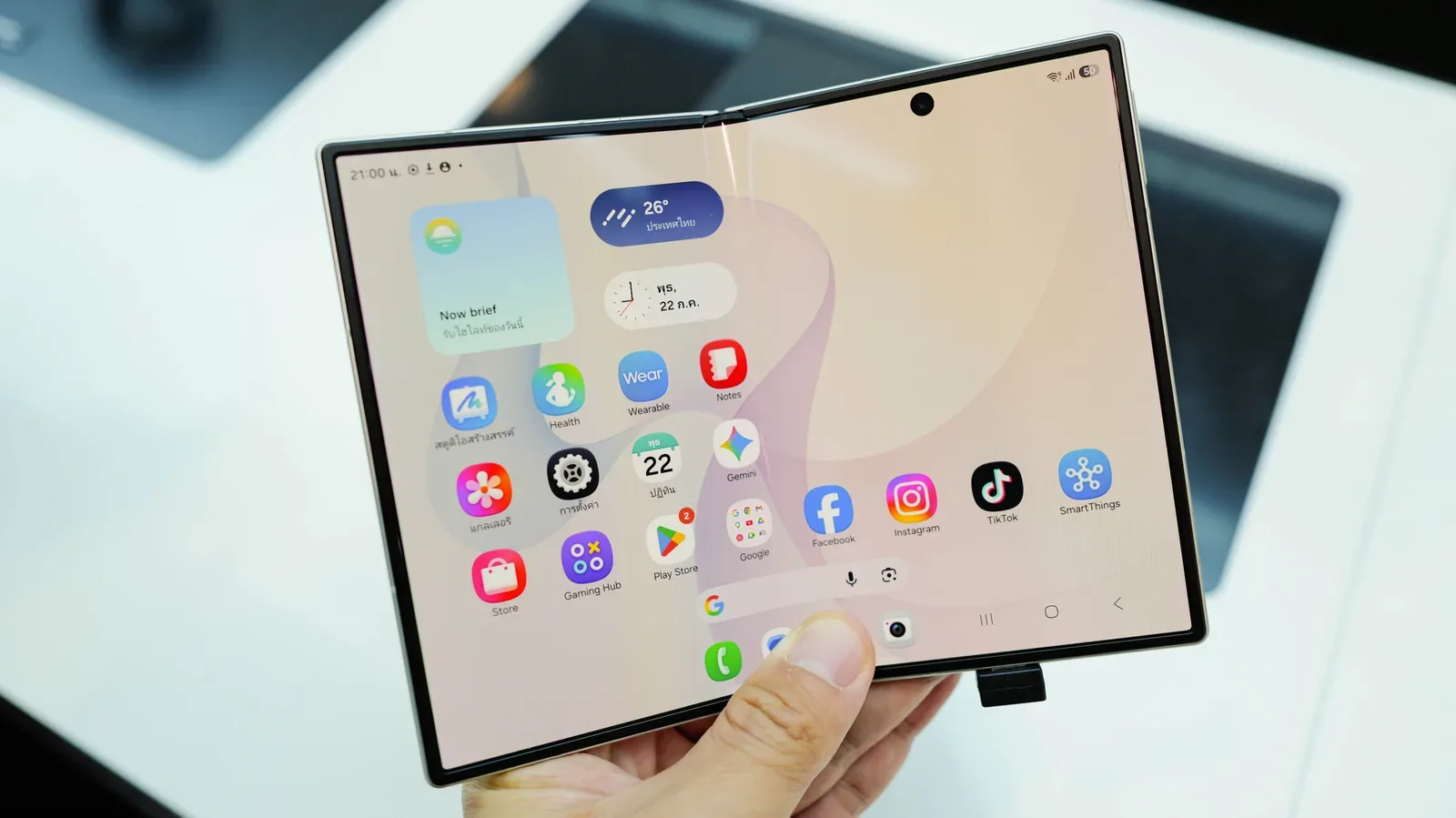
Apple’s iPhone Duo is positioned as a new competitor for Samsung’s foldable phones, but its arrival could create a useful side effect for the Galaxy Z Fold 8 and the wider foldable market: more people may finally pay attention to the category at all.
That distinction matters. Foldables have existed in mainstream consumer hardware for years, with Samsung’s original Galaxy Fold arriving in 2019, yet they remain a small corner of the overall phone business. IDC estimates that 20.6 million foldable phones shipped last year, compared with 1.25 billion smartphones globally. A foldable is no longer an unfamiliar concept, but it is still far from a default purchase.
Apple has now unveiled the iPhone Duo, its first phone in the format, ahead of its planned arrival in stores next month. The company is entering a market that Samsung has already helped establish, rather than inventing a new device class. Still, an Apple launch can bring an enormous amount of attention to a concept that many buyers had previously dismissed as expensive, delicate, confusing or simply unnecessary.
For Samsung, that attention could become an opportunity. People newly curious about folding phones do not have to wait for one particular device. They can compare models already on sale, including the Galaxy Z Fold 8, the more affordable Galaxy Z Flip7 FE and the higher-end Z Fold 8 Ultra. Competition is real, but so is the possibility that a rising tide of interest makes the whole category easier to sell.
Apple is competing for buyers—and growing the audience
The clearest potential benefit is category awareness. In ordinary slab-phone terms, nearly everyone understands the basic deal: a screen, cameras, apps and a familiar rectangular shape. Foldables ask buyers to think differently. Their appeal is not merely that the screen bends; it is that one device can be used in several physical layouts.
A book-style phone such as the Galaxy Z Fold 8 can be closed for a conventional phone-like experience and opened for a larger display. A device can also be used half-open, which changes the way software, controls and on-screen information can be arranged. Those use cases need explaining, and a high-profile iPhone Duo campaign is likely to put that explanation in front of many people who would otherwise never seek it out.
That does not mean all of those newly interested shoppers will choose Apple. Some may prefer the range Samsung already offers. Others may conclude they want to try a foldable immediately rather than wait until the iPhone Duo reaches stores. Recent reports suggest that purchases of the Galaxy Z Fold 8 have increased after the iPhone Duo reveal, although the exact reason an individual buyer chooses a phone cannot be known from sales interest alone.
There are several plausible explanations. Some enthusiasts may want to experience the form factor before Apple’s product arrives. Some buyers may be comparing options and find Samsung’s established lineup more suitable. And some may simply be encountering foldables as a serious choice for the first time because Apple’s entry has made the format a much bigger conversation.
Related coverage includes Why the iPhone Duo Could Give Samsung’s Galaxy Z Fold 8 a Lift.
Samsung has reportedly cut foldable-phone prices in certain markets after the announcement. That is a practical reminder that consumers do not need to “pick a side” for competition to help them. A price reduction, a stronger promotional offer or a broader range of devices can all be meaningful even for shoppers who never consider buying an iPhone Duo.
Why the market is still unusually small
The shipment figures give useful context to the excitement. Twenty-point-six million foldable devices is not an insignificant total, but it represents a tiny share beside 1.25 billion smartphone shipments. Put simply, foldables have demonstrated that there is demand, but they have not yet become a mainstream assumption in the way a standard smartphone has.
That leaves substantial room for growth, but it also means phone makers must make a more persuasive case. A buyer needs to understand what a foldable improves in day-to-day use, not merely admire the engineering. More display space, alternate layouts and the prospect of having phone and compact tablet-like roles in a single device are possible arguments. Yet the format must also feel coherent, polished and worth the trade-offs implied by a more complicated design.
Apple’s participation may help normalize those questions. When a major phone maker enters a category, the discussion can shift from “Why would anyone want this?” to “Which version of this is best for me?” That is a much healthier position for established foldable makers. It turns the format from a niche curiosity into a product segment where features, design decisions and price matter.
Samsung’s advantage is choice. There is one iPhone Duo for now, while Samsung’s foldable catalog spans a relatively affordable flip-style option and premium Fold variants. The Galaxy Z Flip7 FE and Z Fold 8 Ultra serve different positions in that range, and the Galaxy Z Fold 8 sits within a company that has already had years to make foldables part of its product identity.
Choice alone is not a guarantee of success, of course. It does, however, give prospective buyers more ways to enter the category. A shopper attracted by the iPhone Duo’s publicity may discover that they prefer a different size, approach or price point. That is precisely how one company’s announcement can strengthen a rival’s sales prospects without reducing the direct rivalry between them.
The crease is a hardware detail with outsized importance
One area where attention may intensify is the visible crease in a folding screen. The crease is the line or indentation formed where a flexible display repeatedly bends. It is a familiar characteristic of foldable hardware, and the iPhone Duo has not eliminated it. Its implementation reportedly makes the crease substantially less noticeable through a matte nano-textured layer.
“Nano-textured” describes a very fine surface treatment. In this context, its importance is not the term itself, but the intended result: changing how the screen surface looks and reflects light so that the crease attracts less attention. A less-obvious crease may seem like a small refinement, but it speaks directly to a major perception issue for foldables. Buyers are likely to scrutinize the hinge area because it is where the format visibly differs from a conventional phone.
The important point is not that every future foldable will use the same material or solution. The more likely effect is competitive pressure around the outcome. Once one major model claims a less conspicuous crease, other manufacturers have a stronger reason to improve their own approach. The benchmark becomes not whether a screen folds, but how finished it feels when unfolded.
That is a positive kind of pressure. It directs attention toward tangible refinement rather than novelty for novelty’s sake. Samsung and other companies will be judged more closely on details that influence how a device looks in normal use, not just on the dramatic fact that it changes shape.
Software has to understand the hinge
The equally important challenge is software. The iPhone Duo still runs iOS, but its interface has been designed around three states: folded, unfolded and half-open. That sounds obvious, yet it is one of the hardest parts of making a foldable feel intentional.
A user interface is the layer of controls, windows, animations and layouts through which someone uses a device. On a foldable, that interface has to respond to both a changing screen size and a changing physical posture. An app that looks acceptable on a narrow display may need a different arrangement on a larger one. A half-open device may call for a separate presentation again.
Too often, foldable software can appear to simply enlarge or shrink an ordinary phone interface. The result may function, but it can look unfinished because the bigger display is not being treated as a distinct workspace. A thoughtfully designed foldable interface instead considers how content and controls should move between layouts as the device opens or closes.
Apple’s design will therefore be watched for more than its hardware. Developers are already porting the iPhone Duo’s opening-and-closing animation to Android, an early sign that visible interface ideas can travel quickly between platforms. An animation alone does not make a foldable better, but it can shape expectations for transitions: the movement on screen should help users understand what has changed when the device changes form.
There is no certainty that this particular animation will become a standard. The broader point is stronger: once a major entrant presents a polished answer to a foldable design problem, competitors have an incentive to examine their own answer. That can improve everything from the way apps reflow to the clarity of split-screen layouts and the continuity of a task across folded and unfolded states.
What prospective buyers should take from the rivalry
For people considering a foldable, the iPhone Duo’s launch should make comparison easier, not more tribal. The useful questions are practical. Does the device offer a layout that fits the way it will be used? Does the unfolded interface look like a purposeful experience rather than a stretched phone screen? Is the crease sufficiently unobtrusive for the buyer? And does the available model range include a price and form factor that make sense?
The developing competition also argues against treating any one announcement as the final word on foldables. Samsung has experience and a wider set of products in this segment. Apple brings a first attempt with a screen treatment intended to reduce the crease’s visibility and an iOS interface built around multiple positions. Each approach can push the other company to improve.
That is especially useful in a market that remains so much smaller than the mainstream smartphone market. More attention can produce more comparison, more choices and greater pressure to offer compelling value. It may even eventually encourage Apple to consider a lower-cost iPhone Duo model, though that remains a possibility rather than a stated plan.
Apple did not need to be first to shape the next stage of foldables. Its entry may make the category more visible, while Samsung’s existing lineup gives curious customers alternatives right now. For the Galaxy Z Fold 8, the iPhone Duo may be a challenger—but it may also be the catalyst that gets more people to look at foldables in the first place. For a closer look at the naming overlap without confusing the products, see why the iPhone Duo and Surface Duo are not the same kind of device.