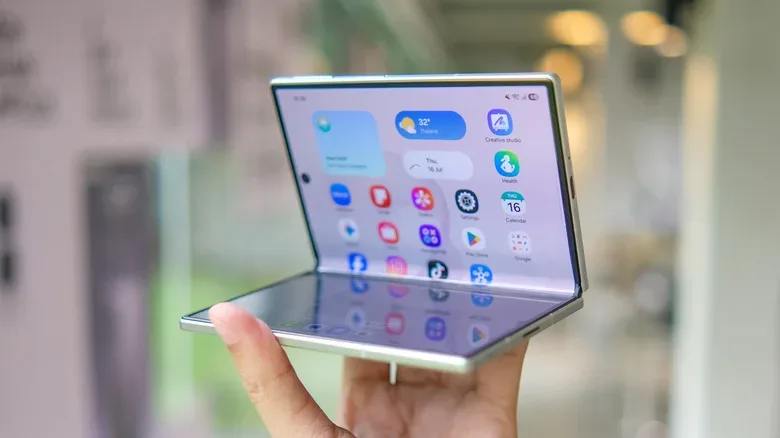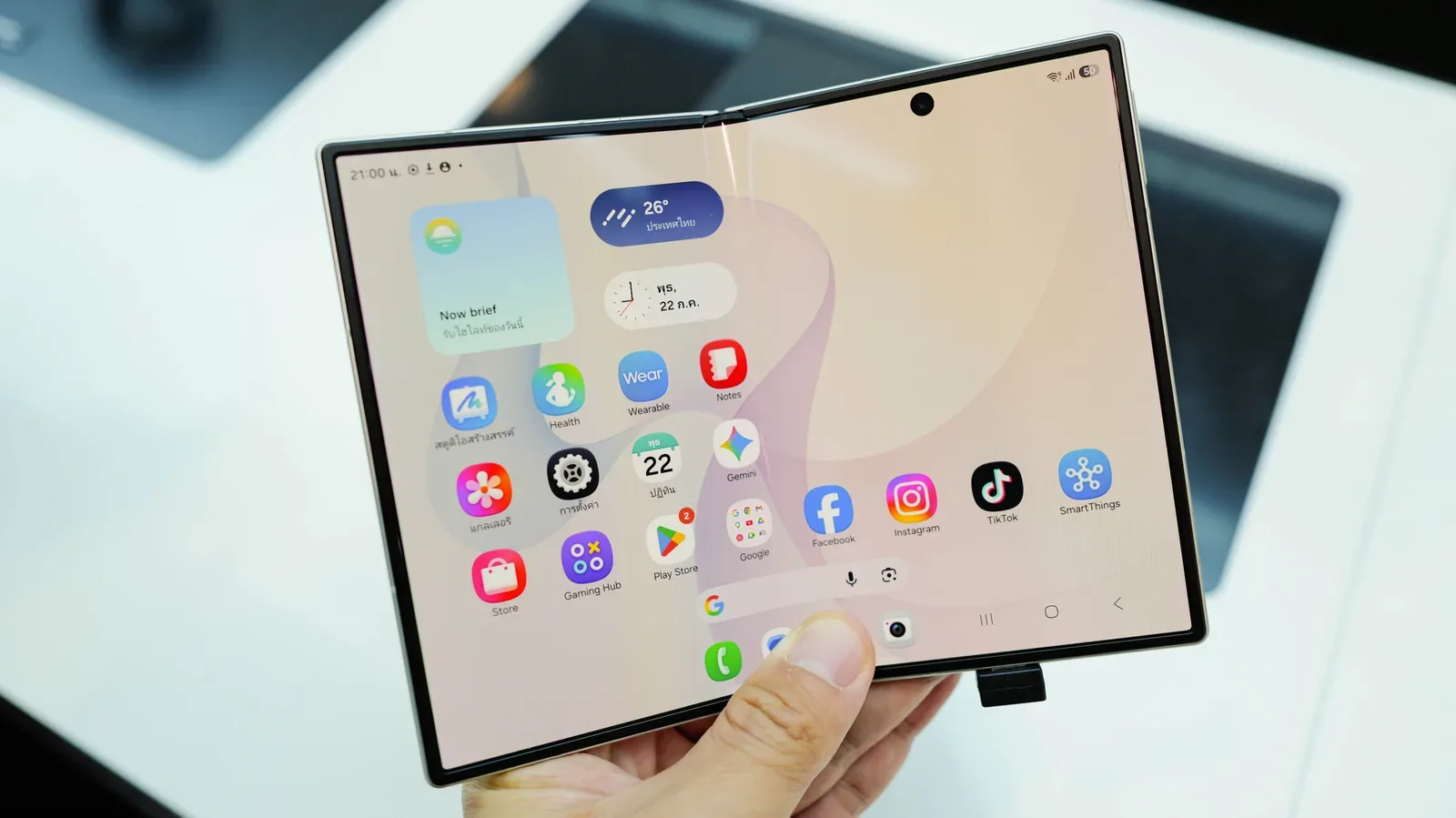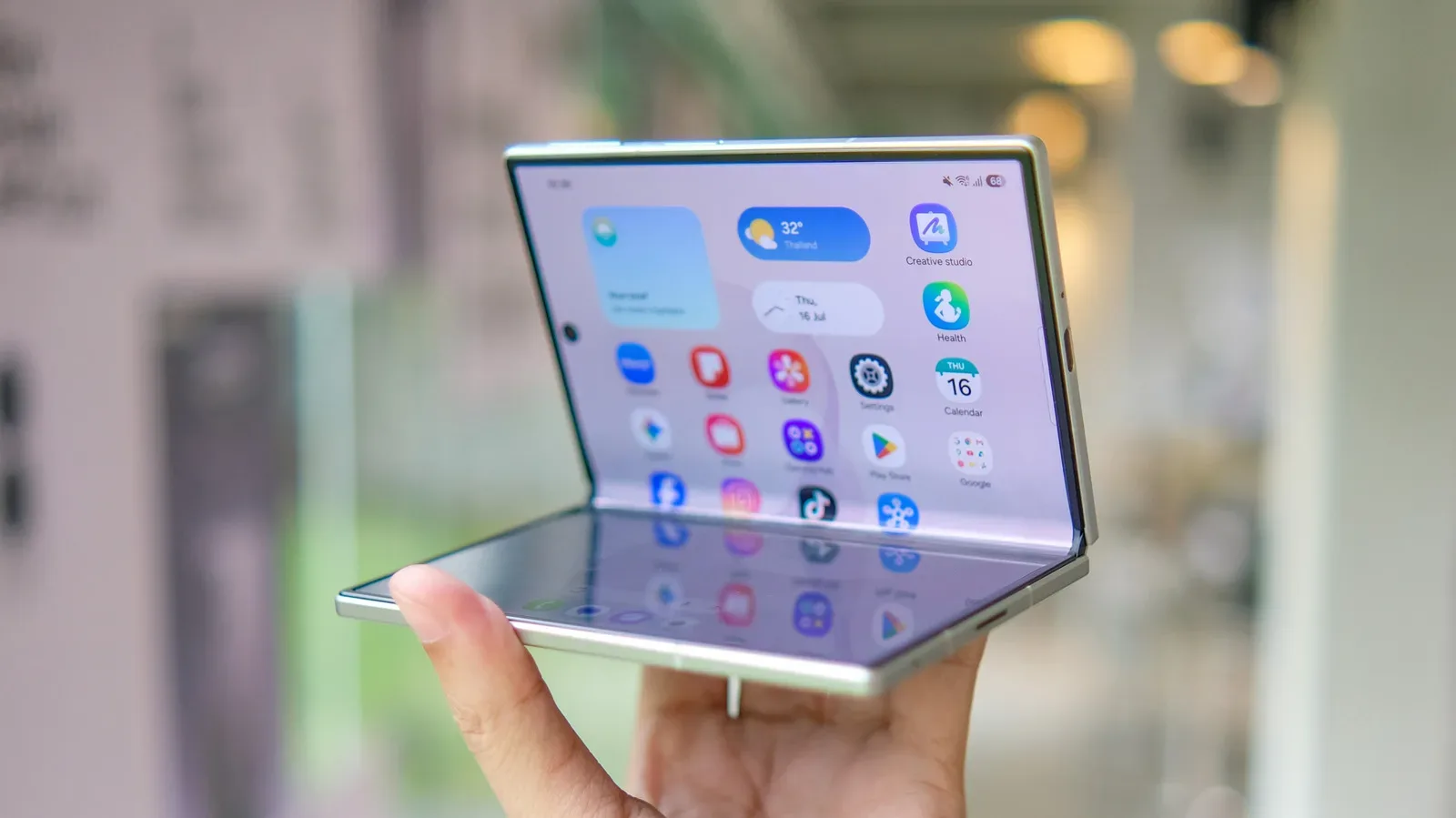
Foldable phones have spent years graduating from experimental hardware to polished, genuinely useful pocket tablets. Samsung’s original Galaxy Fold arrived seven years ago with obvious first-generation baggage, while the models that followed have brought stronger displays, slimmer frames and more mature hinges. The core trick remains undeniably appealing: carry something phone-sized, open it, and gain a much larger workspace for reading, video, maps, multitasking and games.
Yet one extremely ordinary interaction still exposes the awkward physics behind the premium folding-phone pitch. Put one down on a desk, then try to type, tap or scroll while it lies flat. Depending on the camera housing, the device can rock back and forth like it has decided a meeting-room table is its personal balance board.
It is not the flashiest complaint about foldables. The screen crease and long-term durability questions get more attention, understandably. But the wobble caused by a large rear camera module is an unglamorous, repeated annoyance. It appears whenever someone answers messages at a café table, follows a recipe in the kitchen or uses the unfolded display as a small workstation. A $2,000-plus device should not feel as though it needs a tiny wheel chock.
The camera bump is doing a real job
Calling every camera bump bad design would be too simple. Modern phone photography depends on components that take up physical space. Larger sensors help gather light, lens systems need room, and manufacturers keep pursuing better image quality without making the rest of a phone dramatically thicker. The camera island is the compromise: allow that area to project beyond the chassis, and more capable imaging hardware can fit inside.
That logic applies to conventional smartphones, too. Flat-backed phones are increasingly rare, and Apple even uses the term Camera Plateau for its raised camera area. On a typical slab phone, however, the discomfort can be limited. A case may level the surface somewhat, or the bump may sit in a position that leaves enough of the phone resting steadily on the desk.
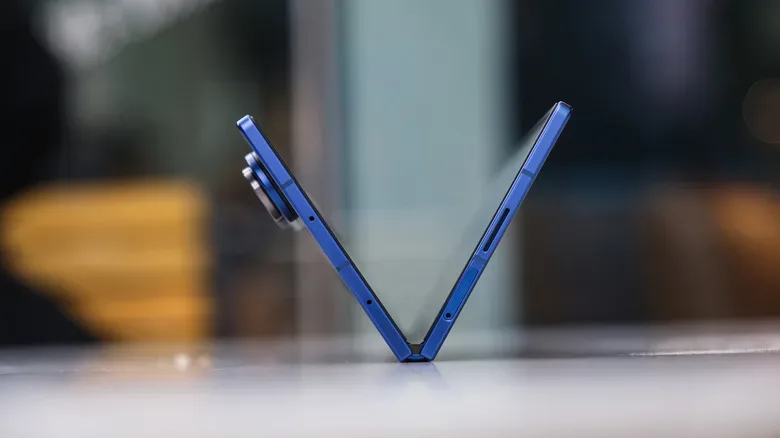
A book-style foldable makes the compromise more conspicuous. Manufacturers are aggressively slimming these models so that, when closed, they resemble an ordinary flagship rather than a wallet with a screen. But cameras do not shrink at the same pace as chassis thickness. The raised module becomes proportionally more dramatic, and its placement matters just as much as its height.
With the Galaxy Z Fold 8, the rear camera assembly protrudes substantially and is arranged vertically. Set the handset down and the uneven contact points can make interaction on a flat surface less stable. Posts from users discussing the wobble illustrate how quickly a small daily irritation can become a major complaint after a buyer has committed to an expensive device.
Some frustrated owners have reportedly taken the extreme step of dismantling phones to remove rear cameras. That is emphatically not a sensible remedy. It risks damaging a costly device and discards a major part of what buyers are paying for. Still, the fact that anyone would consider it is a reminder that hardware ergonomics are not trivial once they intrude on routine use.
Thinness is not automatically a win
The industry’s fixation on thin devices has a built-in contradiction. A thinner body looks elegant, slides into a pocket more easily and helps remove the old perception that foldables are bulky novelties. But a thinner body beside a camera module with roughly fixed space requirements can exaggerate the bump. The phone becomes sleeker in profile while becoming less level on a table.
There is an obvious engineering answer: make the body thick enough to contain the cameras flush with the back. That would eliminate or reduce the rocking, give the device a more stable footprint and potentially leave room for a larger battery. It would also challenge the marketing language around ultra-thin foldables and make a closed device feel less like a conventional phone.
In other words, there is no free lunch, only a menu of physical compromises. Buyers can choose a thin folding chassis with a conspicuous camera rise, or a thicker device that carries more of its hardware internally. Neither approach is inherently wrong, but the industry should be more willing to recognize that “thin” is only one measure of good design.
A foldable is supposed to combine two formats in one device. It should not require users to choose between a capable camera and a phone that stays still when they tap it on a desk.
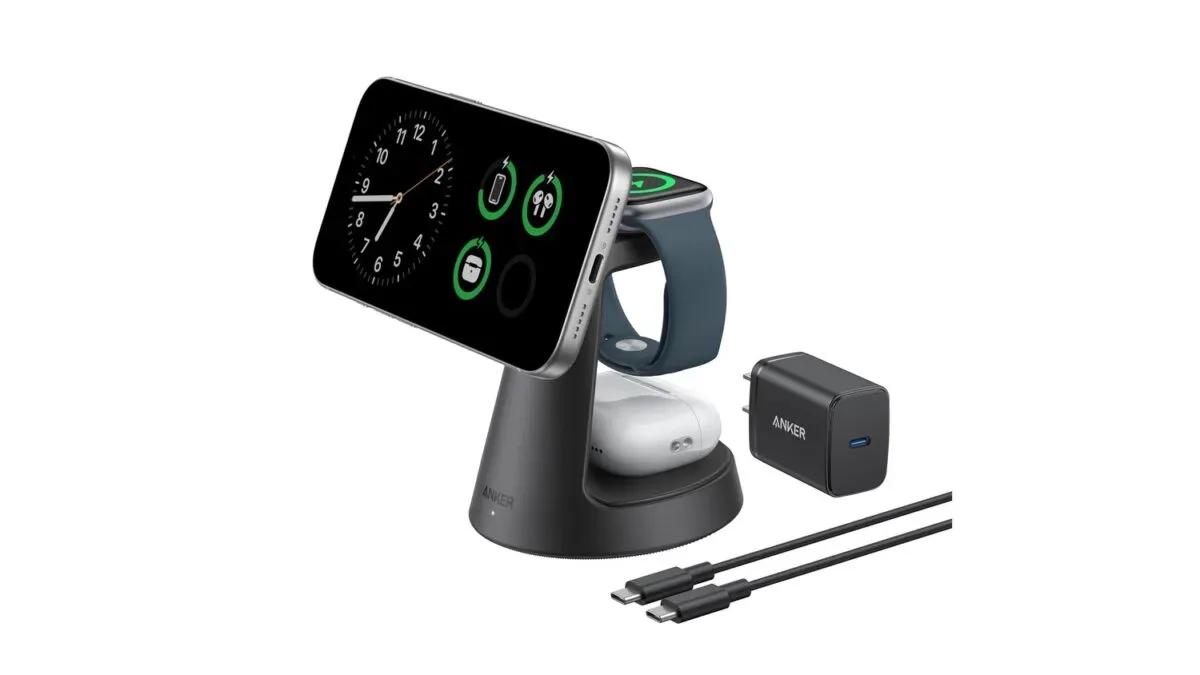
For the moment, a thicker case is the practical workaround. It can reduce the difference in height between the camera section and the rest of the back, improve grip and add protection. The catch is almost comical: buyers select increasingly thin foldables, then wrap them in enough material to restore some thickness. Anyone planning to use a wireless charging stand should also consider the fit and alignment implications of a very bulky case. A fold-flat accessory such as this Qi2 charging station is a useful example of why the accessory ecosystem’s physical design can matter as much as a spec sheet.
The wobble is part of a larger foldable compromise
Camera bumps alone do not explain why foldables remain less common than standard smartphones. The format is better than it was, but it still asks shoppers to make several trade-offs at once. The table-rocking issue merely has the distinction of being easy to understand without a teardown, benchmark chart or repair bill.
The central display crease remains visible. Improvements have made it less distracting than earlier implementations, but it has not disappeared. After months of repeated opening and closing, the crease can be especially noticeable under reflected light, leaving the interior panel with an appearance some users may find less pristine than a traditional glass display.
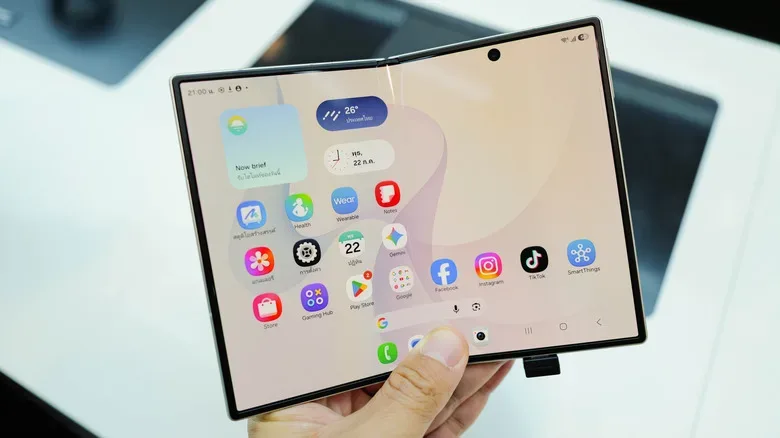
Software remains another uneven area, particularly on Android. A large interior screen creates possibilities for multi-window work, media and gaming, but not every app makes intelligent use of that space. Some applications behave like enlarged phone apps rather than thoughtfully adapted tablet software. TikTok, for instance, can look unusual on the Z Fold 8’s relatively wide, short inner display. A screen that changes shape is only as convincing as the software that responds gracefully to it.
Apple may have an advantage here if its rumored foldable iPhone appears, because iOS applications have often adapted comparatively quickly to new device features and form factors. But that remains a rumor, not a product promise. The same reports suggest that Apple’s possible foldable may omit both a telephoto camera and Face ID, features that buyers associate with iPhone Pro models. A new entrant could expand attention around foldables without immediately eliminating their compromises.
Premium pricing makes omissions harder to forgive
Foldables are not just being compared against normal flagship phones in theory. Their prices invite direct scrutiny of every missing feature. The Galaxy Z Fold 8 Ultra is listed at $2,100, yet it lacks the 5x optical zoom and 60W fast charging offered by the S26 Ultra. For a buyer, that can make the decision feel like choosing an expansive display over camera reach and charging speed, rather than receiving the best of everything.
This is the fundamental tension. Foldables are exciting because they offer something a regular phone cannot: a tablet-like screen that folds into a pocketable body. But their prices and flagship branding raise an understandable expectation that they should match the best conventional handset in nearly every other category. Current models often cannot do that, whether the limitation is camera hardware, battery capacity, charging, durability, app behavior or simple desk stability.
None of this means the category lacks value. A person who reads comics, edits documents, manages multiple apps, watches video or wants a roomy portable screen may reasonably decide the interior display is worth the price and the compromises. Foldables can be genuinely delightful devices when their special capability aligns with how someone uses a phone.
But reaching beyond enthusiasts will require more than thinner bodies and smaller creases. Companies need to make the everyday moments feel as effortless as they do on a standard phone. That means continuing to improve app layouts, closing camera and charging gaps where possible, keeping durability credible and revisiting whether an ultra-thin chassis is worth a device that jitters every time it is used on a table.
Until then, shoppers should evaluate a foldable as a package of trade-offs rather than a straightforward flagship upgrade. Look at the camera system, charging specifications, software behavior, price and how the device sits when opened on a desk. The giant screen may be the showpiece, but the tiny seesaw underneath it is still part of the experience.