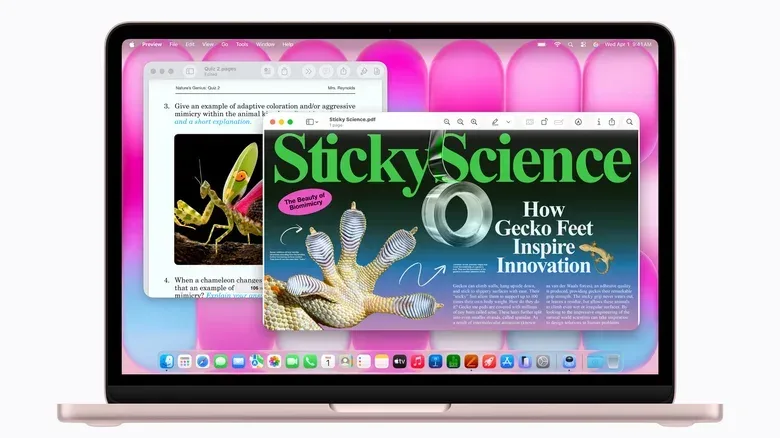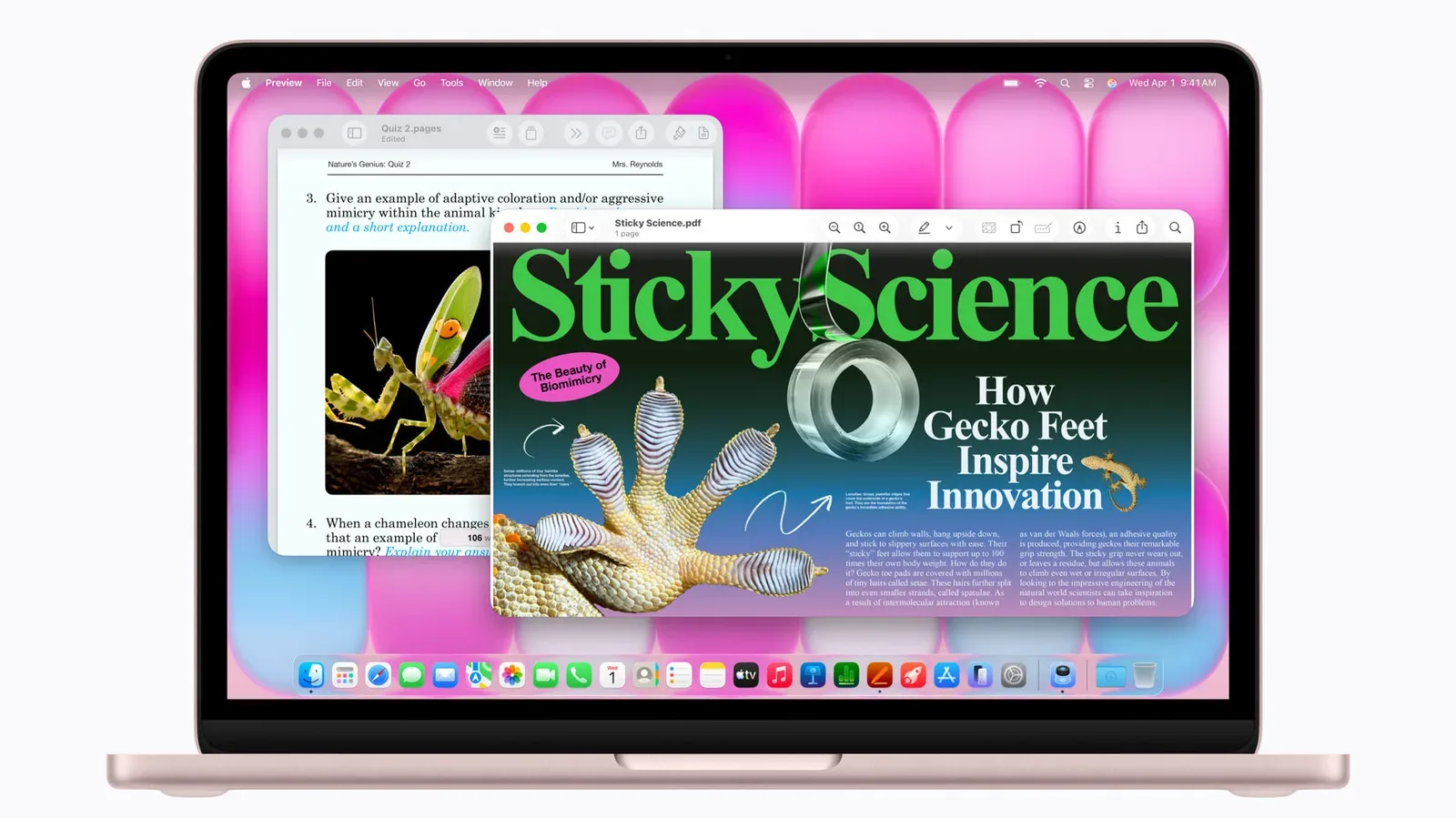
There is now a pink Apple laptop again—sort of. The MacBook Neo arrives in a finish called Blush, a rosy color that has found an enthusiastic audience online, particularly among students. But it also exposes an odd divide in Apple’s hardware strategy: the one MacBook available in an overtly pink shade is positioned for casual use and note-taking, rather than demanding creative or professional workloads.
That does not make the MacBook Neo a lesser object in aesthetic terms. Quite the opposite: Blush is proof that a lively laptop color can be appealing without being a novelty. The awkward part is the implication created by the range around it. Buyers who want more performance, or who simply prefer a higher-end machine, largely have to leave that expressive finish behind.
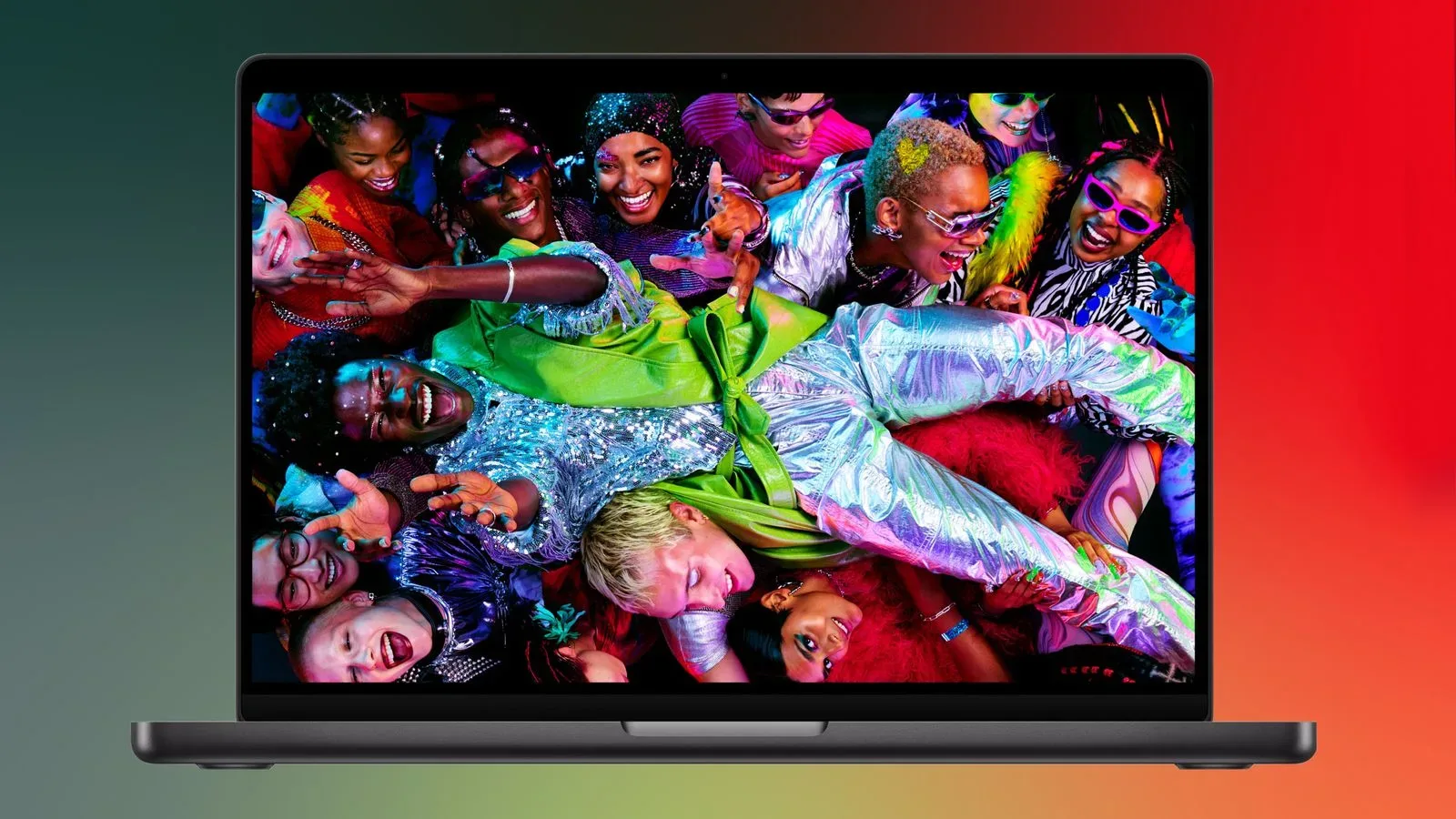
MacBook Air buyers can choose a faint blue option, but the MacBook Pro line is limited to Silver and Space Black. In practice, someone seeking a pink laptop must choose between getting the color they want and stepping up to a system intended for more intensive work. Color has become a capability boundary even though the two attributes do not inherently conflict.
Blush is a choice, but not a full lineup choice
The important distinction is between a color being available somewhere and it being meaningfully available across a product family. Blush answers the first question. It does not answer the second.
For casual users, the Neo’s positioning may be completely appropriate. Note-taking, everyday tasks and schoolwork do not require pro-class power merely to be enjoyable or productive. But a student can also edit video, create illustrations, record music, compile software or take on more ambitious work over the lifespan of a laptop. A working creative may have equally straightforward aesthetic preferences. Neither group should have to treat a colorful finish as a trade-off against the machine that fits their needs.
“Pro” in this context is a performance tier, not a personality type. It describes machines meant for heavier workloads, not machines that need to look like office equipment. A more capable MacBook can still be restrained in design, but restraint ought to be an option rather than the only expression available.
This is also why cases are not a perfect answer. A case can add color, certainly, but it covers the product rather than making the hardware itself available in that finish. It can alter the feel, thickness and appearance of a laptop, and it does nothing for buyers who value a coordinated chassis, keyboard and display surround. Blush has appeal precisely because it is part of the device rather than an accessory placed over it.
Apple has used color elsewhere
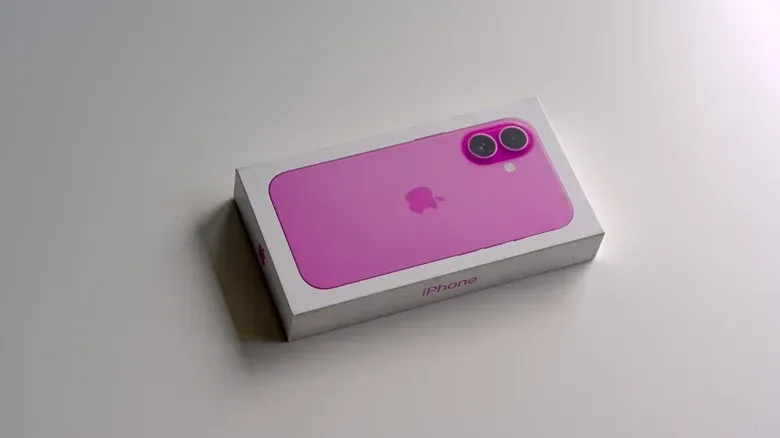
The absence is not easily explained by a lack of experience. Apple already offers colorful finishes in several current product families. Two pink treatments appear across the Phone 16 and 17e, although the 17e’s version is more subdued while the Phone 16 takes a brighter approach. The base iPad with A16 is also offered in a bold pink, alongside a notably vivid yellow, and the M4 iMac lineup includes pink among several conspicuous colors.
Related coverage includes Apple’s Pink MacBook Problem Goes Beyond the Blush MacBook Neo.
Those examples matter because they demonstrate that pink can mean different things. It need not always be the same saturated tone. One device can make it loud and cheerful; another can make it lighter or more muted. A high-performance laptop would not necessarily need to duplicate Blush exactly. It could use a deeper rose, a soft pink, or another warm metallic interpretation while still giving the MacBook Pro range a genuine alternative to grayscale finishes.
The present split instead suggests a familiar ladder: the more accessible product gets the bolder colors, and the more expensive model becomes quieter. The iPad Pro and MacBook Pro fit that pattern, tending toward muted finishes and the usual gray and silver territory.
There is a practical logic to that decision. Premium laptops are used in offices, studios, schools and shared spaces, where neutral equipment can be perceived as broadly suitable. A company may also prefer a smaller, simpler selection of finishes for its upper-end models. But neutral colors do not become universally preferable just because they are conventional. A pink option could sit beside Silver and Space Black without displacing either.
Rose Gold showed there was room in the middle
Apple’s earlier Rose Gold finish is useful context, even if it was not the vivid pink some shoppers would ideally want. It offered a middle ground: warmer and more distinctive than silver, but still metallic and relatively reserved. The color appeared on iPhones during the mid-2010s, on MacBook Air models that were discontinued in 2019, and on Apple Watches until this year.
The Apple Watch Series 11 was the final showcase for Rose Gold in this account. With the Series 12, that option has gone away too, leaving Night Blue as the lineup’s most colorful alternative—a dark shade by design. Across Apple hardware, then, the movement is not simply from one pink to another. In some higher-end areas, it is away from warm color altogether.
That makes the Neo’s Blush finish feel less like the start of a broad return and more like an isolated exception. It is welcome, but it raises a reasonable question: why should the only pink MacBook be the one least equipped for demanding creative work?
Phones point to a less rigid color rule
Smartphones provide a counterexample to the idea that bold colors must remain reserved for entry-level devices. The Pixel line has received several pink treatments, including the Pixel 11’s hot-pink Hibiscus finish. Motorola’s reimagined foldable Razr is available in Hot Pink, a color that deliberately echoes the original Razr’s visual identity.
Apple’s own recent Pro phones offer an even more relevant signal. The 17 Pro came in a strongly saturated orange, while the 18 Pro includes rich burgundy and subtle glacier blue. Those choices do not turn every professional product into a rainbow, but they show that a premium designation and a more assertive finish can coexist.
The lesson is not that every MacBook needs a hot-pink chassis. It is that product segmentation does not need to be communicated through color austerity. Performance is explained by processors, memory options, display specifications and thermal design. Thermal design is the system that moves heat away from components so a computer can sustain demanding work. It is meaningful engineering. The shade of the enclosure is a separate product decision.
For prospective laptop buyers, that separation is worth keeping in mind. Color should be one factor, but it should not eclipse workload, portability, storage needs or the expected life of the machine. Someone planning long gaming sessions, for instance, will also want to understand why capacity figures alone do not settle a device’s endurance; battery capacity and real battery life are not the same thing. Similarly, a Blush finish cannot turn a casual-use laptop into a professional workstation, and a Space Black finish does not make a Pro model the best fit for every buyer.
A colorful MacBook Pro would broaden the choice, not replace it
There is a straightforward path between making every premium MacBook brightly colored and offering none in pink: add one. Silver and Space Black could remain for people who want familiar, low-key choices. A blush, rose or burgundy-adjacent option would simply recognize that a buyer can want serious performance and visual character at the same time.
The possibility feels especially timely with a rumored reimagining of the MacBook Pro range on the horizon. A rumor is not a product plan, and there is no basis here to promise a pink Pro model or any particular new finish. Still, a redesign would be a natural moment to reconsider the distinction between “fun” colors for mainstream machines and neutral colors for powerful ones.
Until that happens, the MacBook Neo carries an outsized symbolic role. It gives pink-laptop shoppers a real Apple option, but it also makes the limitation impossible to miss. Blush proves the finish can exist. The remaining challenge is letting buyers who need more from a laptop choose it without first giving up the color they like.