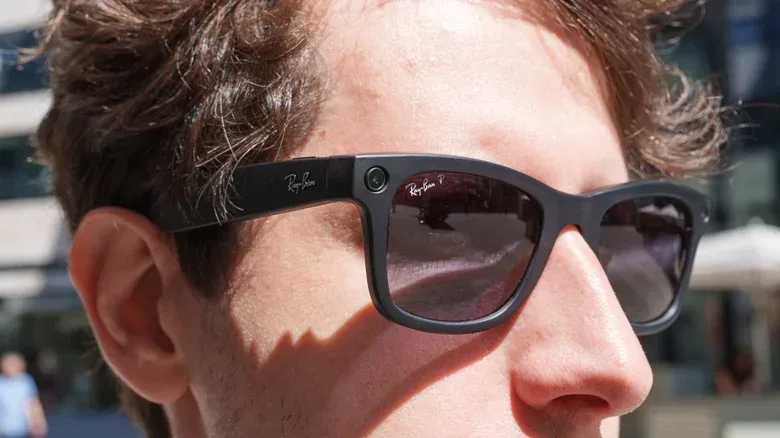
AI glasses are often framed as a face-mounted assistant, camera, or futuristic shortcut to asking questions aloud in public. That framing misses a more immediately understandable feature: the speakers. A pair of smart glasses with open-ear audio can play music, handle calls, read out alerts, and keep a voice assistant within reach without putting anything in the ear or over it.
That does not make the format a clean replacement for a dedicated pair of headphones. It is better understood as a different loadout for a different part of the day. Headphones are built around private, focused listening. Glasses are built around being worn already. The distinction sounds small, but it changes how frequently an audio device is available, how much it interrupts the wearer, and how connected they remain to the room or street around them.
For people who prioritize rich sound, isolation, or discretion, conventional headphones and earbuds remain the obvious choice. But for notifications, calls, podcasts, and casual background listening, the open-ear approach has a credible quality-of-life argument—and it does not require treating an ordinary trip to the store like a cyberpunk side quest.
What open-ear audio actually changes
Open-ear speakers direct sound toward the wearer’s ears while leaving the ear canal unobstructed. This is the defining trade-off. Unlike an earbud, which sits in the ear, or over-ear headphones, which surround it, the glasses do not attempt to seal the listener away from outside sound.
That means the listener can still hear traffic, a person speaking nearby, a store announcement, or a colleague trying to get their attention. It also means music will not be as enveloping, isolated, or sonically full as it can be through a substantial dedicated headset. Those are not contradictory outcomes; they are the same design decision viewed from two different needs.
In technical terms, sound isolation is the reduction of outside sound reaching the listener. Good headphones and earbuds often pursue it because a quieter perceived background lets the listener focus on the recording. Open-ear glasses largely abandon that goal. Their virtue is situational awareness: the practical ability to remain aware of sounds in one’s environment while audio is playing.
The result resembles having music playing lightly in the background rather than stepping into a private listening chamber. For a walk, housework, or a short errand, that may be exactly right. For a favorite album, a noisy commute, or a situation where every detail of a game soundtrack matters, it is much less persuasive.
Sound quality is not the winning stat here
Tiny speakers built into frames have obvious physical constraints. They are not designed to compete directly with larger headphones whose purpose is delivering the best portable sound they can manage. Anyone shopping primarily for sonic detail should treat that as the first and clearest answer: smart glasses are not the premium-audio champion.
The more useful question is whether perfect sound is required for the task at hand. Listening is not one activity. There is a meaningful gap between critical music listening and catching a reminder, taking a five-minute call, following a podcast while washing dishes, or playing some low-key music during a walk.
Open-ear glasses can be useful because they eliminate friction in those smaller moments. There is no separate case to remember, no earbuds to insert, no headband to carry, and no decision to make about whether a short interaction is worth unpacking another device. If the glasses are already being worn, the audio is already in position.
That convenience should not be confused with audio superiority. It is superiority in readiness. In everyday technology, readiness frequently wins more use than a better feature that lives in a bag.
The same principle explains why there is still room for both formats. Dedicated headphones make sense when the listener wants a deliberate audio session. Smart glasses make sense when sound is an accompaniment to the rest of life rather than the whole point. Readers weighing earbuds against larger headphones for gaming may find a related distinction in this look at when earbuds or headphones make sense for gaming: fit depends on what the listener needs, not a universal winner.
The strongest case is calls, not playlists
Phone calls reveal the appeal of the glasses format especially clearly. Holding a phone to the ear for a long conversation can become tiring. Headphones solve the hands-free problem, but over-ear models can feel warm over time, while earbuds occupy the ear and may make a person feel detached from nearby activity.
Glasses take a third path. Nothing is held in the hand, nothing seals the ear, and the caller can move around while continuing to hear their surroundings. The practical advantage is not that the call becomes more private or more immersive. It is that the call becomes less physically intrusive.
That can matter for mundane situations that make up most real device use: taking a call while walking, doing chores, or waiting somewhere. The wearer can still hear what is happening around them, and they do not need to balance a handset against a shoulder or search for a pair of earbuds before answering.
There is a caveat that should stay front and center. Open-ear sound is inherently less private than sound contained by earbuds or headphones. Someone very close by in a quiet room may be able to hear both sides of a call or the audio coming from the frames. A device that leaves the ears open cannot promise the same personal audio bubble as a sealed design.
That is why this is not a universal call solution. It is better suited to contexts where a little sound leakage is acceptable and awareness is valuable. It is a poor fit for confidential conversations, silent rooms, or any place where nearby people should not have to hear the wearer’s media.
Always worn is a meaningful advantage
Smart glasses have one advantage that ordinary headphones cannot duplicate: they may already be on the wearer’s face. That matters most to people who regularly wear prescription glasses or otherwise use eyewear throughout the day. An audio device stored in a pocket only works when someone remembers to bring it, charge it, and put it on. Frames, by contrast, can be part of a normal daily routine.
This makes alerts and voice functions more compelling than the flashy demonstrations often associated with AI. The useful routine may be as simple as having an incoming message or reminder read aloud rather than reaching for a phone. That does not sound transformational in a product demo. It may nevertheless be the function that changes behavior.
It could help a person avoid a familiar sequence: checking a notification, unlocking the phone, and drifting into a longer session of scrolling. Audio does not eliminate distraction by itself, but it can remove one reason to pick up the screen. The benefit is not guaranteed, and it depends on how notifications are configured and used. Still, it is a credible practical use for voice-forward wearables.
Headphones and earbuds can also work with voice assistants such as Siri or Google Gemini. Their limitation is simpler: they must be in use when the message arrives. If they are in a case at the bottom of a bag, their hands-free promise is temporarily unavailable. Glasses turn that availability into their central proposition.
AI is useful when it gets boring
The most grounded version of an AI glasses pitch is not an elaborate spoken exchange about market figures or a running commentary on everything in view. It is an assistant doing small things at the exact moment the wearer needs them: reading a message, announcing a reminder, or handling a short request without forcing a phone interaction.
That is also the appropriate place for skepticism. An always-available assistant is only a benefit when it provides information people actually want read aloud and when speaking to it feels appropriate in the setting. A person may happily ask for a reminder at home and prefer not to dictate a message on public transit. The technology can be hands-free without being socially frictionless.
So the better standard is modest utility, not magic. If the glasses reduce phone grabs and make calls easier, they have already earned a role. The AI layer becomes valuable insofar as it supports those routines rather than demanding that the wearer rebuild their habits around it.
The camera question is separate—and important
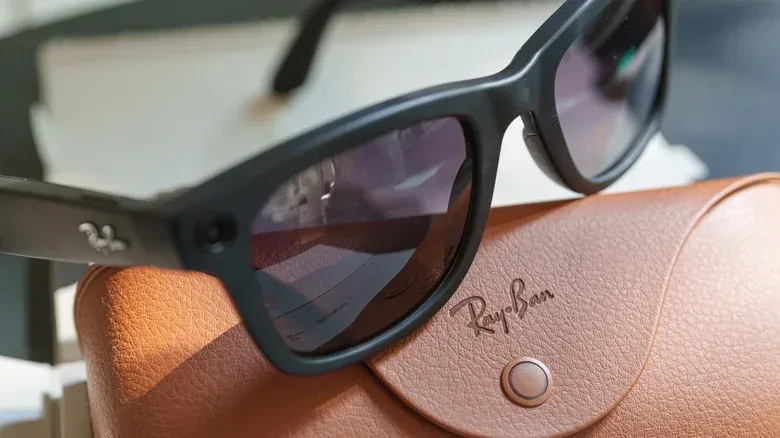
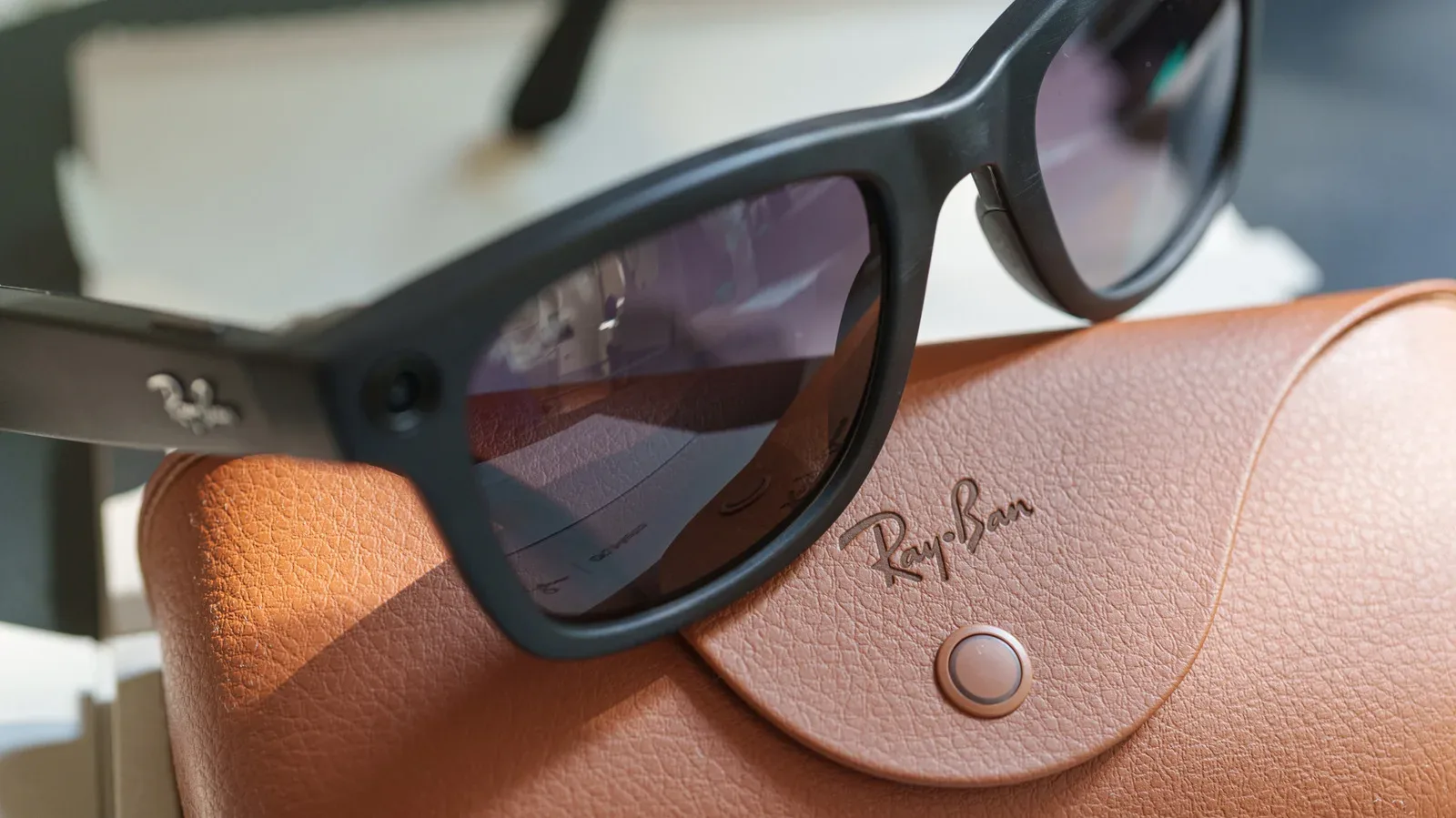
Smart glasses have attracted understandable scrutiny because some models combine their audio functions with a camera capable of recording or livestreaming what the wearer sees. The first Ray-Ban Meta smart glasses arrived in October 2023, and their camera prompted mixed reactions despite the technology being packaged in a form resembling conventional Ray-Ban frames.
Some establishments, including MSC Cruises and Royal Caribbean, have banned or restricted smart-glasses use. That reaction speaks to a social problem beyond the personal convenience of the wearer: people around the device may not know whether they are being recorded.
Camera-free AI glasses offer a meaningful alternative for anyone interested in audio, calls, alerts, and voice assistance without wanting a camera on their face. The Ray-Ban Meta Audio is presented as a camera-free option that retains most of the camera-equipped glasses’ functions while emphasizing privacy.
Removing the camera does not turn any connected device into a privacy nonissue. Audio, notifications, and assistants still deserve careful settings and common sense. But it removes the most conspicuous concern associated with smart glasses: the possibility of quietly capturing what other people are doing. It may also make the glasses more comfortable socially, both for the wearer and for people nearby.
Who should treat glasses as a headphone alternative?
The most promising audience is not everyone who likes gadgets. It is people whose listening is intermittent and practical: glasses wearers who take calls often, commuters and walkers who prefer to keep their ears open, and anyone who would rather hear reminders than repeatedly unlock a phone.
- A good fit: casual music and podcasts, short calls, reminders, chores, walking, and moments where environmental awareness matters.
- A weak fit: private calls in quiet spaces, focused music listening, people who want strong isolation, and anyone who expects frame-mounted speakers to rival high-quality dedicated headphones.
- A key buying question: would the audio be used because the glasses are already on? If the answer is yes, convenience may outweigh lower sound quality.
- A social question: is a camera necessary? If not, a camera-free model addresses the biggest visible privacy objection while preserving the core audio idea.
AI glasses are therefore not poised to delete headphones from the inventory screen. They are a complementary device that can take over the least glamorous but most frequent audio jobs. Their open-ear speakers will not satisfy listeners seeking rich, isolated sound. But for effortless calls, spoken notifications, and background audio that does not shut out the world, their limitations are also the point.