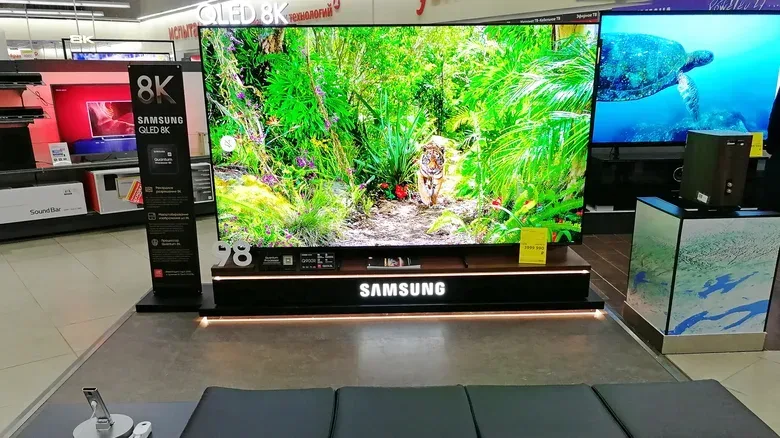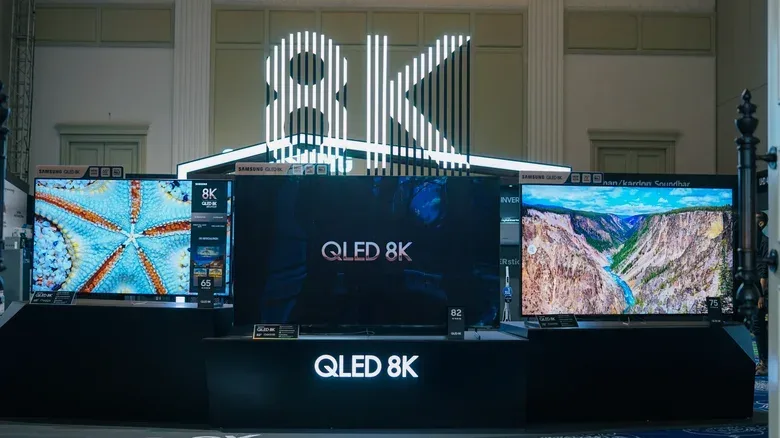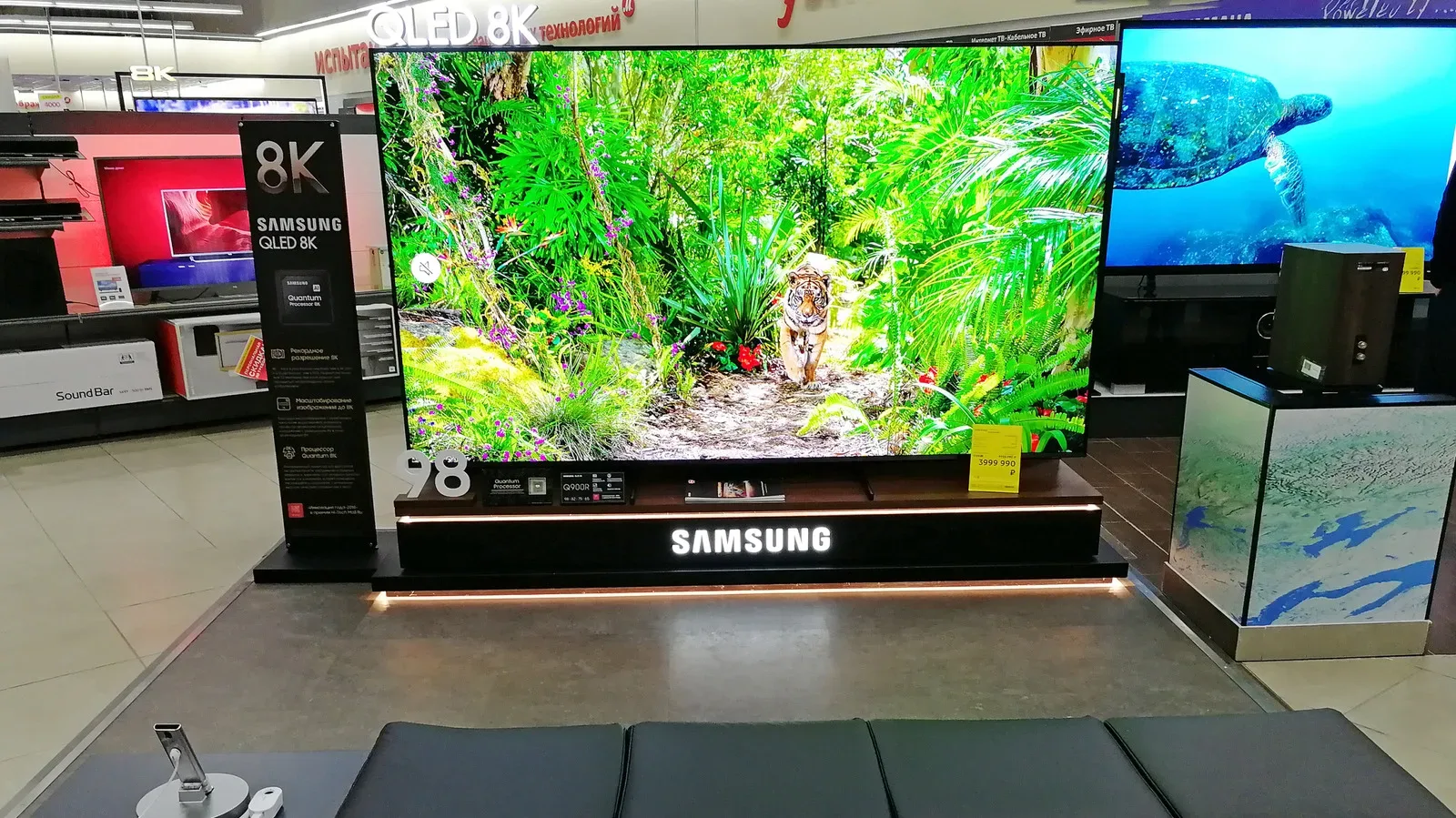
For a while, 8K television was presented as the obvious next checkpoint: 4K had arrived, therefore 8K would inevitably take its place. Instead, the format has become a remarkably clear example of a specification that is technically impressive but commercially unconvincing. The screens can display an immense number of pixels, yet the surrounding ecosystem never gave most people a compelling reason to buy one.
That matters to game players as much as film and television viewers. A new display standard only becomes meaningful when the content, hardware, delivery methods and viewing conditions line up. 8K never achieved that alignment. It was not defeated by one missing feature or one bad product. Rather, its case collapsed under a stack of practical questions: What can actually be watched in 8K? How much extra does it cost? Can a home connection deliver it? Can a gaming PC render it? And, from a normal sofa, can the extra detail even be seen?
By late 2026, the answer for most households is that 4K remains the sensible destination. The fate of 8K is less a story about people rejecting better pictures than about the limits of chasing resolution alone.
The numbers describe a giant adoption gap
An 8K television has a native resolution of 7,680 by 4,320 pixels. That is four times as many pixels as a 4K screen. It sounds like an overwhelming upgrade, but pixel totals are only one component of image quality, and only valuable when the image being shown contains that extra detail.
The market has made its preference unusually plain. Omdia reported in September 2024 that nearly one billion 4K televisions were in use worldwide. Cumulative 8K television sales since 2015, by comparison, stood at just 1.6 million units. Those figures do not measure exactly the same thing—one is active installed base and the other is cumulative sales—so they should not be treated as a direct share calculation. Still, they establish the scale of the gulf. Omdia also found that 8K sales peaked in 2022 rather than building into a sustained replacement cycle.
Manufacturers have adjusted accordingly. Sony discontinued its remaining 8K TVs in 2025. TCL had already pointed to low demand when stepping away from the category. LG exited the 8K market in 2026 after LG Display, a separate company from the consumer-TV seller LG Electronics, ceased making 8K LCD and OLED panels. Samsung remains the notable holdout, offering the 8K QN990H in its 2026 range.
That is a far cry from a broad industry migration. A TV buyer who wants a 4K model has an established, mainstream market. An 8K buyer is shopping in a narrow and shrinking niche.
The central problem: almost nothing is made for 8K
Native content is material created, mastered or delivered at the display’s full resolution. It is the ideal way to show what a format can do. The problem for 8K is that native movies, television programming and streaming libraries never became a normal consumer offering in the way 4K did.
Related coverage includes Why 8K TVs Never Replaced 4K.
There are exceptions, but exceptions do not form an ecosystem. Japan’s NHK operates BS8K, a dedicated channel with arts, culture and nature programming. China Media Group’s CCTV-8K and Spain’s RTVE have also been associated with 8K broadcasting. These outlets demonstrate that 8K distribution is possible; they do not establish the kind of widely available catalog that would encourage a typical household to replace a functioning 4K set.
This leaves most 8K televisions relying on upscaling. Upscaling is processing that takes a lower-resolution image and expands it to fit a higher-resolution panel. It can make an image look cleaner or more refined, depending on the source and the processing. But it cannot turn missing original detail into the same thing as a genuine 8K image. A 4K stream upscaled to an 8K panel is still, fundamentally, a 4K source being intelligently enlarged.
That distinction is crucial. Upscaling may be a welcome picture-quality tool, but it is a weak reason to pay a premium for a new resolution class. If viewers spend almost all of their time with 4K or lower-resolution material, the television’s headline capability remains largely unused.
More pixels create a delivery problem, not just a picture benefit
Resolution is also a data question. An 8K image contains four times the pixels of 4K, meaning substantially more image information has to be processed, stored and sent. Compression can reduce the bandwidth required for a video stream, and settings such as frame rate affect the total demand too. Even so, the basic obstacle does not disappear: high-quality 8K streaming would ask considerably more of home internet connections and the systems delivering the video.
That creates a circular problem. Services have little incentive to invest heavily in 8K delivery while the installed base is tiny. Consumers have little reason to purchase 8K televisions when there is almost no material to stream. Physical media did not supply a broad alternative route to an 8K library either.
The same logic is even harsher in games. Gaming at 8K means rendering an enormous image in real time. The graphics hardware must produce the frame, often repeatedly every second, before the display can show it. The source evidence is appropriately cautious: 8K gaming requires extremely powerful hardware that very few people own or can reasonably afford.
For players, this is a reminder that resolution is only one performance target. A game can feel more responsive or look more striking because of other characteristics that are not captured by a bigger pixel number. It is entirely possible for a player to gain more practical value from a capable 4K presentation than from pursuing an 8K output mode that demands exceptional hardware and compromises elsewhere.
Anyone considering a gaming setup should also separate a display’s native resolution from a game’s rendering resolution. A game can be rendered below the panel’s native resolution and then scaled up. That can be useful, but it means owning an 8K TV does not automatically mean games are being rendered in native 8K.
The human-eye question limits the upgrade further
Even if content and hardware were plentiful, extra pixels only help if a viewer can resolve the difference. Screen size, seating distance and field of view all shape that answer. Field of view describes how much of what a person can see is occupied by the display. A larger image or closer seat can make fine detail more visible; a smaller screen seen from farther away makes the benefit harder to perceive.
A 2025 University of Cambridge study illustrates why the living-room setup matters. In one example, a 44-inch television viewed from 2.5 meters away did not produce a better result with 4K or 8K than a comparably sized QHD display. QHD, or Quad High Definition, is a lower resolution than 4K. The example does not claim that 4K and 8K are always indistinguishable. It shows that resolution gains are conditional, not automatic.
That makes 8K’s target audience especially narrow. Someone with native 8K material, a sufficiently large display and a viewing position that reveals the additional detail may genuinely see an improvement. A very large room with room for a 65-inch-or-larger set positioned appropriately may provide a more favorable scenario than an ordinary living-room arrangement. But that is a specialist use case, not a mass-market argument.
There is an uncomfortable lesson here for every specifications race: a number can continue rising after its practical benefit becomes difficult to notice. The transition from standard definition to 1080p was a much more dramatic leap for many viewers than the move from 4K to 8K. At the latter stage, diminishing returns become the governing principle. Each additional improvement can cost more while producing a smaller visible change in typical conditions.
Why better 4K is a more useful goal
Resolution is not the whole picture-quality story. Contrast, color performance, brightness and HDR can all influence how an image appears. HDR, short for high dynamic range, concerns the range between dark and bright parts of an image and the presentation of those highlights and shadows. These factors can improve a 4K viewing experience without requiring a transition to 8K.
That does not make 8K fraudulent or pointless. It is a real technical capability, and there are circumstances in which it can provide a visible benefit. But it is not a reliable form of future-proofing at present. Buying for an anticipated future only makes sense when the surrounding content and device support are likely to arrive in time to matter. The evidence from the market so far points in the opposite direction: panel production has ended at one major supplier, several TV brands have left the segment, and mainstream content has not materialized.
For a shopper choosing a television now, the practical priority is straightforward. Start with a 4K set and assess the aspects of picture quality that will be used every day. Treat an 8K panel as a highly specific enthusiast purchase, not the inevitable next step. The dream of a wall-filling native-8K game or film is easy to understand. The present-day buying decision, however, should be based on what can be watched and played now—not on pixels waiting for a reason to exist.
For another reminder that gaming hardware choices are often about trade-offs rather than a single spec-sheet winner, see our look at why Xbox controllers still use AA batteries.