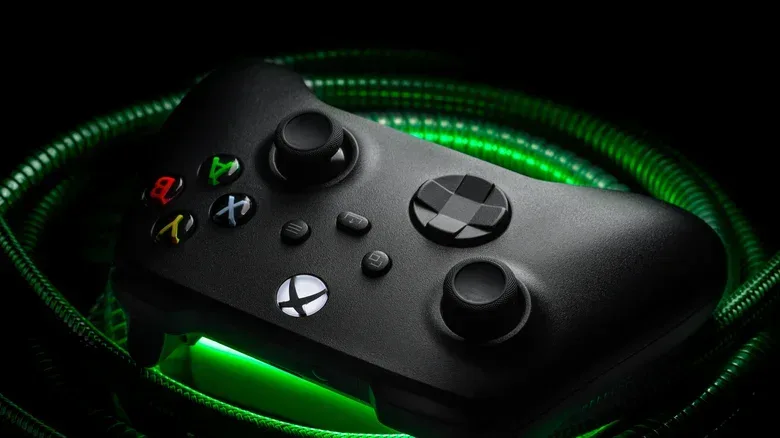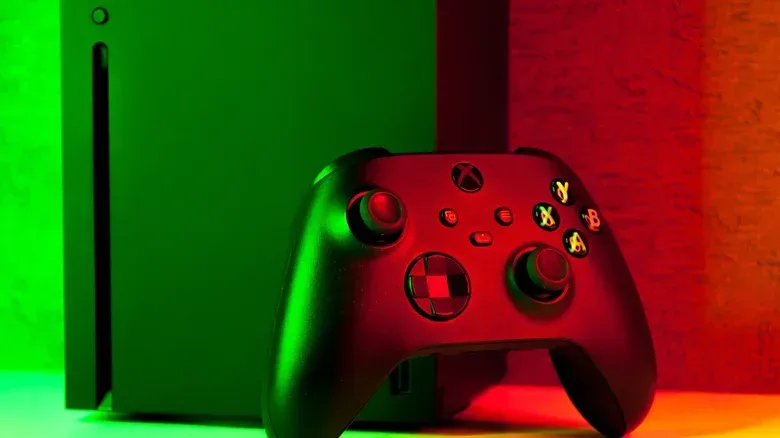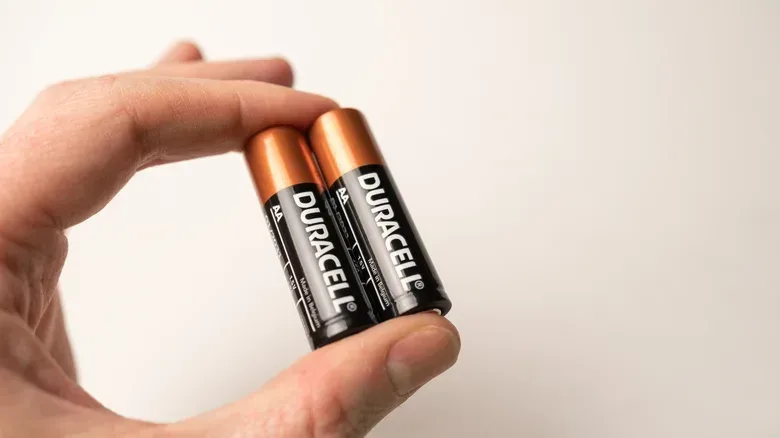
For a piece of hardware released alongside a modern console, the Xbox Series X controller’s power arrangement can look strangely old-fashioned: its standard version runs on two AA batteries. The console revealed on December 12, 2019, came with a solid-state drive aimed at sharply reducing loading times, yet its controller retained a battery compartment that asks players to use removable cells.
That contrast is precisely why the subject has endured as one of gaming’s more unexpectedly heated hardware debates. Sony had moved from the wired PlayStation 2 controller to an internally rechargeable wireless controller for PlayStation 3. Nintendo’s Wii used AAs, but Nintendo later adopted rechargeable batteries with Wii U in 2012. Microsoft, meanwhile, has continued to ship standard Xbox controllers designed around replaceable AA power.
The important point is that this is not presented as an inability to offer recharging. Microsoft sells a separate rechargeable battery pack for $24.99. Its controller design is instead an either-or proposition: use disposable AA batteries, use compatible rechargeable AA cells, or add the company’s rechargeable pack. Whether that is a meaningful consumer benefit or an inconvenient extra purchase depends heavily on how, and where, a person plays.
A controller design rooted in Xbox history
The original Xbox arrived with a wired controller, so it did not need its own onboard power source. Wireless play entered the Xbox ecosystem with Xbox 360, whose wireless controller used a pair of AA batteries. That decision established a familiar routine for Xbox players: when the controller’s power runs down, open the rear compartment and replace the batteries.
That routine has persisted through hardware generations even as consoles, displays and accessories have become much more complicated. In a narrow technical sense, AA is simply a common battery size. In practical controller terms, though, the compartment gives the owner control over the power source rather than permanently binding it to a battery installed inside the pad.
The distinction matters because an internal rechargeable battery is built into the controller. It is recharged by connecting a cable or placing the controller on a charging dock, but it is not intended to be casually swapped by the player. A replaceable battery system, by contrast, allows the controller to take fresh disposable AAs or removable rechargeable cells. Microsoft’s optional pack occupies the same general role as the AA cells, giving buyers a rechargeable route without changing the basic controller design.
For broader context on the companies and generations behind this divide, see Xbox vs PlayStation: Console History, Sales and What the Numbers Mean.
Microsoft’s case: flexibility rather than a single answer
Xbox leadership addressed the AA question in a 2020 discussion about the Series-era controller. The message was straightforward: feedback from players was sharply divided, with a substantial group actively preferring AAs. The company characterized the controller’s battery compartment as a choice-driven design and pointed to the separately available rechargeable pack for people who want a plug-in-style experience.
Related coverage includes Why Xbox Controllers Still Use AA Batteries.
That framing is worth taking seriously because it explains why the controller has not simply followed the design choices of its console rivals. A built-in battery makes one decision for every buyer. Xbox’s standard controller leaves the decision open after purchase.
For a player who likes rechargeable batteries, the path is clear: buy the dedicated pack or use rechargeable AA batteries. For a player who values immediate replacement power, ordinary AA cells remain available. A household that already keeps rechargeable AAs for other devices may see that as a useful overlap. Someone who wants a controller that is ready to dock and charge without buying anything additional may see the default arrangement as needlessly incomplete.
Neither view is irrational. They prioritize different kinds of convenience.
The strongest argument for AA batteries: recovery in the moment
The case for removable batteries is at its best when a controller dies in the middle of a game. With charged replacements or a new pair of AAs close at hand, the interruption can be brief. There is no requirement to connect a cable and wait for the controller’s own internal battery to regain enough charge.
This is the core of the pro-AA argument. “Rechargeable” does not automatically mean “available right now.” A controller with a sealed-in battery can be extremely convenient when it has been placed on its charger between sessions. But if it was not charged, its owner may need to continue with a cable attached while it receives power. Some players have no issue with that; others specifically chose wireless play to avoid it.
The swappable approach also separates the controller from one particular battery’s condition. The source-supported concern is simple: if an internally installed battery fails, the owner may be pushed toward replacing the controller rather than merely replacing the power cells. A controller designed for AAs avoids that specific dependency because the cells are already user-removable.
That does not prove every AA setup is cheaper, greener or easier in every household. It means it offers an obvious practical advantage in one scenario: power can be replaced immediately instead of recharged first.
The strongest argument against AAs: charging should be effortless
The anti-AA position begins with an equally familiar experience. A rechargeable controller can be connected after a session or rested on a charging station, then picked up again with its battery topped up. There is no need to keep loose batteries in a drawer, remember which cells have been charged, or make an additional purchase to obtain a rechargeable solution.
For these players, a contemporary wireless controller should include its rechargeable battery as standard. The fact that Xbox offers a separate pack does not entirely answer the complaint, because the purchase is still separate. The $24.99 option gives the player a route to the experience they want, but it adds cost and a decision that buyers of internally rechargeable controllers do not face in the same way.
The disagreement is therefore not really about whether recharging works. Xbox players can recharge with the appropriate pack, and rechargeable AA cells are another possible route. The dispute is about defaults. Is it better for a controller to arrive as a self-contained rechargeable device, or as a device that lets the owner decide what kind of battery system belongs inside?
Three power paths, three different routines
It helps to break the Xbox approach into its actual options rather than treating “AA controller” as a single use case.
- Disposable AA batteries: This is the simplest replacement model. When the batteries are depleted, install a fresh pair. It favors speed and broad availability, but requires a continuing supply of batteries.
- Rechargeable AA batteries: These retain the removable-cell approach while allowing the cells to be recharged separately. The player can rotate charged cells into the controller rather than attach the controller itself to a cable.
- Microsoft’s rechargeable pack: This is the company’s optional $24.99 alternative for players who want the controller itself to behave more like an internally rechargeable design.
Each route solves a different problem. Disposable cells minimize the time needed to get back into a game. Rechargeable AAs preserve the quick-swap benefit while avoiding the need to keep buying disposable cells. The dedicated pack reduces the appeal of loose batteries and makes recharging the controller the central habit.
There is no evidence here that one of these choices is universally superior. The useful takeaway for buyers is to identify their own pain point. If a dead controller during a session is the biggest irritation, spare charged cells are compelling. If managing batteries is the irritation, the separate rechargeable pack is likely the more natural fit.
The Duracell question remains unconfirmed
A second explanation has periodically circulated: that Xbox’s AA design is connected to a long-standing relationship with Duracell. A Duracell UK marketing manager described an ongoing Xbox partnership as a constant arrangement. Microsoft did not confirm a battery agreement, however. Its public position was that it intentionally provides consumers with a choice of battery solutions and it declined to discuss any potential commercial deal.
That leaves the partnership theory unresolved. It should not be treated as a confirmed explanation for the controller’s continued AA compartment. The more firmly supported explanation is Microsoft’s stated consumer-choice rationale and its observation that players are strongly split on the matter.
Why this small detail keeps producing big opinions
Controller batteries sit directly inside a player’s routine. They determine whether an evening starts with a dock, a cable, a charger, a pack of AAs or a sudden scramble after a low-battery warning. Unlike many technical specifications, the consequences are repeatedly visible at the exact moment somebody wants to play.
That is why the Xbox arrangement can be both old-fashioned and deliberately modern in different senses. The AA format has obvious roots in earlier generations of wireless controllers. Yet the ability to choose between replaceable cells and an optional rechargeable pack is also a form of modularity that internally rechargeable controllers do not provide.
Microsoft’s position is not that everyone should prefer AAs. It is that standard Xbox controllers should not force every customer into one power method. Critics can reasonably argue that a rechargeable pack should be included. Supporters can just as reasonably value having a battery system they can replace in seconds. For now, the controller’s battery door remains a small piece of hardware carrying a very large argument about what convenience means.