A Console Conceived Against the Hardware Arms Race
The Wii began as Nintendo’s response to both a business problem and an industry assumption. Nintendo’s GameCube had been a capable machine, but it had not matched the commercial reach of Sony’s PlayStation 2, and Microsoft had entered the home-console market with Xbox. By the middle of the 2000s, the next generation appeared to be moving toward more powerful processors, high-definition television output, larger game worlds, cinematic presentation, and expensive development. Sony and Microsoft were preparing machines aimed directly at the established enthusiast audience. Nintendo could participate in that race, but its leadership concluded that matching competitors feature for feature would not necessarily restore its position.
The project was developed under the codename Revolution. Satoru Iwata, who became Nintendo’s global president in 2002, promoted a strategy that sought new customers instead of relying only on people who already bought consoles. Hardware director Genyo Takeda and designer Shigeru Miyamoto became strongly associated with the idea that the controller should be easy to understand before the player knew anything about games. Nintendo’s experience with the Nintendo DS reinforced this direction. The DS used a touch screen and a simple stylus to make some actions feel more direct, and Wii attempted a similar transformation in the living room.
The central question was not simply how to detect movement. It was why many people would pick up a television remote without hesitation but avoid a traditional game controller. Conventional pads had become highly capable, but they also carried a history of learned conventions: several face buttons, shoulder buttons, two analog sticks, and combinations that were obvious only after practice. Nintendo wanted the new controller to resemble something familiar while still providing enough flexibility for traditional games. That led to a slender remote-shaped device that could be held in one hand, pointed at the screen, tilted, shaken, or used with an attached Nunchuk.
This strategy involved real risks. A lower-power console could be dismissed as technologically behind PlayStation 3 and Xbox 360. Motion sensing could become an awkward gimmick if gestures were added without improving the game. Publishers might hesitate because established franchises were built around buttons and analog sticks, while new audiences might buy only a few Nintendo titles. Wii was therefore not a rejection of competition; it was an attempt to change the basis of competition. Nintendo would compete through accessibility, price, social play, and software that made its control method understandable within seconds.
From Revolution to Wii
Nintendo showed the Revolution hardware publicly before explaining its most important feature. At E3 2005, the company displayed a small console while keeping the final controller secret. That decision reflected the difficulty of communicating an unfamiliar interface through photographs or technical specifications. A conventional gamepad could be understood immediately from an image, but the Wii controller made sense only when somebody used it. Nintendo needed demonstrations in which the physical action and the response on screen were obvious to spectators who might never have played a console before.
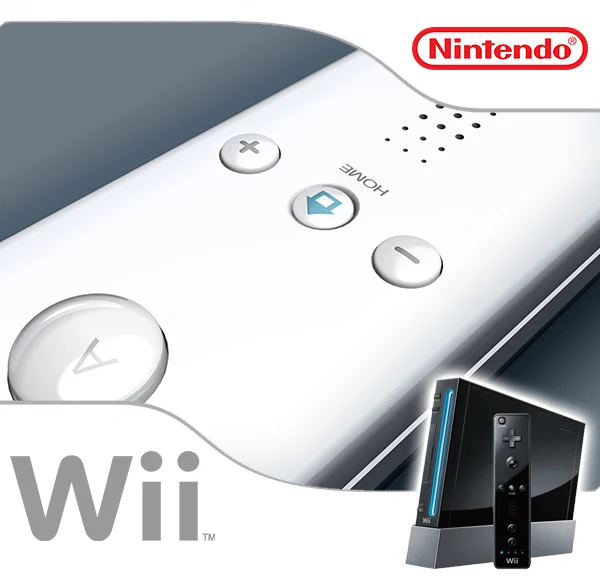
The Wii Remote combined an accelerometer with an optical pointing system. The accelerometer detected changes in movement along several axes, allowing software to recognize actions such as tilting, shaking, or swinging. The sensor bar, placed near the television, contained infrared lights that gave the remote a fixed reference for pointing. The bar did not independently track the player like a camera; the remote detected its infrared points and used them to estimate where it was aimed. This distinction mattered because the system’s pointer, motion detection, and orientation sensing were related but not identical capabilities.
The optional Nunchuk added an analog stick, trigger-like buttons, and a second-hand control arrangement. Together, the Remote and Nunchuk could support first-person aiming, character movement, racing, sports, or more conventional action. The remote also contained a speaker and vibration motor, giving Nintendo additional ways to provide feedback. The design did not make every movement perfectly literal. A game might interpret a short wrist motion as a swing, while another might use the remote mainly as a pointer. Its usefulness depended on software deciding what kind of physical relationship would make an action clearer.
Nintendo announced the name Wii on April 27, 2006. The name was intended to sound like “we,” emphasizing shared play, while the two lowercase i characters could suggest people standing together or the shape of the controller. The response was mixed because the industry was accustomed to names that implied power, speed, or continuity. Nintendo nevertheless retained it because the name supported the intended identity: friendly, memorable, easy to pronounce, and not strongly associated with specialist hardware. The change from Revolution to Wii announced that the product was meant to be a mainstream household device rather than merely an experimental enthusiast machine.
Launch Timing, Regional Differences, and the Meaning of the Bundle
Wii launched in North America on November 19, 2006, before reaching Nintendo’s home market. Japan followed on December 2, Australia on December 7, and Europe on December 8. The North American launch price was 249.99 dollars. Japan’s launch price was 25,000 yen before tax, while European pricing varied by country and was commonly listed at 249.99 euros or 179 pounds in the United Kingdom. Nintendo’s staggered schedule placed the first launch before the American Thanksgiving holiday, then moved through Japan and other major regions during the crucial end-of-year shopping season.
The different launch packages shaped the way Wii was encountered. Wii Sports was bundled with the console in North America and in many western markets, but it was sold separately in Japan. That difference was not a trivial packaging detail. In the United States and Europe, a buyer could connect the console and immediately experience tennis, bowling, golf, baseball, and boxing without purchasing another game. In Japan, the hardware and demonstration software were separate purchases, so Wii’s basic proposition was introduced through a different commercial arrangement. The hardware was broadly the same, but the first cultural explanation of the machine was regionally distinct.
The launch package included a Wii Remote, Nunchuk, sensor bar, cables, batteries, and the necessary stands and setup components. Nintendo was reducing the number of decisions a new owner had to make. The console did not require a high-definition television, multiple controllers, or an expensive collection of accessories before its distinctive feature could be experienced. The Wii Menu used large channels and a television-like layout, presenting games, settings, and internet functions as visible destinations rather than hiding everything behind a complex operating system.
Demand quickly exceeded supply in many territories. Nintendo reported strong early sell-through and shortages around launch, with retailers unable to keep units available for everyone who wanted one. Supply constraints were partly manufacturing and distribution problems, but they also intensified the sense that Wii represented something different from the other new consoles. The launch message was visible in stores and commercials: people stood up, pointed, laughed, and took turns. Wii was not offered merely as a more powerful box for existing players. It was presented as a reason for people who had ignored previous consoles to reconsider the category.
Technology Designed for Cost, Size, and Simplicity
Wii used a conservative hardware design compared with PlayStation 3 and Xbox 360. Its architecture developed from Nintendo’s GameCube generation rather than from an attempt to compete directly with the most powerful machines of the seventh generation. The system used a PowerPC-based central processor and a custom graphics and system-support design, but Nintendo’s priority was not headline performance. The machine was compact, relatively quiet, and less demanding to manufacture. Those choices helped Nintendo sell the console at a lower price while avoiding the heat and complexity associated with the more ambitious hardware of its competitors.
For ordinary players, the consequence was more important than the component names. Wii was designed for standard television output rather than high-definition presentation, although it supported progressive-scan output on compatible displays. Developers could still build attractive worlds, fast action, large levels, and sophisticated effects, but the system offered less memory and graphical capacity than the competing consoles. Nintendo’s studios responded with distinctive art direction, readable colors, stylized animation, and tightly framed environments. Super Mario Galaxy, for example, used small planetoids, curved surfaces, and imaginative lighting to produce visual variety without relying on photorealism.
The Wii Remote’s different sensors had different strengths. Accelerometers were effective at detecting changes in movement, but they did not independently provide a complete and permanent reading of orientation. The infrared pointer worked relative to the sensor bar and television position. The combination allowed games to know where the player was aiming and whether the controller was being tilted or moved, but it did not automatically reproduce every hand movement as a precise three-dimensional action. Some Wii games therefore used gestures as commands rather than as literal simulations.
The sensor bar itself became an important example of Nintendo’s practical design compromises. It was necessary to provide the infrared reference that made reliable pointing possible, yet it was another object the owner had to place near the television. Nintendo’s hardware designers considered its size, color, placement, cable length, and compatibility with both older televisions and newer flat screens. This attention reflected a larger principle: Wii tried to hide technical complexity wherever possible, but some of that complexity had to be moved into the living room. Accessibility was not the absence of setup; it was the attempt to make setup understandable and worthwhile.
Wii Sports and the Expansion of the Playing Audience
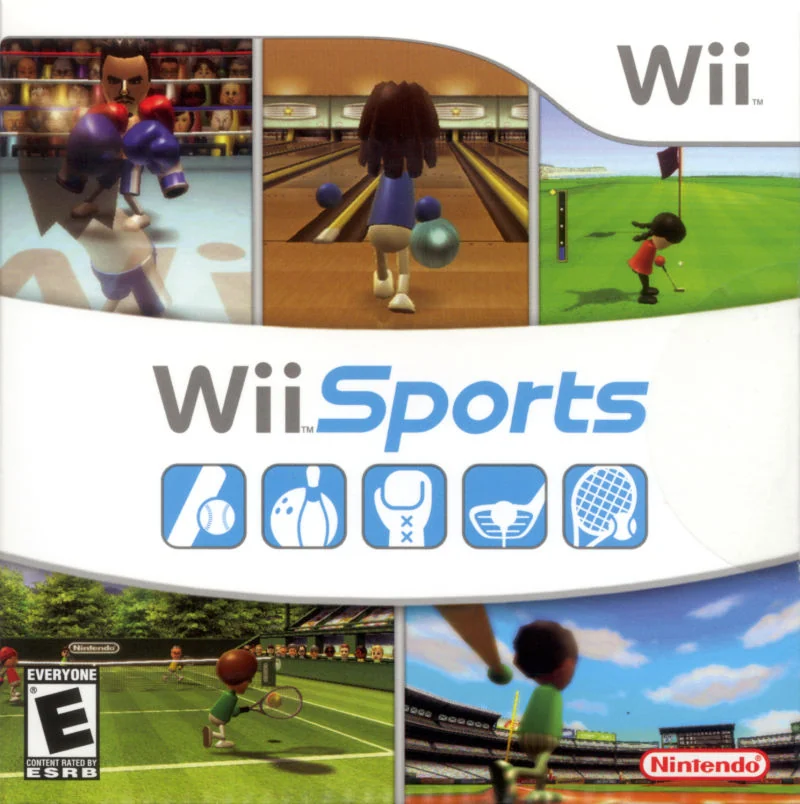
Wii Sports became the clearest expression of Nintendo’s strategy because its activities were recognizable before they were learned as videogames. Tennis, bowling, baseball, golf, and boxing communicated through everyday physical analogies. A player did not need to understand a fictional universe, a complicated menu structure, or an established series. The games used simple Mii characters, compact sessions, and rules that could be explained while people watched. Spectators could understand what was happening, then take a turn without first studying a manual or observing an expert for an extended period.
Bowling was especially effective as a social introduction because the connection between the player’s arm movement and the virtual ball was easy to grasp. Tennis and baseball made the relationship between timing and motion visible, while golf introduced a slower activity that allowed players to adjust through feedback. Boxing demanded more movement and used the Remote and Nunchuk together. These experiences varied in precision and depth, but they shared a design goal: the first successful action should happen quickly. Wii Sports worked as a tutorial for the controller, a party game, a product demonstration, and a reason to keep the console connected to the family television.
The Mii system reinforced the idea that Wii belonged to a household rather than to one dedicated player. Users could create simple avatars that appeared in Wii Sports and other software. Miis were less detailed than conventional character creators, but their speed and legibility made them useful. A face could be assembled in a few minutes, and family members could recognize it from across a room. The avatars also gave the Wii Menu a personal character. The console recorded not just which games had been purchased, but something about the people who used it.
The pack-in arrangement made Wii Sports commercially unusual. It was not merely a bonus included to increase perceived value. In territories where it was bundled, the game explained the hardware’s purpose at the moment of purchase. That helped Nintendo market Wii to families, older adults, social groups, and people who did not identify as players. Bowling scores and tennis matches became household activities rather than specialist knowledge. The broadened audience was one of Wii’s greatest achievements, but it also created a later challenge: many new owners were interested in a small number of accessible experiences and did not automatically become buyers of every traditional game released for the system.
Nintendo’s Landmark Games and the Range of First-Party Design
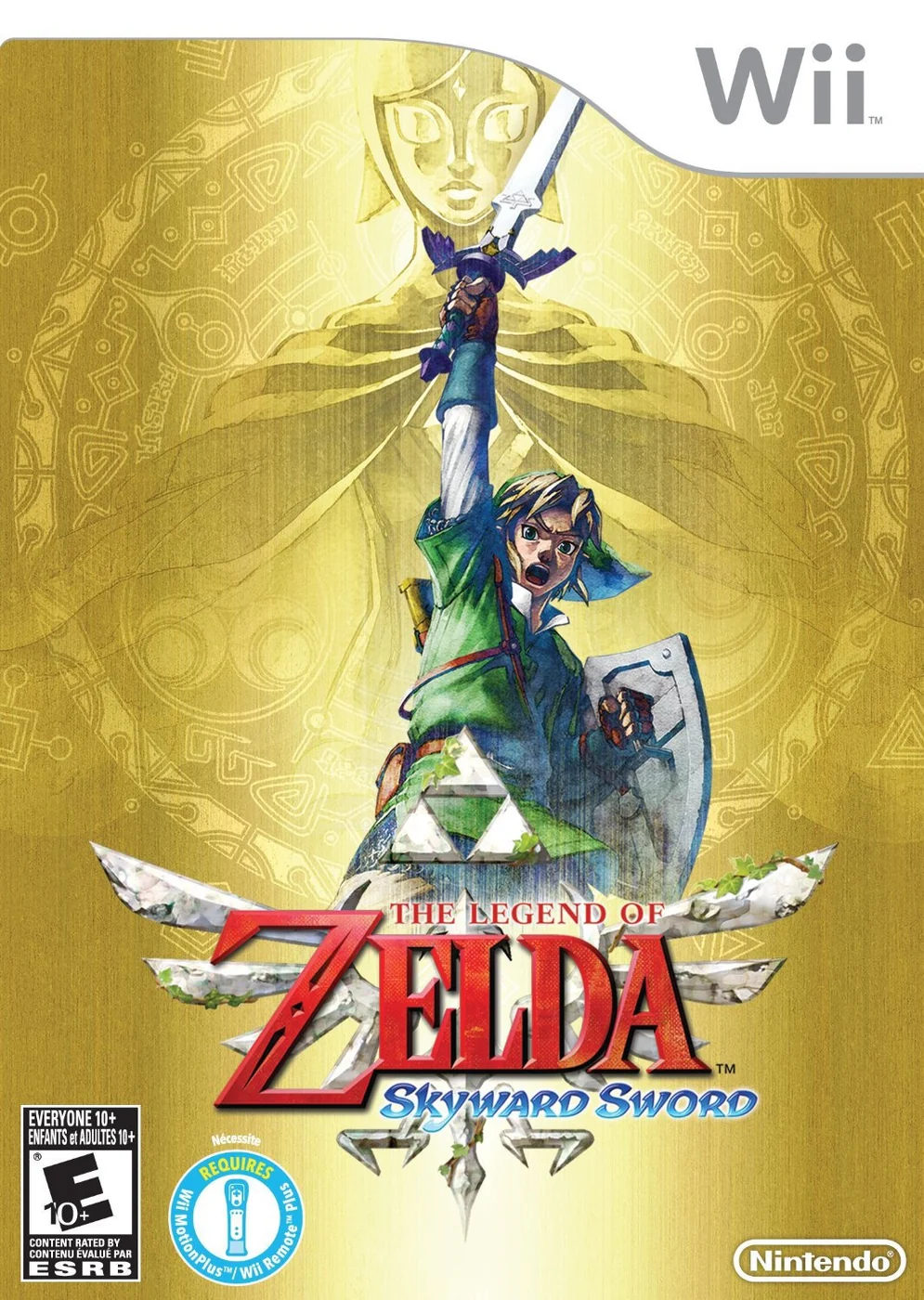
Wii needed more than a demonstration game to sustain its identity. The Legend of Zelda: Twilight Princess launched alongside the console and connected Wii to Nintendo’s established audience. It was also released for GameCube, making the Wii version a cross-generation title rather than a completely exclusive showcase. On Wii, pointer aiming and gesture-based attacks adapted the adventure to the new controller. The game showed that the system could host a large, traditional Nintendo production while using the new input method to make selected actions more direct.
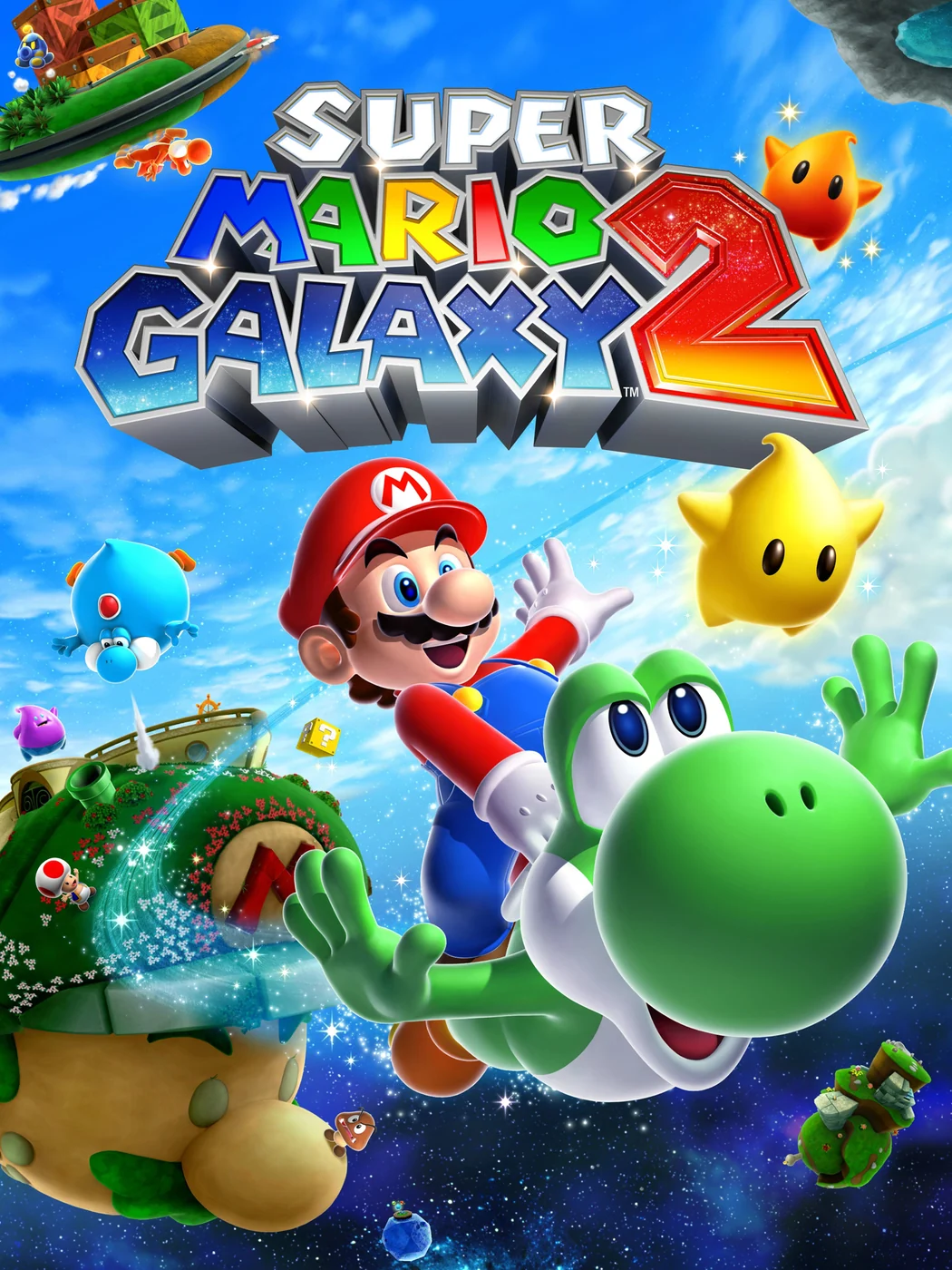
Super Mario Galaxy became a stronger argument for the platform’s creative range. Its levels were organized around planetoids and changing gravity, allowing the player to move through spaces that did not behave like ordinary flat platforming stages. The Wii Remote supported pointer interaction and a spin move, but the game’s importance came from the complete design: level construction, camera control, music, animation, pacing, and challenge. It demonstrated that Wii could support sophisticated games for experienced players without abandoning the visual clarity and immediate controls that Nintendo considered central to the system.
Other Nintendo projects used the controller in different ways. Metroid Prime 3: Corruption made pointing and aiming central to a first-person adventure. WarioWare: Smooth Moves turned the remote into a source of rapid comic prompts. New Super Mario Bros. Wii used simultaneous four-player cooperation and competition to transform a familiar platformer into a group activity. Donkey Kong Country Returns and Kirby’s Epic Yarn showed that conventional genres could remain important even when motion was not the sole attraction. The variety mattered because Wii was most successful when motion served a design purpose rather than appearing as a mandatory feature.
Nintendo also used Wii to present games about routine, health, and family activity. Wii Fit introduced the Balance Board, which contained pressure sensors that estimated how weight was distributed across its surface. Its body tests and exercises were consumer entertainment, not a replacement for professional medical or fitness assessment, but the format gave the console a new role in the home. Wii Fit Plus added more exercises and customizable routines. These products encouraged Nintendo to treat software as something that could organize household habits, not only provide a fictional adventure or competitive match.
Competition and the Uneven Third-Party Library
Wii competed with Xbox 360 and PlayStation 3 without trying to match their technical priorities. Xbox 360 had launched in 2005 and emphasized high-definition games, a strong online identity, and established genres. PlayStation 3 arrived in November 2006 with powerful hardware, Blu-ray support, and the prestige of the PlayStation brand. Wii offered a lower price and a control method that could be demonstrated without a high-definition television. Nintendo’s success showed that the market was not a single contest in which the most advanced hardware automatically won. Different consoles could sell different reasons to play.
The business model also differed. Wii’s relatively conservative design lowered manufacturing complexity, while Nintendo’s first-party games provided a steady stream of highly recognizable software. The large installed base created an obvious opportunity for outside publishers. In practice, the third-party library became uneven. Some companies released strong adaptations and experiments, while others produced inexpensive licensed games or rushed party titles aimed at the broadest possible audience. The sheer number of low-quality releases created the reputation later summarized by the term “shovelware,” even though the platform also contained ambitious and carefully made games.
Motion control complicated established development practices. A publisher making an action game had to decide whether pointing should control aiming, whether gestures should replace attacks, and whether players should be able to use a Classic Controller or GameCube pad. A role-playing game might gain little from literal movement, while a shooting game could benefit immediately from a pointer. Resident Evil 4: Wii Edition showed how aiming could make an existing game feel newly direct. Boom Blox used pointing, pulling, stacking, and throwing as central spatial actions. Other games added shaking because the hardware made it possible, even when the gesture did not improve the underlying design.
Nintendo’s audience strategy therefore produced a contradiction. Wii attracted millions of people who had not previously bought consoles, but those customers did not behave as one unified software market. Some purchased Wii Sports, Wii Fit, Mario Kart Wii, or another familiar title and then used the system occasionally. Enthusiasts wanted deeper adventures, role-playing games, shooters, and experimental projects, but publishers could not always predict whether those games would reach a large enough audience. Nintendo understood the platform’s central message better than most partners because it controlled the hardware, software, and advertising. The result was a commercial triumph that nevertheless reinforced Nintendo’s reliance on its own studios.
Peripherals, Digital Distribution, and the Wii Living Room
Wii’s accessories extended the idea that one controller could take different physical forms. The Nunchuk provided analog movement and additional buttons. The Classic Controller offered a more familiar arrangement for Virtual Console games and traditional software. The Wii Wheel placed a remote inside a steering shell, while the Zapper combined the Remote and Nunchuk into a light-gun-shaped frame. These accessories were not equally necessary, but they made Wii appear adaptable. Depending on the software, the same basic controller could function as a pointer, racket, steering wheel, fishing rod, or conventional directional device.
The Balance Board was more significant than most plastic shells because it measured pressure at four points and estimated how the player’s weight was distributed. Wii Fit used those readings for balance activities, posture-related tests, and movement exercises. The board was not a clinical instrument, and Nintendo’s software was not equivalent to medical supervision, but the product’s communication was clear. It turned the console into a household object associated with exercise and routine. That positioning brought Wii into homes through a different conversation from action games and helped demonstrate that the platform could be built around an accessory as well as a controller.
The Wii Shop Channel introduced an early form of console digital distribution that combined older and newer software. Virtual Console offered selected games from earlier Nintendo and third-party systems, while WiiWare provided downloadable original titles. Additional channels made the system feel like an internet-connected appliance, with visible menu spaces for weather, news, voting, Miis, and other functions. Storage was limited, so Nintendo supported SD cards and later improved the system’s ability to manage downloaded content. The shop was not a modern account ecosystem, but it taught a large audience that a console could receive software without a disc being inserted.
Wii’s online infrastructure was cautious compared with Xbox Live. Nintendo Wi-Fi Connection enabled online multiplayer and related features in games such as Mario Kart Wii, Super Smash Bros. Brawl, and Animal Crossing: City Folk, but friend codes and limited communication tools made the service feel deliberately restricted. WiiConnect24 allowed background exchanges, messages, and updates for selected channels and games. These services were separate layers rather than one unified online platform. That distinction became important later, because multiplayer support, background channels, downloadable purchases, and redownload rights ended on different schedules.
Motion Control’s Cultural Impact and Its Limitations
Wii became visible far beyond specialist game stores. Advertisements showed parents, children, grandparents, friends, and office groups taking turns. The small white console and friendly menu made it resemble a consumer appliance more than an expensive computer. Hospitals, schools, retirement communities, hotels, and workplaces experimented with motion-based activities, although the seriousness and scale of those uses varied. News coverage often presented Wii as evidence that videogames had entered a wider social space. The system’s most important cultural achievement was not that every player became a dedicated hobbyist, but that the category became easier to discuss in ordinary settings.
The controller changed the physical and social arrangement of play. It could be held loosely, passed from person to person, and understood by watching someone else. Players often stood or moved their arms, while spectators could follow the action without learning a button layout. Yet the cultural promise sometimes exceeded the technical reality. Many games required only small wrist movements, and motion input did not automatically make a game more active or accessible. The best designs connected the action, the feedback, and the physical demand; weaker designs treated movement as decoration.
Nintendo’s success encouraged competitors to pursue similar ideas. Sony introduced PlayStation Move for PlayStation 3, while Microsoft developed Kinect for Xbox 360 using camera-based body tracking. Smartphones adopted accelerometers, touchscreens, and orientation sensing as standard features. Wii’s influence was therefore broader than direct imitation of its controller. It helped establish that a platform could be differentiated by the relationship between the player and the machine, not only by processor performance or graphical resolution.
The backlash revealed the limits of the approach. Some players disliked calibration, imprecise recognition, physical effort, or the sense that gestures had replaced reliable buttons. A flood of low-quality motion games made the platform look less curated than Nintendo’s strongest releases. Wii was also labeled a casual-only system even though it hosted demanding adventures, shooters, strategy games, and experimental software. That reputation influenced how publishers marketed games and how some enthusiasts evaluated the library. Wii expanded the audience while sometimes making its deeper software harder to notice.
Hardware Revisions and the Road to Wii U
Nintendo revised Wii during its commercial life without abandoning the original platform. The initial RVL-001 model, released in November 2006, included GameCube controller ports and memory-card slots. It could play GameCube discs and support compatible accessories, making it a bridge between the previous generation and the new machine. In October 2011, Nintendo introduced the RVL-101 model. It was designed to lie horizontally, removed GameCube support, and could not run GameCube discs or use accessories that required the old controller ports. The unchanged Wii name concealed meaningful differences between revisions.
The Wii Mini, model RVL-201, reduced the machine further. It used a smaller red-and-black enclosure, omitted internet functionality, removed GameCube compatibility, reduced the number of USB ports, and did not include SD-card support. The result was not a full replacement for the original Wii experience. It was a lower-cost way to play compatible Wii discs for people who did not need the platform’s online features or backward compatibility. Its late appearance showed that Wii had entered a long-tail phase: the cultural phenomenon had matured into an inexpensive commodity while Nintendo’s main development attention moved elsewhere.
Nintendo announced Wii U at E3 in June 2011 and positioned it as the successor to Wii. The new system used a tablet-like GamePad with a built-in screen, allowing a second display and forms of asymmetrical play. Wii U was backward compatible with Wii software and controllers, providing continuity for existing owners, but its central idea differed from the original machine. Wii had made the player’s physical movement visible in the room; Wii U tried to make the second screen useful to an individual player while preserving some of the family-oriented identity of its predecessor.
The transition was difficult because the name and appearance did not communicate the difference quickly enough. Some consumers interpreted Wii U as a Wii accessory or revised controller. The GamePad’s value required a longer explanation than the Wii Remote’s basic point-and-move demonstration. Nintendo also faced an audience divided between occasional Wii owners and enthusiasts who wanted stronger third-party support. Wii U’s disappointing performance did not erase Wii’s achievements, but it showed that a successful brand message could not simply be repeated with a more complicated product. Nintendo later carried lessons about flexibility, immediate demonstrations, and approachable play into the design of Nintendo Switch.
Decline, Service Closures, and Preservation
Wii’s sales eventually slowed as smartphones, tablets, high-definition consoles, and new Nintendo hardware changed the market. A large installed base did not guarantee continued engagement. Many owners had purchased Wii for a small number of highly accessible games, and the novelty of motion control could not maintain demand by itself. Late in the system’s life, Nintendo’s release schedule became less consistent, while publishers concentrated more heavily on PlayStation 3, Xbox 360, personal computers, and newer digital platforms. A console can remain culturally famous after it is no longer the center of its manufacturer’s development plans.
Nintendo closed WiiConnect24 services on June 27, 2013. Forecast, News, Everybody Votes, Nintendo, Check Mii Out, and other connected functions stopped working, along with several Wii friend and message exchanges. Nintendo Wi-Fi Connection ended on May 20, 2014, removing online play, matchmaking, rankings, some user-created exchanges, and related functions from compatible Wii software. These were not the same shutdown. WiiConnect24 concerned background services and channels, while Nintendo Wi-Fi Connection was the network layer used by many games.
The Wii Shop Channel remained active longer because it handled purchases and redownloads. Nintendo stopped allowing new purchases on January 30, 2019, after ending the ability to add Wii Points in March 2018. At first, customers could redownload purchased WiiWare, Virtual Console games, and channels, and some content could be transferred to Wii U. Nintendo stated that these remaining functions would eventually end, illustrating the difference between a store closing and every associated service disappearing at the same time. The precise separation of purchases, redownloads, transfers, and game servers matters when documenting the platform’s decline.
Preserving Wii therefore requires more than saving disc images. The platform’s identity depended on Wii Remotes, Nunchuks, MotionPlus, Balance Boards, sensor bars, memory cards, regional software, save data, and menu channels. Some games rely on online matchmaking or downloadable content that official servers no longer provide. Others depend on accessories that are vulnerable to wear, missing cables, or calibration problems. Community preservation projects and emulation can help reproduce experiences, but they involve legal and archival questions. Wii demonstrates that a platform is an ecosystem of hardware, software, interfaces, networks, and social practices, not merely a console shell.
Sales, Legacy, and the Historical Meaning of Wii
Nintendo’s official dedicated-hardware sales table lists Wii at 101.63 million units worldwide and Wii software at 921.85 million units as of June 30, 2026. These are consolidated lifetime totals reported by Nintendo, not estimates of active users or the number of households that still play the system. The figures place Wii among Nintendo’s most successful home consoles and confirm that its appeal was not a brief curiosity. Nintendo achieved this result without matching the processing power or high-definition ambitions of its principal competitors.
Wii changed Nintendo’s understanding of hardware. A console could be differentiated through the behaviors it encouraged, the people it invited, and the way its software explained its controls. Wii Remote, Mii, Wii Sports, Wii Fit, Balance Board, and Wii Shop Channel formed a connected household concept. Not every element survived unchanged, but the strategy influenced later Nintendo products. Switch continued the emphasis on flexible play and immediate demonstrations, while Nintendo’s later sports software preserved some of the approachable physical activities associated with Wii.
The platform’s design legacy is mixed in useful ways. Wii encouraged developers to think about spectators, short sessions, local multiplayer, physical analogy, and interfaces that communicate through action. It normalized pointing, tilting, and body-based input in consumer electronics. At the same time, it showed that a novel controller could become a burden when sensing was unreliable or when gestures had no meaningful relationship to the rules. The lasting lesson is not that every game should use motion. It is that an input method should make an intended action clearer, quicker, or more expressive.
Wii’s historical importance comes from the way commercial discipline and conceptual risk reinforced each other. Nintendo kept the console compact, reused a comparatively conservative technical foundation, and avoided a costly specification race. It then took a major gamble on who would play and how they would interact with the machine. The result broadened videogames’ cultural presence while exposing the limits of novelty, the dangers of weak online permanence, and the importance of software that serves a complete audience. Wii asked a question that shaped the industry afterward: not simply how powerful a console could be, but how many people could understand its invitation to play.