The problems that shaped the next PlayStation
PlayStation 4 grew out of Sony’s difficult opening to the PlayStation 3 generation. The PlayStation 2 had become the best-selling home console in history, creating enormous expectations for its successor. Yet the PlayStation 3 launched in 2006 with an unusual Cell processor, a complicated development environment, Blu-ray hardware that raised manufacturing costs, and a price substantially higher than Microsoft’s Xbox 360. Sony eventually recovered through price cuts, hardware revisions, strong software and the value of Blu-ray, but the early damage was clear. The next system had to restore confidence among players, publishers and developers at the same time.
The most important correction was architectural. Rather than repeat the PlayStation 3’s specialized design, Sony chose an x86-64 processor derived from AMD’s Jaguar family and paired it with a Radeon-based graphics processor. That approach resembled the hardware developers already understood from personal computers, even though the console remained a fixed, tightly controlled platform. Mark Cerny, a veteran designer and producer who had worked on many generations of games, became the system architect. His public explanation of the project emphasized listening to developers and reducing barriers that had made PlayStation 3 software expensive and time-consuming to produce.
This decision reflected changes throughout the industry. High-budget games required larger teams, games were increasingly released on several platforms, and online services were becoming part of ordinary console ownership. A machine with familiar processor technology could help studios share tools and production knowledge between platforms. Sony also understood that a new console could no longer be treated as an isolated box that simply read discs. Players expected downloads, patches, friends lists, video sharing, streaming, remote access and regular software updates. PlayStation 4 was designed to preserve the clear appeal of a living-room console while accepting that the console had become a networked computer.
Announcement and the architecture of accessibility
Sony announced PlayStation 4 at PlayStation Meeting 2013 in New York on February 20, 2013. The company showed the DualShock 4 controller, described the system architecture and presented software from major publishers, independent developers and Sony’s own studios. The console itself was not shown until June’s E3 presentation, but the announcement established its central theme: the system was intended to put developers and players at the center of the platform. That language was a deliberate response to the perception that PlayStation 3 engineering ambition had sometimes taken priority over practical development.
The original PlayStation 4 used a custom AMD accelerated processing unit, or APU, combining an eight-core Jaguar-based CPU with a Radeon-derived graphics processor. The CPU handled game logic, artificial intelligence, physics, operating-system work and other general calculations. The GPU performed the many parallel calculations required to draw geometry, lighting, effects and textures. Sony specified 1.84 teraflops of graphics performance, but the more meaningful design choice was the memory arrangement: 8GB of GDDR5 unified system memory, available to both the CPU and GPU. Developers could work with one large, fast pool instead of dividing a much smaller memory supply into rigid categories.
The launch model included a built-in hard drive, Blu-ray drive, Gigabit Ethernet, wireless networking, USB 3.0, Bluetooth and HDMI output. Supporting hardware handled background downloads, video compression and decompression, and other network functions so that recording or uploading gameplay did not have to consume all of a game’s resources. In everyday terms, PlayStation 4 was a standardized computer optimized for a television, controller and fixed software target. Its accessible architecture did not guarantee excellent games, but it made performance more predictable and reduced the amount of custom engineering needed before a team could concentrate on design.
Launch dates, regional strategy and early momentum
PlayStation 4 launched in North America on November 15, 2013, at a suggested price of 399 dollars. It followed on November 29 in Europe, Australia and several Latin American markets, with prices varying by territory. Sony launched the system in Japan on February 22, 2014, rather than making Japan part of the first worldwide wave. The Japanese launch price was 39,980 yen before tax, or 41,979 yen including tax at the time, and Sony announced a separate camera bundle. The staggered schedule reflected supply and software planning, while also acknowledging that North America and Europe had become the strongest immediate markets for a new home console.
Regional versions were not identical. Prices, bundles, language support, advertising, television applications, launch software and distribution schedules differed from country to country. Japan received a lineup of nineteen launch software titles, including Knack, Killzone Shadow Fall, Resogun, Battlefield 4, FIFA 14, Final Fantasy XIV: A Realm Reborn beta software and several Japanese-developed games. The Japanese launch also occurred after several months of overseas sales, giving Sony time to assemble a more locally relevant catalog, although some important Japanese publishers were still adjusting to global release patterns and the changing balance between Japanese and Western high-budget development.
The first months produced strong momentum. Sony reported more than one million PlayStation 4 systems sold through to consumers in North America during the first day. By March 2, 2014, the company reported six million worldwide sell-through, including 370,000 systems in Japan during the Japanese launch period. In August 2014, Sony announced that worldwide sell-through had passed ten million. These figures were consumer sales estimates rather than merely shipments into retail channels. The distinction mattered because the platform’s early success was being measured by actual ownership, not just by inventory sent to stores.
The Xbox One rivalry and the meaning of price
The most consequential early competition came from Microsoft’s Xbox One. Both machines launched in November 2013 and used broadly comparable AMD-derived foundations, but their public identities were sharply different. Microsoft initially presented Xbox One as an entertainment hub built around television integration, voice control and the Kinect camera. Sony concentrated on games, a lower price and conventional physical-game ownership. The initial PlayStation 4 package cost 399 dollars, while Xbox One cost 499 dollars because Kinect was included. That hundred-dollar gap was substantial for households that were likely to choose one console rather than purchase both.
Microsoft also initially proposed a more restrictive licensing model involving regular online authentication and limitations on lending or reselling physical games. The company reversed those policies before launch, but the announcement had already affected consumer perception. Sony used its E3 presentation to communicate that lending a disc meant handing the disc to another person, turning a simple ownership policy into a memorable contrast. The victory was not caused by a single joke. It resulted from the combination of price, architecture, launch timing, physical-media policy and a public message that seemed less interested in controlling the buyer.
Competition remained important throughout the generation. Microsoft reduced the Xbox One’s price, separated Kinect from later packages, improved the operating system and expanded its first-party strategy. Nintendo’s Wii U offered distinctive franchises unavailable elsewhere, even though it struggled commercially. Sony also had weaknesses: the launch catalog lacked an overwhelming system-selling exclusive, Driveclub was delayed, and online multiplayer for most paid games required PlayStation Plus. Nevertheless, the basic proposition was easy to understand. Buyers received a reasonably priced console, a familiar disc format, a large third-party library and a platform that appeared likely to remain supported for many years.
DualShock 4 and the social console
The DualShock 4 retained the PlayStation layout while adding several new forms of interaction. It included a clickable touchpad, a built-in speaker, improved motion sensing, a light bar and a dedicated Share button. The touchpad could register clicks and swipes, though developers used it inconsistently. The light bar helped the PlayStation Camera track the controller and could communicate in-game states through color, but it also contributed to battery drain and was not universally popular. These features mattered less as isolated innovations than as evidence that Sony viewed the controller as an interface to a connected social system.
The Share button allowed players to save screenshots, record recent gameplay and broadcast live through services such as Twitch and Ustream. PlayStation 4 maintained a rolling buffer of recent footage, meaning players could capture something that had just happened without manually starting a recording beforehand. Later updates added ShareFactory for editing clips and Share Play for inviting another player into a session through streaming. Depending on the software and connection, a friend could watch, take temporary control or join a supported multiplayer experience without owning the same game.
Remote Play extended the system beyond the television. PlayStation Vita could act as a secondary client, receiving the game image from the PS4 while sending controller input back over a network. Results depended on wireless conditions, distance and the quality of the home network, but the idea anticipated a later expectation that a game library should not be tied to one display. Smartphones and tablets also became part of the PlayStation ecosystem through companion applications. PlayStation 4 helped normalize recording play, broadcasting it, watching friends, inviting people into sessions remotely and treating a console account as a persistent social identity.
From launch software to a broad ecosystem
The launch library showed both the promise and the limitations of a new generation. Killzone Shadow Fall served as a visual demonstration of larger environments and more detailed effects, while Knack attempted to establish a new Sony character franchise. Resogun, developed by Finnish studio Housemarque, was especially significant because it showed that a downloadable arcade-style game could stand beside large retail releases. Multiplatform games including Assassin’s Creed IV: Black Flag, Battlefield 4, Call of Duty: Ghosts and FIFA 14 gave buyers a practical reason to purchase the system even when they were more interested in major publishers than in exclusives.
Sony also used remasters to connect the new platform with the previous generation. The Last of Us Remastered brought Naughty Dog’s acclaimed PlayStation 3 game to PS4 with improved resolution, performance options and included downloadable content. Journey arrived in 2015, giving a new audience access to Thatgamecompany’s short, atmospheric adventure. Remasters filled a software gap while studios learned the new hardware and helped owners who had skipped PlayStation 3. They also marked the beginning of a business pattern in which publishers increasingly treated recent games as reusable libraries rather than products tied permanently to one machine.
The third-party ecosystem became the platform’s greatest commercial strength. Grand Theft Auto V, Destiny, Minecraft, The Witcher 3, FIFA, Call of Duty, Battlefield, Resident Evil 7, Monster Hunter: World and many other major games made PlayStation 4 a default destination. Japanese developers increasingly released on the system for worldwide audiences, while Western publishers used it as a major baseline for production. Retail discs remained important, but downloadable editions, patches, expansions, seasonal content and free-to-play games became routine. The PS4’s identity therefore depended not only on exclusives but on being a reliable center of the entire contemporary software market.
Sony’s first-party identity
Sony’s own studios gradually supplied the games that made PlayStation 4 distinctive. Naughty Dog’s Uncharted 4: A Thief’s End arrived in May 2016 as a polished adventure combining climbing, shooting, vehicle sequences, puzzles and character-driven storytelling. Sony announced that the game exceeded 2.7 million units in worldwide sales during its first week, counting both Blu-ray sell-through and digital sales through May 16. Its performance demonstrated that a primarily single-player adventure could still become a major commercial event in an era increasingly associated with online services and recurring monetization.
From Japan, FromSoftware and Sony’s collaboration on Bloodborne became one of the generation’s most influential action role-playing games. Its gothic setting, aggressive combat, demanding encounters and indirect storytelling attracted a dedicated audience and expanded the design vocabulary associated with the Souls series. Sony’s timeline and reporting described the game as reaching one million copies in 2015, a notable result for a challenging new property. Bloodborne also showed that Sony’s identity did not have to be limited to broad cinematic spectacle. The platform could support difficult, strange and specialized games that cultivated passionate communities.
Guerrilla Games’ Horizon Zero Dawn broadened the first-party portfolio again. Released in February 2017, it combined a large open world with stealth, crafting, ranged combat and machine animals modeled on prehistoric creatures. Sony reported 2.6 million units sold through in its first two weeks, calling it the company’s biggest new first-party property launch on PS4 at that point. Later releases including God of War, Marvel’s Spider-Man, Detroit: Become Human, Death Stranding, Ghost of Tsushima and The Last of Us Part II demonstrated the platform’s mature range. Together they established a recognizable PlayStation strategy centered on technically polished, story-led games, while still leaving room for unusual partnerships and genres.
Slim and Pro: a mid-generation redesign
In September 2016, Sony introduced a slimmer standard PlayStation 4 and the more powerful PlayStation 4 Pro. The slim model reduced the original system’s volume by 30 percent, weight by 16 percent and power consumption by 28 percent, according to Sony. It preserved the same basic capabilities while making the console easier to manufacture, ship and place in a home. This was a familiar console revision: the same generation in a smaller, more efficient package, aimed at reducing costs and attracting buyers who had not purchased at launch.
PlayStation 4 Pro was more significant because it created a performance tier within the generation. It used a faster CPU, a substantially more capable graphics processor and a larger standard hard drive. It supported HDR10 and 4K output, but many games did not render every pixel at native 4K. Developers commonly used checkerboard rendering, dynamic resolution and other reconstruction techniques to produce a sharper image without multiplying the entire workload. The practical result varied by game, television and viewing distance, but Pro gave owners of new 4K displays a reason to upgrade without replacing the existing software library.
Sony presented Pro as an enhancement rather than a separate generation. The same games and gameplay features were intended to work on both the standard PS4 and Pro, with patches offering higher resolution, steadier frame rates, improved shadows, greater draw distance or other visual options. Sony stated that all games and gameplay features would remain available across the two systems. The benefits were therefore uneven: some developers offered multiple graphics modes while others made only modest improvements. Even so, Pro established a pattern later adopted more widely, in which a console generation could include an enthusiast model aimed at better image quality and performance.
PlayStation VR and new forms of play
PlayStation VR launched in North America on October 13, 2016, with releases in other territories around the same period. The system consisted of a headset, a processor unit and associated cables; many games also required PlayStation Camera, while some used PlayStation Move controllers. Unlike a television, the headset displayed separate images to the player’s eyes and tracked head movement, creating a sense of being inside a three-dimensional space. The PS4 had to render these viewpoints at low latency, because a noticeable delay between physical movement and image response could cause discomfort.
Sony’s strategy was notable because it brought virtual reality to a console audience rather than requiring an expensive gaming PC. PlayStation VR was compatible with the existing PS4 family, while PS4 Pro could improve resolution or performance in supported titles. Launch software included Batman: Arkham VR, Rez Infinite, Driveclub VR, PlayStation VR Worlds and Rigs Mechanized Combat League, alongside experiments in horror, rhythm, cockpit simulation and social play. Sony announced more than thirty day-one titles in North America and promoted a wider selection arriving through the holiday season.
Virtual reality did not replace conventional games. The headset’s cost, physical setup, limited play space, motion discomfort and need for specialized software restricted its audience. Some experiences were short demonstrations rather than long campaigns, and developers had to design around comfort as well as visual quality. Nevertheless, PS VR was an important experiment. It showed that a console maker could use an existing installed base to lower the barrier to a new display technology, and it encouraged designers to think about presence, scale, locomotion and interaction in ways that ordinary third-person games did not require.
Digital services and changing ownership habits
The PS4 business model combined traditional game sales with subscriptions and digital services. PlayStation Plus became necessary for online multiplayer in most paid games, while free-to-play games generally did not require the subscription. Plus also offered cloud storage, discounts and rotating games. This helped Sony support network infrastructure and turn occasional buyers into recurring subscribers, but it changed the meaning of console ownership. The hardware was now an entry point into an account-based ecosystem whose benefits depended on continuing services, network access and a functioning digital store.
Digital distribution became central to discovery and purchasing. Players could preload large games before release, download expansions and receive patches that sometimes changed a product substantially after launch. This made post-release support a normal part of console development. Sony’s acquisition of Gaikai in 2012 also fed its interest in cloud gaming and contributed to PlayStation Now. Streaming could broaden access to games, but its quality depended on broadband conditions and could not fully replace local hardware for players who wanted consistent latency or permanent access to a downloaded or disc-based game.
The transition created new tensions. Digital libraries were tied to user accounts, licenses could differ by territory, and multiplayer or other online features could disappear when publishers ended support. A physical disc might contain only an initial build while important fixes, expansions or features existed on servers. At the same time, PS4 still supported discs, used-game resale and offline play for many single-player experiences. The coexistence of these models made the generation transitional: it looked like a conventional console era while moving the industry toward continuously updated, service-based platforms.
Cultural impact, controversies and maturity
The PS4 helped make gameplay broadcasting and capture ordinary console activities. A player did not need a dedicated computer, capture card or complex technical setup to upload a clip or begin a stream. The Share button placed those functions directly on the controller, encouraging the circulation of spectacular victories, funny failures, speedruns, competitive matches and creator commentary. This changed how games were marketed because players’ clips could become informal advertising. It also amplified bugs, harassment and controversies, demonstrating that visibility could benefit both publishers and critics.
The generation broadened the accepted scale of game experiences. Alongside enormous open-world productions were short narrative works, independent downloads, Japanese role-playing games, horror titles, remakes and experimental projects. What Remains of Edith Finch, Inside, Undertale, Nier: Automata, Persona 5, Celeste, Hollow Knight and The Witness represented different audiences and design traditions. The large installed base gave publishers confidence to localize specialized games, while the digital store gave smaller projects access to buyers who might never have found them on retail shelves.
The platform also had substantial weaknesses. Large games required lengthy installations and often significant patches, while the standard hard drive could fill quickly. PlayStation 4 was not backward compatible with PlayStation 3 discs, because the two systems used very different architectures. The user interface and digital policies changed through system updates, and network outages or server shutdowns could affect multiplayer and downloadable features. Some highly anticipated games launched in unfinished or disappointing states. The PS4’s cultural importance therefore came not from perfection but from scale: it became a common meeting point for blockbuster, independent, competitive, social and experimental forms of play.
Transition to PlayStation 5 and measured success
Sony announced PlayStation 5 as the successor to PS4, with the new system launching in November 2020. The transition did not immediately end PlayStation 4’s relevance. Its installed base was enormous, developers had years of experience with its architecture, and the economic disruption surrounding 2020 made cross-generation releases commercially attractive. Games such as Marvel’s Spider-Man: Miles Morales, Horizon Forbidden West, Gran Turismo 7 and God of War Ragnarök received PS4 versions or cross-generation support for a period. That strategy extended PS4’s life, although it also meant that some early PS5 software could not be designed exclusively around the newer console’s fast solid-state storage and more powerful CPU.
Sony’s business data reports more than 117 million PlayStation 4 systems worldwide, using the company’s sell-in reporting definition. Earlier milestones show how quickly the platform expanded: Sony reported six million worldwide sell-through by March 2, 2014, ten million by August 2014, and more than 50 million sold through by December 2016. These numbers should not be treated as interchangeable. Sell-through refers to units purchased by consumers, while sell-in refers to units shipped into the sales channel. Console histories often become misleading when manufacturer shipments, retailer inventory and consumer purchases are combined without explanation.
The achievement was especially notable because PS4 did not depend on one revolutionary feature. It combined a familiar disc-based console with developer-friendly hardware, strong third-party support, social tools, a competitive price and increasingly capable first-party studios. Sony’s recovery from PlayStation 3 was therefore strategic as well as technical. The company understood that the platform had to be easy to explain, affordable enough for a mass audience and flexible enough to support both traditional games and emerging online habits.
Preservation and lasting influence
Preserving PlayStation 4 history requires more than keeping a console and a disc on a shelf. The platform’s software includes patches, downloadable expansions, digital-only releases, account licenses, online multiplayer components and virtual-reality peripherals. A launch disc may behave differently after years of updates, while a game built around servers may lose essential functionality when its publisher ends service. Save data can depend on local storage or cloud synchronization, and system software can determine whether older applications remain accessible. Preservation therefore involves software environments, network behavior and documentation as well as physical objects.
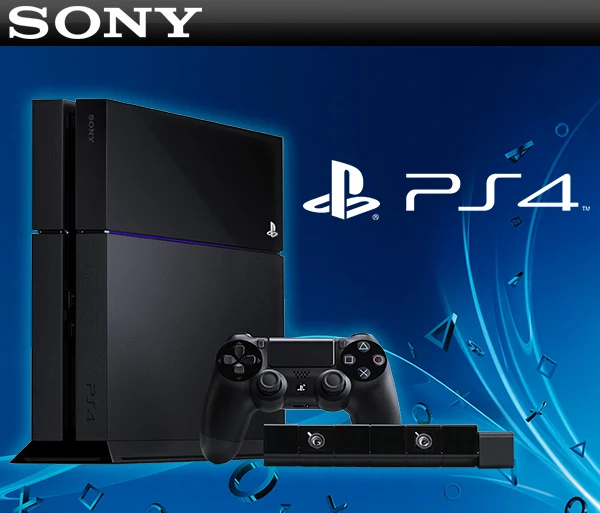
The hardware has several distinct identities. The original 2013 model represents Sony’s return to a large, angular black console after the rounded PlayStation 3 era. The slim revision reflects the move toward smaller and more efficient manufacturing. The Pro represents the mid-generation shift toward 4K televisions and HDR. Limited editions, regional model numbers, revised internal components and special bundles add further layers. Controllers, cameras, Move units, VR headsets, charging accessories and external storage also form part of the platform’s history. Treating every PS4 as identical obscures how Sony refined the system and how players experienced it at different points.
The PS4’s influence can be seen in later console expectations. Capturing and broadcasting play became routine, as did account-based libraries, background downloads, digital patches, remote access and performance tiers. Developers benefited from standardized hardware and tools that resembled wider computer-development practices. Sony’s first-party output reinforced a model of expensive, cinematic, story-led games supported by a global audience, while the enormous installed base sustained third-party and independent software. PlayStation 4 was not the first networked console, the first digital console or the first to experiment with social features. Its importance came from combining those trends into an affordable, widely distributed system that remained relevant through most of the 2010s and into the next generation.